DbcultAccessing Vault...
5/10
Senior Film Conservator
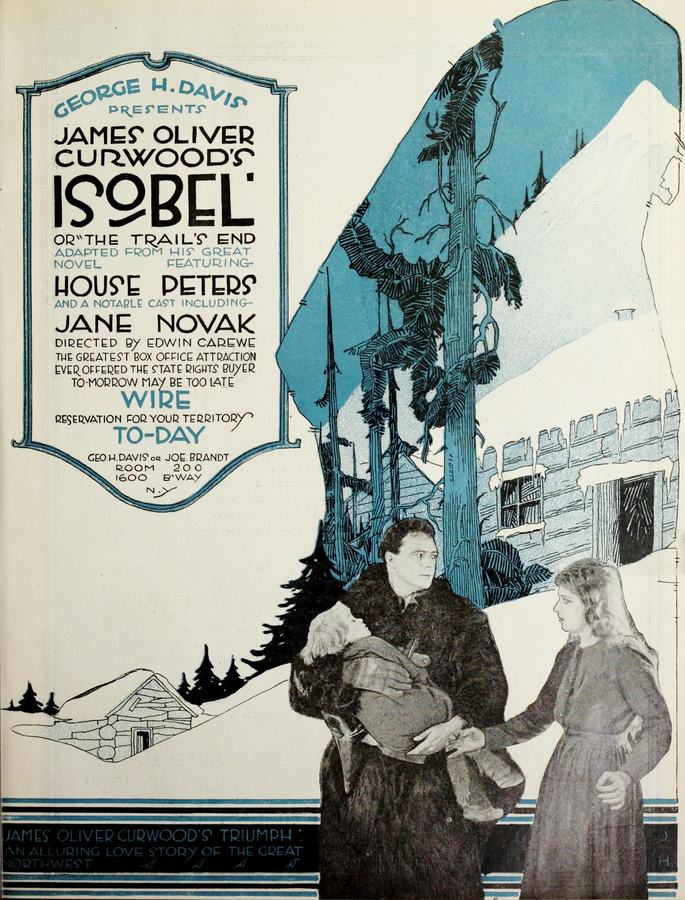
A definitive 5/10 rating for a film that redefined the boundaries of cult cinema. Isobel or the Trail's End remains a cornerstone of transgressive art.
Step back into a bygone era of cinematic storytelling, where grand emotions and sweeping landscapes converged to craft narratives of enduring power. Isobel or the Trail's End, a silent film that, despite its age, resonates with a timeless quality, plunges viewers into a world where justice is a nuanced concept, love defies logic, and the untamed wilderness serves as both refuge and relentless adversary. Penned by the formidable duo of James Oliver Curwood and Finis Fox, this film is far more than a simple melodrama; it's an intricate dance of fate, a testament to the human spirit's resilience, and a poignant exploration of the consequences of impulsive actions.
At its core, the narrative is ignited by an act of visceral, primal retribution. Scottie Dean, portrayed with a raw intensity by Horin Konishi, a passenger aboard a whaling vessel, finds his world upended by an egregious attack on his wife, Isobel. In a moment of searing indignation and protective fury, Dean casts Captain Jim Blake overboard, believing this decisive act to be the ultimate, fatal recompense. This singular, life-altering choice immediately propels Dean into a desperate flight for survival, convinced he carries the indelible stain of a man's death. He retreats into the vast, indifferent embrace of the North Woods, a landscape that promises both anonymity and an arduous test of endurance. This initial precipitating incident sets the stage for a saga steeped in themes of justice, guilt, and the profound psychological burden of perceived wrongdoing. It's a classic setup that echoes the high stakes of other early thrillers, where a single event cascades into a torrent of unforeseen consequences, much like the intricate plotting seen in serials such as The Trail of the Octopus, though here, the focus remains intensely personal rather than grand conspiracy.
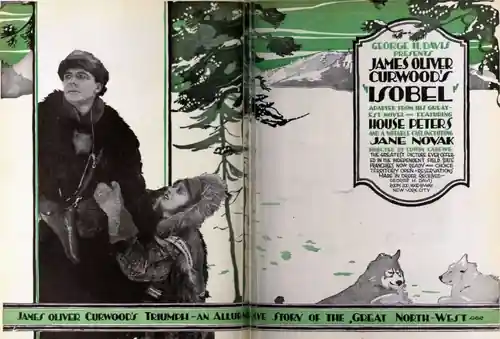
The stage is then meticulously set for the introduction of Sergeant William MacVeigh, the embodiment of law and order, assigned the unenviable task of tracking Dean down. However, the wilderness, with its own peculiar brand of destiny, orchestrates a pivotal encounter that forever alters MacVeigh's trajectory. As he relentlessly closes in on his quarry, he stumbles upon a vision that transcends his professional mandate: Isobel, exquisitely portrayed by Jane Novak, drawing a sled that purportedly contains her husband's coffin. Novak imbues Isobel with an ethereal beauty and a palpable aura of sorrow that instantly disarms MacVeigh. His duty, his oath, his very purpose, momentarily dissolve in the face of her captivating presence. This is a moment of profound irony and human vulnerability, where the stern hand of the law is rendered impotent by the sudden, overwhelming force of attraction. MacVeigh, inadvertently yet inexorably, allows the couple to slip through his grasp, a decision born not of malice, but of a burgeoning, undeniable infatuation. This romantic complication, where love and duty collide, is a narrative cornerstone, reminiscent of the emotional quandaries explored in deeply felt melodramas like Sapho (1913), where personal passions frequently override societal expectations.
This unexpected turn of events, however, does not go unnoticed. Corporal Bucky Smith, a character expertly crafted as MacVeigh's nemesis and rival, seizes upon the sergeant's lapse with a zealous, almost vindictive, determination. Smith, played with a keen sense of antagonism, insists that MacVeigh has flagrantly violated his oath, and he vows to apprehend Dean himself, driven by a blend of professional ambition and personal animosity. This external pressure forces MacVeigh into an agonizing dilemma: to protect Isobel from Smith's relentless pursuit, he must paradoxically arrest Dean. It's a deeply complex sacrifice, a testament to MacVeigh's evolving sense of loyalty and affection. The ensuing confrontation between MacVeigh and Smith is charged with tension, a battle of wills and principles. Ultimately, MacVeigh, demonstrating a resourcefulness born of desperation, disposes of the meddling corporal, a necessary evil to safeguard the woman he has come to love. This act further complicates MacVeigh's moral landscape, blurring the lines between lawman and protector, duty and desire. The narrative thrives on these shades of gray, presenting characters who are neither wholly virtuous nor entirely villainous, but deeply human in their flaws and motivations.
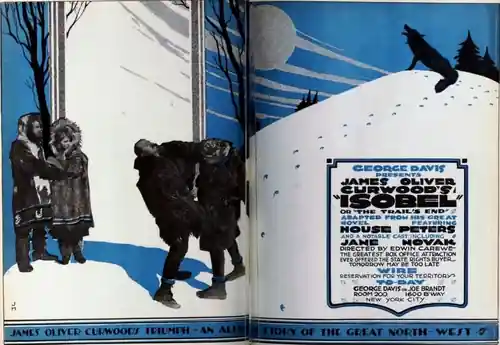
Following this pivotal confrontation, MacVeigh, still bound by his complex affection for Isobel, orchestrates Dean's escape, a gesture that speaks volumes about his character. He is a man caught between the rigid demands of his profession and the compelling dictates of his heart. Yet, the North Woods, a setting that looms large as a character in itself, continues to test the limits of human endurance. The harsh realities of the wilderness eventually compel Dean to reappear, a broken figure begging for MacVeigh's assistance. His wife, Isobel, is gravely ill in a distant, isolated hut, and Dean's desperate plea underscores the unforgiving nature of their environment. It is during this desperate interlude that a staggering truth is unveiled: Captain Jim Blake, the man presumed dead, is, in fact, alive. This revelation shatters the very foundation of Scottie Dean's guilt and subsequent flight, retroactively transforming his act of vengeance into a tragic misunderstanding. The weight of this revelation, coupled with the relentless struggle against the elements, proves too much for Dean, who succumbs to his trials. Horin Konishi's portrayal of Dean's final moments is imbued with a quiet pathos, a poignant end to a man whose life was tragically shaped by a mistaken belief.
With Dean's demise, MacVeigh, his love for Isobel undimmed despite the tumultuous journey, rushes to her side. However, the trials of the wilderness and the emotional toll have taken a severe toll on Isobel. She lies delirious with brain fever, her mind clouded by suffering and trauma. In her fevered state, she fails to recognize MacVeigh, instead accusing him of the very crime he sought to prevent: the murder of her beloved husband. This agonizing rejection, a cruel twist of fate, highlights the tragic irony inherent in their story. Jane Novak's performance here is crucial, conveying the profound depths of Isobel's delirium and the heartbreak of MacVeigh's unrequited devotion. The scene is a masterclass in silent film acting, where gestures, facial expressions, and the subtle nuances of performance must convey complex emotional states without the aid of dialogue. It’s a moment of profound pathos, echoing the unfulfilled longings and misunderstandings that frequently drive the narratives of classic cinema, much like the dramatic irony at play in The Silent Witness, where perceptions often diverge from reality.
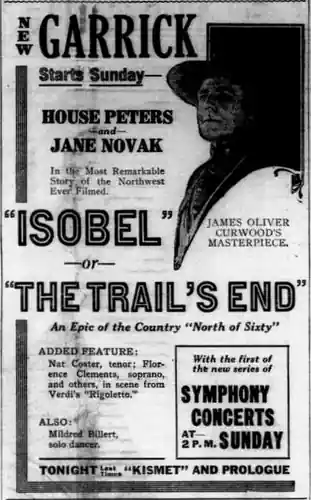
Years, long and arduous, pass. The memory of Isobel, and the unresolved pain of their separation, continues to haunt MacVeigh. Then, a letter arrives, bearing the devastating news of Isobel's death. This seemingly final blow propels MacVeigh on a pilgrimage to Montreal, a journey not of pursuit, but of remembrance and a desire to connect with the past. There, he seeks out Isobel's daughter, a living echo of the woman he once loved. It is in Montreal, amidst the bustling anonymity of urban life, that fate intervenes once more, in its most miraculous and redemptive form. MacVeigh discovers that the woman he loves, the woman he believed to be lost to him forever, is alive. The letter was a cruel deception, or perhaps a misunderstanding, but the outcome is nothing short of a miracle. The reunion between MacVeigh and Isobel is depicted with a tender, deeply emotional resonance. It is a moment of profound relief and joy, a culmination of years of suffering, misunderstanding, and unwavering love. This protracted separation and eventual, improbable reunion speak to the enduring power of hope and the belief in a destiny intertwined. The film’s narrative arc, from impulsive violence to profound misunderstanding, and finally to a hard-won, deeply poignant reunion, is a testament to the rich storytelling capabilities of its era.
The strength of Isobel or the Trail's End lies not only in its compelling plot, intricately woven by writers James Oliver Curwood and Finis Fox, but also in the performances of its dedicated cast. Horin Konishi, as Scottie Dean, delivers a performance marked by raw emotion and palpable desperation, making his character's plight deeply sympathetic despite his rash actions. Jane Novak, as Isobel, is the emotional anchor of the film, conveying fragility, strength, and a haunting beauty that justifies the sacrifices made for her. The supporting cast, including Pearlie Norton, Tom Wilson, Hal Wilson, House Peters, Robert Walker, Dick La Reno, and Edward Peil Sr., each contribute to the rich tapestry of the narrative, providing depth and authenticity to the world of the North Woods. The silent film format, far from being a limitation, enhances the emotional impact, forcing the audience to engage more deeply with the visual storytelling, the subtle gestures, and the powerful expressions that define the era's acting style. The film’s use of natural landscapes, while perhaps not as grandly cinematic as later productions, effectively conveys the isolation and unforgiving nature of the environment, making the characters’ struggles feel all the more visceral. The influence of Curwood, known for his wilderness adventure novels, is evident in the film's rugged setting and the theme of humanity's struggle against nature, a recurring motif in his literary works.
In an age dominated by rapid-fire dialogue and visual effects, Isobel or the Trail's End serves as a powerful reminder of cinema's foundational storytelling prowess. It is a film that, through its dramatic twists, its exploration of human fallibility, and its ultimate embrace of enduring love, captures the essence of classic Hollywood romantic adventure. It’s a journey through vengeance, mistaken identity, relentless pursuit, and the ultimate, redemptive power of a love that transcends time and tragedy. The film’s ability to evoke such profound emotions without a single spoken word is a testament to the artistry of its creators and the enduring appeal of its narrative. It stands as a compelling artifact from an earlier cinematic era, offering a rich, emotionally resonant experience that continues to captivate those willing to delve into its depths. For those who appreciate the intricate dance of fate and the resilience of the human heart, Isobel or the Trail's End is a discovery well worth making, a forgotten gem that shines brightly with timeless themes.
IMDb 5.3
1924
Community
Log in to comment.