DbcultAccessing Vault...
Cult Review
Senior Film Conservator
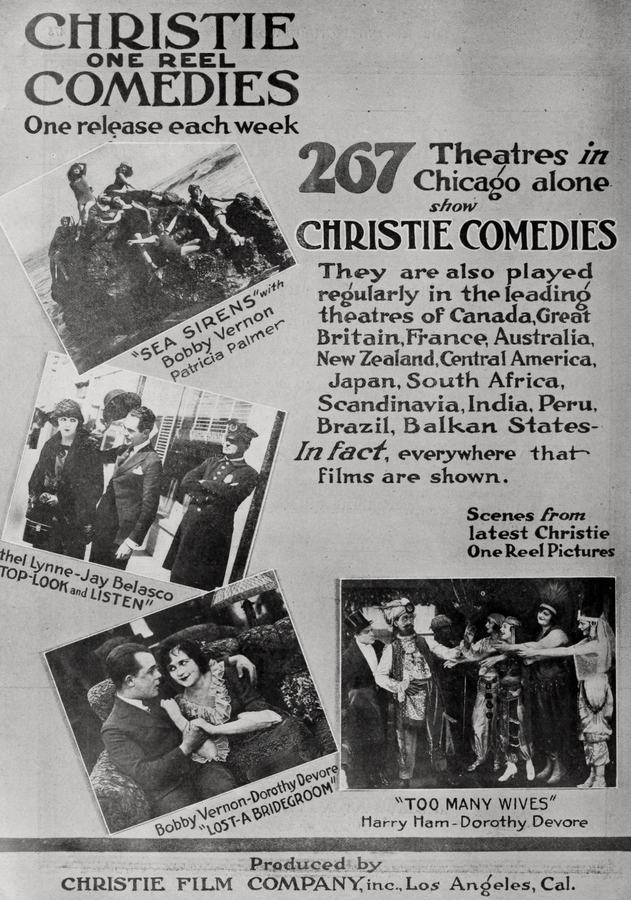
If you believe silent comedy peaked with Keaton’s stone-faced stoicism or Chaplin’s balletic pathos, Too Many Wives will slap that assumption sideways with a silk glove and then run off with your fiancée. Released in the spring of 1923—when jazz poured from basement speakeasies and pre-Code innuendo still had to pirouette around censors—this effervescent marital fracas distills bigamy into carbonated champagne. One sip and the bubbles of deceit explode on your tongue.
Harry Ham, saddled with a name that sounds like a vaudeville punch-line, glides through the picture with the slippery charm of a ledger-book Casanova. He never twirls a moustache or arches a brow; instead he smiles like a man who has already pocketed the deposit on another woman’s future. That restraint is what sells the absurdity: we glimpse the panic behind his spectacles, yet he keeps scribbling promises as if vows were mere IOUs.
Director John Francis Dillon—better remembered today for melodramas—treats matrimony like a three-ring circus. Each fiancée occupies a distinct socio-economic tier: Devore’s Gertie is the working-girl flapper whose hemline climbs higher whenever she senses injustice; Mrs. Van Alstyne, a velvet-draped widow, drifts through scenes trailing the sulfuric perfume of old money; Tillie the taxi-dancer, played with feral gusto by an uncredited Maryon Aye, storms parlors in fringe that shivers like tambourines. Their collisions feel less like catfights than precision choreography: a purse becomes a semaphore flag, a wedding veil turns into a bullfighter’s cape.
The screenplay, attributed to four contract writers who probably never met in the same room, weaponizes paperwork. Every forged signature ricochets through the plot like a bullet in a bunker. Dillon cranks the Wilhelm-scream of the silent era—an intertitle that simply reads “BUT I HAVE A CERTIFICATE!”—and repeats it until the phrase achieves comic mania. By the fifth iteration, the audience starts giggling in anticipation, a Pavlovian response that modern sitcoms still attempt with catchphrases.
Devore, often dismissed as a “pleasingly plump comedienne,” operates like a stealth satirist. Watch her eyes when she confronts Ham: the pupils dilate with calculation, not heartbreak. She weaponizes empathy, extracting alibis the way a safecracker listens for tumblers. In one sublime sequence she pretends to faint, forcing Ham to catch her while simultaneously pick-pocketing his pocket calendar. The camera lingers on her triumphant smirk—an expression that screams checkmate without intertitles. Contemporary viewers may detect the DNA of Rosalind Russell’s Hildy Johnson or even Veep’s Selina Meyer; Devore simply lacked sound to verbalize the venom.
“Silent film acting is not about absence of voice,” critic Imogen Sara Smith once wrote, “but about presence of thought.” Devore’s thought is so present you could iron shirts on it.
Forget the matte paintings and travelling mattes of later epics; the special effect here is overlapping bureaucracy. Dillon superimposes three marriage certificates on the same frame, each stamped on a different day, then dissolves them into a flurry of rice. It’s a 1920s version of Photoshop layering, achieved with nothing more than double exposure and candle-snuffed nerve. Equally dazzling is the courthouse pendulum: the camera tilts 45-degrees so the swinging axe of justice becomes a metronome for Ham’s escalating lies. The tilt is so subtle first-time viewers suspect projector malfunction—until characters start sliding sideways across the set, clutching hats like astronauts in zero-G.
Compare this visual audacity to The Kaiser’s New Dentist, which used similar Dutch angles for horror, not humour. Too Many Wives proves that skewed perspective needn’t herald German Expressionist dread; it can also herald American bedlam.
Each bride embodies a cultural anxiety of the ’20s. Gertie’s rolled stockings and bee-stung lips broadcast sexual autonomy; the widow’s black-edged stationery whispers that wealth outlives love; Tillie’s gum-snapping argot warns that urban nightlife devours innocence faster than bathtub gin. Ham’s sin isn’t promiscuity—it’s failure to respect the category each woman files herself under. He treats them as interchangeable assets, like war bonds. The film’s catharsis arrives when the three collectively re-categorize him as chattel, auctioning his debt to the highest bidder in a third-act courtyard scene that plays like a feminist slave market, minus the solemnity.
Scholars hunting proto-queer subtext will relish the homosocial energy between the women. Once they compare ledgers, their camaraderie eclipses romantic rivalry. They share cigarettes, synchronized eye-rolls, even a tandem bicycle chase through a municipal park. The men become mere obstacles, stumbling over hedgehogs and sprinkler pans. In this reading, Ham’s bigamy is less moral affront than logistical inconvenience; the true love story is female solidarity.
Listen beyond the clatter of the projector and you’ll imagine jazz: a cornet trill when Devore arches an eyebrow, a snare-drum stutter when Ham pockets a wedding ring. Contemporary exhibitors were encouraged to hire live quartets who could segue from “Ain’t She Sweet” into Mendelssohn’s wedding march in under eight bars. The dissonance would mirror the film’s tonal whiplash—romance laced with larceny. Today, Kino’s restoration offers a sprightly piano score by Ben Model, but try syncing your own playlist: anything by Parquet Courts or Cory Henry amplifies the modernist anxiety humming beneath the hijinks.
Place Too Many Wives beside Divorce and the Daughter and you witness Hollywood’s bipolar stance on wedlock: one film lampoons multiplicity, the other pathologizes separation. Or stack it against A Love Sublime for a diptych on deception—where Sublime wallows in tragic irony, Wives pirouettes into absurdist victory. Even Cowardice Court, released the same year, treats courtroom theatrics as noble crusade; Dillon treats the bench as vaudeville stage.
For decades the sole surviving print was a 9.5 mm Pathéscope reel tucked inside a Parisian nunnery—apparently the sisters screened it for levity between vespers. A 2018 4K restoration by EYE Filmmuseum scanned the nitrate at 8K, then downsampling to preserve silver-halide shimmer. Grain nestles like warm candle-soot; Devore’s freckles emerge like cinnamon on café-au-lait. The Blu-ray from Kino Lorber pairs the film with an audio essay by historian Kelly Robinson who contextualizes bigamy statutes circa 1923. Streaming options rotate on Criterion Channel and Kanopy, but purchase the disc: the booklet alone—loaded with facsimile divorce decrees—merits shelf space.
In an era of dating-app fatigue and algorithmic matchmaking, the notion that one might juggle three fiancées via ledger fraud feels almost quaint—yet the emotional stakes sting harder. Dillon’s film prefigures our current anxieties about curated personas: Ham’s downfall isn’t lust, it’s poor spreadsheet management. Replace the marriage certificates with Instagram profiles and you have a 2020s cautionary tale.
More crucially, the movie flips the gaze. Women don’t compete for the man; they network around his duplicity, weaponizing the very paperwork meant to constrain them. In 1923 that was radical; in 2024 it still feels subversive. The final image—three brides linking arms as Ham stumbles behind, veil over his head—anticipates every Beyoncé-style “you-won’t-get-my-tears” empowerment anthem. Only silent cinema could deliver that triumph without uttering a syllable.
9 / 10 – A kinetic, whip-smart romp whose paper cuts draw blood long after the laughter subsides.
Further sleuthing? Investigate The Rainbow Trail for more Ham, or chase Devore in The Midnight Man. For contrast, sample Erträumtes’ European melancholy. Whichever path you choose, pack a spare ring—and maybe a lawyer.
IMDb —
1917
Community
Log in to comment.