DbcultAccessing Vault...
Cult Review
Senior Film Conservator
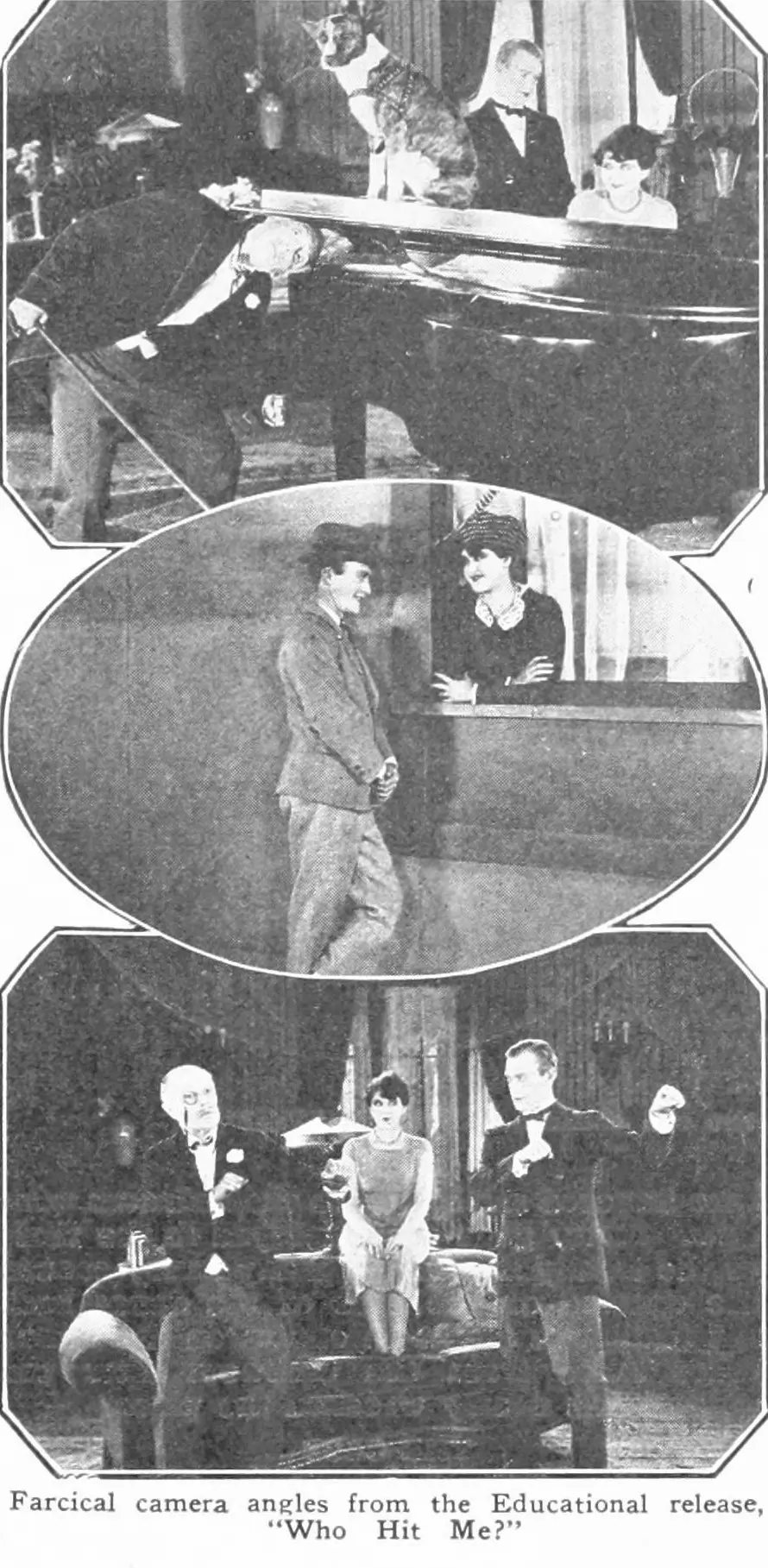
Does Who Hit Me? hold up as a comedy classic for modern audiences? Short answer: yes, but only if you value physical agility over a coherent script.
This film is for the viewer who enjoys the raw, unpolished energy of early 20th-century slapstick and the rubber-limbed genius of Al St. John. It is absolutely not for anyone who requires logical character motivations or a plot that moves beyond a single, thin premise.
The film functions as a time capsule of a specific brand of American humor that relied on the human body being treated like a crash-test dummy. It is kinetic, loud in its silence, and occasionally genuinely surprising in its choreography.
This film works because Al St. John possesses an almost supernatural ability to manipulate his center of gravity, making every fall look like a choreographed accident rather than a staged stunt.
This film fails because the narrative glue between the department store firing and the household valet sequences is essentially non-existent, leaving the audience to jump between disparate gags without a breath.
You should watch it if you are a student of physical comedy or if you want to see how the 'valet disaster' trope was perfected before it became a tired sitcom cliché.
Al St. John is the engine of this production. Often overshadowed by his uncle Roscoe 'Fatty' Arbuckle or his contemporary Buster Keaton, St. John brings a frantic, almost desperate energy to the role of Al. In the opening sequence at the department store, his dance isn't just a plot device to get him fired; it is an exhibition of fluid motion.
When he is kicked out of the store, the transition from a vertical human to a projectile is seamless. He hits the pavement with a weight that you can almost feel through the screen. It is a reminder that in this era, the stunts were the special effects. There were no safety nets, just the actor's willingness to take a bruise for a laugh.
His performance as the 'valet' is where the film really finds its stride. He treats every household object as an adversary. A simple task like hanging a coat or serving a drink becomes a high-stakes battle of physics. It is unhinged. It is brilliant. It is exhausting.
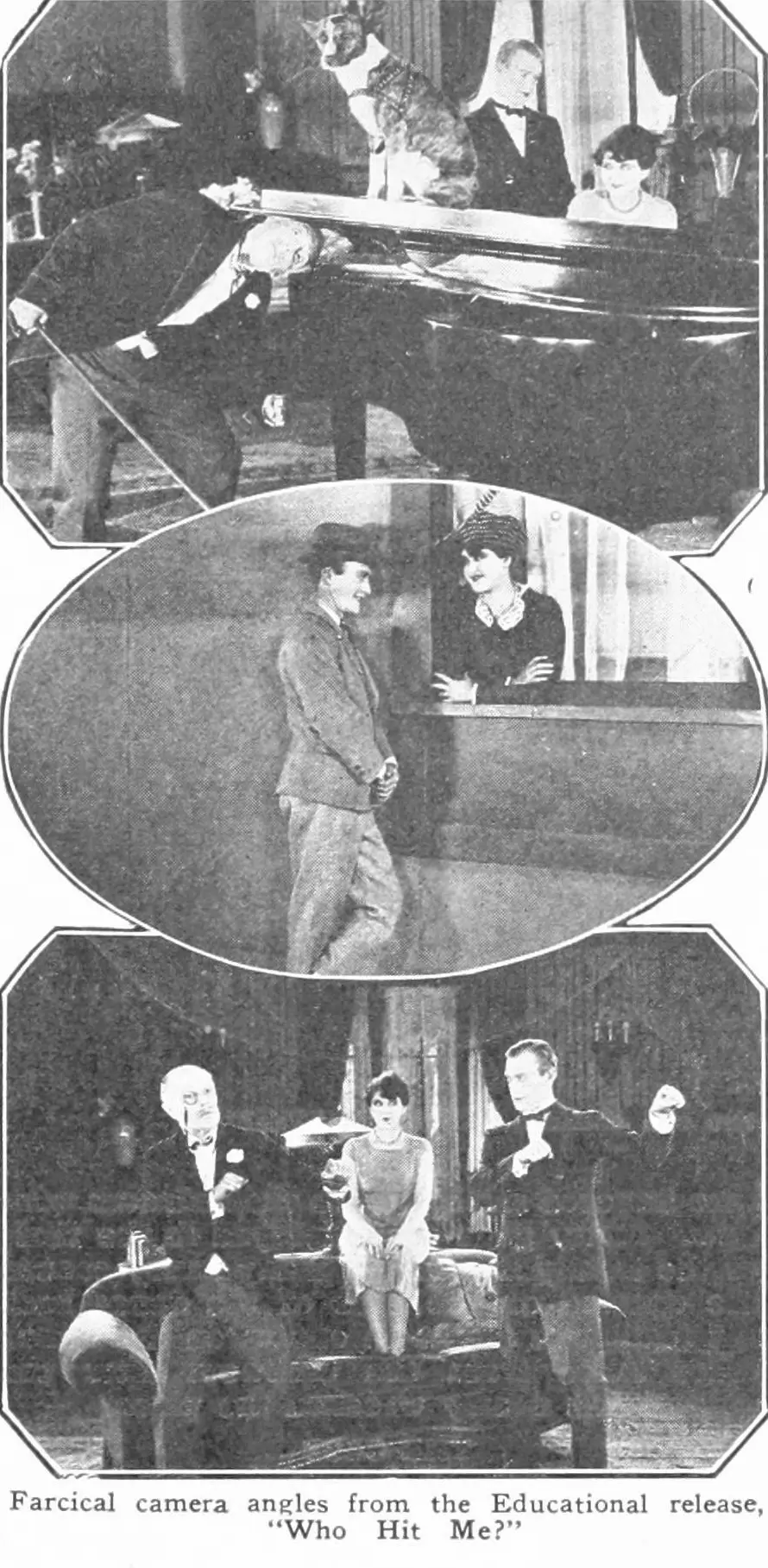
The plot of Who Hit Me? is a thin veil for a series of escalating disasters. The logic used by Zelma and Phil—hiring the man they just hit with a car to avoid a lawsuit—is inherently ridiculous. However, in the world of 1920s comedy, this brand of 'logic' was standard operating procedure.
Compared to a film like Jazz Monkey, which leans into animal-based hijinks, Who Hit Me? focuses on the friction between social classes. Al is a blue-collar delivery boy thrust into a domestic environment where he clearly doesn't belong. The humor comes from his total lack of etiquette and his accidental destruction of the upper-middle-class aesthetic.
The film doesn't waste time on character development. Phil Dunham and Zelma O'Neal serve primarily as straight-faced reactions to Al’s madness. Their job is to look horrified, and they do it well. But make no mistake, the plot is merely a delivery system for St. John’s acrobatics.
Yes. The stunts performed by Al St. John are real. There are no digital effects. His timing is perfect. While the social context of the humor has aged, the raw spectacle of a man falling down a flight of stairs with grace remains universally entertaining.
Modern comedies often rely on dialogue and 'cringe' humor. Who Hit Me? is a reminder that a well-timed trip or a face full of flour can be just as effective. It is a visceral experience. It requires the viewer to engage with the screen on a purely physical level.
Stephen Roberts, who would go on to direct more substantial features, shows a keen eye for framing action here. He understands that for slapstick to work, the audience needs to see the whole body. He avoids the tight close-ups that modern directors use to hide stunt doubles.
The pacing is relentless. Once Al enters the house, there is rarely a moment of silence—visual or otherwise. The film moves with the speed of a runaway train, much like the vehicular chaos seen in The Speeding Venus. Roberts ensures that each gag leads directly into the next, creating a snowball effect of destruction.
One specific scene involving a tray of dishes stands out. It isn't just that the dishes break; it’s the way Al tries to save them, only to cause more damage in the process. It’s a beautifully choreographed sequence of failure that requires precise timing from both the lead and the supporting cast.
When looking at the landscape of short comedies from this era, such as Happy Go Luckies or Artie, the Millionaire Kid, Who Hit Me? stands out for its sheer aggression. It isn't a 'sweet' comedy. It is a film about a man being beaten by the world and then accidentally beating the world back.
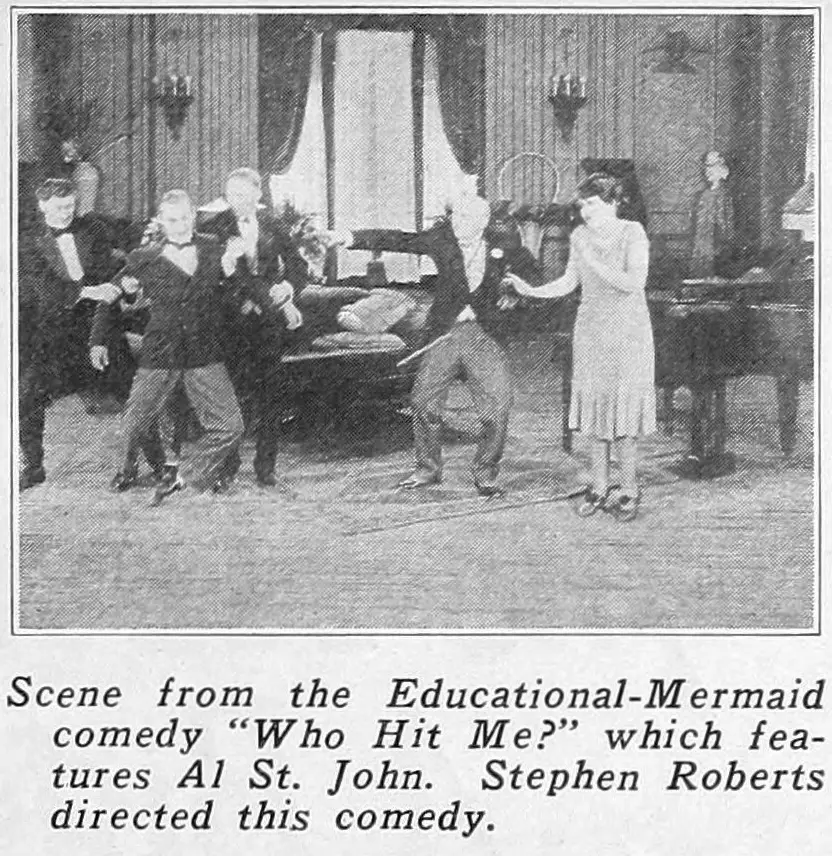
It lacks the poetic loneliness of a Chaplin film or the structural perfection of a Keaton short, but it has a punk-rock energy that those films sometimes lack. It is messy. It is loud. It is unapologetic about its desire to see things break.
It also touches on themes of legal paranoia, which was a burgeoning anxiety in the early automobile age. The fear of a lawsuit driving the plot gives the film a slight edge of desperation that grounds the absurdity.
Pros:
Cons:
One thing that modern viewers might miss is the subtle commentary on the 'new' middle class of the 1920s. Zelma and Phil are clearly terrified of the legal system, suggesting a fragility to their status. Al, the delivery boy, is a force of nature that exposes that fragility. It’s almost a proto-Marxist slapstick if you look at it through a very specific, slightly cracked lens.
The reality is that Al isn't just a bad valet; he is a disruption to the order they are trying so hard to maintain. Every broken vase is a crack in their social standing.
Who Hit Me? is a frantic, messy, and ultimately hilarious piece of comedy history. It doesn't aim for the heart; it aims for the funny bone and the occasional rib. Al St. John is a marvel of human flexibility, and his performance alone justifies the runtime.
It hurts to watch. But it works. The film captures a moment in time where the only thing cheaper than a life was a laugh, and it spends both with reckless abandon. It’s a loud movie that doesn’t need sound to tell you exactly how much it hurts to fall down.
"A chaotic collision of class and incompetence that proves a lawsuit is often safer than a bad valet."
If you are looking for a deep cinematic journey, look elsewhere. But if you want to see a man turn his body into a weapon of mass domestic destruction, Who Hit Me? is exactly what you need.
IMDb 7.5
1934
Community
Log in to comment.