DbcultAccessing Vault...
Cult Review
Senior Film Conservator
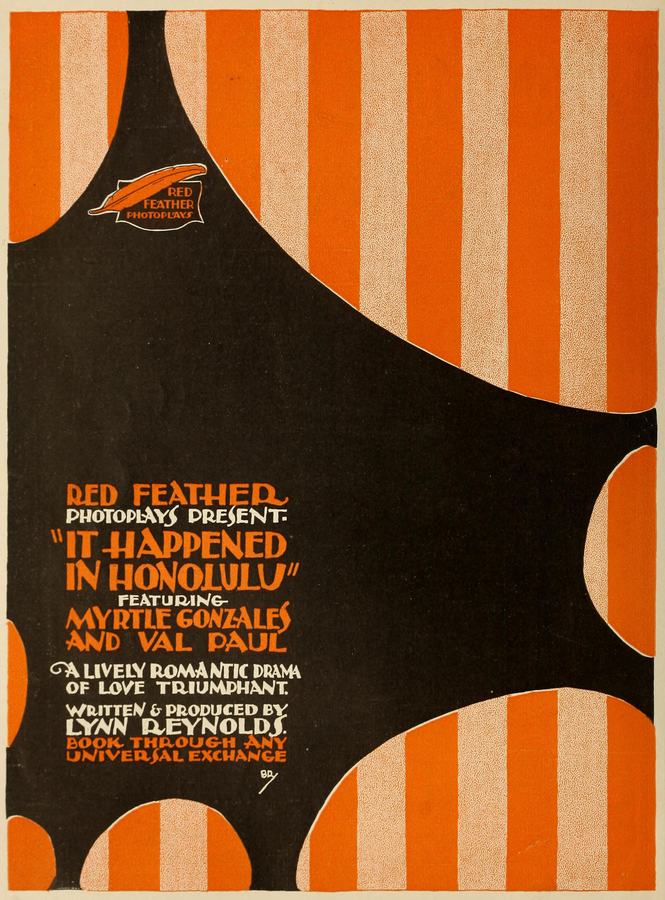
In the pantheon of early silent cinema, few films manage to oscillate between the mundane realities of the wholesale fish trade and the high-octane drama of a Hawaiian prison break with the peculiar grace found in It Happened in Honolulu. Directed by the prolific Lynn Reynolds, this 1916 production is a quintessential artifact of its time, capturing a transitional moment in American storytelling where the Victorian sensibilities of social hierarchy were beginning to clash with the burgeoning 'happy-go-lucky' spirit of the 20th-century youth.
At the heart of the narrative is Larry Crane, portrayed with a charmingly vacuous enthusiasm by Arthur Albertson. Larry is a character who embodies the 'slacker' archetype long before the term entered the cultural lexicon. His refusal to engage with the 'Crane and Son' fish business until the sun has reached its zenith is not merely a plot point; it is a rejection of the Protestant work ethic that defined his father’s generation. This intergenerational friction provides the film's initial momentum, grounding the subsequent melodrama in a relatable, albeit heightened, domestic reality.
Contrasting Larry’s aimless charm is the Wyland household, a microcosm of social anxiety. Mrs. Wyland, played with formidable severity by Lule Warrenton, is the architect of the family’s social trajectory. Her disdain for Larry’s 'piscatorial' pedigree in favor of the dubious nobility of Lord Percy Weatherfield (Bertram Grassby) serves as the primary obstacle. It is a classic trope: the authentic American merchant versus the parasitic European aristocrat. Unlike the grand historical stakes seen in films like Civilization, the conflict here is intimate, played out over tea sets and mountain retreats.
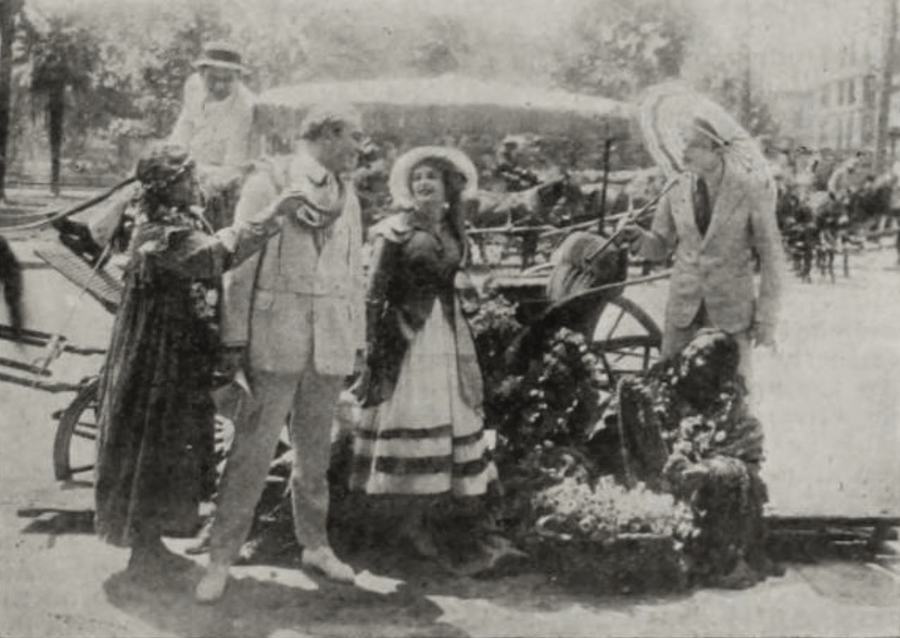
One of the most intriguing elements of It Happened in Honolulu is its meta-textual use of photography. When young Bobby Wyland—the quintessential 'enfant terrible'—captures Larry and Mabel in a 'lover-like embrace' with his camera, the device acts as a primitive surveillance tool. This plot point echoes the thematic preoccupations of The Children in the House, where the innocence of youth is weaponized against the indiscretions of adults. Bobby’s revenge, born of a firecracker-related reprimand, sets the entire second act in motion, forcing the characters out of their comfortable California milieu and toward the volcanic shores of Oahu.
The transition from the 'mountain home' to the ocean liner introduces a sense of scale that was ambitious for 1916. While it lacks the sheer theological grandiosity of The Photo-Drama of Creation, the film utilizes the voyage as a space for moral testing. On the high seas, the true nature of Lord Percy is revealed—not as a gentleman, but as a mercenary willing to trade his hand in marriage for a $50,000 dowry. This transactional view of romance stands in stark contrast to Larry’s impulsive, if somewhat reckless, devotion.
While the primary plot follows the romantic pursuit, the secondary narrative involving Clarence Velie (Fred Church) provides the necessary tension to elevate the film from a mere comedy to a crime melodrama. Velie is the shadow to Larry’s light; where Larry is transparently lazy, Velie is opaquely industrious. His manipulation of the ledgers—altering a $5,000 withdrawal to $15,000—is a masterclass in silent film villainy. It is a betrayal of trust that mirrors the darker themes of financial ruin explored in The Gods of Fate.
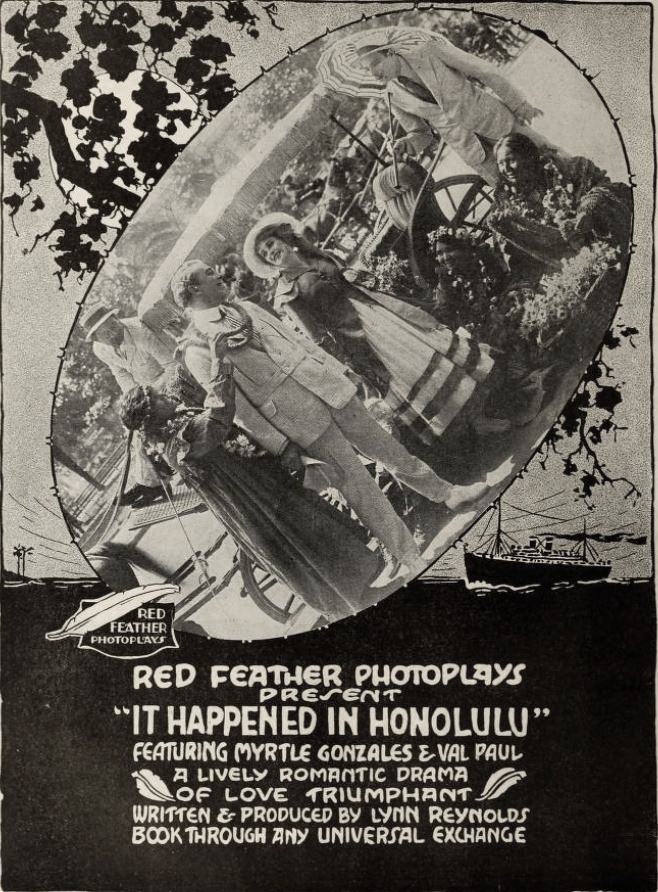
This subplot is crucial because it justifies Larry’s eventual incarceration. Without the 'forged check' and the missing $10,000, Larry’s arrest in Honolulu would be a mere misunderstanding. With it, his plight takes on a genuine desperation. The introduction of Detective Boggs adds a procedural element to the film, transforming the tropical paradise into a landscape of pursuit and evasion. The cinematography during these sequences captures the lushness of the Hawaiian setting, providing a visual feast that would have been incredibly evocative for audiences in the mainland United States.
The film’s resolution is inextricably linked to American iconography. The choice of the Fourth of July as the date for both the intended wedding and the eventual prison break is no coincidence. It serves as a thematic anchor, symbolizing Larry’s declaration of independence from both his father’s overbearing expectations and the literal shackles of the Hawaiian legal system.
The sequence in the 'native prison' is particularly striking. Larry’s refusal to work and his subsequent brawl with the guards demonstrate a physical prowess that his earlier 'fish market' persona lacked. The use of dynamite to facilitate an escape is a pyrotechnic flourish that provides the film with its most visceral thrills. It is a moment of pure cinematic catharsis, reminiscent of the gritty survivalism found in Pierre of the Plains.
However, the film avoids becoming a simple 'outlaw' narrative. The timely arrival of the cablegram from Larry’s father, clearing his name and exposing Velie’s perfidy, restores the social order. The 'happy honeymoon' is not just a romantic conclusion but a validation of Larry’s inherent goodness. He has proven that his 'happy-go-lucky' nature is not a lack of character, but a different kind of strength—one that can withstand false accusations and survive the rigors of a Pacific dungeon.
Myrtle Gonzalez, as Mabel, delivers a performance that is both spirited and nuanced. She is not a passive damsel; her telegram to Larry is the catalyst for his journey. Her chemistry with Albertson provides the film’s emotional core, making the audience root for their union against the machinations of the formidable Mrs. Wyland. Gonzalez, often cited as one of the first Latin American stars in Hollywood, brings a luminous quality to the screen that is unfortunately lost in many other surviving fragments of the era.
Lynn Reynolds’ direction is remarkably fluid for 1916. He manages a complex ensemble cast and multiple intersecting plot lines without losing the narrative thread. His ability to balance the farcical elements of the firecracker prank with the genuine suspense of the embezzlement trial is a testament to his versatility. While the film may not reach the heights of social commentary found in The Sex Lure or the atmospheric dread of The Cossack Whip, it possesses a unique charm that is entirely its own.
Viewing It Happened in Honolulu through a modern lens, one cannot help but notice the colonial undertones of the 'native prison' and the portrayal of Hawaii as a place where American law and order are both tested and ultimately reaffirmed. Yet, within the context of its release, the film was a sophisticated piece of entertainment that offered audiences a mixture of travelogue, romance, and thriller. It stands alongside other 1915-1916 releases like The Purple Lady or Suzanne as a work that helped refine the grammar of the feature-length narrative.
The film’s obsession with class—the fish merchant vs. the Lord—reflects the anxieties of a nation grappling with its own identity. Larry Crane is the quintessential American hero of the silent era: flawed, perhaps a bit lazy, but ultimately honest and capable of great action when pushed to the brink. His victory is not just over the villainous Clarence Velie, but over the rigid social structures that sought to define him by his trade rather than his heart.
Final Verdict: It Happened in Honolulu is a vibrant, multi-faceted gem of the silent era. It offers more than just historical curiosity; it provides a genuine narrative arc that satisfies through its blend of humor, heart, and high-stakes adventure. For those interested in the evolution of the American romantic comedy-drama, it is an essential viewing experience that proves, even in 1916, that love—and a bit of dynamite—can conquer all.
IMDb 4.6
1924
Community
Log in to comment.