DbcultAccessing Vault...
Cult Review
Senior Film Conservator
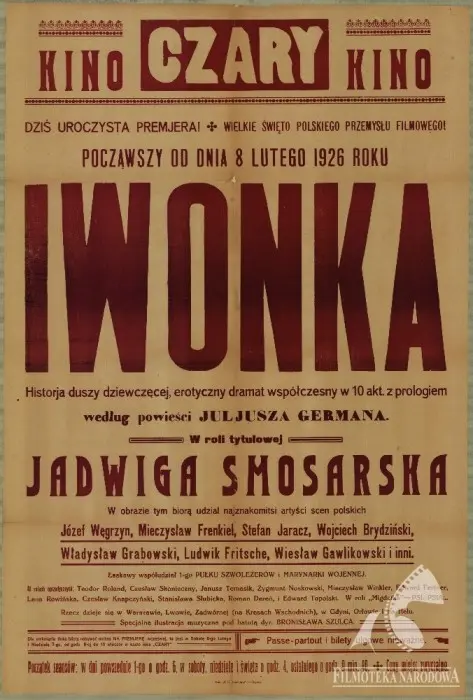
Set against the backdrop of Poland’s tumultuous transition from feudalism to modernity, Iwonka is a cinematic odyssey that captures the essence of a bygone era while posing profound questions about human nature and societal transformation. Directed by Juliusz German and Edward Puchalski, the film is a testament to the power of storytelling and the enduring relevance of historical narratives.
The central character, Wojciech Brydzinski, played by the same eponymous actor, is a complex figure whose actions are informed by both personal desires and the exigencies of his social standing. His relationship with Janina Romanówna, portrayed by Janina Romanówna herself, forms the emotional core of the film, exploring the intricate dynamics of love, loyalty, and the conflicting pressures of duty and freedom.
As the narrative progresses, the film seamlessly weaves historical events into the personal lives of its characters, highlighting the profound impact of external forces on individual destinies. The performances are nuanced and deeply affecting, with each actor bringing a unique dimension to their role. Notable among them are Józef Kotarbinski and Maria Modzelewska, whose on-screen chemistry adds a layer of authenticity and emotional resonance to the story.
The cinematography is nothing short of breathtaking, capturing the grandeur of Polish estates and the stark contrasts between opulent interiors and the harsh realities of war. The use of light and shadow, particularly during the pivotal scenes of conflict, creates a visual language that mirrors the emotional turmoil of the characters. The score, composed by an unnamed musician, adds a poignant layer to the narrative, underscoring the film’s themes of loss, hope, and resilience.

What sets Iwonka apart is its ability to balance historical accuracy with personal insight. The film expertly navigates the complexities of its time period, offering viewers a window into a world that is both foreign and relatable. It challenges the viewer to reflect on the nature of freedom, the responsibilities of power, and the enduring human quest for connection and purpose.
Comparatively, Iwonka stands toe-to-toe with other significant historical dramas such as The Writing on the Wall and Ashes of Hope. While these films also explore the social and political upheaval of their respective eras, Iwonka’s focus on individual experience and emotional depth gives it a distinctive edge. It is a film that demands repeated viewings, each one revealing new layers of meaning and emotion.
The social commentary of Iwonka is as relevant today as it was when the film was released, making it a must-watch for anyone interested in the intersection of historical narrative and human drama. It is a film that not only entertains but also educates, offering a poignant reminder of the enduring human condition and the ways in which we navigate the challenges of our times.
For those looking to explore more of this genre, consider delving into films like My First Jury, Nattens datter II, or The Golem. Each offers a unique perspective on the themes of social change, individual identity, and the human spirit’s capacity for resilience.
In conclusion, Iwonka is a film that transcends its historical setting, offering a rich and nuanced exploration of the human experience. It is a cinematic achievement that deserves widespread recognition and acclaim, not just for its historical significance but for its profound emotional impact and artistic merit.

IMDb 8.1
1935
Community
Log in to comment.