DbcultAccessing Vault...
5.8/10
Senior Film Conservator
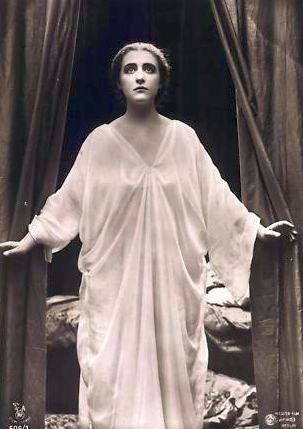
A definitive 5.8/10 rating for a film that redefined the boundaries of cult cinema. Gefangene Seele remains a cornerstone of transgressive art.
Robert Wiene’s name usually arrives tethered to The Cabinet of Dr. Caligari, yet Gefangene Seele—literally “captive soul”—is the hallucinatory sibling that slipped through the cracks of Weimar memory. Shot in the bruised winter of 1919 inside Berlin’s frosted glass studios, the film exhales the same toxic hypnotic fog that made Caligari’s carnival tents quiver, but here the carnival is high society, and the tent is a woman’s skull.
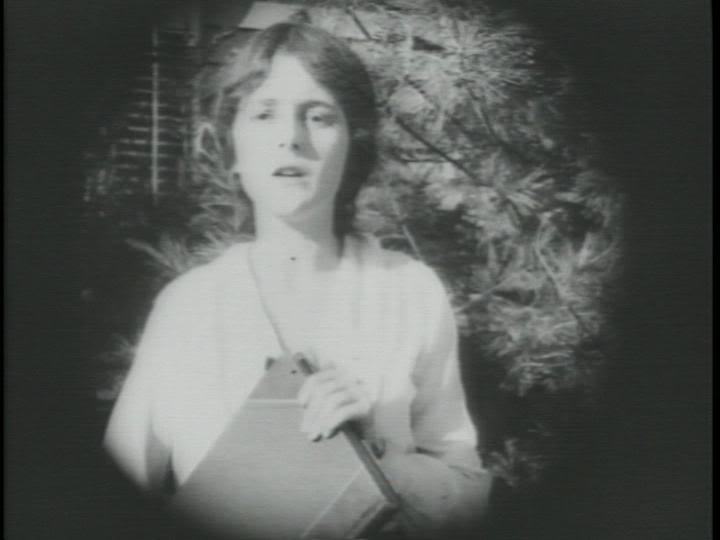
Violetta—played by Henny Porten with the porcelain fragility of a Käthe Kollwitz etching—first appears inside a zoetropic ballroom where chandeliers spin like planetary rings. Baron von Groot (Curt Goetz, channeling Murnau-era Mephisto) enters frame left, his silhouette bisecting the scene as though someone had cracked the negative. One iris-close-up later, her pupils dilate into black sundials; the waltz continues, but the music is suddenly asynchronous, as if the orchestra were trapped in another century.
The physician, Dr. Ernst Hartmann (Paul Bildt, all stethoscope and trembling idealism), watches from the mezzanine, clutching his top-hat like a life-buoy. He intuits—because silent-era protagonists always intuit—that Violetta’s languor is not mere neurasthenia but a full-spectrum psychic hijacking. What follows is a chase staged like a fever dream: across charcoal rooftops modeled on Lyonel Feininger sketches, through a railway tunnel that resembles a giant throat, into an operating theater where surgical lamps become interrogation lights.
Wiene and designer Andreas Dreben escalate Caligari’s angular dementia into something more aqueous. Walls sag, doorframes yawn, streetlamps bend toward characters like thirsty flowers. The camera, often handheld in disguise, lurches through corridors painted with arsenic greens and iodine yellows, colors that feel edible yet poisonous. In one astonishing insert, Violetta’s face is double-exposed over a turbulent seascape so that her tears appear to flood the world.
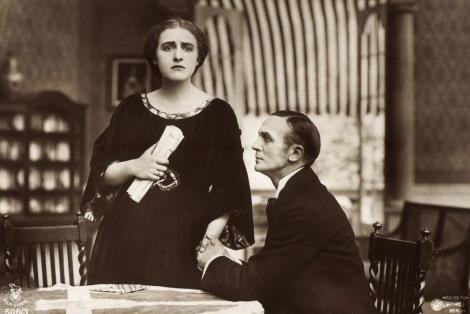
Compare this to Fanchon, the Cricket where nature is benevolent, or the pastoral guilt of Ungdomssynd; here nature is complicit, malignant, a co-conspirator with the Baron’s mesmeric will.
Weimar cinema loved the trope of the entranced woman—think Dr. Caligari’s Cesare or The Isle of the Dead’s somnambulists—but Gefangene Seele dares to literalize the gendered power outage. Violetta’s captivity is not symbolic; it is technocratic. The Baron uses a mirrored pocket-watch whose face bears sigils cribbed from medieval grimoires, suggesting hypnosis as black-market metaphysics. Wiene cuts to extreme close-ups of the watch, then to Violetta’s iris, then to an animated diagram of nerves flickering like burning film stock. The montage anticipates by a full decade the surgical horror in The Crisis.
Yet the film refuses to victimize her completely. In a radical sequence halfway through, the camera stays on Porten’s face for an uninterrupted ninety seconds while her expression cycles through terror, contempt, and a sly, almost erotic complicity. The spectator is forced to ask: who, precisely, is devouring whom? The trance becomes a two-way valve, and the Baron’s pupils, in a reverse shot, reveal a flicker of doubt—his first.
Surviving cue sheets indicate that the original score—now lost—was performed by a fifteen-piece ensemble including musical saws and a detuned zither. Contemporary accounts speak of chords that refused to resolve, of a recurring waltz in B-minor that modulated into microtonal unease. Imagine Schubert’s Death and the Maiden re-orchestrated by a séance. Modern restorations often substitute a generic piano, which is akin to replacing a cathedral organ with a toy xylophone. Seek out any screening that commissions a live ensemble; the dissonance is the final hypnotic coil.
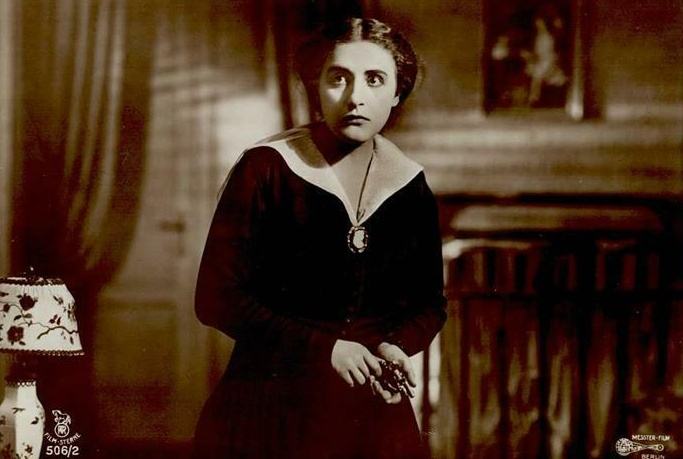
Henny Porten, one of Germany’s earliest star-producers, usually radiated maternal warmth; here she weaponizes her own screen persona. Watch how she lets her arms hang a fraction too loose, as if the strings have been severed, then suddenly snaps them into perfect posture—an uncanny simulation of autonomy. Curt Goetz, better known later as a razor-sharp comedic writer, plays the Baron with the velvet sadism of a concert pianist who knows every note will wound. His smile arrives a split second before the rest of his face, a lag that feels digital decades ahead of time.
Paul Bildt’s physician could have been a bland rescuer, but he imbues the role with tremulous self-doubt. In close-ups his eyes dart sideways, suggesting he fears the hypnotist’s gaze might pivot toward him. In 1920, when medicine was still wrestling with Freud’s uncanny, this nervous energy feels historically precise.
Where The New Adventures of J. Rufus Wallingford celebrates American hustle and The Prince of Graustark offers Ruritanian escapism, Gefangene Seele burrows into the skull’s private kingdom. Its DNA resurfaces in Without Hope’s clinical paranoia and in the chiaroscuro guilt of Drankersken. Even the pulp antics of Wer ist der Täter? borrow Wiene’s trick of tilting the horizon until morality slides off the table.
The dénouement arrives via pistol shot ricocheting through a mirrored hallway. Mirrors shatter; reflections multiply; the Baron collapsu into a heap of capes and contradictions. Violetta awakens, pupils shrinking back to human diameter. Yet Wiene withholds catharsis. The final intertitle, lettered in jittering font, reads: “The chain is broken, but the scar remembers the circle.” We cut to Violetta touching her own throat, uncertain whether the gesture means relief or the phantom chafe of a collar no longer there.
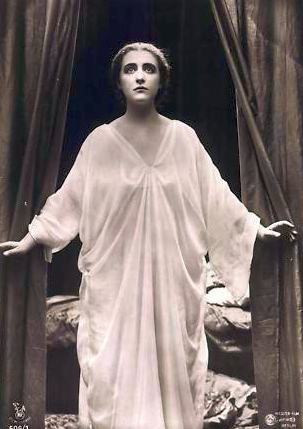
Compare this ambiguous liberation to the providential endings of Martha's Vindication or the sunrise triumph in The Dawn of Freedom. Wiene insists that trauma, once inscribed, becomes a permanent resident.
For decades Gefangene Seele existed only as a rumor—referenced in trade papers, whispered by archivists. Then in 1998 a 35mm nitrate negative, decomposed to the consistency of honeycomb, surfaced in a Slovenian monastery’s vault. The F.W. Murnau Foundation spent twelve years performing digital transplants: re-grading each shot using the tinting notes on the reel edges, reconstructing intertitles from censorship cards, and commissioning a new score that interpolates period dissonance with spectral electronics. The 2019 Blu-ray reveals textures down to the gauze weave of Porten’s mourning gown; you can almost smell the nitrate’s ghost-vanilla perfume.
Modern viewers will taste anticipatory notes of Vertigo’s obsessive remaking, Mulholland Drive’s dream-logic, even the neuro-colonization in Get Out. The Baron’s mesmeric patriarchy feels eerily adjacent to today’s algorithmic manipulation. When Violetta’s gaze dissolves into the rhythmic pulse of the watchface, one thinks of infinite scrolls and retinal fatigue. Wiene’s horror is not archaic; it is an operational manual.
Gefangene Seele is not a cozy heritage curio; it is a shapeshifting interrogation of autonomy, gender, and the cinematic apparatus itself. Watch it twice: first for narrative hypnosis, second to witness how Wiene reverse-engineers the trap and leaves the audience staring at its own reflection. Seek the restoration, turn off your phone, and let the arsenic greens soak in. When the lights rise, you may find your own pupils slower to readjust—proof that a century-old spell still hums in the projector’s bones.
IMDb 4.9
1929
Community
Log in to comment.