DbcultAccessing Vault...
Cult Review
Senior Film Conservator
A Review by [Your Name]
Decoding the Masquerade of Identity in Lewis Allen Browne’s Silent Masterpiece
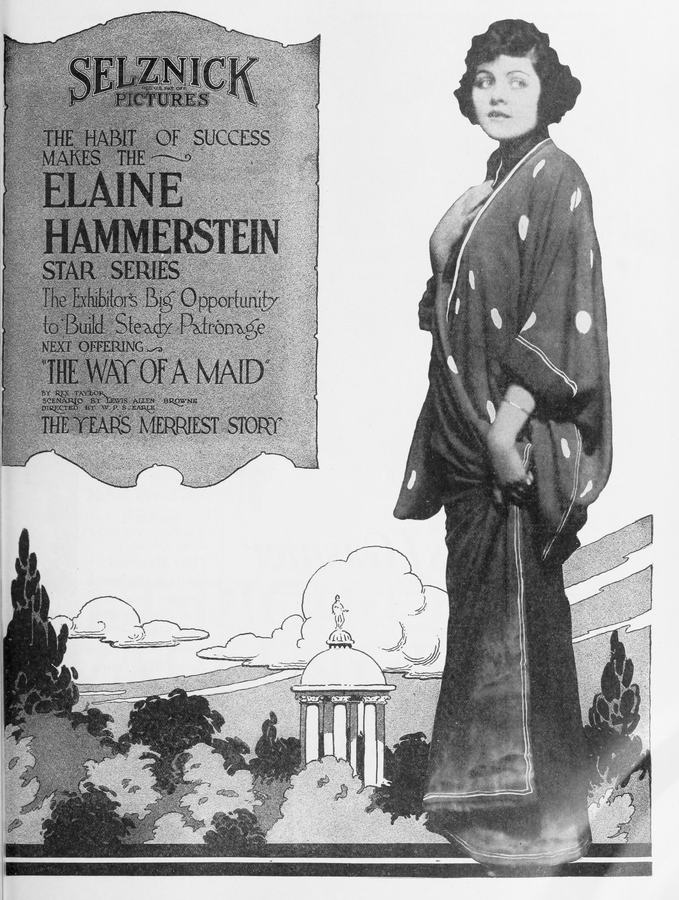
In an age when Hollywood’s golden era was still a gleam in the eye of future historians, The Way of a Maid emerged as a sly, subversive gem that defied the didacticism of its contemporaries. Directed by Lewis Allen Browne and scripted by the ever-reliable Rex Taylor, this 1926 silent film is less a mere melodrama and more a psychological study of class, agency, and the performative nature of identity. The narrative, anchored by Elaine Hammerstein’s luminous portrayal of Naida Castleton, is a masterclass in visual storytelling, using the absence of sound to amplify the tension of unspoken truths.
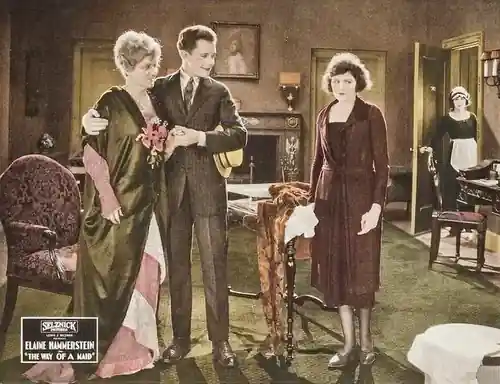
Naida’s transformation from a society belle to a housemaid is not merely a plot device but a metaphor for the existential crisis of the early 20th-century woman. Her initial masquerade is born of necessity—financial ruin forces her to sell her city residence and lease her summer home. Yet, as she assumes the role of secretary to Thomas Lawlor (George Fawcett), the film becomes a study in contrasts: the opulence of Naida’s past life clashing with the austerity of her present, the rigid expectations of her class versus the fluidity of her assumed identity.
The film’s genius lies in its use of space as a narrative tool. The contrast between Naida’s gilded drawing rooms and the austere Lawlor household is rendered in stark, chiaroscuro lighting, a visual echo of her internal duality. In one particularly striking sequence, Naida serves cocktails to her old friends in the same room where Mrs. Lawlor (Helen Lindroth) arrives unannounced, her presence a silent rebuke to the social order. This scene, devoid of dialogue, speaks volumes through the interplay of glances, gestures, and the oppressive stillness of the decor.
The emotional core of the film hinges on the relationship between Naida and Tom Lawlor. Arthur Housman’s direction of Fawcett’s performance is nuanced; Tom’s initial infatuation with the “maid” is tinged with a naivety that borders on condescension, yet evolves into genuine affection as he begins to see the woman behind the role. The proposal scene, a masterstroke of silent-era storytelling, relies on the subtlest of cues—a trembling hand, averted eyes, the faintest tremor in a smile—to convey the weight of Naida’s impending revelation.
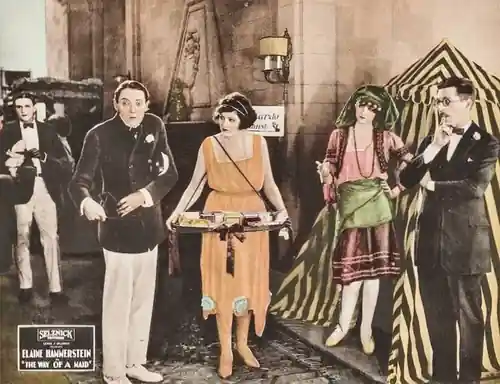
While the film’s plot may seem derivative of Victorian-era farces, its treatment of class is refreshingly modern. Unlike the didactic morality tales of the time, The Way of a Maid refuses to vilify the lower classes or sanctify the aristocracy. Instead, it posits identity as a performance, a concept that would later permeate the works of directors like John Ford and Jean Renoir. The film’s final act, where Naida’s true identity is unveiled not as a climactic confession but as an acceptance of self, feels less like a resolution and more like a philosophical epiphany.
Cinematographically, the film is a triumph. The use of mirrors and reflective surfaces is particularly noteworthy; Naida is often framed behind glass, her image fractured yet whole, a visual metaphor for the duality of her existence. The score, though absent in silent films, is implicitly felt in the pacing of the editing and the meticulous blocking of scenes. Even the costumes, designed with an eye for period detail, serve as narrative shorthand—Naida’s transition from flowing gowns to utilitarian aprons is a visual cue as potent as any spoken line.
Comparisons to contemporaneous films like En Skuespillers Kærlighed are inevitable, yet The Way of a Maid distinguishes itself through its restraint. Where other films of the era leaned into melodrama, Browne and Taylor opt for a more introspective tone, letting the audience infer the emotional undercurrents. This approach, while riskier, results in a film that feels less like a story and more like a meditation on the human condition.
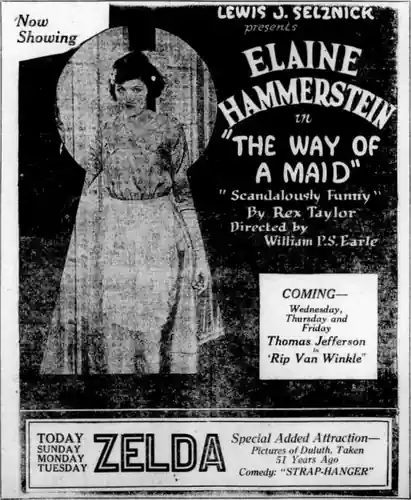
The supporting cast, notably Helen Lindroth as the scheming Mrs. Lawlor, elevates the material beyond its schematic premise. Lindroth’s performance is a masterclass in understated menace, her every glance a calculated threat to Naida’s fragile façade. Arthur Housman’s direction of the ensemble is equally commendable, ensuring that even minor characters contribute to the film’s thematic cohesion.
Technically, the film is a marvel of early cinema. The use of lateral tracking shots, particularly in the shopping sequence where Naida is discovered by her friends, is a precursor to the more dynamic camera movements of the 1930s. The film’s editing, though rudimentary by modern standards, is precise in its construction of tension, particularly in the build-up to Tom’s proposal.
Despite its strengths, The Way of a Maid is not without its flaws. The pacing in the second act occasionally falters, with some scenes lingering too long on the emotional beats, risking a lull in momentum. Additionally, the resolution, while thematically consistent, may feel unsatisfying to modern audiences accustomed to more explicit denouements. Yet, these are minor quibbles in the context of a film that remains a testament to the artistry of the silent era.
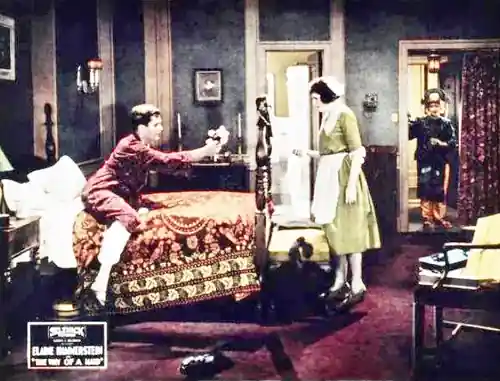
In the pantheon of early Hollywood, The Way of a Maid occupies a unique space. It is neither a slapstick comedy nor a tear-jerking melodrama but a sophisticated exploration of identity, class, and the masks we wear. Its legacy lies not in its plot but in its ability to evoke the same existential questions that continue to resonate in cinema today: What is authenticity in a world of performance? Can love transcend the roles we assume? And, perhaps most poignantly, can we ever truly escape the shadows of our past?
For those seeking a deeper appreciation of the film, a comparative study with Hamlet (1917) offers intriguing insights. While both films grapple with identity and deception, The Way of a Maid approaches its themes with a lighter touch, using the trappings of romance to explore the same existential dilemmas that haunt Hamlet’s soliloquies. The contrast between the two films is a microcosm of cinema’s evolution—from the brooding introspection of early drama to the nuanced character studies of the silent era.
Ultimately, The Way of a Maid is a film that rewards patience and intellectual engagement. Its pleasures are not immediate but accrue with each viewing, revealing layers of meaning that elude the first-time spectator. In an age where cinema often prioritizes spectacle over substance, this film stands as a reminder that the most enduring stories are those that speak to the quiet, unspoken truths of the human heart.
IMDb —
1924
Community
Log in to comment.