DbcultAccessing Vault...
Cult Review
Senior Film Conservator
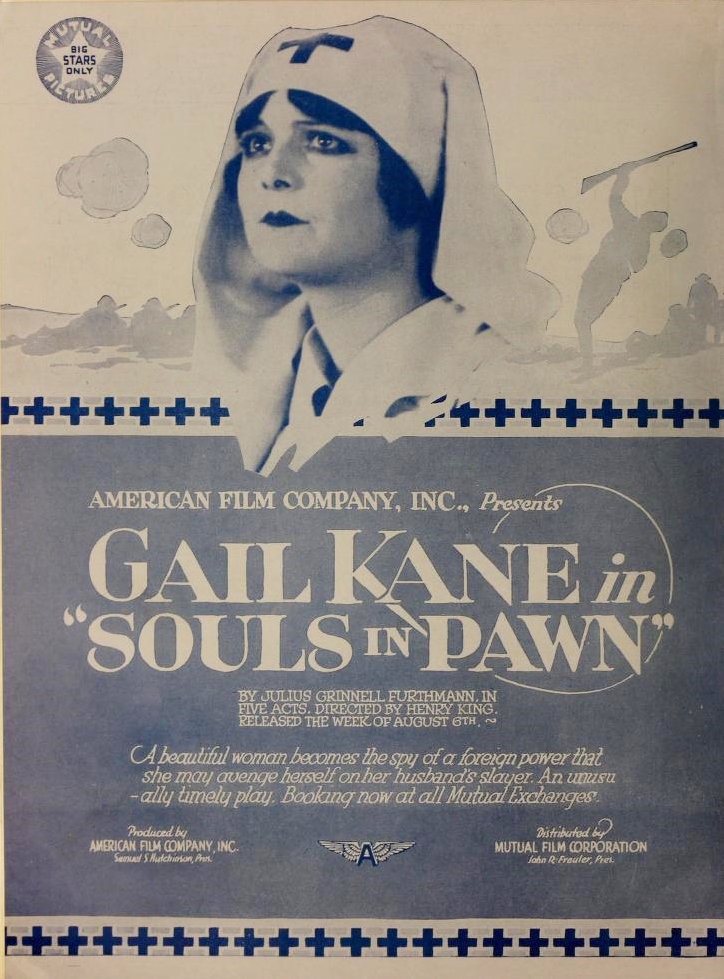
Stepping back into the cinematic landscape of 1917, one encounters a fascinating tapestry of burgeoning narrative sophistication, where the silent screen, far from being mute, articulated profound human dramas through gesture, expression, and meticulously crafted intertitles. Amidst this vibrant era, Souls in Pawn emerges as a strikingly ambitious and emotionally resonant work, a testament to the period's capacity for intricate storytelling. Directed with a keen eye for suspense and psychological depth, this film transcends its historical context to deliver a compelling narrative that intertwines the high stakes of wartime espionage with the deeply personal anguish of love, betrayal, and vengeance. It’s a compelling journey into the moral ambiguities of conflict, showcasing how personal destinies become inextricably entangled with global cataclysms. The film doesn't merely present a plot; it unfurls a complex ethical dilemma, forcing its characters, and by extension, its audience, to grapple with the blurred lines between right and wrong, duty and desire, truth and deception.
At its core, Souls in Pawn is a masterful exercise in narrative layering, a spy thriller that defies simplistic categorization. The initial premise is deceptively straightforward: Prince Kondemarck, a senior figure within the German secret service operating in the shadowy streets of Paris, receives a directive of paramount importance. He must enlist the most astute and captivating woman available to serve his nation's interests. This isn't a mere recruitment drive; it’s a strategic maneuver demanding both charm and cunning, a delicate balance that speaks volumes about the perceived power of female operatives in the clandestine world of early 20th-century espionage. The screenplay, penned by the prolific Jules Furthman, immediately establishes a tone of intrigue and high stakes, setting the stage for a narrative that promises more than just surface-level action.
Kondemarck's search leads him to Liane Dore, a figure draped in both beauty and profound sorrow. Liane is the recent widow of Sebastian Dore, whose untimely and mysterious demise has left her consumed by a singular, burning desire: vengeance. Her grief is not passive; it is an active, driving force, shaping her every decision. When Kondemarck approaches her, his proposition is a Faustian bargain. Liane agrees to lend her considerable talents to the German cause, but not out of patriotism or mercenary ambition. Her agreement is conditional, predicated on Kondemarck's solemn vow to reveal the identity of her husband's killer within a year. This narrative hook is extraordinarily potent, immediately establishing an undercurrent of personal tragedy and moral compromise beneath the veneer of international espionage. Gail Kane, portraying Liane Dore, imbues the character with a compelling blend of fragility and steely resolve. Her expressive eyes and controlled gestures convey the depth of Liane's pain and the unwavering commitment to her oath, making her a protagonist whose motivations are both understandable and deeply sympathetic.
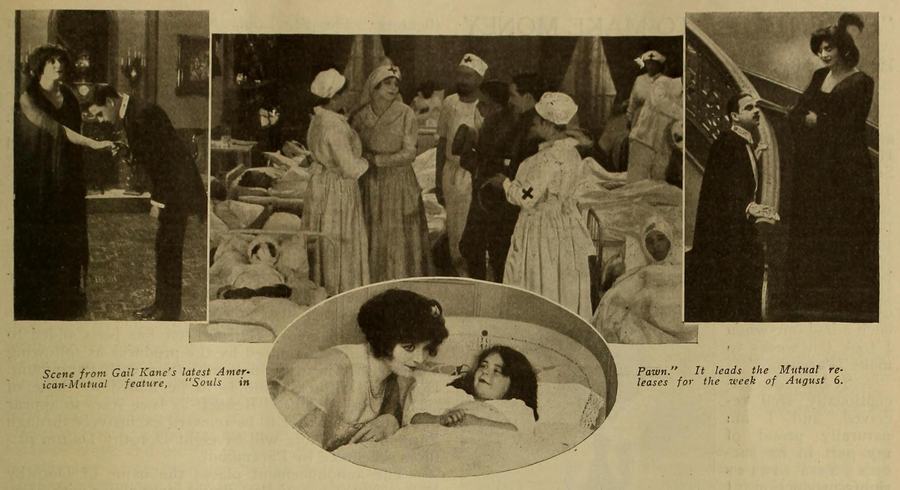
The true brilliance of Furthman’s script, however, lies in its immediate introduction of a devastating dramatic irony. Unknown to Liane, the very man who promises to unmask her husband's murderer is, in fact, the one responsible for his death. Prince Kondemarck’s actions, however, are not born of malice or cold-blooded calculation against Sebastian Dore. Instead, they are the tragic consequence of a deeply personal betrayal: Dore, masquerading as a bachelor, had cruelly deceived and ultimately betrayed Kondemarck's own sister. This revelation immediately elevates the narrative beyond a simple spy thriller into a complex Greek tragedy, where fate and familial honor collide with devastating force. Das Geheimschloss, another film from a similar period dealing with secrets and hidden identities, might hint at this kind of intricate plotting, but Souls in Pawn takes it to a deeply personal, almost Shakespearean level of tragic entanglement. Douglas MacLean, as Prince Kondemarck, carries the weight of this secret with remarkable subtlety. His performance is a masterclass in restrained anxiety and internal conflict, portraying a man caught between his duty, his personal tragedy, and his burgeoning feelings for the woman he has inadvertently wronged.
As Liane and Kondemarck embark upon their clandestine activities, working in concert within the treacherous world of wartime intelligence, an unforeseen and intensely powerful connection begins to form between them. Their association, initially a cold, transactional arrangement rooted in deception and a hidden agenda, gradually evolves into a passionate romance. This development is not merely a convenient plot device; it is the beating heart of the film’s emotional resonance. The silent screen, with its reliance on close-ups, lingering gazes, and nuanced body language, is perfectly suited to conveying the unspoken language of nascent love. Kane and MacLean's chemistry is palpable, their performances eloquently illustrating the magnetic pull between two individuals who, despite their conflicting loyalties and the dark secrets that separate them, find solace and understanding in each other. This unlikely romance, blooming amidst the backdrop of international conflict and personal vendetta, highlights the profound human need for connection, even in the most perilous circumstances. The theme of forbidden or complicated love is a perennial favorite, seen in films like A Woman's Triumph or Where Love Leads, but here it is infused with a unique layer of moral complexity and imminent danger.
The narrative takes a dramatic turn with the full outbreak of war, escalating the stakes for all involved. Liane, demonstrating a profound sense of humanitarianism that transcends national allegiances, transforms her home into a sanctuary for wounded French soldiers. This act of compassion, however noble, inadvertently exposes her to new dangers. It is during this period that Baron Arnorld von Pollnitz, another German spy driven by a deep-seated personal animosity towards Prince Kondemarck, enters the fray. Pollnitz, fueled by a desire for revenge against Kondemarck, sees an opportunity to strike by exposing Liane. His denunciation of Liane as a spy is a calculated act of malice, designed not only to harm her but to inflict maximum damage upon his rival. This moment underscores the brutal realities of wartime espionage, where personal vendettas can be disguised as patriotic duty, and innocent lives become pawns in a larger, more cynical game. Frank Rickert's portrayal of Pollnitz, though perhaps less central, effectively conveys the character's insidious nature, adding another layer of treachery to the already complex plot.
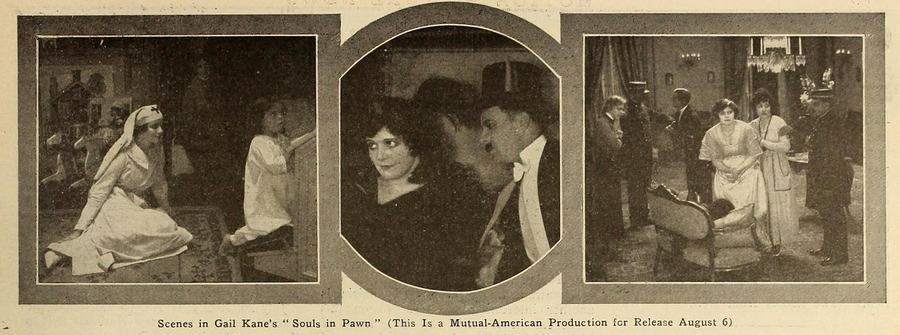
Liane's arrest and subsequent sentencing to death represent the narrative's emotional nadir, a moment of profound despair and seemingly inescapable doom. The tension here is almost unbearable, a testament to the film's effective pacing and the audience's investment in Liane's fate. It is, of course, Prince Kondemarck who intervenes, orchestrating a daring rescue that highlights his deep affection and commitment to Liane, even at immense personal risk. This act of heroism, however, is immediately followed by the most devastating revelation of all: Liane discovers that her rescuer, the man she has come to love, is also the man who killed her husband. The weight of this truth is staggering, shattering her world and forcing a brutal confrontation with her deepest convictions.
This pivotal moment is where Gail Kane's performance truly shines, as she navigates the tumultuous emotional landscape of betrayal, love, and the lingering desire for vengeance. Liane stands on the precipice of denouncing Kondemarck, torn between her oath to her late husband and the profound feelings she has developed for his killer. The silent screen excels at depicting such internal struggles, relying on facial expressions and subtle shifts in posture to convey the character's profound moral agony. Just as she is about to make a decision that would seal both their fates, Kondemarck produces a series of letters. These are not just any letters; they are irrefutable proof of Sebastian Dore's duplicity, revealing his calculated betrayal of Kondemarck's sister and his true, ignoble character. This narrative device is a masterstroke, serving not only to vindicate Kondemarck's actions but also to fundamentally alter Liane's perception of her deceased husband. Her quest for vengeance, once pure and righteous, is suddenly exposed as having been built on a foundation of lies and a distorted image of the man she mourned.
The impact of these letters is seismic. Liane's idealized memory of Sebastian crumbles, replaced by a harsh reality that forces her to re-evaluate everything. Her desire for vengeance dissipates, replaced by a complex mix of disillusionment and a renewed understanding of Kondemarck’s actions. The film deftly handles this shift, portraying Liane's internal turmoil with sensitivity and psychological realism. In a dramatic climax, with their intertwined fates now irrevocably sealed by shared secrets and a love that has defied impossible odds, Liane and Kondemarck flee together aboard his yacht, seeking escape from the relentless pursuit of justice and the unforgiving gaze of a world at war. This ending, while offering a semblance of hope, is not without its lingering shadows, suggesting that their journey toward true peace and absolution will be a long and arduous one.
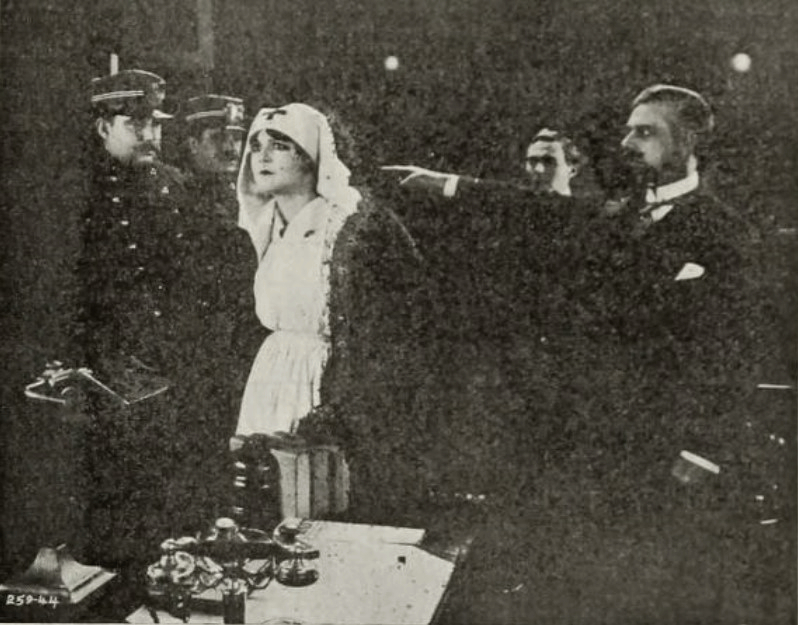
The enduring power of Souls in Pawn lies not only in its compelling narrative but also in the exceptional performances of its lead actors and the skillful direction that binds it all together. Gail Kane, as Liane Dore, delivers a tour-de-force performance, embodying the character's journey from grief-stricken widow to determined spy, from devoted lover to a woman grappling with devastating truths. Her ability to convey such a wide spectrum of emotions—sorrow, anger, love, confusion, and ultimate acceptance—without uttering a single word is a testament to her talent and the expressive potential of silent film acting. She transforms Liane from a mere plot device into a fully realized, deeply sympathetic human being. Her portrayal resonates with a strength often associated with early cinema's powerful female leads, reminiscent of the emotional depth found in performances from films like A Girl of Yesterday.
Douglas MacLean, as Prince Kondemarck, provides the perfect foil. His performance is marked by a quiet intensity, projecting a man burdened by immense responsibility and a terrible secret. MacLean masterfully conveys Kondemarck's internal struggle, his sense of duty conflicting with his burgeoning love, and the constant threat of exposure. His portrayal is nuanced, avoiding caricature and instead presenting a complex individual caught in an impossible situation. The supporting cast, including Frank Rickert as the vengeful Baron Arnorld von Pollnitz and Edward Peil Sr. in his role, contribute effectively to the film's atmosphere of intrigue and danger, though the film undeniably belongs to its two leads.
Jules Furthman's screenplay is a marvel of intricate plotting and character development. To weave such a complex web of espionage, personal vendetta, and romantic entanglement, all within the constraints of silent film narrative, speaks volumes about his skill as a writer. The pacing is deliberate, allowing for the slow burn of emotional development and the gradual unraveling of secrets, while also punctuated by moments of intense action and dramatic revelation. The use of intertitles is artful, providing necessary exposition without overwhelming the visual storytelling, a balance that was crucial to the success of silent features. The direction, while not explicitly attributed in the provided details, clearly understood how to leverage the visual medium, using composition, lighting, and editing to build tension and convey emotional states. The film’s ability to sustain suspense and emotional investment over its runtime is a testament to its overall cinematic craftsmanship. Comparisons to other intricate silent mysteries like The Mystery of the Yellow Room are apt, though Souls in Pawn infuses its mystery with a deeper, more tragic romantic core.
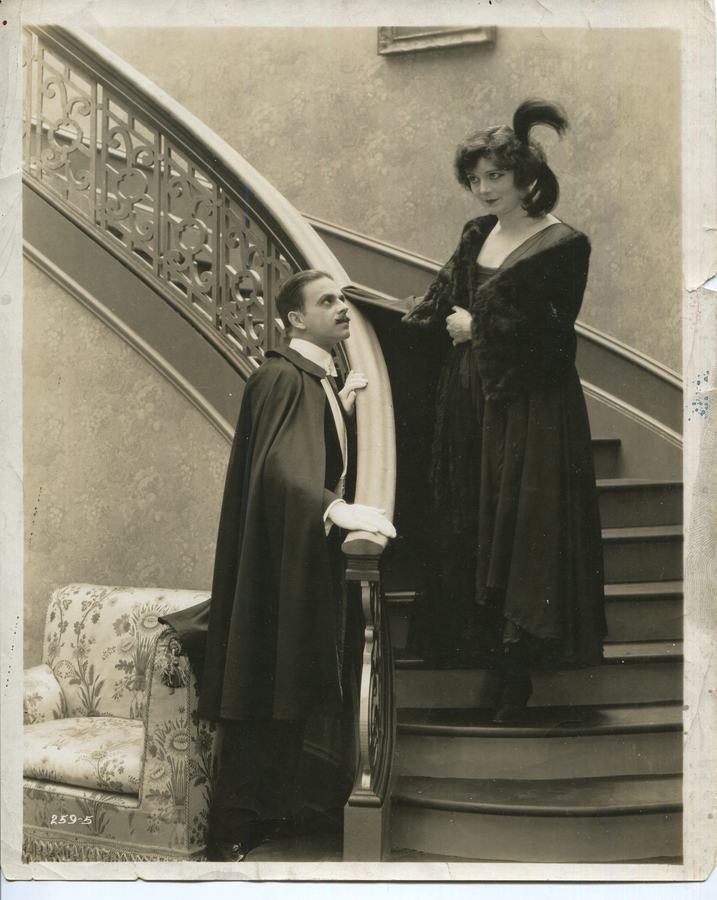
Released in 1917, Souls in Pawn arrived during a pivotal moment in both world history and cinematic evolution. World War I was raging, and its shadow loomed large over society and culture. Films of this period often reflected the anxieties, patriotic fervor, and moral quandaries of the time. While many films might have focused on overt propaganda, Souls in Pawn delves into the more nuanced, personal costs of conflict, exploring how war distorts personal relationships and blurs ethical lines. The depiction of German spies, while fitting the wartime context, avoids simplistic villainy by giving Kondemarck a complex, sympathetic motivation. This approach lends the film a timeless quality, allowing it to resonate beyond its specific historical moment. For instance, while The Fall of the Romanoffs directly addresses the political turmoil of the era, Souls in Pawn uses the war as a powerful backdrop for a deeply personal drama, showcasing the universal themes of love, loss, and redemption against a global conflict.
The film also exemplifies the growing sophistication of silent cinema during this period. By 1917, filmmakers were moving beyond simple narratives and developing a richer cinematic language. Techniques such as parallel editing, intricate flashbacks (or implied flashbacks via intertitles), and the expressive use of close-ups were becoming standard tools for building complex plots and conveying character psychology. Souls in Pawn showcases this evolution, demonstrating how silent film could tell a story with as much, if not more, emotional depth and narrative intricacy as later sound films. Its legacy lies in its contribution to the development of the spy thriller genre and its powerful exploration of ethical dilemmas in wartime, proving that compelling drama doesn't require dialogue to captivate an audience. The film stands as a vibrant example of how early cinema, often underestimated, could deliver narratives of remarkable depth and enduring human relevance. It challenges modern viewers to look beyond the absence of sound and appreciate the profound artistry that defined this foundational period of filmmaking.
Ultimately, Souls in Pawn is a silent film that speaks volumes. It is a poignant exploration of how individual lives are irrevocably altered by the currents of history and the inescapable forces of love and vengeance. The film's narrative audacity, its willingness to delve into the moral gray areas of its characters, and the powerful performances by Gail Kane and Douglas MacLean elevate it beyond a mere historical curiosity. It is a gripping drama that keeps the audience enthralled from its opening frames to its bittersweet conclusion. The intricate plot, while demanding attention, rewards viewers with a richly woven tapestry of human emotion and geopolitical intrigue.
For enthusiasts of silent cinema, or anyone with an appreciation for finely crafted storytelling, Souls in Pawn offers a compelling and deeply satisfying experience. It reminds us that the foundational era of cinema was far from primitive; it was a period of immense creativity, where artists honed the craft of visual narrative to an extraordinary degree. This film, with its potent mix of romance, mystery, and wartime drama, deserves to be rediscovered and celebrated as a significant work, a testament to the enduring power of silent film to capture the complexities of the human "soul" caught "in pawn" to destiny and desire. Its themes of justice, forgiveness, and the search for truth remain as relevant today as they were over a century ago, making it a timeless piece of cinematic art.
IMDb —
1934
Community
Log in to comment.