DbcultAccessing Vault...
Cult Review
Senior Film Conservator
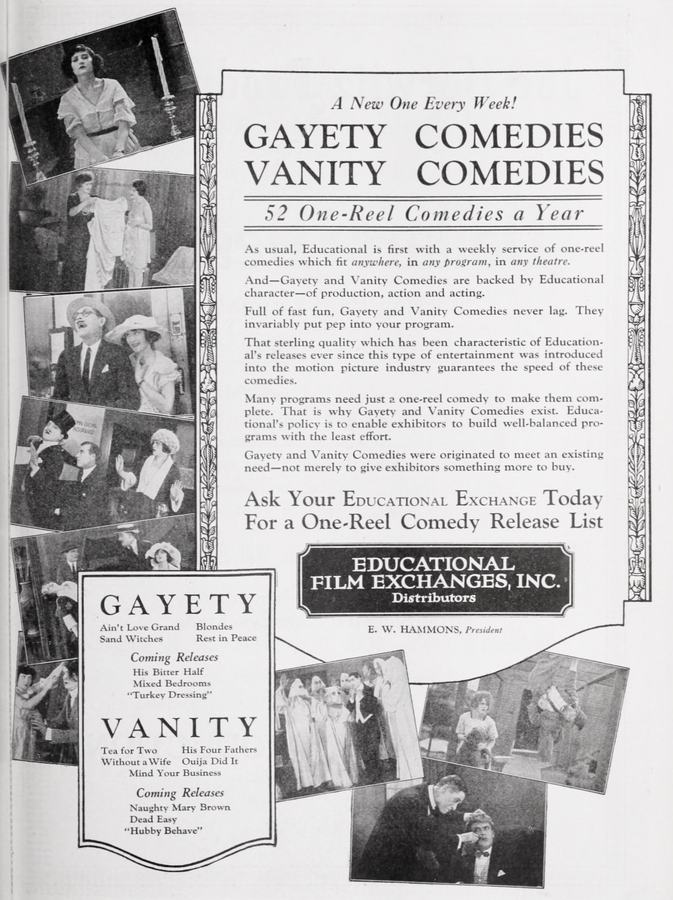
Imagine a universe where matrimony hinges not on fidelity or finance but on decibel ordinances—where a single guttural rasp can redraw property lines inside a two-bedroom flat. Rest in Peace (1922) seizes that absurd premise, distills it through Prohibition-era anxieties, and uncorks a brisk two-reeler that wheezes, honks, and ultimately pirouettes into forgiveness.
The film’s engine is marital physics: every snore triggers an equal and opposite snub. Henry Murdock—rubber-boned, cowlicked, eyes flickering with congenital mischief—plays the husband as a man who treats sleep as a nuisance interrupting his poker schedule. Marion Mackay’s wife is less a killjoy than a weary conductor trying to keep the orchestra of daily life from derailing into cacophony. She sentences him to exile in the back room, a tiled purgatory that reverberates each glottal tremor like a cathedral bell. It is here that the movie’s sonic imagination blossoms: intertitles throb with Z’s that feel corporeal, and the orchestral score (in contemporary festival prints) sneaks contrabassoon growls under the dialogue cards, turning snoring into weather.
But the gag is only half-chewed. The husband’s solution—outsourcing his snore to the club’s reigning pharynax, a walrus-mustached colossus who could drown out a tugboat—betrays the film’s deeper satire: men will commodify anything, even bodily noise, to preserve leisure. The ruse works because wives, the film winks, listen more than they see; the bedroom becomes a radio play where timbre equals identity. Once the surrogate log-sawyer is installed, Murdock slithers into the night, and the narrative pivots from domestic farce to urban chase.
Director Harry Edwards—midway between Mack Sennett’s custard-pie anarchy and the more measured situational comedy of later Laurel & Hardy—stages the raid like a fever dream shot through nickelodeon noir. Cops burst through swinging doors, their bullseye lanterns carving white cones amid cigarette haze; poker chips ascend in slow-motion parabolas, each one a guilty soul seeking ascension. Murdock, deprived of both sleep and dignity, ricochets across pool tables, stuffs winnings into his trousers, and escapes via a dumbwaiter that wheezes like his own bed-bound alter ego. The sequence is undercranked just enough to accelerate stakes without liquefying coherence, a tempo Edwards would refine in On Strike the following year.
Meanwhile, back at the homestead, the wife discovers the ruse—not through Sherlockian deduction but through the oldest of marital instruments: the empty hot-water bottle. Its tepid rubber signals an unoccupied bed; the snore she hears is now revealed as counterfeit currency. Enter Mary Wynn as the neighbor’s flirtatious cousin, a flapper who treats every hallway like a runway. She stumbles upon the substitute snorer, assumes he is Murdock, and unleashes a series of escalating double-takes that could power a small turbine. The scene’s brilliance lies in restraint: rather than speed, Edwards lets tension coil through repetition—each door creak tightens the screw until the wife’s glare could slice bread.
Where The Snob (1921) weaponized class embarrassment and Bride and Gloomy (1922) weaponized wedding jitters, Rest in Peace weaponizes somnolence itself, treating it as marital contraband. The screenplay by Walter Graham and Scott Sidney is economical—no gag overstays, no sentiment cloys. Observe how the final reconciliation occurs wordlessly: Murdock, tiptoeing across dawn-lit linoleum, deposits a fresh rose on the pillow. The wife, half-awake, registers neither pardon nor punishment—merely the continuation of a contract renegotiated nightly. It is a moment of startling modernity, a pre-Code shrug that anticipates the weary romantic fatalism of later Lubitsch.
Technically, the print survives in 35 mm at the UCLA Film Archive, its amber nitrate scratches flickering like fireflies. The grayscale hovers between pewter and bone, perfect for a story about liminal states—wake/sleep, fidelity/freedom, silence/sound. Compare this to the over-exposed broadsides in Over Night (1920) or the murky chiaroscuro of The Sunset Trail (1922), and you appreciate how cinematographer Jack Henderson wrings texture from what could have been mere silhouette comedy.
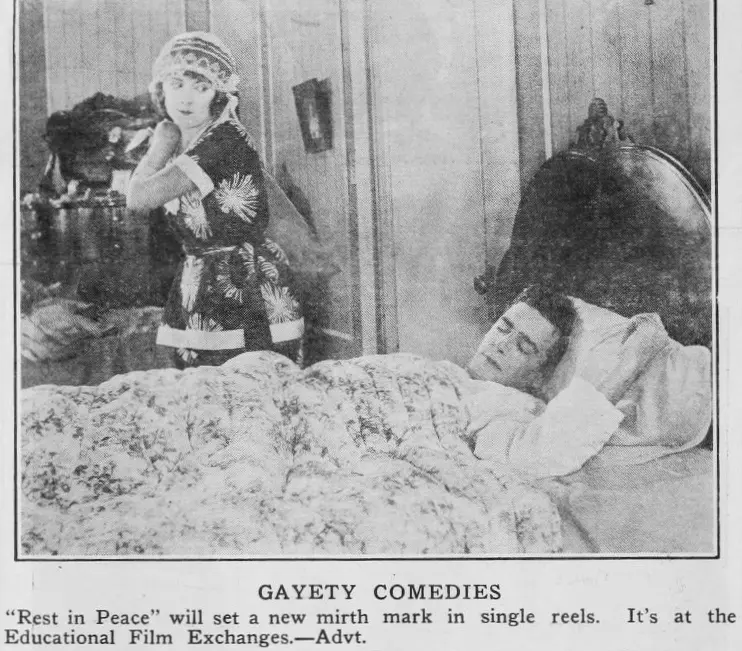
Performances calibrate to a human metronome. Murdock’s elastic face folds into a semaphore of guilt—eyebrows cresting like awnings, mouth retreating into a postage-stamp grin. Mackay counters with stillness; her quiet exasperation is the straight line that lets the absurdity bounce higher. In a era when many silent comedians mistook frenzy for fun (see Bill Apperson's Boy), their dyad feels lived-in rather than looney-tuned.
Yet the film’s cultural resonance exceeds its runtime. In 1922, America is learning to fetishize efficiency: Ford’s assembly lines, Taylor’s time studies, the new cult of sleep as recuperative capital. A man who snores is not merely noisy; he is unproductive, his REM cycles leaking into the marital books like ink. The wife’s ultimatum—sleep or be solvent—mirrors nationwide anxieties about bodily regulation. Thus the poker underground becomes a sanctuary of squandered time, a minor rebellion against the tyranny of the alarm clock. Viewed through that lens, Murdock’s nocturnal escapade is less midlife indulgence than existential revolt.
Still, the picture is not flawless. The police raid, while kinetic, leans on ethnic caricature: a stout Irish cop whose brogue thickens under stress, a Jewish card-shark whose spectacles refract avarice. These tropes, common to the era, snag modern sensibilities like burrs. Edwards attempts to soften the blow by making every character equally venal—cops skim the till, wives surveil, husbands prevaricate—but the aftertaste lingers. Compare the more egalitarian satire of The Eyes of the World (1920), where corruption is systemic rather than personalized, and you glimpse roads not taken.
The score, when exhibited with live accompaniment, deserves special note. A savvy accompanist can weave snare-drum rolls into Murdock’s snores, transforming bodily noise into percussive motif; during the chase, chromatic ragtime evokes the clamor of El trains. At a recent Brooklyn revival, pianist Ben Model interpolated a kazoo chorus at the moment of snorer-substitution, earning a gale of laughter that rattled the venue’s vintage chandeliers. Such interventions honor the film’s elastic soundscape without violating its essence.
In the ecosystem of silent shorts, Rest in Peace occupies a curious niche: too urbane for slapstick maximalists, too knockabout for drawing-room wits. It anticipates the domestic battlefields of later sitcoms—Ralph Kramden’s get-rich schemes, Lucy Ricardo’s backstage machinations—while retaining the tactile magic of nitrate. At a moment when cinephiles fetishize lost mega-epics like The Mystery of a Hansom Cab, here is a reminder that entire cosmologies can flourish inside twenty minutes of snoring.
Availability remains spotty: streaming houses shuffle it in low-resolution cascades, while 35 mm screenings surface at festivals like Pordenone or San Francisco Silent. Seek the UCLA restoration if possible; the subtle gradations between lampblack shadow and cigarette-smoke halo are integral to the film’s nocturnal mood. For home viewing, pair with His Only Chance (1920) for a double bill of marital brinkmanship, or counter-program with the ethereal mysticism of A World of Dreams (1921) to recalibrate your circadian rhythms.
Ultimately, the movie asks: can love survive when one partner’s body becomes a public-address system? Its answer—tentative, pragmatic, forgiving—feels radical in an age that would soon embrace eugenics, sleep labs, and the mechanization of every private sphere. By letting both snore and snorer off the hook, Rest in Peace whispers a subversive lullaby: maybe the loudest thing we share is not our faults but the willingness to endure them until dawn.
Verdict: a brisk, buoyant curio whose rumble still reverberates through a century of marital comedy. Watch it for the acrobatic snoring gag, stay for the quiet epiphany that forgiveness, like sleep, is sweetest when imperfectly achieved.

IMDb 6.8
1925
Community
Log in to comment.