DbcultAccessing Vault...
6.1/10
Senior Film Conservator
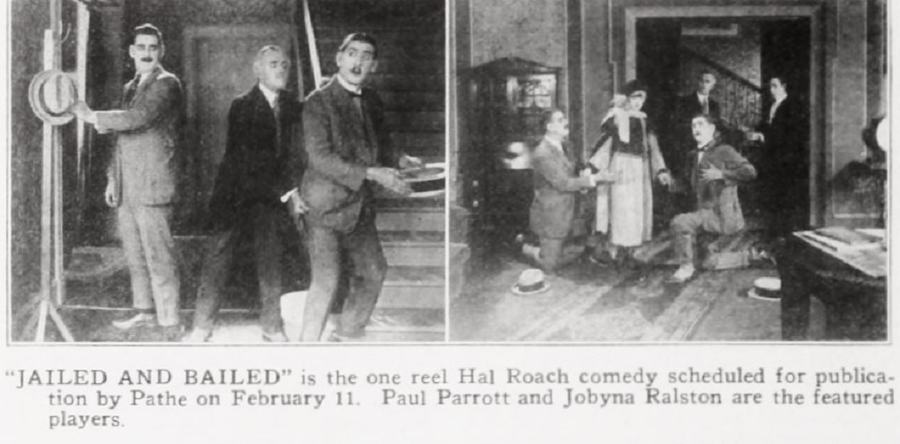
A definitive 6.1/10 rating for a film that redefined the boundaries of cult cinema. Jailed and Bailed remains a cornerstone of transgressive art.
The silent era, often romanticized and sometimes unfairly dismissed, was a crucible for comedic innovation, a period where visual storytelling and physical performance reached an apex of expressive artistry. Among the myriad of gems that emerged from this fertile ground, Hal Roach’s Jailed and Bailed stands as a testament to the era’s unique blend of narrative ingenuity and slapstick brilliance. This film, a spirited romp through the absurdity of romantic pursuit and the pitfalls of misguided chivalry, captures a particular zeitgeist, reflecting a time when cinematic language was still being vigorously defined, often through the most exaggerated and delightful means possible. It's not merely a historical artifact; it's a vibrant, living piece of comedic heritage that continues to resonate with its clever premise and energetic execution.
At its core, Jailed and Bailed unravels a delightfully convoluted scenario born from a woman's exasperation. Our protagonist's inamorata, portrayed with a captivating blend of charm and resourcefulness by Jobyna Ralston, finds herself ensnared in the tiresome tug-of-war between two relentless suitors. Their incessant nagging, a cacophony of competitive affections, becomes unbearable, prompting a drastic, yet undeniably ingenious, solution. Instead of succumbing to the pressure or choosing between two equally persistent men, she engineers her own arrest for a trumped-up speeding violation. This act, far from being a desperate plea for help, is a strategic maneuver, a cunning gambit designed to shift the terms of engagement entirely. She issues a challenge: her hand in marriage will be granted to the man who can secure her release. This audacious declaration sets the stage for a comedic spectacle, transforming a conventional romantic rivalry into a race against the clock and the law, all orchestrated by the very object of their affection. It’s a masterful inversion of the damsel-in-distress trope, placing agency firmly in the hands of the woman, even as she appears to be in peril.
The film then pivots to the frantic, often farcical, attempts of Paul, played by the inimitable James Parrott, and his rival, to fulfill this bizarre marital prerequisite. Their efforts to get themselves jailed alongside their beloved are a masterclass in escalating comedic blunders. Each scheme, more ludicrous than the last, underscores their desperation and lack of foresight, a common thread in many silent comedies where characters’ zealous pursuits lead them down increasingly absurd paths. This particular narrative device, where characters deliberately seek incarceration for a noble (or self-serving) cause, offers a rich vein of humor, exploiting the inherent irony of their situation. The physical comedy, a hallmark of the era, is undoubtedly at its peak here, as Parrott and his counterpart engage in a series of misadventures that would make even the most seasoned vaudevillian performer proud. Their journey into the penal system is less a calculated infiltration and more a series of accidental tumbles, each fall and stumble perfectly timed to elicit maximum laughter.
Hal Roach, a name synonymous with some of the most enduring comedies of the silent and early sound eras, orchestrates this delightful chaos with a deft hand. As a writer, Roach demonstrates a keen understanding of comedic pacing and character motivation, even when those motivations are inherently ridiculous. His ability to craft scenarios that are both exaggerated and surprisingly relatable is a testament to his genius. The plot, while simple on the surface, is layered with situational irony and character-driven humor. Unlike the more overtly physical, often destructive, humor seen in some contemporaries, Roach’s comedy often leaned into the predicaments of ordinary people caught in extraordinary circumstances. One might draw parallels to the structured chaos of a film like Home Brew, where the protagonists' well-intentioned but misguided efforts lead to hilarious and escalating mishaps. In Jailed and Bailed, the focus isn't just on the pratfalls, but on the sheer audacity of the premise and the characters' unwavering, if ill-advised, commitment to it.
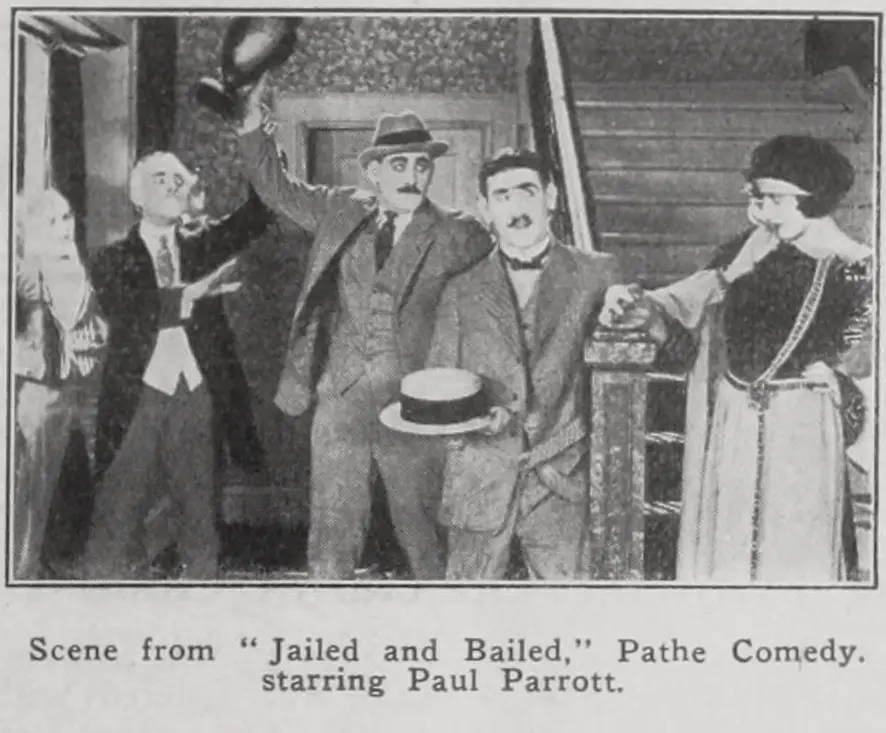
The performances are, naturally, central to the film’s success. James Parrott, a frequent collaborator with Roach and a talented comedian in his own right, brings a wonderful blend of earnestness and ineptitude to Paul. His physical expressions and reactions are perfectly calibrated for the silent medium, conveying a wealth of emotion and intent without a single spoken word. Jobyna Ralston, meanwhile, is a revelation. Her character isn't merely a passive object of desire; she's the architect of the entire comedic enterprise. Ralston imbues her with an intelligence and playful mischief that elevates the role beyond a mere ingenue. Her knowing glances and subtle gestures communicate a shrewdness that is both charming and empowering. The supporting cast, including Wally Howe, Sammy Brooks, Lincoln Stedman, Marvin Loback, Sam Lufkin, George Rowe, and Eddie Baker, each contribute to the bustling, believable world of the film, providing a rich tapestry of reactions and foils for the main comedic duo. Their collective efforts ensure that every scene, no matter how brief, feels alive and contributes to the overall comedic effect.
The climax of Jailed and Bailed delivers a punchline that is both perfectly logical within the film's absurd framework and utterly devastating for our hapless heroes. After successfully, if painstakingly, maneuvering themselves into jail, believing they are on the cusp of winning their beloved's hand, they are met with the crushing reality that she has already been freed by her father. This narrative twist is a stroke of comedic genius, a sudden deflation of their grandiose efforts that leaves them, quite literally, holding the bag – or rather, facing prison terms. The irony is palpable: their valiant, if foolish, attempts to rescue her have only resulted in their own incarceration, while the object of their affections is enjoying her newfound freedom, entirely unburdened by their self-imposed plight. It’s a classic comedic bait-and-switch, brilliantly executed, and a perfect encapsulation of the film's playful cynicism regarding romantic grandiosity.
The thematic undercurrents of Jailed and Bailed are surprisingly rich for a silent comedy. It subtly critiques the performative aspects of romantic pursuit, highlighting how men might go to extreme, even self-defeating, lengths to impress. It also champions female agency, presenting a heroine who manipulates societal expectations and male egos to her advantage, skillfully extricating herself from an undesirable situation. This isn't just about laughs; it's about a character who, despite the restrictive social norms of her time, finds a uniquely individualistic way to assert her will. The film, in its own lighthearted way, challenges the conventional roles assigned to men and women in romantic narratives, making it feel remarkably fresh even today. In an era where women were often depicted as passive recipients of male attention, Ralston's character is a proactive force, a delightful subversion that adds depth to the otherwise straightforward comedic premise.
Visually, the film is a masterclass in silent film technique. The cinematography, though simple by today's standards, is effective in conveying the energy and chaos of the narrative. The use of expressive close-ups, wide shots for physical comedy, and dynamic editing keeps the pacing brisk and engaging. The sets, while likely modest, are utilized effectively to create believable environments for the comedic action, from the bustling streets to the austere confines of the jail. The visual gags are meticulously planned and executed, relying on precise timing and the performers' physical prowess. This attention to detail is a hallmark of Roach's productions, ensuring that every frame contributes to the overall comedic rhythm. The visual language of the film is clear, concise, and universally understood, transcending the need for spoken dialogue, a testament to the power of pure cinematic storytelling.
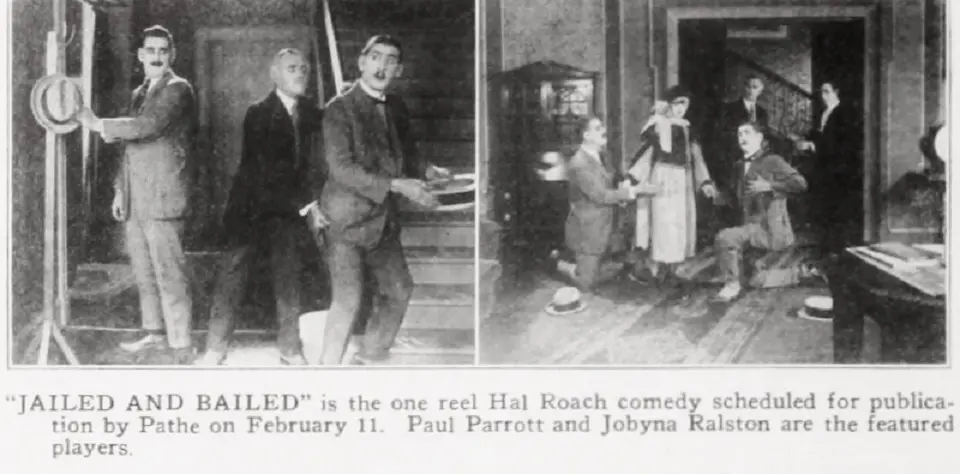
Comparing Jailed and Bailed to other silent comedies reveals its unique position within the genre. While it shares the physical comedy spirit of films like A London Bobby, its narrative complexity and the central role of female cunning set it apart. It’s less about a series of disconnected gags and more about a sustained comedic premise that builds to an ironic conclusion. The character dynamics, particularly the cleverness of Ralston's character against the bumbling determination of Parrott's, offer a more nuanced comedic interplay than some of the simpler chase films of the era. This film exemplifies how silent comedy could weave intricate plots with broad physical humor, creating a rich and satisfying viewing experience. It's not just a collection of laughs; it's a carefully constructed narrative designed to elicit both amusement and a knowing chuckle at the foibles of human nature.
The enduring appeal of Jailed and Bailed lies in its timeless humor and its sharp, albeit lighthearted, commentary on human relationships. The premise, while exaggerated, taps into universal themes of romantic rivalry, the desire for agency, and the often-absurd lengths people will go to for love (or pride). It demonstrates that genuine comedic brilliance doesn't require elaborate special effects or complex dialogue; it thrives on well-developed characters, clever situations, and impeccable timing. The film is a joyous reminder of the artistry and innovation that flourished during the silent film era, proving that laughter is indeed a universal language that transcends generations and technological advancements. Its ability to still elicit genuine mirth decades later is a testament to its intrinsic quality and the enduring legacy of its creators.
Hal Roach’s influence on comedy cannot be overstated, and Jailed and Bailed serves as an excellent example of his directorial and writing prowess. He had an uncanny knack for identifying comedic talent and putting them in situations that maximized their abilities. The film’s crisp editing and clear visual storytelling are hallmarks of his style, which prioritized clarity and comedic impact. It’s a far cry from the more dramatic, ponderous works like Raskolnikov or the intense emotional landscapes of Le torrent, instead embracing a buoyant, often anarchic, spirit. Roach understood that comedy, at its best, is a precise art, requiring careful orchestration of movement, expression, and narrative beats. This film, though perhaps not as widely known as some of his Laurel and Hardy collaborations, is a superb illustration of his comedic philosophy in action, showcasing his ability to craft engaging, hilarious stories that stand the test of time.
The narrative structure, a classic comedic setup with an ironic reversal, is executed with precision. The escalating attempts of the suitors to get jailed, each more desperate and clumsy than the last, build a strong sense of anticipation. This crescendo of comedic efforts ensures that the final reveal – their beloved's pre-emptive release – lands with maximum impact. It’s a satisfying narrative arc that rewards the audience's investment in the characters' plight. The film cleverly plays with audience expectations, setting up a seemingly straightforward heroic quest only to pull the rug out from under the protagonists in the most amusing way possible. This kind of narrative dexterity is what elevates silent comedies like Jailed and Bailed beyond mere spectacle, turning them into genuinely clever pieces of storytelling.
In conclusion, Jailed and Bailed is more than just a forgotten relic of the silent era; it is a vibrant, intelligent comedy that showcases the remarkable talents of its cast and crew, particularly Hal Roach and its lead performers, James Parrott and Jobyna Ralston. Its ingenious plot, the dynamic interplay between its characters, and its sharp, ironic humor make it a compelling watch for anyone interested in the origins of cinematic comedy or simply in need of a good laugh. It’s a film that reminds us that true comedic genius transcends the limitations of technology and language, speaking directly to the universal human experience of love, rivalry, and the delightful absurdity of life. The film's legacy, though perhaps understated, is significant, representing a vital chapter in the evolution of film comedy and a testament to the enduring power of a well-told, uproarious story. It’s a delightful journey into a bygone era, yet its humor feels surprisingly contemporary, a testament to its timeless appeal. This is a film that deserves to be rediscovered and celebrated for its wit and charm, a bright spot in the vast constellation of silent cinema. The comedic timing and character interactions are so finely tuned that one can easily imagine the film playing to packed houses, eliciting peals of laughter that would echo through the grand picture palaces of the 1920s. It’s a truly exemplary piece of early cinematic comedy, a gem that continues to shine brightly.
IMDb 7.7
1934
Community
Log in to comment.