DbcultAccessing Vault...
7.6/10
Senior Film Conservator
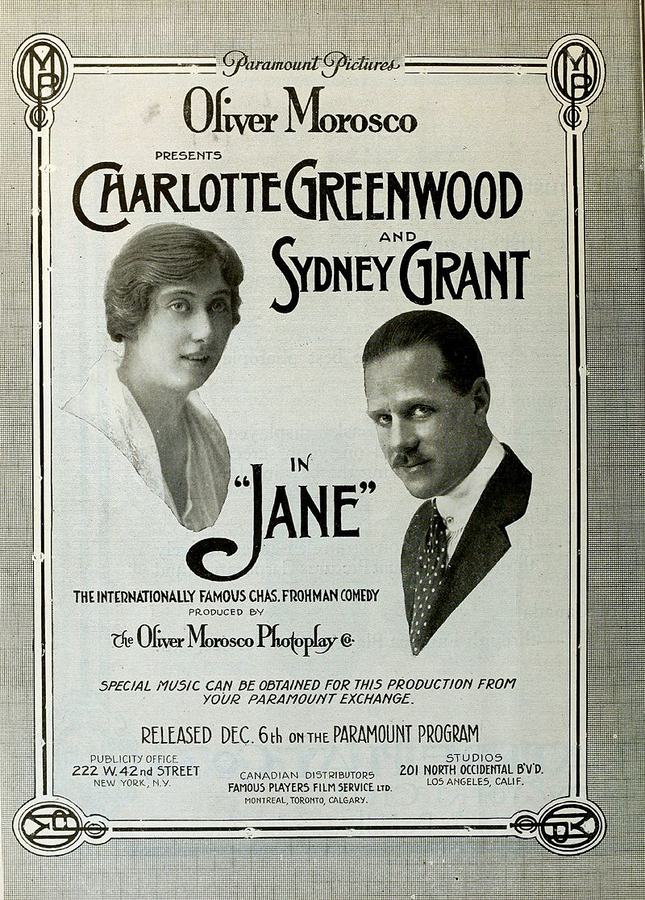
A definitive 7.6/10 rating for a film that redefined the boundaries of cult cinema. Jane remains a cornerstone of transgressive art.
Stepping back into the nascent days of cinematic storytelling, one encounters a peculiar charm in the silent film era, a period where exaggerated expressions and physical comedy reigned supreme. Among the gems of this time, Frank Lloyd's 1915 adaptation of Jane stands out as a quintessential farce, a delightful maelstrom of mistaken identities, desperate deceptions, and the inherent absurdity of human social conventions. This isn't merely a quaint relic; it's a masterclass in comedic construction, a testament to how universal humor can transcend the absence of spoken dialogue.
The premise, as with many great farces, is elegantly simple yet ripe for complication. Our protagonist, Charles Shackleton, portrayed with a charmingly bumbling earnestness, finds himself in a financial predicament. His wealthy uncle, a man of traditional values and considerable purse strings, has decreed that Charles must abandon his wild bachelor ways and embrace the sanctity of marriage to secure his inheritance – or, more accurately, an increase in his allowance. This ultimatum sets the entire chaotic chain of events into motion, a domino effect of lies and escalating pretense that forms the backbone of Jane's enduring appeal.
Charles, ever the pragmatist with a penchant for procrastination, initially attempts a legitimate route to matrimonial bliss. He proposes to Lucy Norton, a young woman whose affections he presumably holds, or at least finds convenient. However, Lucy's father, a man of stern principles and perhaps a keen eye for Charles's less-than-stellar reputation, summarily refuses his permission. This rejection, rather than deterring Charles, merely galvanizes him into a more audacious plan. Undaunted, and perhaps a touch reckless, he informs his uncle that he has indeed married, thereby securing his much-needed financial boost. This initial lie, a seed of deceit sown in fertile ground, quickly blossoms into a thorny thicket of complications.
The true comedic engine ignites approximately a year later when the uncle announces an impending visit. The weight of his fabricated marriage crashes down upon Charles, forcing him into a frantic search for a temporary spouse. His gaze falls upon Jane, the housemaid, played with remarkable vivacity and physical comedy by Charlotte Greenwood. Greenwood, a stage star known for her lanky frame and energetic performances, translates her theatrical prowess seamlessly to the silent screen, embodying Jane with a blend of practicality, pluck, and an underlying mischievousness. Charles, in a desperate plea, offers Jane a substantial sum – five hundred dollars, a significant amount in 1915 – to play the part of Mrs. Shackleton. This proposition, seemingly simple, is fraught with a hidden complication: Jane is secretly married to William, the butler, a detail Charles is entirely oblivious to.
The genius of Jane lies not just in the central deception but in the intricate subplots it spawns, particularly the plight of William, the butler. William, meticulously portrayed with a growing sense of bewildered indignation, becomes the unwitting victim of his wife's secret theatrical endeavor. As Jane assumes her role as the lady of the house, engaging in affectionate displays with Charles for the uncle's benefit, William's confusion spirals into profound jealousy. His reactions, conveyed through classic silent film techniques – wide-eyed stares, clenched fists, and a general air of aggrieved exasperation – are a consistent source of humor. He observes his wife, whom he believes to be faithfully his, seemingly embracing another man, showering him with attention, and even sharing a bed (albeit platonically, within the confines of the charade). This provides a rich vein for physical comedy and exaggerated emotional displays, a hallmark of the era's acting style.
The film masterfully uses William's perspective to amplify the farce. Each intimate gesture between Charles and Jane, innocent in its theatrical context, is magnified into an act of betrayal in William's mind. His attempts to understand, to confront, or to simply reconcile what he sees with what he believes, are continually thwarted by the demands of the charade. This dynamic elevates Jane beyond a simple story of a fake marriage; it becomes a poignant, albeit hilarious, exploration of trust, suspicion, and the chaotic consequences of concealed truths. It's a scenario that could easily descend into melodrama, but the skilled direction of Frank Lloyd and the committed performances keep it firmly rooted in the realm of lighthearted comedy.
The narrative's comedic climax arrives with the uncle's insistence on seeing 'the baby.' This demand, perhaps the most preposterous of the entire scheme, forces Jane into an even more audacious act of improvisation. In a moment of sheer comedic brilliance, she snatches an infant from an unsuspecting washerwoman, presenting the bewildered child as her own. The scene that follows is a symphony of escalating chaos: the uncle, delighted by his 'grandchild,' is caught in a compromising position by the frantic washerwoman, who, naturally, assumes he is a kidnapper. The arrival of the police, the ensuing interrogation, and the frantic attempts by Charles and Jane to explain away the situation without revealing the entire elaborate hoax, create a truly unforgettable sequence. It's a testament to the film's writers – Harry Nicholls, Frank Lloyd, Elliott J. Clawson, and W.H. Lestocq – that they could weave such a complex and absurd scenario into a coherent, laugh-out-loud narrative.
This particular sequence highlights the ingenuity required in silent filmmaking. Without dialogue, the actors' expressions, gestures, and the carefully crafted title cards must convey the urgency, the panic, and the sheer comedic irony of the situation. The audience is privy to the full scope of the deception, making William's continued bewilderment and the uncle's unwitting participation all the more humorous. The scene also briefly touches upon themes of class disparity, as the washerwoman's immediate assumption of wrongdoing by the well-dressed gentleman reflects societal biases of the time.
The success of Jane largely rests on the shoulders of its talented cast. Charlotte Greenwood, as mentioned, is a standout, her physical comedy and expressive face perfectly suited to the demands of silent film. Her ability to convey both Jane's resourcefulness and her underlying good nature makes her a sympathetic and engaging protagonist, even as she participates in the deception. Herbert Standing as the uncle provides a sturdy, if gullible, anchor for the comedic chaos, his reactions of paternal pride and later, utter confusion, being crucial to the film's humor. Sidney De Gray, as William, masterfully navigates the emotional rollercoaster of a jealous husband, his silent suffering a running gag that never wears thin. The ensemble cast, including Myrtle Stedman as Lucy, each contributes to the vibrant tapestry of the film, ensuring that every character, no matter how minor, plays a vital role in the unfolding farce.
Frank Lloyd's direction is precise, utilizing the medium's strengths to maximum effect. The pacing is brisk, essential for a farce, allowing the comedic situations to build rapidly without feeling rushed. The use of intertitles is economical and effective, providing necessary exposition and dialogue without bogging down the visual storytelling. Lloyd understands that silent comedy thrives on visual gags, exaggerated reactions, and well-timed physical humor. He orchestrates the various characters' movements and interactions with a choreographer's eye, ensuring that the comedic beats land with precision. This is particularly evident in the scenes of escalating panic, where multiple characters are reacting simultaneously to unforeseen complications.
Comparing Jane to other films of its era, one can appreciate its unique blend of domestic farce and broader social commentary. While films like Cinderella (also from 1914 or 1915, depending on the version) offered more straightforward romantic narratives with clear moral lessons, Jane delves into the hypocrisies of societal expectations surrounding marriage and wealth with a lighter, more satirical touch. It's less about moralizing and more about reveling in the glorious disarray that arises when individuals attempt to circumvent societal norms through elaborate lies. The film's energy and inventiveness also stand apart from more dramatic or action-oriented serials of the time like The Adventures of Kathlyn, proving that silent cinema could excel in diverse genres.
As the comedic tension reaches its peak, the various threads of deception begin to unravel. Charles, pushed to his limits by the constant threat of exposure and the increasing complexity of his lie, finally makes a sincere, pleading proposal to Lucy. This moment, while still tinged with the lingering effects of the farce, marks a turning point, signaling a return to genuine emotion and truth. The eventual revelation of Jane's secret marriage to William, and the entire elaborate charade, leads to a satisfying, if somewhat convoluted, resolution. Remarkably, everyone ends up satisfied – Charles finds true love with Lucy, Jane and William's secret is out but their union is affirmed, and even the uncle, though initially shocked, presumably finds humor in the sheer audacity of the scheme.
Jane is more than just a historical curiosity; it's a vibrant, entertaining piece of early cinema that continues to resonate with audiences today. Its themes of social pressure, financial desperation, and the lengths people go to maintain appearances are timeless. The film's reliance on physical comedy, exaggerated expressions, and perfectly timed gags ensures that its humor remains accessible and genuinely funny, even without the benefit of spoken dialogue. It's a reminder of the foundational principles of comedy that have influenced countless films since.
In an era dominated by technological spectacle, revisiting a film like Jane offers a refreshing perspective on the power of simple, well-executed storytelling. It demonstrates that the core elements of engaging narrative – compelling characters, escalating conflict, and ultimately, a satisfying resolution – are universal, regardless of the medium's limitations or advancements. It's a delightful romp, a testament to the ingenuity of early filmmakers, and a firm reminder that sometimes, the most profound laughter comes from the most elaborate lies. A truly charming and essential watch for anyone interested in the roots of cinematic comedy and the enduring power of a good old-fashioned farce.
IMDb —
1924
Community
Log in to comment.