DbcultAccessing Vault...
Cult Review
Senior Film Conservator
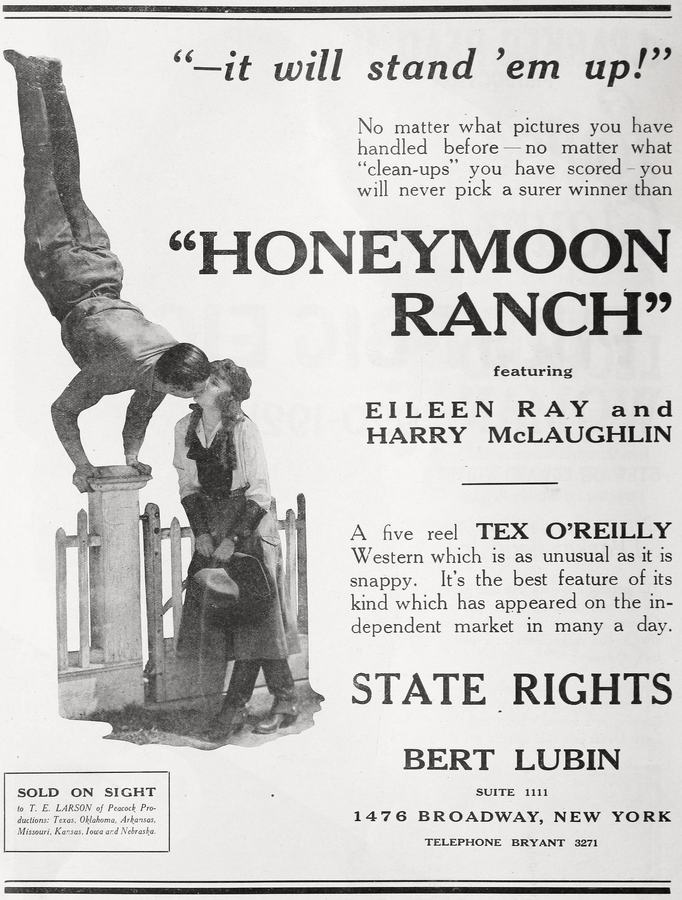
The West, as Honeymoon Ranch imagines it, is not a place but a predicament—an avalanche of space that swallows metropolitan certitudes faster than a gambler pockets his last blue chip. Our unnamed New Yorker—let’s dub him Suit, for his attire is the only language he owns—steps onto the station planks with the tentative grace of a man testing thin ice. Cinematographer John Hagin cranks the camera low; the sun carves obsidian silhouettes, turning every cowboy hat into a halo of menace. Suit’s pupils dilate not from light but from Margaret Davis, who leans against a hitching post as if she were invented moments earlier by a bored demiurge with a Sweetheart Complex.
Their meet-cute lasts four seconds, ends with a tilt of her chin that could slice bread. Townley’s script refuses us the balm of small talk; instead, a dust plume rises between them like a marriage veil. One hour of plot time later, that veil is traded for a burlap sack of threats: a rusted 10-gauge shotgun nuzzles Suit’s spine while a preacher whose breath reeks of coal oil mutters the matrimonial shortcut. The same woman—now nameless to the clan yet everything to Suit—stands beside him, eyes lowered, possibly complicit, possibly captive. Nothing in the frame reassures us that love can survive the ceremony.
Most comedies of 1926 flit along the rim of custard-pie innocence. Honeymoon Ranch opts for gunpowder. The tonal whiplash arrives like a cattle prod: laughter is inseparable from the threat of dismemberment. When Tex O’Reilly’s bandit-brother jams the wedding ring onto Suit’s trembling finger, the close-up lingers on skin rubbed raw—an image that anticipates the blood-slicked wedding rings of later noir. Yet a subtitle card, jaunty as a barroom jingle, quips: "Marry in haste, repent at gunfire." This is screwball before the term existed, but the humor is laced with strychnine; every gag carries a ricochet.
Compare it to The Key to Yesterday, where amnesia served as cosmic reset button, or A Jazzed Honeymoon that treated marriage as Charleston footnote. Here, wedlock is kidnapping formalized. The film’s central joke—that romance can be legislated at gunpoint—haunts the viewer long after the last reel flaps against the projector. Townley and O’Reilly, co-writing with the manic glee of boys burning ants, understand that desire curdles when cornered.
Margaret Davis never unveils a backstory; she doesn’t need one. Her performance is a dialectic of glances: sidelong (calculating), downward (demure), direct (civil-war dangerous). She is the MacGuffin in a gingham dress, yet the camera refuses to neuter her into mere object. In the barn-raising sequence—an outlaw cousin demands a kiss as toll—Davis plants her boots, spine as stiff as the ladder behind her, and lets the silence thicken until the man retreats. The triumph is wordless, but the cut to Suit’s face tells us he has begun to suspect his bride might be the only loaded weapon in the county.
Silent-era heroines often oscillated between virgin and vamp; Davis synthesizes both, then adds a third option: escape artist. Watch her in the third act, wrists apparently bound, yet fingers drumming a syncopated tattoo against her thigh—she’s testing the rope’s give, auditioning futures. The film’s boldest declaration is that a forced marriage can become a crucible where forged steel emerges female-shaped and furious.
If the narrative spine is shotgun marriage, the ribcage is extended family as blood-sport officiant. Sam White plays Uncle Jebediah like a biblical plague with a hangover; his grin reveals more gaps than teeth, each absence a cautionary tale. The set-piece brawl in the dry gulch—ostensibly the cousins defending the bride’s honor—plays like a pagan rite. Combatants swing fence-posts, yokes, even a live rooster used as flail. Cinematically, it’s a smeared canvas: undercranked footage gives motion a herky-jerky frenzy, while Hagin double-exposes dust clouds so the landscape itself appears to thrash.
What astonishes is the sound design—yes, in a silent. Intertitles are peppered with onomatopoeic fragments: "THWACK-THUD," "SKREEEE," "DOK!" The projector in the surviving print rattles the sprockets at these moments, as though the film stock itself winces. The cumulative effect is raw physicality that makes later baroque westerns like Fighting Through feel balletic by comparison.
Suit’s wardrobe—boater hat, kid gloves, spats—becomes a running gag and a class scar. Each item is systematically destroyed: hat stomped, gloves shredded, spats repurposed as tourniquets. The West, in its abrasive democracy, dismantles metropolitan privilege thread by thread. Yet the film avoids pastoral propaganda; the ranch folk are no nobler. They feud over water rights like Wall Street brokers over railroad stock. When Suit, bloodied but unbowed, finally stands his ground, the victory is not conquest but translation: he has learned the vernacular of elbows and eye-gouges, yet still phrases his love in city subjunctives. The closing two-shot—couple limping toward a dawn that looks suspiciously like dusk—suggests marriage as cease-fire rather than happily-ever-after.
Robin H. Townley directs with an expressionist twitch. Shadows gouge faces; kerosene lamps create amber pools where intentions drown. Note the iris-in on Davis’s hands clasping a revolver: the circular mask shrinks until only pearl-grip and trigger are visible—an omen of wedding ring morphing into firearm. Elsewhere, he superimposes a locomotive over a human heart, pistons pumping in sync with ventricles—a montage at once industrial and carnal. These flourishes predate the surgical precision of Das Phantom der Oper’s German silents, yet they emerge from a cowboy budget, all bailing wire and hubris.
Color tinting alternates between tobacco-sepia for daylight and cyanotype for night, rendering moonlit skin the shade of drowned marble. One reel, rumored lost, allegedly used hand-scratched scarlet on negative to indicate gunshots; the existing restoration approximates the effect via crimson flash-frames that bruise the viewer’s retina.
With no spoken syllables, actors must orchestrate meaning through sinew and micro-gesture. Tex O’Reilly, who also co-wrote, plays the antagonistic cousin with a shoulder-rolling swagger that seems to loosen his skeleton. Watch how he enters a room: hat brim down, torso tilted as if perpetually leaning into a wind of his own making. Opposite him, Harry McLaughlin’s New Yorker is all staccato—movements start then stutter, hands flutter toward pockets that no longer exist once his coat is torn away. The contrast is vaudeville without the greasepaint.
Allene Ray as the kid sister supplies the film’s only filament of unshadowed joy; her cartwheel across the corral is shot in reverse then printed forward, producing a ghostly echo—childhood as fleeting palindrome. Her presence reminds us that this world, brutal as it is, still breeds futures not yet hog-tied by vendetta.
Set it beside Nedra’s society melodrama or False Ambition’s moral parable, and Honeymoon Ranch feels like a bootlegger at a church picnic—cruder, drunker, more alive. Its DNA splices into later works: the forced-marriage tension anticipates The Trouble Buster, while the comic violence sires the knockabout cynicism of In Bad. Yet few descendants retain this film’s predatory innocence; they sweeten the arsenic.
Critics often cite Kiss of Death as the hinge where romantic comedy met noir brutality; they overlook this earlier hinge, rusty and squealing, hidden in a cowboy’s duffel bag.
Noteworthy for what it omits: Native Americans appear only as decorative beadwork in the trading-post window, never as agents. The land itself becomes the blank canvas upon which white grievances paint their blood-feud. A modern viewer feels the ethical vacuum, yet the film’s formal daring complicates easy dismissal. The camera worships mesas and sky with devotional wide shots, suggesting that violence is brief, but geography is eternal—an inversion of the “Manifest Destiny” trope where humans loom large. Here, humans shrink; the desert endures, unmoved by their shotgun vows.
Surviving cue sheets specify a melange of parlour tunes, barn-dance jigs, and, oddly, Tchaikovsky’s "Andante Cantabile" for the reconciliation scene. Exhibitors were encouraged to let the pianist improvise dissonant clusters during fight sequences; reviews from Wichita report patrons covering ears, half delighted, half appalled. The intertitles themselves flirt with poetry: "Love, like a lizard, suns itself on the rock of disaster." One imagines the projectionist, lips moving, memorizing lines destined to be forgotten once talkies arrive.
The lone extant 35 mm print was discovered in 1998 in a Tasmanian barn, shrink-wrapped inside a wall cavity alongside newspapers lamenting the Great War. Restoration team rehydrated the emulsion with a cocktail of glycerin and ethanol, then scanned at 4K. The resulting DCP reveals pores, beads of lye sweat, even the moment Davis’s mascara crystallizes into micro-icicles of kohl. What was once a flicker becomes a fresco; every pockmark of the desert floor looks lunar.
Beneath the hijinks lurks a treatise on property. The bride is deed-of-sale; the ranch, collateral; the wedding ring, brand. Suit’s final act is not conquest but refusal: he tears the deed, offers the land to Davis. She declines, tosses the parchment into a campfire, her face orange-lit with insurrection. Ownership immolates; partnership begins. For 1926, this is radical—woman as autonomous stakeholder, not chattel. The moment is wordless, yet it reverberates louder than any suffrage speech.
College campuses circulate a bootleg scored by indie bands—glockenspiel, fuzz guitar, trap hi-hats. At a recent Brooklyn rooftop screening, viewers arrived in western cosplay; the film ended at sunrise, everyone hoarse from supplying their own intertitles. Critics compare the phenomenon to The Rocky Horror Picture Show, but the anarchy here feels more primal, less rehearsed. Perhaps because the source itself is a bruise still blooming.
Watch Honeymoon Ranch for its shotgun wedding that predates The Highest Bid’s marital auction, for its heroine who reloads a Winchester while the hero fumbles with cufflinks, for its conviction that romance sans peril is mere escapism. It is rough, uneven, occasionally racist in omission—yet it throbs with unruly life. In an era when algorithms flatten cinema into content, this 63-minute scream reminds us that film stock once bled.
"Love rides the rails, but the West lays the track."
Stream it if you dare, project it if you’re reckless, marry it if you have a spare shotgun. Just remember: out here, the vows are writ in bruise and barbed wire, and divorce costs more than your metropolitan soul can pay.
IMDb 5.4
1918
Community
Log in to comment.