DbcultAccessing Vault...
Cult Review
Senior Film Conservator
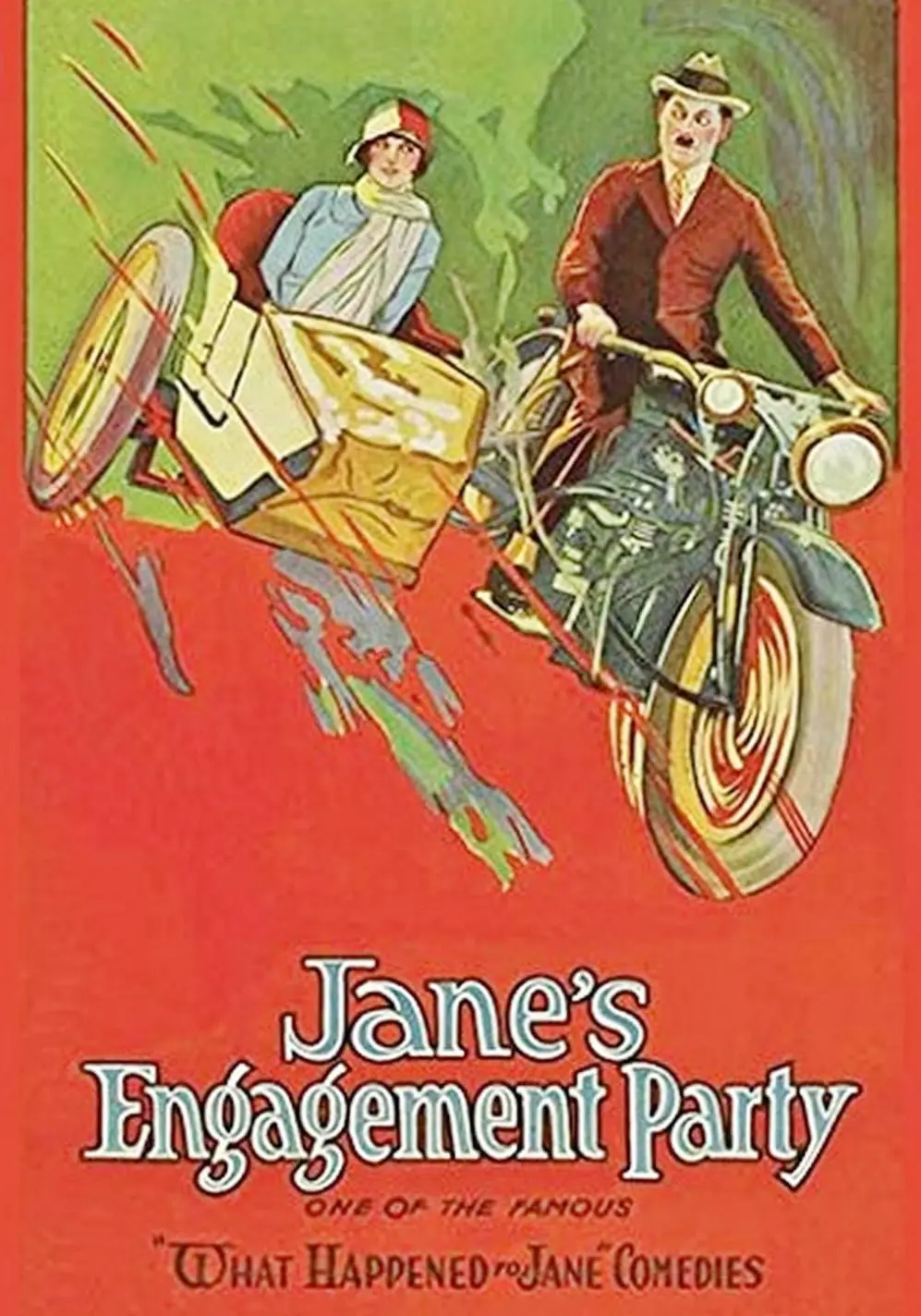
Can a film from an era long past, with a plot as straightforward as a silent-era pie fight, truly hold up in our hyper-stimulated cinematic landscape? Short answer: yes, but with significant caveats. 'Jane's Engagement Party' is a curious relic, a fleeting glimpse into the comedic sensibilities and narrative structures that once captivated audiences, offering a unique blend of slapstick, mild suspense, and a dash of proto-feminist subversion, however unintended. It’s a film that demands a specific kind of viewer, one willing to engage with cinema not just as entertainment, but as a historical document.
This film is unequivocally for those with a deep appreciation for early cinema, silent film enthusiasts, and anyone interested in the foundational elements of screen comedy. It's a delightful watch for film students and historians eager to trace the evolution of visual gags and character archetypes. However, it is decidedly not for viewers seeking modern pacing, complex character development, or high production values. If your cinematic diet consists primarily of CGI-laden blockbusters or intricate psychological thrillers, 'Jane's Engagement Party' will likely feel slow, simplistic, and perhaps even baffling in its comedic approach.
Stepping into the world of 'Jane's Engagement Party' is akin to opening a time capsule. It’s a film that operates on a different wavelength, a testament to a time when visual storytelling was still finding its voice, relying heavily on physical comedy and broad character strokes to convey emotion and drive the plot. The film’s strength lies in its unpretentious commitment to spectacle and immediate gratification, delivering laughs through exaggerated situations rather than nuanced dialogue or intricate plotting.
The plot, while simple, is surprisingly dense with incident, moving from a daring motorcycle ride to a villainous bigamist’s machinations, all culminating in a chaotic, yet ultimately triumphant, resolution. It’s a narrative structure that prioritizes momentum over realism, a common trait of early comedic shorts designed to entertain swiftly and efficiently.
This film works because it embraces its farcical nature with an infectious energy, delivering a series of escalating comedic set-pieces that rarely pause for breath. Its ambition is not to be profound, but to be relentlessly entertaining, and in this, it largely succeeds. Its charm is undeniable, particularly for those attuned to the rhythm of early cinematic storytelling.
This film fails because its narrative contrivances occasionally stretch credulity beyond even the generous bounds of slapstick, and its reliance on broad stereotypes can feel jarring to a contemporary audience. The pacing, while energetic, sometimes feels less like deliberate comedic timing and more like a rushed assembly of gags.
You should watch it if you're a film historian, a silent comedy aficionado, or simply curious about the roots of cinematic humor, and are willing to overlook its rough edges for a glimpse into the past. It’s a valuable piece of film history.
The performances in 'Jane's Engagement Party' are, by modern standards, theatrical and demonstrative, a hallmark of silent cinema where emotion and intent had to be conveyed without spoken dialogue. Tony Hayes, in the role of Tony, is the undisputed engine of the film's comedic drive. His physical presence is commanding, and he possesses a remarkable talent for slapstick, evident from the opening sequence.
The motorcycle side-car ride, for instance, is a masterclass in controlled chaos. Hayes navigates the precarious vehicle with a blend of earnestness and exaggerated panic, his facial expressions shifting rapidly from confident bravado to wide-eyed terror as he careens through the streets. This sequence, where he inadvertently provides his future mother-in-law with the “thrill she has had in thirty years,” is a testament to his ability to blend physical comedy with character-driven humor.
Wanda Wiley, as Wanda, provides a more grounded, though still expressive, counterpoint to Hayes's antics. While her role is less about direct comedic action, her reactions to Tony's escapades and the unfolding drama at the party anchor the more outlandish elements. Her subtle eye-rolls or exasperated gestures communicate volumes, providing a relatable human element amidst the escalating absurdity. It's a performance that, while understated, is crucial for establishing the emotional stakes, however lighthearted they may be.
The villain, whose identity remains somewhat shrouded in the plot synopsis, is portrayed with the necessary smarmy charm and dastardly intent. His ambition to add Jane to his collection of wives is conveyed through a series of sly glances, manipulative smiles, and a general air of untrustworthiness. The actor, whose name is not explicitly provided in the cast list, manages to embody the archetypal cad, a figure often found in early melodramas and comedies. His eventual comeuppance, facilitated by Tony’s ingenious (if bizarre) plan, feels earned, largely due to the actor’s effective portrayal of villainy.
The ensemble of children, though briefly on screen, also deserves mention. Their role in Tony's elaborate ruse, bribed with nickels to claim the bigamist as their father, adds another layer of delightful absurdity. Their uncoordinated charges and earnest cries create a memorable visual gag, highlighting the film’s willingness to embrace unconventional solutions for comedic effect. This scene, in particular, showcases the film’s unique approach to problem-solving within its narrative framework.
The direction in 'Jane's Engagement Party,' while lacking the sophisticated camera work of later eras, is highly effective in serving the film’s comedic ambitions. The focus is clearly on staging gags and ensuring maximum visual impact. The film moves at a brisk pace, a necessity for a short-form comedy, rarely allowing a scene to overstay its welcome. This rapid-fire succession of events, from the initial motorcycle mishap to the climactic exposure of the villain, keeps the audience engaged, even when the narrative logic occasionally falters.
One could argue that the pacing is almost breathless, a relentless march through comedic scenarios. The director, Roy Evans, understands the rhythm of silent comedy: set up the joke, execute it, and move on. There’s little time for lingering shots or contemplative moments. This directness is both a strength and, at times, a limitation, preventing deeper character exploration but ensuring constant comedic momentum. The film never pretends to be anything other than what it is: a vehicle for laughs.
The staging of the engagement party itself is particularly notable. It serves as a bustling backdrop for the villain’s machinations and Tony’s heroic intervention. The frame is often filled with activity, creating a sense of lively chaos that perfectly complements the narrative. The director skillfully manages multiple characters and their interactions within a single space, building anticipation for the eventual confrontation. This crowded, dynamic setting is crucial for the film's comedic tone, emphasizing the public nature of the villain's downfall.
The tone of 'Jane's Engagement Party' is predominantly lighthearted and farcical, leaning heavily into slapstick. However, beneath the surface, there's a surprising undercurrent of social commentary, particularly concerning the vulnerability of women to manipulative figures. While presented comically, the threat of bigamy, and the villain's casual disregard for marital vows, hints at more serious societal concerns of the time. Tony’s heroic efforts, therefore, take on a slightly more significant dimension than mere comedic intervention.
The moment Tony, disguised in a dress and veil, pretends to be one of the deserted wives, is not only a brilliant comedic payoff but also an interesting, if brief, moment of gender role subversion. It's an unconventional observation, a man embracing femininity to expose a man who abuses masculinity. This act, while played for laughs, subtly critiques the patriarchal structures that allowed such villains to operate with impunity. It's a bold choice that elevates the film beyond simple silliness.
Given the era, the cinematography of 'Jane's Engagement Party' is functional and straightforward, prioritizing clarity and the effective capture of physical action. There are no elaborate tracking shots or complex lighting schemes. Instead, the camera acts as a direct observer, framing the action to ensure that every pratfall, every exaggerated expression, and every frantic chase sequence is clearly visible to the audience.
Close-ups are used sparingly but effectively, often to highlight a character’s reaction or a crucial plot point, such as Tony’s recognition of the villain from the newspaper story. These moments serve to punctuate the broader comedic action, drawing the viewer’s attention to specific details that drive the narrative forward. The lighting, while likely natural or basic studio illumination, is sufficient to illuminate the sets and performers, creating a bright, clear image characteristic of the period.
The motorcycle sequence, despite its simplicity in terms of camera work, is dynamic. The use of wider shots allows the audience to fully appreciate the chaotic journey, emphasizing the peril and the comedic absurdity of the situation. The way the scene is edited, likely with quick cuts to simulate speed and impact, demonstrates an early understanding of how film could manipulate time and space for dramatic (or in this case, comedic) effect. It's not a visually stunning film in the modern sense, but its visual language is remarkably effective for its time and purpose.
While 'Jane's Engagement Party' might not be a household name today, its existence contributes to a broader understanding of cinematic history. It showcases the enduring appeal of the underdog hero, the bumbling but ultimately triumphant protagonist, and the timeless comedic trope of mistaken identity and unexpected revelations. Films like Behind the Front or Andy's Hat in the Ring share a similar spirit of lighthearted adventure and comedic escapism.
It’s also fascinating to see the early stages of narrative construction, where plot points are introduced rapidly and resolved with equal speed, often through highly improbable means. This film is a testament to the ingenuity required to tell a compelling story without the aid of synchronized sound, relying solely on visual cues and the power of performance. It works. But it’s flawed.
'Jane's Engagement Party' is more than just a forgotten film; it's a vibrant, if somewhat rough-around-the-edges, piece of cinematic history. It may not have the polish or thematic complexity of later works, but it possesses an undeniable charm and a relentless commitment to entertainment. Tony Hayes proves himself a comedic force, guiding the audience through a series of increasingly absurd situations with infectious energy.
While its appeal is undoubtedly niche, for those willing to embrace its unique rhythms and period sensibilities, it offers a surprisingly engaging and often hilarious experience. It's a film that reminds us of the foundations upon which all subsequent cinematic comedy was built, showcasing the raw inventiveness of early filmmakers. It’s not a masterpiece, but it’s a vital, entertaining artifact. Seek it out if you dare to venture into the roots of laughter; you might just find yourself delightfully surprised by its audacious spirit.
IMDb 6.1
1933
Community
Log in to comment.