DbcultAccessing Vault...
Cult Review
Senior Film Conservator
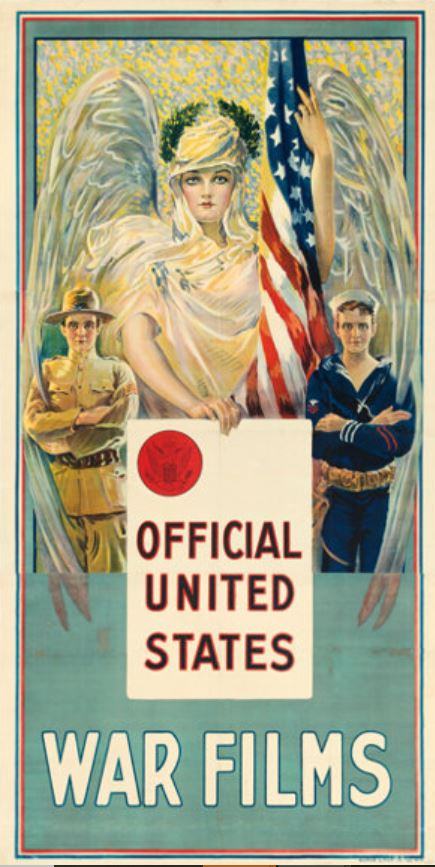
In the annals of cinematic history, where the lines between art, information, and persuasion often blur, 'Allies' Official War Review, No. 23' stands as a fascinating, albeit often overlooked, artifact. This isn't a feature film with a dramatic arc or character development in the conventional sense; rather, it's a meticulously crafted newsreel, a potent instrument of its time, designed not merely to inform but to galvanize, to inspire, and to reaffirm a collective purpose during an era of unprecedented global conflict. To approach it as one would a narrative film is to miss its profound rhetorical power, its subtle yet pervasive influence on the public psyche. Its very existence speaks volumes about the burgeoning role of moving images in shaping national narratives and morale.
The absence of a traditional plot in 'Allies' Official War Review, No. 23' compels us to look beyond conventional storytelling metrics. Instead, we must analyze its structural rhythm, its thematic repetitions, and the deliberate sequencing of its visual segments. Each scene, whether depicting the methodical advance of troops across a desolate battlefield or the churning gears of an industrial complex, serves a specific, calculated function within the broader tapestry of wartime propaganda. It’s a mosaic of carefully selected realities, edited to convey an overarching message of strength, unity, and inevitable triumph. The camera becomes an omniscient observer, yet one whose gaze is inherently biased, framing events through the lens of Allied resolve.
Consider the visual rhetoric employed. Moments of hardship are often juxtaposed with scenes of resilience, sacrifice underscored by the promise of victory. The sheer scale of military operations, from the sprawling logistical networks to the formidable display of naval power, is presented not just as fact, but as a testament to an indomitable will. Unlike the narrative complexities found in a film such as The Trap, which explores personal dilemmas within a confined dramatic space, the 'War Review' operates on a grand, impersonal scale, its 'characters' being entire nations and their collective war machines. Its purpose isn't to evoke individual empathy for a protagonist, but rather a collective sense of national pride and unwavering commitment to a shared cause.
The genius of 'Allies' Official War Review, No. 23' lies in its ability to present a curated version of reality that simultaneously informs and inspires. It is a historical document, yes, but also a psychological tool. The footage, likely gathered from various fronts and domestic industrial sites, is meticulously edited to create a seamless, coherent narrative of progress and determination. We witness the stoicism of soldiers, the tireless work of munitions factory employees, and the steadfast demeanor of political leaders, all coalescing into a singular, powerful image of a nation united against adversity. This cinematic approach contrasts sharply with the more intimate, character-driven narratives of early cinema, such as The Daughters of Men, which focused on social issues and individual moral choices. The 'War Review' transcends the individual, elevating the collective.
The visual language of these war reviews often relied on certain recurring motifs: the massing of troops, the precision of artillery fire, the jubilant faces of liberated populations, or the solemn dedication of those on the home front. These weren't merely recordings; they were carefully constructed affirmations. The cinematographers and editors, though anonymous, were master storytellers in their own right, wielding the camera as a brush to paint a portrait of unwavering resolve. The lack of credited cast or writers underscores the collective nature of the endeavor, positioning the war effort itself as the central 'protagonist,' with every participant, from the highest general to the factory worker, playing a vital supporting role.
Examining 'Allies' Official War Review, No. 23' also provides a crucial lens through which to understand the nascent stages of documentary filmmaking and the overt use of cinema for propaganda. While earlier films like The Life of Our Saviour; or, The Passion Play utilized cinematic spectacle for religious instruction, the 'War Review' adapted similar techniques for political and nationalistic ends. It refined the art of visual persuasion, moving beyond simple reportage to a more sophisticated form of narrative construction, albeit one without fictional characters. The use of intertitles, often declarative and assertive, further guided the audience's interpretation, leaving little room for ambiguity.
The film's impact cannot be overstated, particularly in an era before widespread radio and television. Cinema became a primary conduit for information and emotional connection to the war effort. It brought the distant battlefields into local picture houses, creating a shared experience that reinforced national identity and solidarity. This communal viewing experience amplified its persuasive power, fostering a sense of collective participation in the grand narrative of war. It stood in stark contrast to the escapist fantasies offered by contemporary fictional films, grounding its audience in a shared, albeit carefully curated, reality. The very title, 'Official War Review,' lends an air of unimpeachable authority, a stamp of governmental veracity that further enhanced its credibility and influence.
Despite its utilitarian purpose, 'Allies' Official War Review, No. 23' demonstrates a nascent understanding of cinematic technique. The editing, while perhaps not as complex as later montage theory, is purposeful, creating rhythms and associations that reinforce its message. Shots of powerful weaponry are often followed by scenes of their devastating effect, or by the determined faces of the soldiers wielding them. The use of wide shots to convey the scale of operations, followed by closer shots to humanize the participants, reveals an intuitive grasp of visual storytelling. The choice of angles, the duration of shots, and the transitions between them all contribute to the film's overall persuasive effect. There's a certain raw authenticity to the footage, even within its propagandistic framework, that gives it a compelling immediacy, a stark contrast to the theatricality of melodramas like Three Strings to Her Bow.
The documentary style, even in this rudimentary form, sought to capture and present 'truth,' albeit a highly selective one. The very act of filming and distributing these images was a profound political statement, a declaration of intent and capability. It was an early form of mass media's power to shape public perception, a precursor to the sophisticated informational campaigns of later conflicts. The absence of credited individuals for cast or writers further emphasizes the institutional nature of this production, a collective voice speaking for a collective endeavor. It is not about individual genius, but about collective will and organization, a message perfectly aligned with the needs of a nation at war. This contrasts with films like The Celebrated Stielow Case, which, despite its documentary-like premise, still centered around specific human subjects and their legal drama.
One of the more powerful aspects of 'Allies' Official War Review, No. 23' is its deliberate intertwining of the war on the front lines with the efforts on the home front. This connection was crucial for maintaining morale and ensuring continued support for the war effort. Scenes of soldiers fighting valiantly are often followed by images of civilians working tirelessly in factories or engaging in patriotic activities. This visual dialogue reinforces the idea that everyone has a vital role to play, that the collective sacrifice is shared, and that victory hinges on the unity of the entire nation. It paints a picture of a society mobilized, a vast, intricate machine working in concert towards a singular objective. Such a holistic portrayal of societal effort is rarely seen in purely fictional works of the era, which tended to focus on individual narratives or specific social milieus, much like The Green Cloak might explore crime within a particular urban setting.
The film, therefore, acts as a powerful unifying force, bridging the geographical and psychological distance between combatants and civilians. It transforms abstract concepts of duty and patriotism into tangible, moving images. The emotional impact, though not achieved through character identification, is instead generated by a sense of shared destiny and collective endeavor. The film's message is clear: the war is not just being fought by soldiers, but by an entire populace, whose combined strength will ultimately prevail. This contrasts sharply with a film like The Enemy Within, which might explore internal conflicts or subversive elements, whereas the 'War Review' is entirely focused on external threats and internal cohesion.
While 'Allies' Official War Review, No. 23' might lack the artistic flourishes or complex narratives of later cinematic masterpieces, its historical significance is undeniable. It provides invaluable insight into the propaganda techniques of its era, the logistical challenges of wartime information dissemination, and the evolving relationship between cinema and state power. It is a testament to the early belief in the moving image's capacity to shape public opinion and mobilize populations. As a historical document, it allows contemporary audiences to glimpse the world through the eyes of those who lived through a global conflict, filtered through the specific ideological lens of the Allied command.
One might ponder the ethical implications of such overt propaganda, yet in the context of total war, these films were considered essential tools for national survival. They formed part of a broader cultural landscape, alongside posters, speeches, and newspapers, all working in concert to maintain public resolve. Comparing it to a fictional drama like Wolves of the Rail, which offers a dramatic interpretation of conflict, the 'War Review' presents itself as unvarnished truth, even if that truth is carefully constructed. The enduring power of these reviews lies not in their artistic innovation, but in their stark reflection of a particular historical moment and the potent role cinema played in it. It reminds us that even before Hollywood perfected its dream factories, the power of moving images was already being harnessed for profound, world-altering purposes. It's a stark reminder that cinema has always been more than mere entertainment; it's a powerful medium for shaping perception and influencing history. The film's implicit message of an 'invisible chain' of effort and sacrifice resonates, not unlike the thematic undercurrents one might find in a film titled The Chain Invisible, albeit applied to a national scale rather than individual destinies.
In essence, 'Allies' Official War Review, No. 23' is a cinematic time capsule, offering a window into a world where national survival hung in the balance, and where the moving image was a nascent yet formidable weapon in the arsenal of persuasion. It underscores the profound and often complex relationship between media, power, and public perception, a relationship that continues to evolve even today. While it might not offer the narrative escapism of a film like The Flashlight, its raw historical immediacy and its insights into the mechanisms of wartime communication make it an invaluable piece of cinematic heritage, demanding careful study and contextualization. It speaks to a time when nations, facing existential threats, turned to every available medium, including the burgeoning art of cinema, to rally their people, solidify their resolve, and ultimately, to secure their future. The parallels to films exploring institutional power, such as The Prison Without Walls or The Majesty of the Law, are clear in its portrayal of a disciplined, organized national effort, albeit for a different, more overt purpose.
IMDb —
1917
Community
Log in to comment.