DbcultAccessing Vault...
7/10
Senior Film Conservator
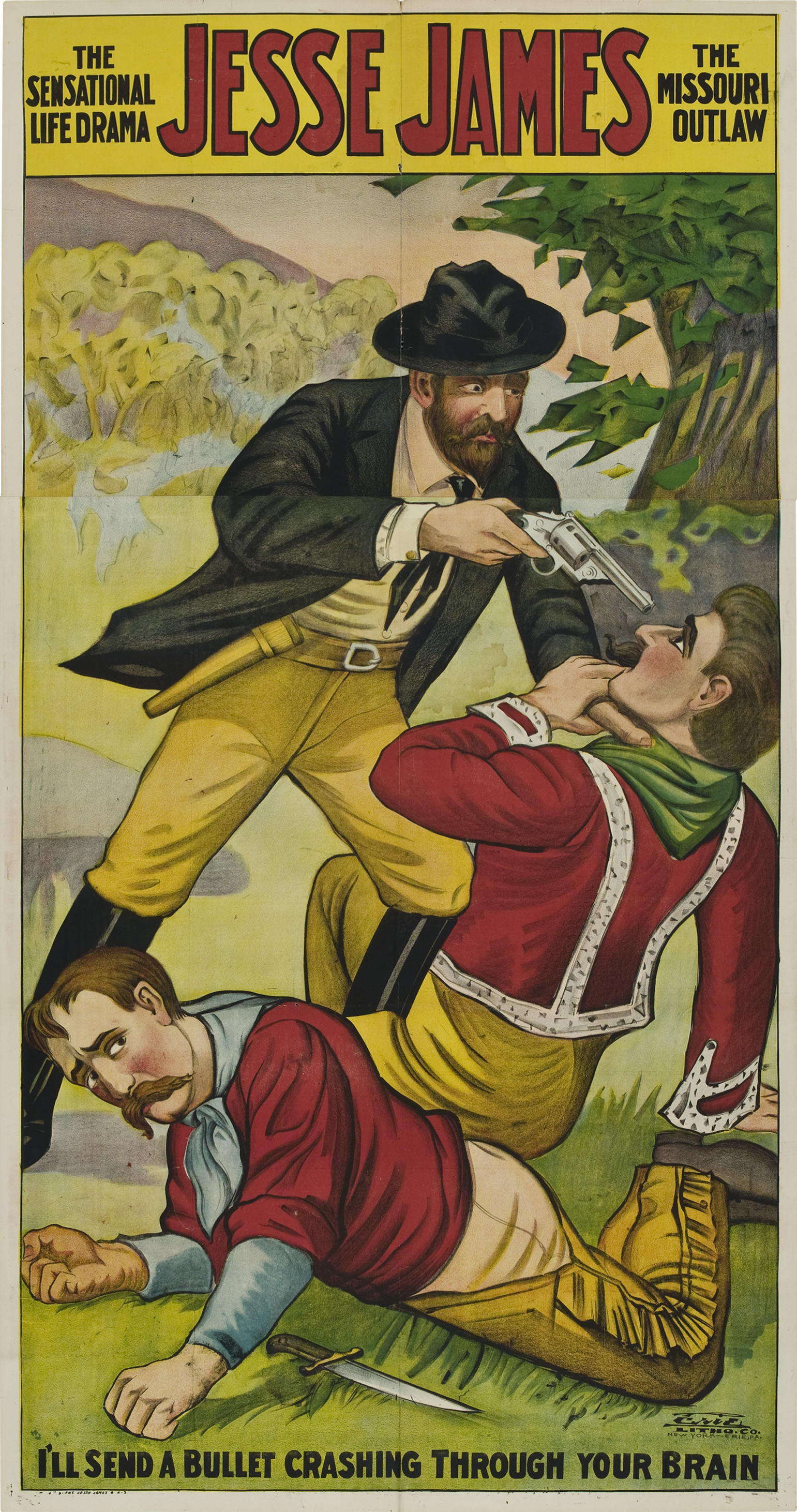
A definitive 7/10 rating for a film that redefined the boundaries of cult cinema. Jesse James as the Outlaw remains a cornerstone of transgressive art.
The year 1921 was a threshold for the American Western, a period where the grit of the frontier was still a living memory for some, yet already being polished into the shimmering artifice of Hollywood legend. In this cultural crucible, Jesse James as the Outlaw emerges not merely as a motion picture, but as a fascinating act of reputation management. Starring Jesse James Jr. as his own father, the film carries a weight of perceived authenticity that few contemporary biopics could hope to emulate. It is a work of cinematic hagiography that attempts to reconcile the violent reality of the Missouri border wars with the romanticized ideal of the 'gentleman bandit.' Watching this today, one is struck by the earnestness of its mission—to strip away the cold steel of the criminal and reveal the warm blood of the victimized farmer.
The framing device of this film is perhaps its most intellectually stimulating component. By positioning Jesse James Jr. as the narrator, recounting his father’s life to an eastern suitor, the film acknowledges the power of storytelling as a currency of social acceptance. This isn't just a chronicle of robberies; it is a vetting process. The suitor, representing the skeptical, civilized East, must be convinced that the bloodline he wishes to join is one of honor, not infamy. This meta-textual layer adds a profound depth to the viewing experience. We aren't just watching the life of Jesse James; we are watching a son perform the labor of redeeming his father’s ghost. It reminds one of the moral complexities found in The Transgressor, where the line between criminal action and personal justification becomes dangerously thin.
The cinematography, though primitive by modern standards, captures the Missouri landscape with a stark, almost documentary-like quality. The return of Jesse from the Civil War is handled with a melancholic restraint. We see a man exhausted by the internecine strife of the rebellion, seeking nothing more than the stultifying peace of agricultural labor. However, the film posits that society—or specifically, the predatory remnants of the wartime legal apparatus—will not allow the soldier to become the civilian. The false accusation of a bank robbery serves as the inciting incident that shatters his bucolic dreams. It’s a narrative beat that echoes the social alienation explored in Das Tagebuch einer Verlorenen, where the protagonist is cast out of respectable society by forces beyond their control.
If Jesse is the reluctant hero, the Pinkerton Detective Agency is portrayed with a level of villainy that borders on the operatic. The film does not shy away from the brutality of the agency’s tactics. The scene depicting the maiming of Jesse’s family is the emotional epicenter of the production. It serves to justify every subsequent bullet fired by the James gang. In the cinematic language of 1921, the violation of the home was the ultimate sin, and by showing the Pinkertons as the aggressors against women and children, the film effectively transfers the moral burden of the 'outlaw' label from Jesse to the state. This thematic exploration of the 'law' as an instrument of oppression is a recurring trope in early frontier cinema, much like the struggles depicted in The Life of a Jackeroo, though here it is amplified by the personal stakes of the James family.
To further the sanctification of its subject, the film lingers on Jesse’s charitable acts. These sequences are designed to counteract the headlines of the era. We see Jesse performing acts of kindness for the downtrodden, sharing the spoils of his 'forced' criminality with those who have been similarly discarded by the post-war economy. This 'Robin Hood' motif is essential to the film’s rhetoric. It suggests that Jesse James was not a parasite on society, but a redistributionist force working outside a corrupt system. This tension between the letter of the law and the spirit of justice is handled with more nuance than one might expect. It forces the viewer to confront the same dilemma seen in Cheating the Piper, where the cost of survival often demands a sacrifice of one's moral purity.
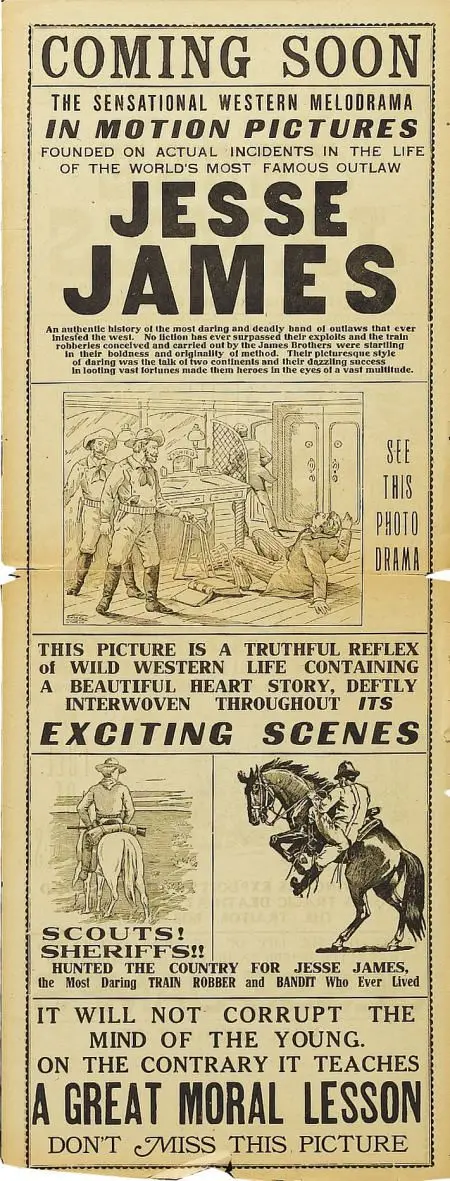
Jesse James Jr. provides a performance that is inherently fascinating. While he lacks the seasoned theatricality of the era’s major stars, there is a somber dignity to his presence. He carries himself with the posture of a man who understands the gravity of the name he bears. The supporting cast, including Gilbert Holmes and Marguerite Hungerford, provide the necessary emotional scaffolding, though they often lean into the expressive pantomime typical of the silent era. The pacing is deliberate, allowing the weight of the tragedy to settle into the viewer’s consciousness. It lacks the frantic energy of contemporary serials, opting instead for a stately, almost funereal progression toward the inevitable finale.
The direction by Franklin B. Coates (who also wrote the script) focuses on the human element rather than the spectacle of the heist. The robberies themselves are often secondary to the emotional aftermath. This is a character study disguised as a Western. The use of title cards is particularly effective, often injecting a poetic or defensive tone that guides the audience’s sympathies. It reminds me of the narrative construction in The Gulf Between, where the chasm between different social strata is bridged by shared human suffering.
The climax of the film—the assassination of Jesse James by Bob Ford—is handled with a sense of cosmic injustice. Ford is depicted not as a lawman or a hero, but as a sycophant who betrays the ultimate bond of brotherhood for a handful of silver. The staging of the scene, with Jesse unarmed and adjusting a picture on the wall, is iconic. It is the moment of apotheosis, where the outlaw is finally transformed into the martyr. The film concludes by returning to the framing device, where the suitor is left to contemplate the legacy of the man whose daughter he wishes to marry. It is a powerful ending that challenges the audience to look past the 'outlaw' label and see the human being forged in the fires of a broken nation.
When compared to other films of the period like If My Country Should Call, which deals with themes of patriotism and sacrifice, Jesse James as the Outlaw offers a more cynical, yet paradoxically more hopeful, view of the American character. It suggests that even in the face of systemic corruption and personal tragedy, a man can maintain a core of nobility. The film is a vital piece of cinematic history, not because it provides an accurate historical record, but because it shows us how the West wanted to remember itself. It is a ghost story told by the ghost’s own son, and in that telling, it finds a unique kind of truth.
Ultimately, the film stands as a testament to the power of the image to reshape history. While the real Jesse James was undoubtedly a more complicated and often more brutal figure than depicted here, the film captures the *myth* of Jesse James with unerring accuracy. It is the myth of the man who refused to be broken by a world that had already lost its way. For anyone interested in the intersection of film, folklore, and the American identity, this is essential viewing. It possesses a raw, unvarnished quality that makes it feel more immediate than many of the big-budget Westerns that would follow in the coming decades. It is a quiet, flickering flame of a movie that still manages to cast a very long shadow.
IMDb 5.8
1927
Community
Log in to comment.