DbcultAccessing Vault...
Cult Review
Senior Film Conservator
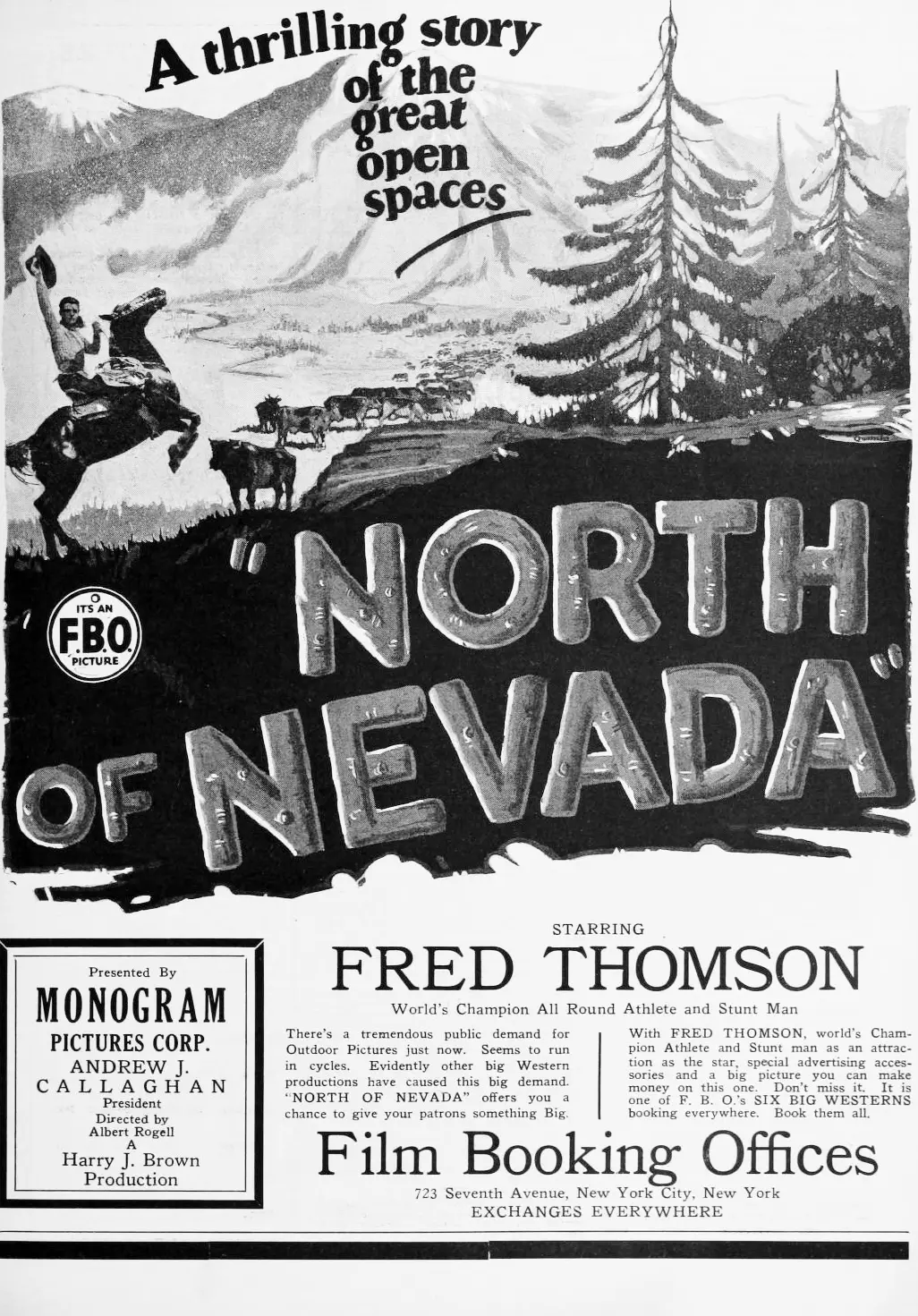
The Silent Frontier and the Myth of the Sovereign Ranch
To inhabit the world of North of Nevada is to step into a cinematic epoch where the landscape was not merely a backdrop but a primary antagonist. Released in 1924, this Fred Thomson vehicle operates within the established tropes of the silent Western while simultaneously flirting with the complexities of early 20th-century progress. The film serves as a fascinating specimen of the transition from the lawless frontier to a world governed by deeds, dams, and the encroaching influence of Eastern urbanity. Unlike the more surreal or experimental offerings of the era, such as Morphium, this production remains grounded in the visceral reality of dirt, sweat, and horsehair.
The narrative propellant—a missing signature on a will—is a classic MacGuffin that exposes the fragility of the Western social contract. In the absence of the written law, the 'natural' law of the foreman, Tom Taylor, is challenged by the 'civilized' law of the Ridgeway heirs. This dichotomy is the heartbeat of the film. We see a similar exploration of territorial rights and cultural friction in The Secret of the Pueblo, yet here the stakes are amplified by the presence of a dam—a symbol of man's attempt to chain the wildness of Nevada.
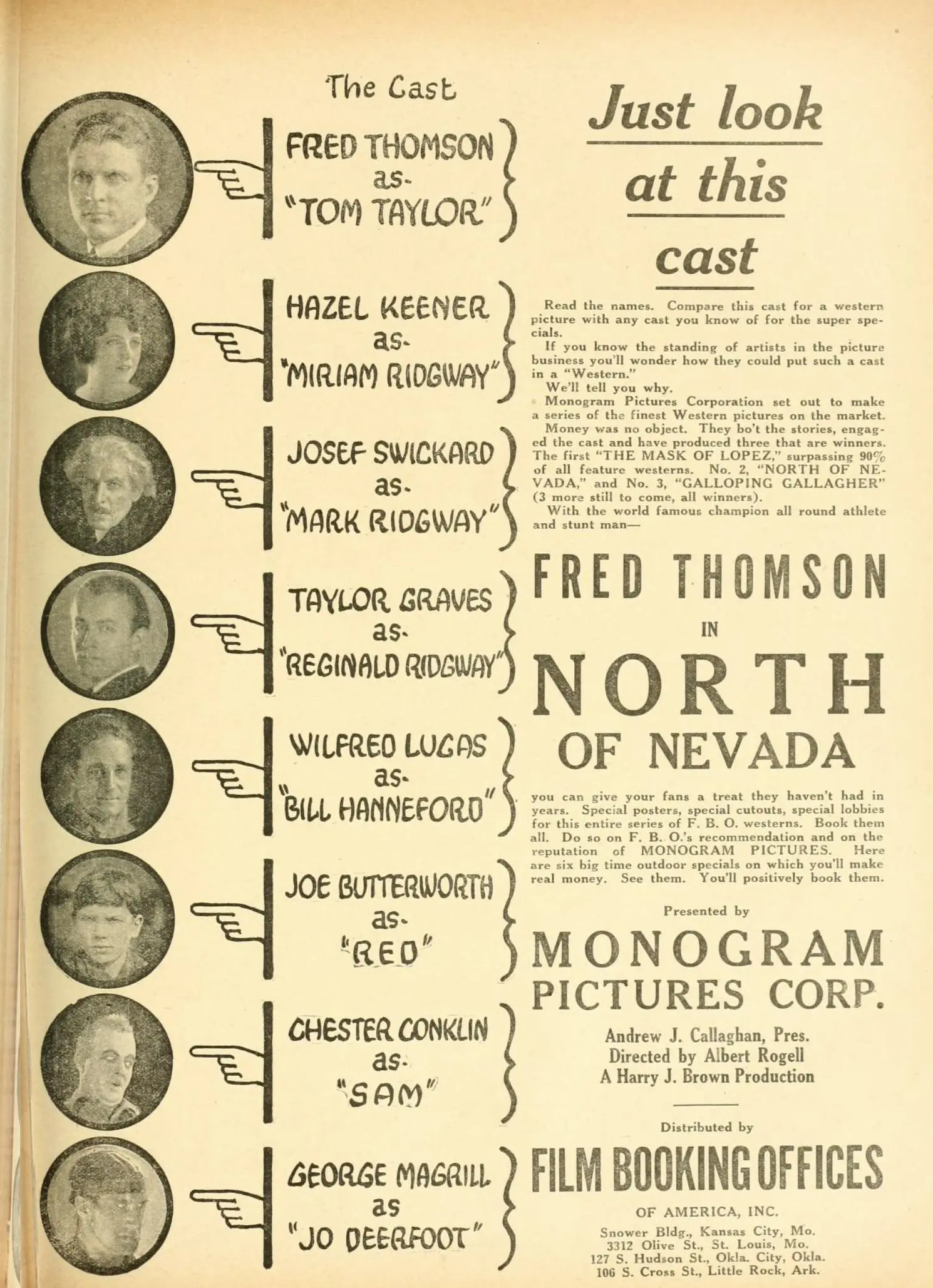
Fred Thomson, often overshadowed in historical retrospectives by the likes of Tom Mix or William S. Hart, brings a distinctive collegiate vigor to the role of Tom Taylor. His performance is less about the grit of the gunfighter and more about the grace of the athlete. In North of Nevada, his physicality is the moral compass. When he moves, he does so with an economy of motion that suggests a man perfectly synchronized with his environment. This stands in stark, almost cruel contrast to the character of Reggie Ridgeway, played with a fluttering, effeminate incompetence by Taylor Graves.
The film’s portrayal of Reggie is a fascinating, if problematic, relic of its time. He represents the perceived rot of the East—a man who has lost his masculine utility through the comforts of the city. His susceptibility to Joe Deerfoot’s manipulation is presented not just as a failure of intellect, but as a failure of character. While contemporary viewers might find the 'effeminate' coding of his stupidity to be jarring, it serves the film's thematic purpose: the West is no place for the soft. This theme of the 'unfit' heir is a recurring motif in silent drama, occasionally echoed in the more somber tones of Dombey and Son.
Perhaps the most complex element of the film is George Magrill’s portrayal of Joe Deerfoot. Described as a "college-educated half-breed," Deerfoot is a character born of the anxieties of the 1920s. He is the 'other' who has acquired the tools of the white man—education and legal acumen—and uses them to subvert the established order. His villainy is not one of primitive savagery, but of intellectual predation. He understands the value of water rights in a way the ranch owners do not, foreshadowing the hydro-political noir of later decades.
Deerfoot’s status as an educated indigenous man makes him a more formidable threat than the typical outlaw. He operates in the shadows of contracts and signatures before resorting to the primal violence of kidnapping and stabbings. This intersection of modern greed and ancient landscape creates a tension that is far more sophisticated than the simple 'cowboys and Indians' dynamic often attributed to this genre. For a comparison in how silent cinema handled complex social hierarchies, one might look toward the nuanced social strata in A Common Level.
It would be a critical oversight to discuss North of Nevada without centering the contribution of Silver King the Horse. In the 1920s, animal stars were often the primary draw for audiences, and Silver King was a titan among them. His performance here transcends mere stunt work; he is the narrative’s ultimate arbiter of justice. When the human protagonist is incapacitated—stabbed and cast into a lake—it is the horse that takes the initiative.
The sequence where Silver King tramples Deerfoot to death is surprisingly visceral. It suggests a natural world that will not be exploited by the likes of Deerfoot. Furthermore, the horse’s leap from a precipice into the water to save Tom Taylor is a breathtaking moment of silent cinema spectacle. It is a sequence of such audacity that it makes the domestic dramas of The Faithful Heart seem positively sedentary. Silver King is not just a companion; he is a force of nature, a white-maned deity that restores the moral order when human systems fail.
The visual composition of the film, directed by Albert S. Rogell, utilizes the vastness of the Nevada landscape to emphasize the isolation of the characters. The camera often lingers on the horizon, creating a sense of scale that diminishes the petty squabbles of the Ridgeway heirs. The use of natural light, particularly in the mountain sequences, provides a texture that is often lost in modern digital Westerns. There is a tactile quality to the film—the dust kicked up by hooves, the spray of the water from the dam—that connects the viewer to the physical labor of ranch life.
While the film lacks the avant-garde editing of Soviet contemporaries like Literaturno-instruktorskiy agitparokhod vtsik 'Krasnaia Zvezda', its pacing is remarkably modern. The transition from the comedic interludes involving the city-slickers to the high-stakes action of the finale is handled with a deftness that keeps the 1500-word-equivalent narrative from sagging. The mountain lair of Joe Deerfoot is shot with a sense of looming dread, utilizing shadows and rocky crags to create a labyrinthine atmosphere that mirrors the villain's devious mind.
The romance between Tom and Marion serves as the bridge between the two worlds. Marion Jackson’s screenplay smartly allows Marion to be more than a damsel; she is the prize for which the soul of the ranch is fought. Her eventual rejection of her brother’s weakness and her embrace of the ranching life represents the idealization of the West as a place of rebirth. By sending Reggie back East on a train—the very symbol of the encroaching modernity that brought him there—the film effectively purges itself of the 'unnatural' elements. This restoration of the status quo is a common theme in the conquest narratives of the time, much like the triumphant arcs in The Spirit of the Conqueror.
In many ways, North of Nevada is a film about the necessity of strength. It argues that ownership is not merely a matter of legal documentation, but of physical and moral stewardship. Tom Taylor earns the ranch not through the will of Mark Ridgeway, but through his blood, his sweat, and his connection to Silver King. This is the ultimate Western fantasy: that the land belongs to those who are strong enough to hold it.
Viewing North of Nevada a century after its release, one is struck by its enduring vitality. While some of its social characterizations are undeniably dated, its core conflict remains resonant. It is a film about the anxiety of transition—the fear that the rugged virtues of the past will be swindled away by the cunning of the future. It lacks the cynical edge of Love Without Question, opting instead for a populist heroism that is both naive and deeply satisfying.
The film succeeds because it understands the spectacle. Whether it is the slapstick of a city-slicker out of his element or the heart-stopping leap of a horse into a mountain lake, the movie never forgets to entertain. It occupies a space between the pure comedy of Going! Going! Gone! and the dramatic intensity of La dame masquée. For the silent film enthusiast, it is an essential text; for the casual viewer, it is a window into a world where a man, his horse, and his honor were enough to hold back the tide of a changing world. In the grand tapestry of 1924, North of Nevada stands as a vibrant, sun-drenched thread of American myth-making.
IMDb —
1928
Community
Log in to comment.