DbcultAccessing Vault...
Cult Review
Senior Film Conservator
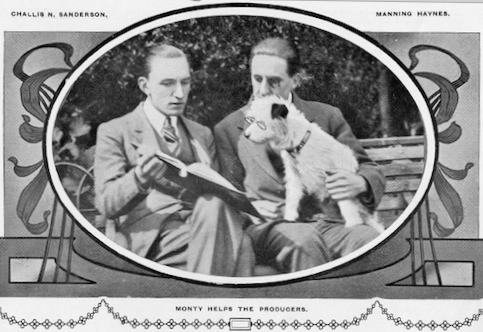
In the pantheon of silent cinema, few films dare to center their narratives on the unspoken wisdom of animals. Monty Works the Wires, a 1916 relic now resurrected for modern audiences, achieves this audacious feat with a narrative that is equal parts fable, satire, and emotional autopsy. The film’s premise—a collie named Monty recounting his master’s disastrous marriage to a Pekinese owner to a wide-eyed dachshund—is deceptively simple, yet it unfurls into a layered meditation on human folly. This is a film that whispers its truths through the ears of man’s best friend, demanding viewers to listen beyond the spectacle of intertitles and into the silent spaces between.
The film’s opening frames immediately establish its tonal duality: a pastoral English countryside bathed in golden light, juxtaposed with the clashing personalities of its human characters. Monty, played with dignified stillness by an unnamed canine co-star, serves as both narrator and moral compass. His dachshund companion, the eager pupil of this tragic tale, is portrayed with a mix of curiosity and naivety, a silent stand-in for the audience’s own expectations. The intertitles, penned by Lydia Hayward and H. Manning Haynes, are a marvel of economy, each line a haiku of human absurdity. When Monty remarks, “Her jewels sparkled like her lies; his pride was a cage of his own making,” the words linger long after the film’s credits roll.
The central conflict—the master’s marriage to the Pekinese owner—unfolds with the tragic inevitability of Greek drama. Mildred Evelyn, as the Pekinese owner, brings a venomous elegance to her role, her every gesture calculated to project wealth while betraying desperation. H. Manning Haynes, playing the besotted husband, is a study in misplaced idealism, his character’s arc a descent from hopeful infatuation to hollow resignation. The Pekinese itself, though a minor character, becomes a symbol of the transactional nature of the union; its presence is a constant reminder of the husband’s prioritization of status over emotional truth.
What elevates Monty Works the Wires beyond its contemporaries is its radical narrative choice to let animals frame the human drama. The collie’s perspective is unflinching yet compassionate, offering a critique of human relationships that is both absurdist and deeply human. In one particularly striking sequence, Monty watches his master’s new wife mistreat her Pekinese, her cruelty masked as affection. The collie’s reaction—a slow, deliberate turn of the head toward the camera—is a silent indictment of hypocrisy, a moment of meta-commentary that modern filmmakers would envy. This is the film’s greatest triumph: it uses the innocence of its canine narrator to expose the rot beneath human civility.

Technically, the film is a marvel of early 20th-century craftsmanship. The set designs, particularly the juxtaposition of rustic countryside scenes with the opulent yet sterile interiors of the Pekinese owner’s home, are masterclasses in visual storytelling. The use of chiaroscuro in the film’s final act—where the collie’s shadow looms large over a broken marriage—feels shockingly modern, a technique that prefigures the Expressionist innovations of German cinema. Even the absence of synchronized sound becomes a narrative tool; the silence amplifies the emotional subtext, demanding viewers focus on the actors’ expressions and the collie’s body language.
Comparisons to other early films are inevitable. Like Double Trouble, Monty Works the Wires uses animal characters to explore human foibles, though it lacks the slapstick energy of its 1929 counterpart. Its darker themes align it more with Lest We Forget, another silent-era drama that grapples with regret and societal decay. Yet Monty distinguishes itself with its unique narrative lens. The film’s emotional core resonates like a forgotten cousin of Joseph and His Coat of Many Colors, though its parable is far less didactic, preferring ambiguity to moralizing.
The performances are uniformly exceptional, though the film’s most compelling actor remains the collie. The dog’s eyes convey a range of emotions—patience, sorrow, quiet judgment—that rival the performances of his human co-stars. Mildred Evelyn, in particular, deserves praise for her ability to balance vanity with vulnerability, a feat that makes her character’s downfall all the more tragic. H. Manning Haynes, while less dynamic, delivers a performance that is deliberately restrained, his character’s passivity a mirror to the audience’s own complicity in the story’s unraveling.
The film’s pacing, however, is its most polarizing element. At moments, the narrative lingers too long on the dachshund’s reactions, creating a sense of narrative stasis that some viewers may find frustrating. Yet these pauses are intentional; they allow the audience to sit with the emotional weight of the collie’s story. The film’s final act, which sees the dachshund wandering alone through a changed world, is a masterclass in visual storytelling. The absence of the collie, now a silent figure in the background, leaves the dachshund as a symbol of inherited wisdom and unresolved grief—a haunting coda that lingers long after the final reel.
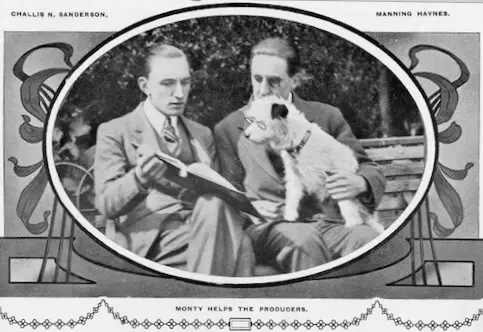
Visually, Monty Works the Wires is a feast for the eyes. The cinematography, though rudimentary by today’s standards, uses negative space and natural lighting to create a dreamlike quality. The collie’s movements through these spaces are choreographed with precision, each glance and gesture a deliberate narrative choice. The film’s use of color—particularly in the Pekinese owner’s costumes—is a subtle commentary on the artificiality of her world, her pastels a mockery of the warmth found in Monty’s own rustic settings.
In the broader context of silent film history, Monty Works the Wires occupies a curious space. It lacks the overt spectacle of Salomy Jane or the grand historical sweep of Joseph and His Coat of Many Colors, yet it is no less ambitious in its storytelling. Its focus on domestic drama and animal perspective is a bold departure from the action-driven narratives of its era. The film’s themes of loyalty, miscommunication, and societal pretension feel disturbingly relevant to modern audiences, a testament to its timelessness.
For those seeking a film that challenges the boundaries of narrative form, Monty Works the Wires is a revelation. It is a work that demands patience and attention, rewarding viewers with a story that is as much about the silences between words as it is about the dialogue itself. The collie’s final glance at the camera—a mixture of resignation and quiet hope—is a masterstroke, a reminder that even in the darkest tales, there is room for empathy. This is not merely a film about animal loyalty; it is a mirror held up to human fragility, inviting us to see ourselves through the eyes of those we often overlook.
In conclusion, Monty Works the Wires is a cinematic anomaly that defies categorization. It is a silent film that speaks volumes, a domestic drama with mythic undertones, and a fable that feels startlingly contemporary. While its pacing may alienate some, its emotional depth and innovative storytelling are undeniable. For lovers of early cinema and those who appreciate stories told through unconventional lenses, this film is a must-watch. It is a reminder that the best films are those that make us see the world anew—and in this case, through the eyes of a collie who knows more than he lets on.
IMDb 5.6
1931
Community
Log in to comment.