DbcultAccessing Vault...
Cult Review
Senior Film Conservator
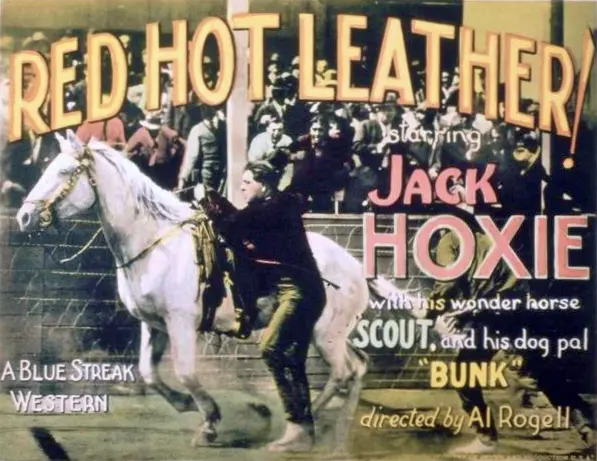
Is Red Hot Leather worth your time in the modern era? Short answer: yes, but only if you view it as a masterclass in silent-era kinetic energy rather than a complex character study. This is a film for those who appreciate the physical language of the early Western, and it is most certainly not for viewers who require the nuanced, slow-burn pacing of contemporary prestige dramas.
The film serves as a fascinating artifact of a time when the Western was transitioning from mythic poetry into a more grounded, stunt-heavy form of entertainment. Jack Hoxie, a man whose presence on screen is defined more by his muscle memory than his facial expressions, provides a performance that is refreshingly devoid of the over-the-top theatricality often found in silent films like Behind Masks. Instead, Hoxie offers a rugged, stoic athleticism that feels remarkably modern.
To understand if this film fits your palette, you must decide what you value in silent cinema. If you are looking for the raw, dusty reality of the 1920s West, this is essential viewing. If you are looking for a deep exploration of the human condition, you might find it lacking.
1) This film works because it integrates the rodeo climax into the narrative as a functional plot device rather than a mere exhibition of skill.
2) This film fails because the antagonist, Morton Kane, is a one-dimensional caricature of greed whose motivations are never explored beyond a basic desire for oil wealth.
3) You should watch it if you want to see the precise moment where the Western genre began to value the automobile as much as the horse as a tool for heroism.
Jack Hoxie was not an actor in the traditional sense; he was a force of nature. In Red Hot Leather, his performance is centered around his movement. When he is waylaid by Kane’s men, the ensuing struggle isn't choreographed with the clean, rhythmic grace of modern fight scenes. It is messy, desperate, and filled with a sense of genuine danger. This isn't the stylized violence of Die rote Nacht; it’s a blue-collar brawl.
One specific scene stands out: Jack’s escape in Kane’s car. There is a delicious irony in seeing a 'real cowboy'—as Ellen Rand describes him—forced to command a piece of modern machinery to save his traditional way of life. The way Hoxie handles the steering wheel is as aggressive as the way he handles a lariat. It’s a jarring but effective visual metaphor for the 1920s West, a place where the horse and the internal combustion engine were fighting for dominance.
The plot of Red Hot Leather hinges on the discovery of oil, a common trope that reflects the anxieties of the era. Much like the industrial shifts seen in Ride for Your Life, the film pits the honest labor of the rancher against the predatory speculation of the oilman. Morton Kane isn't just a villain; he is the personification of a new, colder America that Jack’s father, played with a pathetic fragility by William H. Turner, cannot understand.
The film’s portrayal of Jack’s father is surprisingly moving. While many silent films opted for grand gestures of despair, Turner’s performance is inward-facing. He looks like a man who has been outpaced by time. When he learns the ranch might be lost, his paralysis feels less like a medical condition and more like a spiritual defeat. This adds a layer of stakes that elevates the film above a standard B-Western.
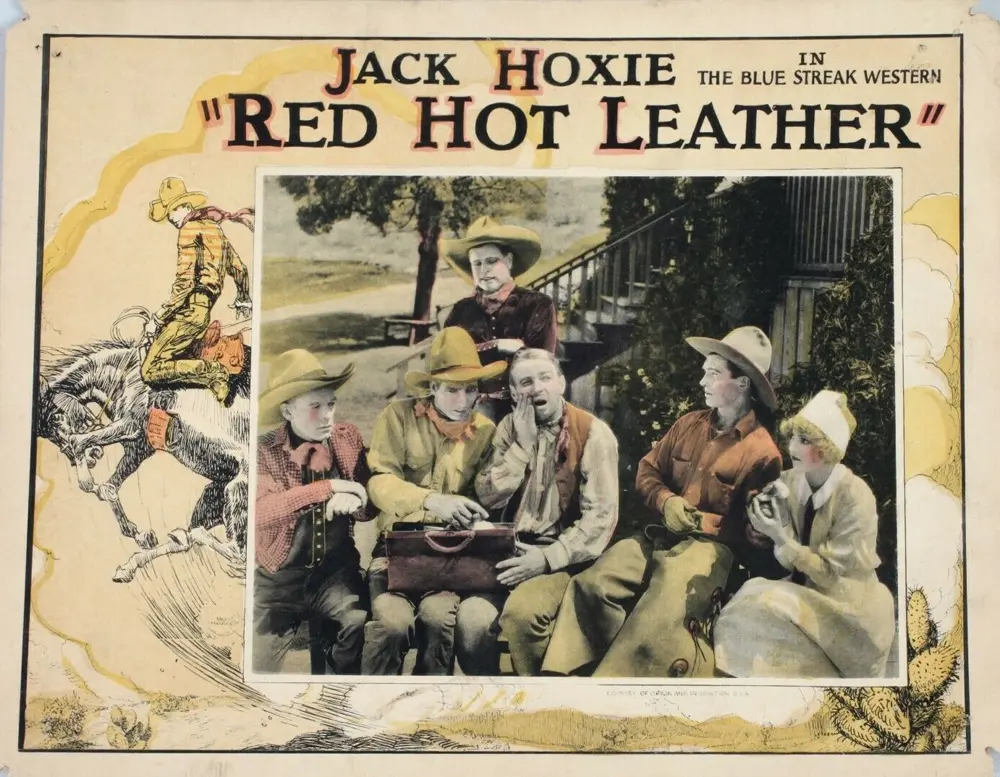
It would be a mistake to review this film without mentioning Scout the Horse and Bunk the Dog. In the 1920s, animal stars were often billed alongside their human counterparts, and for good reason. Scout provides a level of personality that occasionally outshines the human leads. In the relay race sequences, the camera lingers on Scout’s power and intelligence, making the horse a character with his own agency rather than just a prop.
This focus on animals adds a grounded, naturalistic feel to the film. While films like Bobbie of the Ballet focused on the artifice of the stage, Red Hot Leather finds its soul in the dirt and the sweat of living creatures. The cinematography by Albert S. Rogell captures the dust of the rodeo in a way that feels tactile. You can almost smell the leather and the manure.
Yes, specifically for the rodeo sequences. These are not staged with the safety nets of modern Hollywood. When Jack Hoxie enters the bucking events, he is actually riding. The danger is palpable. For a modern audience used to CGI, there is a refreshing honesty in seeing a man actually risk his neck for a shot. It makes the ending feel earned, even if the resolution is a bit too neat.
However, if you are looking for a film with the narrative complexity of Love and the Woman, you will be disappointed. The romance between Jack and Ellen is perfunctory. Ellen is less a character and more a reward for Jack’s heroism. Ena Gregory does what she can with the role, but her primary function is to look impressed by Jack’s masculinity.
Pros:
Cons:
Albert S. Rogell was a director who understood the value of a frame. In Red Hot Leather, he uses wide shots to establish the isolation of the ranch and tight close-ups to emphasize the tension of the rodeo. Unlike the more experimental framing in L'assassino del corriere di Lione, Rogell keeps things functional. He wants you to see the action clearly.
The pacing is relentless. From the moment Jack returns home, the film moves with the speed of a galloping horse. There is very little 'fat' on this narrative. While some might argue this prevents character depth, it ensures that the audience is never bored. It is a lean, mean filmmaking machine that knows exactly what it wants to be.
"The film doesn't ask for your sympathy; it demands your attention through sheer physical effort."
Red Hot Leather is a meat-and-potatoes Western that delivers exactly what it promises. It doesn't have the artistic pretensions of The Great White Silence, but it has a heart of pure adrenaline. Jack Hoxie is a captivating lead precisely because he feels like a man who actually belongs in the saddle. It works. But it’s flawed. The simplicity is its strength and its weakness.
Ultimately, this film is a testament to the power of the physical image. In a world before sound, Hoxie and Rogell told a story of greed, family, and redemption through movement, dust, and speed. It remains a vital piece of Western history that deserves a look from any serious cinephile.
IMDb 5.2
1933
Community
Log in to comment.