DbcultAccessing Vault...
Cult Review
Senior Film Conservator
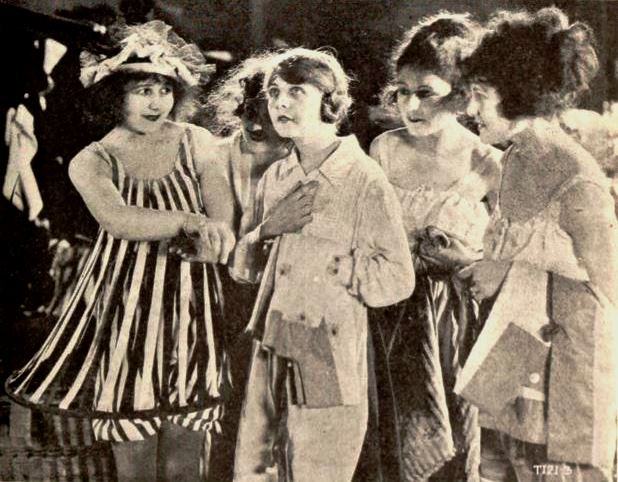
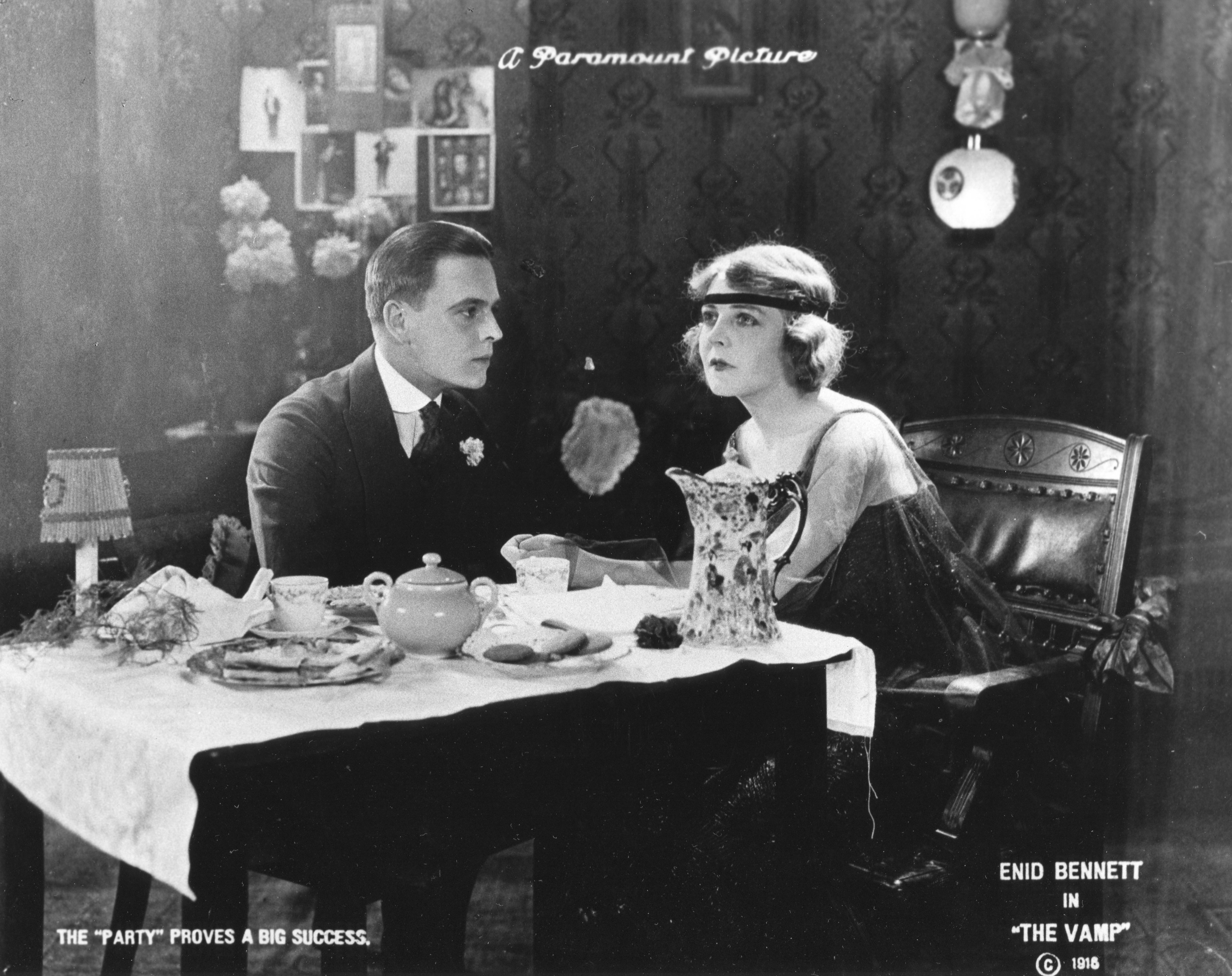
Stepping back into the flickering glow of the early 20th century, we encounter 'The Vamp,' a cinematic confection from 1918 that, despite its age, still possesses a surprising bite. Directed with a certain theatrical flair, this film, penned by C. Gardner Sullivan, offers more than just a glimpse into the narrative conventions of its time; it provides a fascinating commentary on female agency, societal expectations, and the unexpected utility of personal charm in matters both romantic and national. The genius of 'The Vamp' lies not merely in its straightforward plot, but in the nuanced portrayal of its titular character, Nancy, brought to effervescent life by the captivating Enid Bennett. Her journey from backstage ingenue to an unwitting patriotic operative is a delightful exploration of transformation, often punctuated by moments of genuine humor and understated drama.
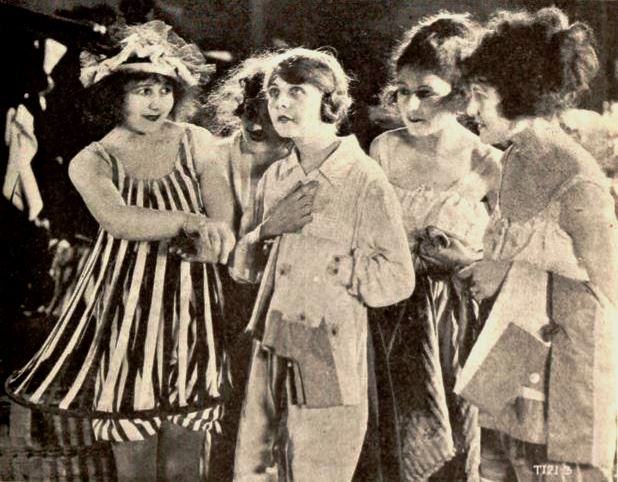
At its core, 'The Vamp' is a story of education – albeit one conducted in the unconventional classrooms of a musical-comedy theatre's wings. Nancy, initially a picture of wide-eyed innocence, is an anachronism in a world of worldly showgirls. Her naiveté, however, isn't a weakness but a blank canvas awaiting instruction. The chorus girls, with their knowing glances and practiced allure, become her unwitting mentors, initiating her into the arcane mysteries of 'vamping.' This isn't just about batting eyelashes; it’s a calculated, almost scientific method of attracting and, more importantly, controlling a man's attention. It's a performance in itself, a delicate dance of suggestion and allure, designed to disarm and captivate. Enid Bennett's portrayal of Nancy's learning curve is particularly engaging; we see her initially clumsy attempts evolve into a more refined, albeit still somewhat innocent, application of these new powers. It's a testament to Bennett's skill that Nancy never loses her fundamental sweetness, even as she embraces her inner 'vamp.' This transformation resonates with other films of the era that explored female self-discovery, though often with more tragic undertones, unlike the relatively lighthearted approach here. One might draw a thematic parallel to films like The Sin Woman, which also delves into a woman's journey of self-discovery through unconventional means, though 'The Vamp' maintains a decidedly more comedic and less morally burdened tone.
Nancy’s first target is the shy minister, a man whose piety and reserved demeanor make him an unlikely candidate for a 'vamping' victim. Yet, it is precisely this contrast that makes their courtship so charmingly comedic. The minister, played with suitable bashfulness by Douglas MacLean, is utterly unprepared for Nancy's newfound, albeit still clumsy, seductive overtures. The film cleverly plays on the humor of a sacred figure being subjected to such worldly tactics. The success of Nancy’s vamping on the minister is swift and decisive, leading to their marriage and a relocation to a mining town. This transition marks a significant shift in Nancy’s life, moving her from the artificial glitz of the theatre to the stark realities of a working-class community. It suggests a domestication, a settling down, yet as the narrative unfolds, it becomes clear that Nancy's unique skills are far from redundant in her new environment. The early scenes of their married life, though brief, establish a foundation of genuine affection, making her later actions feel less manipulative and more an extension of her inherent character, albeit one now equipped with a potent, albeit unusual, skill set. The simplicity of their union, contrasted with the complexities of the world, echoes the straightforward romances seen in films like Volunteer Organist, though 'The Vamp' injects a layer of playful subversion.
The placid existence of the mining town is soon disturbed by the looming specter of international conflict, specifically the machinations of a German operative. The film, produced during World War I, taps into the prevalent anxieties of the era, portraying foreign espionage as a tangible threat even in remote American communities. This German spy, expertly played by Robert McKim, is not a cartoonish villain but a subtle agitator, sowing seeds of dissension amongst the miners, threatening to disrupt vital wartime production. His presence transforms 'The Vamp' from a romantic comedy into something more akin to a wartime thriller, albeit one filtered through Nancy's unique perspective. The stakes are elevated dramatically; what began as a personal quest for love now morphs into a matter of national security. This shift in genre is handled with remarkable fluidity, a testament to C. Gardner Sullivan's writing, which manages to integrate disparate elements without feeling jarring. Films of this period often reflected contemporary political anxieties, much like Barbara Frietchie, which also touched upon themes of patriotism and loyalty during conflict, but 'The Vamp' injects a more unconventional hero into the fray.
It is here that Nancy's acquired skill set finds its most unexpected and potent application. Faced with a crisis that threatens her adopted community and, by extension, the national war effort, Nancy is called upon to deploy her 'vamping' technique once more. This time, the target is not a shy minister but a dangerous spy, and the objective is not romance, but intelligence and counter-espionage. The film cleverly positions Nancy's feminine wiles as a legitimate, even heroic, tool in the face of a national threat. Her seduction of the spy is not portrayed as morally compromising, but rather as a clever, necessary act of patriotism. It’s a bold statement for a film of its time, suggesting that traditionally feminine attributes, often relegated to the domestic sphere or dismissed as superficial, could be instrumental in matters of grave importance. Enid Bennett navigates this transformation with aplomb, maintaining Nancy's underlying goodness while imbuing her with a newfound sense of purpose and daring. The climax, where Nancy outsmarts the operative, is a satisfying culmination of her journey, proving that the 'vamp' can be both alluring and incredibly effective. This narrative arc, where a seemingly ordinary woman rises to an extraordinary challenge, finds echoes in other silent films featuring strong female leads, such as Leah Kleschna or The Spartan Girl, though 'The Vamp' injects a comedic lightness often absent in more dramatic fare.
Beyond Enid Bennett's radiant central performance, 'The Vamp' benefits from a strong supporting cast that grounds its more fantastical elements. J.P. Lockney, Charles K. French, and Melbourne MacDowell provide solid performances that add texture to the mining town setting and the broader narrative. Lockney, in particular, often played authoritative or paternal figures, lending a sense of gravitas. Charles K. French's presence, frequently seen in character roles across numerous silent films, brings a familiar, comforting quality. Melbourne MacDowell, a veteran actor, contributes to the film's theatrical sensibility. Robert McKim, as the German operative, manages to convey menace and cunning without resorting to over-the-top villainy, a common pitfall in wartime propaganda films. His understated performance makes the threat feel more insidious and therefore more compelling. Douglas MacLean, as the shy minister, is endearing in his awkwardness, making his eventual succumb to Nancy's charms all the more delightful. The chemistry between Bennett and MacLean, though conveyed through silent gestures and expressions, is palpable and forms the emotional core of the film. C. Gardner Sullivan's screenplay gives each character enough space to contribute to the overall narrative tapestry, ensuring that even minor roles feel significant. The ensemble works in concert to create a believable, if slightly heightened, world where comedy and peril coexist. This collaborative strength is a hallmark of well-crafted silent films, where every gesture and expression must convey meaning, much like the intricate character dynamics observed in The Flying Twins, where distinct personalities drive the plot.
C. Gardner Sullivan, a prolific screenwriter of the silent era, demonstrates his considerable talent in 'The Vamp.' His ability to blend genres – from romantic comedy to espionage thriller – with such seamlessness is commendable. The script is remarkably well-structured, allowing Nancy's character to evolve organically in response to the challenges she faces. Sullivan avoids simplistic characterizations, even for the 'villain,' and imbues the narrative with a sense of playful wit. The concept of 'vamping' itself, as a skill that can be taught and applied, is a brilliant narrative device, providing both comedic opportunities and a powerful tool for the protagonist. Sullivan's writing often featured strong, resourceful female characters, a progressive stance for the time. His understanding of pacing and dramatic tension, even within the confines of silent film, is evident throughout. The dialogue, though unseen, is clearly implied through the intertitles and the actors' performances, demonstrating a keen ear for naturalistic (for the era) exchanges. His contribution is pivotal in elevating 'The Vamp' beyond mere entertainment to a film with enduring thematic resonance. His work here could be compared to the intricate plotting seen in The Hand of Peril, where narrative twists are paramount, but with a lighter touch.
As a silent film, 'The Vamp' relies heavily on visual storytelling, and it largely succeeds. The direction, while not groundbreaking, is competent and effective, utilizing close-ups to emphasize emotional reactions and wider shots to establish setting. The pacing is well-judged, allowing moments of humor to breathe while maintaining a steady build-up of tension during the espionage segments. The film's aesthetic, typical of its time, showcases the burgeoning artistry of early cinema. The costumes and sets, particularly those in the theatre, are evocative and contribute to the film's charm. The use of intertitles is judicious, providing necessary exposition without overwhelming the visual narrative. What truly makes 'The Vamp' stand out, however, is its underlying thematic strength. It’s a film that subtly champions female ingenuity and adaptability. Nancy's journey is a microcosm of a broader societal shift, where women were beginning to assert their agency in increasingly public and impactful ways. The idea that traditionally feminine attributes could be harnessed for national good was a powerful message during wartime, perhaps offering a sense of empowerment to female audiences. The film's enduring appeal lies in this clever blending of personal narrative with larger historical context, presented through a lens of charming wit. It's a delightful example of how silent cinema could convey complex ideas with elegant simplicity. When viewed alongside other compelling silent narratives like Malombra or The Spotted Lily, 'The Vamp' carves out its own distinct niche through its unique blend of humor and patriotic fervor. Its playful spirit and unconventional heroism make it a fascinating watch, reminding us that even in the early days of cinema, storytellers were exploring nuanced facets of human experience, often with a surprising degree of sophistication. The way the film handles the delicate balance between comedy and suspense, a challenge for any filmmaker, is particularly noteworthy. It never fully descends into farce, nor does it become overly dramatic, maintaining a consistent tone that keeps the audience engaged from start to finish. This tonal mastery is a testament to the collaborative efforts of its director, writer, and cast, all working within the unique constraints and opportunities of the silent medium. The film is a vibrant artifact, reflecting the cultural zeitgeist of its era while simultaneously offering timeless themes of courage and cleverness. It's a reminder that even without spoken dialogue, cinema possessed an incredible power to captivate, entertain, and subtly influence its audience. The film's ability to remain relevant, even after more than a century, speaks volumes about its thoughtful construction and the universal appeal of its central character's journey. It stands as a testament to the foundational strengths of early narrative filmmaking, showcasing how compelling characters and well-structured plots could transcend the limitations of technology to deliver truly memorable cinematic experiences. The final moments of the film, where Nancy's triumph is secured not through brute force but through wit and charm, leave a lasting impression, solidifying her place as an unconventional, yet undeniably effective, heroine of the silent screen. This inventive approach to conflict resolution sets it apart from more conventional action-oriented narratives of the period, demonstrating a cleverness that continues to resonate with modern viewers. The film's legacy is perhaps found in its quiet assertion of feminine power, subtly woven into a tale that is, at its heart, simply fun.
'The Vamp' is more than just a historical curiosity; it’s a genuinely entertaining and surprisingly progressive silent film. Enid Bennett delivers a performance that is both endearing and empowering, anchoring a narrative that deftly weaves together romance, comedy, and wartime intrigue. C. Gardner Sullivan’s script is intelligent and engaging, providing a refreshing take on female heroism. For those accustomed to the more dramatic fare of the era, or even the outright melodramas like The Tides of Fate or Unprotected, 'The Vamp' offers a lighter, more whimsical counterpoint, proving that silent cinema had a broad spectrum of storytelling to offer. It’s a film that deserves to be rediscovered, not just for its historical significance, but for its sheer charm and cleverness. It reminds us that even in the absence of spoken words, a captivating story, well-told, can transcend time and continue to delight. The film’s ability to entertain while subtly commenting on societal roles and national duty is a testament to its enduring quality. It’s a gem that shines brightly, a testament to the ingenuity and talent of the early Hollywood era, and a must-see for anyone interested in the evolution of cinematic storytelling and the nuanced portrayal of female characters on screen. Go on, let 'The Vamp' charm you; you won't regret it.
IMDb —
1934
Community
Log in to comment.