DbcultAccessing Vault...
6.2/10
Senior Film Conservator
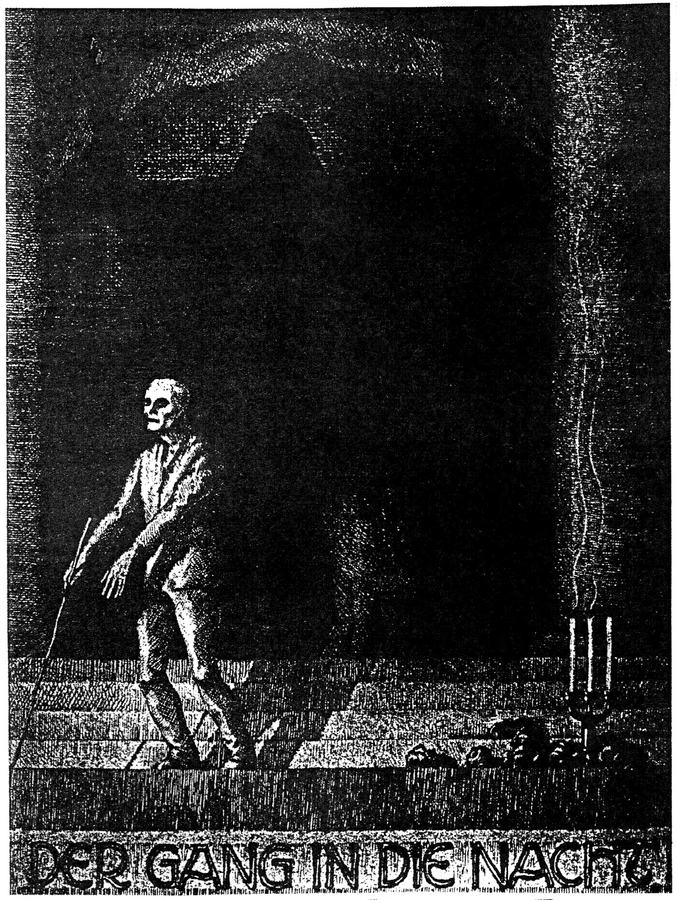
A definitive 6.2/10 rating for a film that redefined the boundaries of cult cinema. Journey into the Night remains a cornerstone of transgressive art.
The year 1920 stands as a monumental pillar in the architecture of cinematic history, a period where the silent frame began to breathe with a newfound, often terrifying, psychological complexity. Among the artifacts of this era, Journey into the Night (Der Gang in die Nacht) emerges not merely as a relic, but as a pulsating, fever-dream exploration of human frailty. Directed by the legendary F.W. Murnau and penned by the visionary Carl Mayer, this film serves as an early testament to the power of the Kammerspielfilm—the intimate theater of the soul. It eschews the grand spectacles of its contemporaries for a claustrophobic, intense study of three lives colliding in a wreckage of desire and duty.
The narrative foundation is deceptively simple, yet it is built upon a bedrock of profound existential dread. We are introduced to Dr. Eigil Borne, portrayed with a stoic yet crumbling dignity by Olaf Fønss. Borne is a man of science, a figure of the Enlightenment who believes he has mastered the vagaries of the human condition. His engagement to Hélène (Gudrun Bruun Stephensen) represents the zenith of his social standing—a union predicated on mutual respect and a somewhat tepid, sanitized affection. Hélène is the embodiment of the daylight world; she is constant, nurturing, and ultimately, predictable. In many ways, her character recalls the domestic tensions explored in Milestones of Life, where the passage of time ossifies the heart.
However, the stability of this union is shattered during a birthday celebration that takes the couple into the smoky, flickering shadows of a cabaret. It is here that Lily, the dancer, enters the frame. Erna Morena imbues Lily with a kinetic, almost predatory energy that stands in stark contrast to Hélène’s static grace. Lily is not merely a woman; she is a force of nature, a representation of the irrationality that Borne has spent his life trying to cure in others. This encounter is the tipping point, the moment where the doctor’s carefully constructed reality begins to hemorrhage. Unlike the more whimsical romantic entanglements found in An Oil-Can Romeo, the attraction here is pathological, a sickness that mocks the doctor’s own profession.
One cannot discuss Journey into the Night without acknowledging the haunting presence of Conrad Veidt. Playing the role of the blind painter, Veidt provides the film with its most potent symbolic weight. His performance is a masterclass in physical expressionism; every gesture is a brushstroke of agony. He represents the consequence of unbridled passion, a ghost from Lily’s past who looms over the present like a memento mori. The dynamic between Veidt’s character and the central trio elevates the film from a standard melodrama to a gothic tragedy. His presence is as pervasive and unsettling as the hypnotic themes in The Vampires: Hypnotic Eyes, pulling the characters toward a fate they are powerless to resist.
Veidt’s character serves as a mirror to Borne’s own descent. While Borne is blinded by his obsession with Lily, the painter is literally blind, yet he sees the inherent darkness of their situation with a clarity that the sighted characters lack. This irony is a hallmark of Carl Mayer’s writing, which often focused on the tragic intersections of fate and character flaws. The psychological tension here is far more acute than the straightforward vengeance depicted in Graf Sylvains Rache, opting instead for a slow-burn dissolution of the ego.
Murnau’s direction, even at this early stage, displays a sophisticated understanding of light and shadow. The film oscillates between the bright, airy spaces of Borne’s professional life and the murky, claustrophobic interiors of the cabaret and the coastal retreat where the final act unfolds. The use of the sea as a backdrop for the climax is particularly striking, echoing the elemental struggles found in Les travailleurs de la mer. In Murnau’s hands, the ocean becomes a hungry entity, reflecting the turbulent emotions of his protagonists.
The cinematography does not merely record the action; it interprets the internal states of the characters.
When Borne abandons his practice and his fiancée to follow Lily, the camera captures his isolation with a cold, detached eye. The transition from a man of importance to a man of desperation is rendered through subtle shifts in framing. We see him shrinking within the frame, swallowed by the environments he once dominated. This visual storytelling is a precursor to the techniques that would later define the silent era, moving away from the stagey presentations of films like Once a Mason toward a purely cinematic vernacular.
Carl Mayer’s contribution to Journey into the Night cannot be overstated. As one of the primary architects of the Golden Age of German Cinema, Mayer brought a poetic sensibility to the screenplay. He understood that the greatest horrors are not those that lurk in the shadows, but those that reside within the human heart. The dialogue (conveyed through intertitles) is sparse, allowing the visual rhythm to carry the emotional weight. This economy of language forces the audience to engage with the subtext, much like the challenging narratives of Hedda Gabler.
Mayer’s themes often revolve around the impossibility of escaping one's past or one's nature. In Journey into the Night, Eigil Borne attempts to reinvent himself as a lover, a bohemian, a man freed from the shackles of his profession. But he is ultimately tethered to his own sense of morality, which he has betrayed. This internal conflict is what drives the film to its devastating conclusion. It is a far cry from the redemptive arcs seen in It Is Never Too Late to Mend; here, the path of the night leads only to the void.
When placed alongside other works of the period, Journey into the Night stands out for its lack of sentimentality. While a film like Untamed might explore the wildness of the human spirit in a more rugged, externalized setting, Murnau’s film internalizes that wildness, turning it into a corrosive agent. Similarly, where The Black Secret relies on mystery and external plot twists, Journey into the Night finds its suspense in the inevitable collapse of its characters' psyches.
The film also shares a certain DNA with Die lebende Tote, particularly in its fascination with the boundary between life and death, and the way a single obsession can render a person effectively 'dead' to the rest of the world. Even in its more action-oriented moments, such as the tension surrounding the painter’s health, the film maintains a somber, reflective tone that is absent from more populist fare like The Jaguar's Claws or the comedic escapism of A Sammy in Siberia.
The climax of the film is a masterclass in atmospheric dread. The setting—a lonely house by the sea—becomes a character in itself. The crashing waves and the howling wind serve as an externalization of Borne’s internal state. The resolution is not a tidy wrapping up of plot points but a final, agonizing gasp of a man who has lost everything. It is a 'triumph' only in the sense of Triumph des Lebens, where the harsh reality of life asserts its dominance over the illusions of the individual.
The final images of the film linger long after the credits roll. We are left with the image of a man who ventured too far into the night and found that there was no dawn waiting for him. It is a sobering reminder of the power of cinema to confront the darker aspects of our existence. Unlike the legalistic or moralistic binaries found in Ten Dollars or Ten Days, Journey into the Night offers no easy answers, only a profound, haunting silence.
In the pantheon of Murnau’s work, Journey into the Night is often overshadowed by his later masterpieces like Nosferatu or Sunrise. However, to overlook this early gem is to miss a crucial chapter in the development of the cinematic language. It is a film that demands to be seen, not just as a historical curiosity, but as a living, breathing piece of art that continues to resonate with its raw emotional honesty and its uncompromising vision of the human tragedy. It is, quite simply, an essential journey for anyone who truly loves the medium of film.
IMDb —
1916
Community
Log in to comment.