DbcultAccessing Vault...
5.7/10
Senior Film Conservator
A definitive 5.7/10 rating for a film that redefined the boundaries of cult cinema. Judge Not remains a cornerstone of transgressive art.
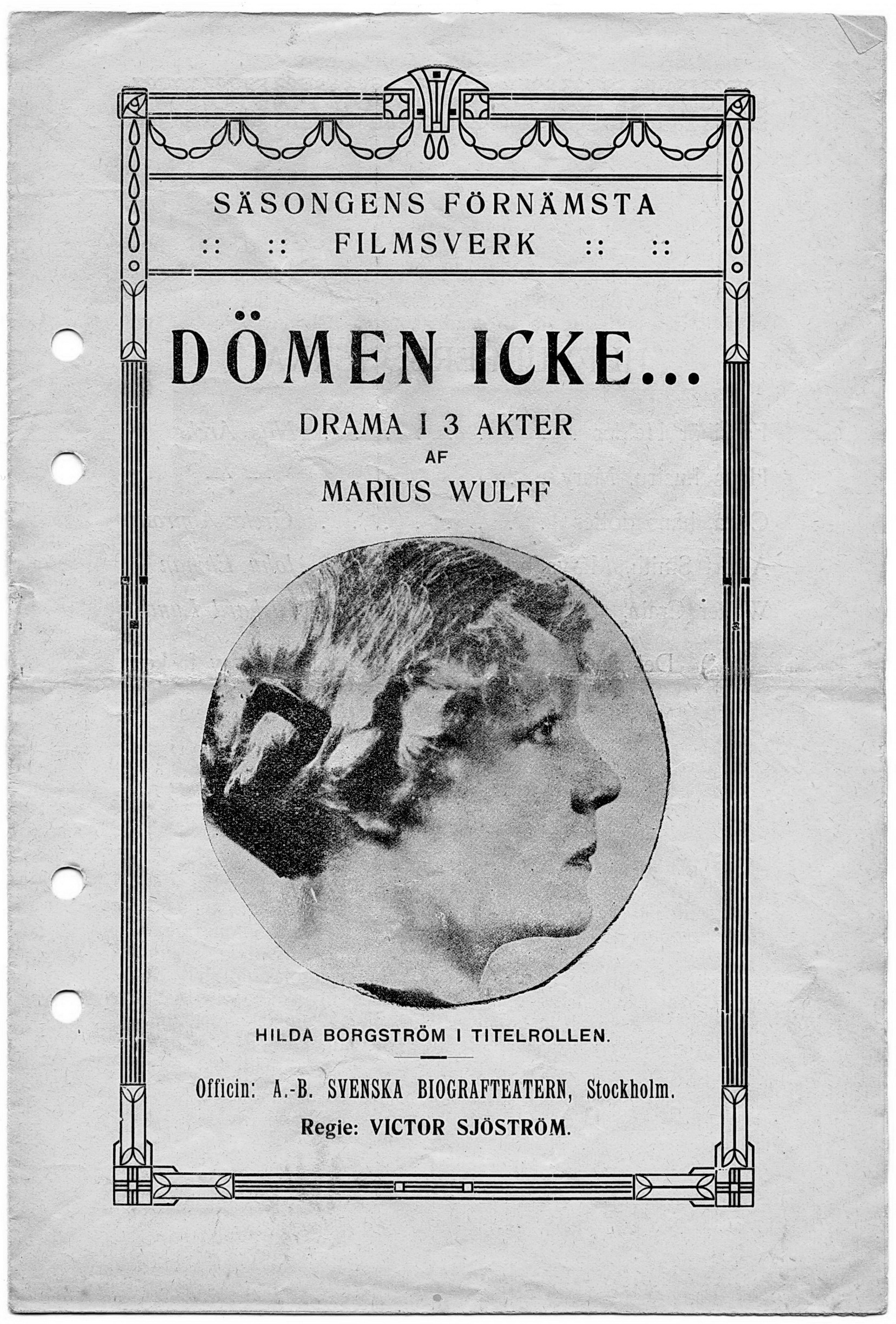
Stepping back into the nascent years of cinema, one often finds narratives that, despite their rudimentary technical constraints, possess a raw, potent emotionality. Such is the case with the 1914 Swedish silent film, 'Judge Not' (original title: 'Döma ej'). This isn't just another flickering relic from a bygone era; it's a profound exploration of domesticity, morality, and the inescapable long shadow of one's past. Directed with a quiet intensity that belies its age, the film, penned by Marius Wulff, offers a piercing look into how external forces can utterly dismantle the most cherished personal sanctuaries.
At its core, 'Judge Not' presents a seemingly simple yet profoundly impactful premise: Helder, portrayed with compelling nuance by William Larsson, embodies the contented family man. His existence is a picture of domestic bliss, a haven of peace meticulously constructed and lovingly maintained. Yet, the tranquility of this world is merely a fragile veneer, susceptible to the tremors emanating from less fortunate corners of society. The catalyst for this upheaval arrives in the form of a letter, a seemingly innocuous piece of correspondence that carries the weight of a thunderbolt. It’s from Albert, Helder’s wife’s brother, played by the formidable John Ekman, who has, against all odds, managed to escape the confines of prison. This singular event doesn't just introduce a plot twist; it detonates a moral quandary right at the heart of Helder's home, forcing an immediate and agonizing reassessment of loyalty, duty, and the very definition of justice.
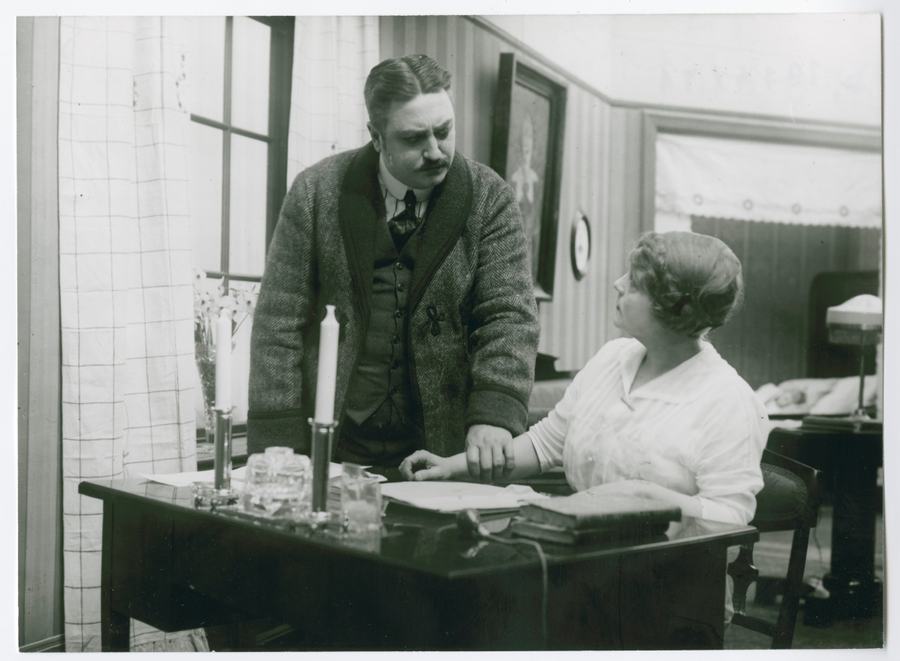
The elegance of Wulff's screenplay lies in its economy. With minimal exposition, it plunges the audience into a high-stakes ethical dilemma. The weight of Albert's past, his criminal record, and his newfound freedom become a looming presence, a dark cloud threatening to eclipse the sunny disposition of Helder's life. This immediate shift from domestic peace to impending crisis is a testament to the era's storytelling prowess, where melodrama was not merely an indulgence but a vehicle for exploring complex human emotions and societal pressures. The film, in this regard, stands as a compelling precursor to later dramas that would dissect the fabric of family under duress.
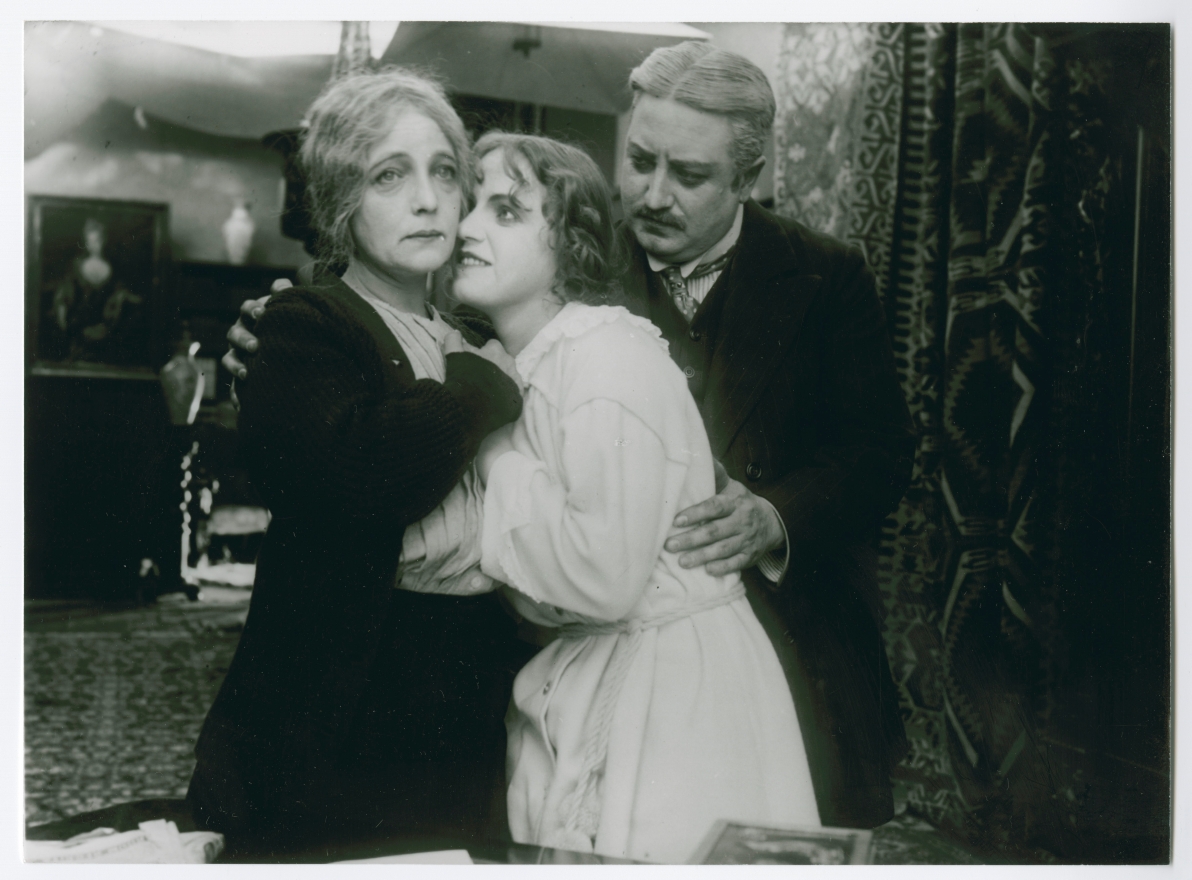
In the silent era, the burden of conveying character, emotion, and narrative thrust fell squarely on the shoulders of the actors. Their faces, their postures, their gestures were the lexicon of the screen. Hilda Borgström, as Helder’s wife, delivers a performance of remarkable depth. Her initial joy, her subsequent dread upon reading Albert's letter, and the internal conflict between her marital loyalty and familial bond are etched across her features with heartbreaking clarity. She isn't just reacting to events; she's embodying the profound anguish of a woman torn between two worlds, two loves, two duties. Her performance is a masterclass in silent film acting, utilizing every subtle quiver of a lip or widening of an eye to communicate volumes.
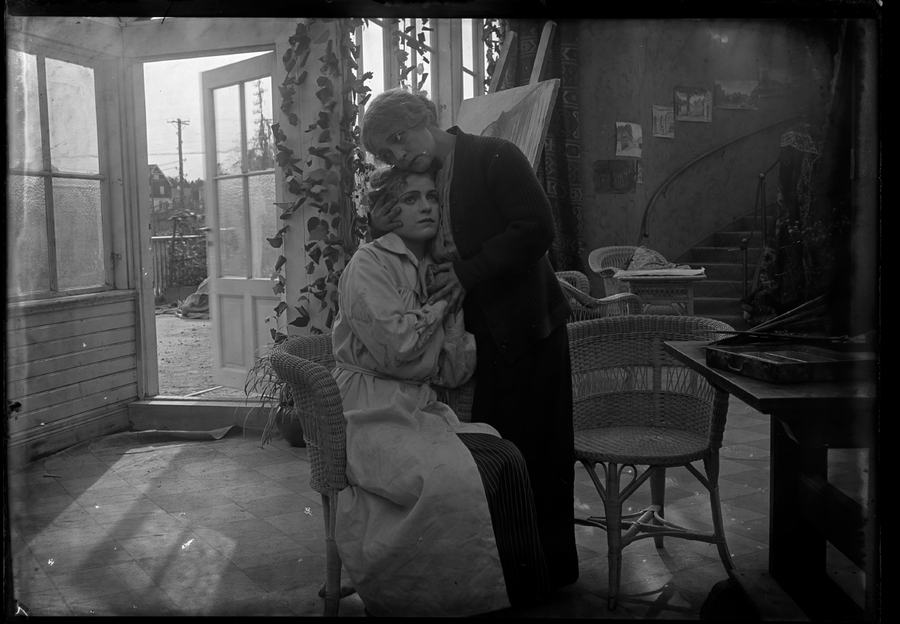
William Larsson, as Helder, anchors the film with a portrayal of quiet strength juxtaposed with growing anxiety. His character is the moral compass, yet also the one whose sense of order is most threatened. Larsson conveys the internal struggle of a man who values his family's reputation and safety above all else, now confronted with the uncomfortable truth that his wife’s brother is a fugitive. His performance is less about grand gestures and more about the subtle shifts in his demeanor, reflecting the mounting pressure and the difficult choices he must inevitably face. The domestic bliss he initially projects slowly erodes, replaced by a palpable tension that he carries throughout the film.
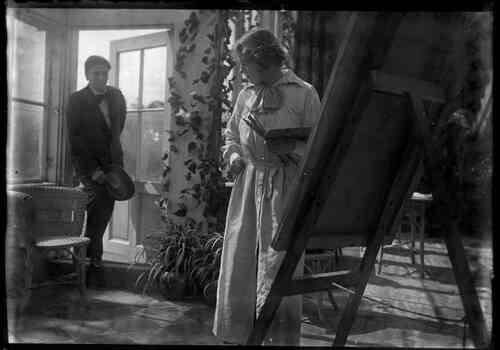
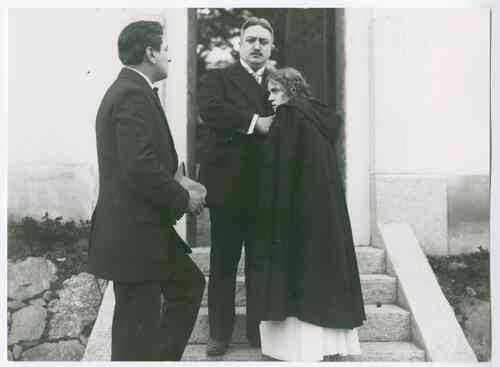
And then there is John Ekman as Albert. His presence, even before his physical appearance on screen, looms large. When he does arrive, he embodies the very essence of the 'outsider' – the disruptive force. Ekman's portrayal likely delves into the complexities of a man on the run, perhaps not entirely villainous, but certainly desperate, making him a figure of both fear and, potentially, a tragic sympathy. The clash between Helder's bourgeois stability and Albert's chaotic freedom forms the central dramatic tension, expertly rendered by these actors. The supporting cast, including Jenny Tschernichin-Larsson, Greta Almroth, Richard Lund, Nils Elffors, and Nils Aréhn, undoubtedly contribute to the intricate social fabric of the film, adding layers to the community's reaction to the unfolding drama.
'Judge Not' is more than a simple melodrama; it's a moral crucible. The title itself is an imperative, immediately inviting the audience to consider the complexities of judgment, both legal and personal. What does one do when faced with a loved one who has transgressed the law? Does familial loyalty supersede civic duty? These are questions that resonate deeply, transcending the specific historical context of the film. The film forces its characters, and by extension, its viewers, to confront the grey areas between right and wrong, between compassion and accountability.
The societal expectations of the early 20th century also play a crucial role. The stain of a criminal record, especially for an escaped convict, would have been immense, not just for the individual but for their entire family. Helder's concern for his family's reputation and safety is therefore not merely selfish but rooted in the very real social ramifications of the time. This aspect brings to mind other films of the era that grappled with social stigma and the plight of individuals against overwhelming odds. While not directly comparable in plot, the struggle against societal perception echoes in films like Traffic in Souls, which, though focusing on white slavery, similarly highlighted the vulnerability of individuals to societal ills and the often-harsh judgments passed upon them.
The tension between individual morality and legal justice is a timeless theme. Albert's escape, while an act of defiance against the state, could also be seen as a desperate bid for freedom, perhaps even a chance at redemption, depending on the specifics of his crime (which the synopsis doesn't detail, allowing for intriguing ambiguity). This ambiguity allows for a deeper exploration of the 'judge not' dictum. Is society's judgment always fair? Are the circumstances leading to Albert's imprisonment, and subsequent escape, truly black and white? Such questions elevate the film beyond mere entertainment, positioning it as a thoughtful commentary on human fallibility and the often-imperfect scales of justice.
Marius Wulff's contribution as the writer cannot be overstated. In an era where storytelling was still finding its cinematic voice, Wulff crafted a narrative that is both concise and emotionally expansive. The strength of his script lies in its focus on character reactions and the slow, inexorable build-up of tension. He understands that the true drama isn't just in Albert's escape, but in the ripple effect it has on Helder's seemingly impregnable domestic sphere. The letter itself is a brilliant narrative device, an inanimate object imbued with immense power to disrupt and redefine relationships.
The screenplay’s structure likely mirrors the psychological journey of its protagonists. From the initial shock and disbelief, through the agonizing contemplation of choices, to the inevitable confrontation, Wulff guides the audience through a tightly woven emotional arc. This narrative precision is a hallmark of effective early cinema, where every scene, every intertitle, had to count. We can infer a progression of suspense, a slow turning of the screw, which would keep audiences riveted, much like the serialized narratives popular at the time, such as What Happened to Mary or Fantomas: The Man in Black, though 'Judge Not' likely prioritizes psychological drama over episodic adventure.
While a detailed analysis of the cinematography is difficult without viewing the film, one can surmise certain techniques prevalent in 1914. Directors of this period were adept at using framing, composition, and often stark lighting to convey mood and emphasize character. The contrast between the bright, ordered domestic scenes and the potential shadowy world of Albert’s escape would have been a powerful visual metaphor. Close-ups, though not as ubiquitous as they would become, would have been crucial for capturing the nuanced facial expressions of Borgström and Larsson, vital for communicating their internal turmoil. The director would have utilized the limited tools available to create a palpable sense of tension and foreboding.
The use of sets and locations would also contribute significantly. The sanctity of Helder's home, perhaps depicted with warm, inviting interiors, would stand in stark contrast to any scenes depicting Albert's escape or his clandestine movements. This visual dichotomy reinforces the central conflict: the collision of two vastly different worlds. One can imagine scenes of clandestine meetings, nervous glances, and the ever-present threat of discovery, all conveyed through careful staging and the expressive physicality of the actors. This approach to visual narrative, where environment and gesture speak volumes, aligns with the best practices of early silent cinema, allowing it to compete with the dramatic intensity of stage plays and novels like those adapted in Lena Rivers or A Lady of Quality, which relied on rich textual descriptions.
'Judge Not' serves as a fascinating artifact not only for film historians but for anyone interested in the enduring power of storytelling. It reminds us that fundamental human dilemmas – the struggle between love and law, personal ethics and societal expectations – are timeless. While the technology of cinema has advanced exponentially since 1914, the core emotional resonance of such narratives remains undiminished. The film's ability to create suspense and provoke thought with such a simple premise is a testament to the skill of its creators.
Comparing 'Judge Not' to other films of its era highlights its unique contribution. Unlike the adventure serials or grand historical epics, it grounds its drama in the intimate, focusing on the psychological impact of a moral crisis on an ordinary family. Its focus on internal conflict and the domestic sphere distinguishes it from more outwardly action-oriented films. While The Count of Monte Cristo deals with a grand tale of escape and revenge, 'Judge Not' turns the lens inward, exploring the consequences of such an escape on those left behind, those who are forced to 'judge' or to protect. It’s a powerful reminder that even the quietest lives can be upended by profound moral challenges, and that the choices made in such moments define us. The film’s title itself, a direct biblical injunction, adds a layer of moral gravity that was common in early cinema, often used to explore complex ethical situations without necessarily providing easy answers. This ambiguity is what gives 'Judge Not' its lasting power, inviting continuous reflection on our own capacity for empathy and justice.
In conclusion, 'Judge Not' stands as a compelling example of early silent cinema's ability to craft intricate psychological dramas. Its enduring appeal lies in its universal themes of family loyalty, the burden of the past, and the difficult choices that define our moral landscape. It's a film that, despite its age, continues to ask pertinent questions about how we navigate the complexities of human relationships when confronted with the harsh realities of justice and freedom. A silent film, perhaps, but one that speaks volumes to the human condition.
IMDb —
1918
Community
Log in to comment.