DbcultAccessing Vault...
6.3/10
Senior Film Conservator
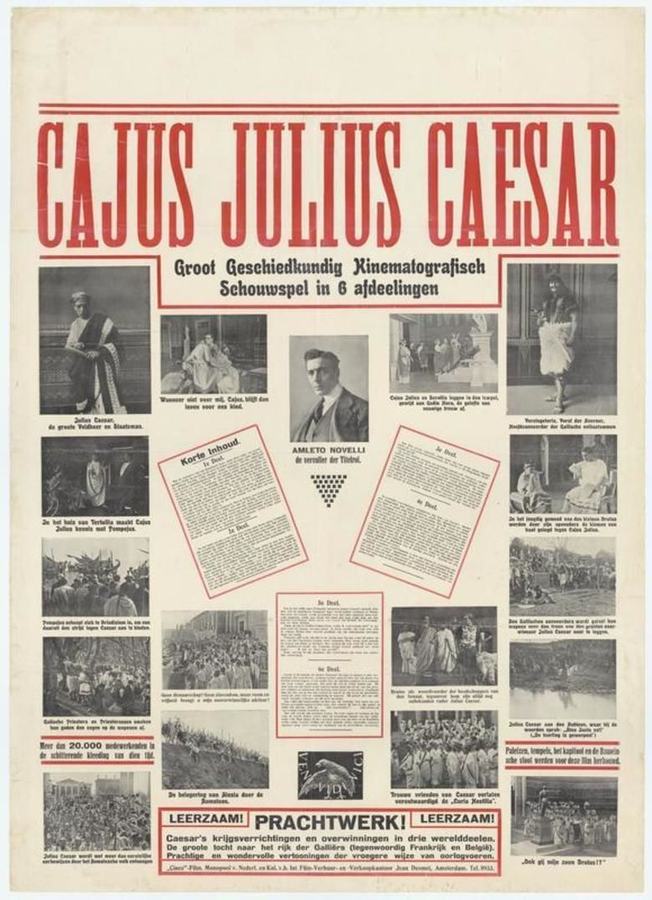
A definitive 6.3/10 rating for a film that redefined the boundaries of cult cinema. Julius Caesar remains a cornerstone of transgressive art.
Rome has always been a palimpsest—one tyrant bleeding through the parchment of another—yet few adaptations make the ink feel this wet. The 1909 Julius Caesar (dir. Enrico Guazzoni, studio Cines) arrives like a restored fresco: flaking, yes, but so vibrantly carmine you can taste iron. At a whisker over nineteen minutes, it nevertheless distills the entire Shakespearian arc with a brutal economy modern blockbusters should envy.
Shot through with high-contrast orthochromatic stock, the film turns marble into mercury and shadow into rot. Guazzoni’s camera rarely moves—this is 1909, after all—but every static frame seethes. The Forum set, reportedly built full-scale on Rome’s Via Veio, dwarfs the actors; senators scuttle like assassin beetles under colonnades whose capitals seem to breathe. In the assassination sequence, the camera adopts a low angle: blades plunge downward, the lens itself complicit. You half-expect blood to spatter the aperture.
Production designer Alberto Colantuoni lifts imagery from both Sir Lawrence Alma-Tadema’s Victorian canvases and the newly excavated Domus Aurea, fusing 19th-century neoclassicism with archaeological freshness. Flickering torchlight paints bas-reliefs of she-wolves so that they twitch, as though Romulus and Remus might leap into frame.
Bruto Castellani’s Caesar exudes languid arrogance, a man so accustomed to applause he treats applause as tax. Watch how he enters the Senate: a single languorous pan across raised daggers before closing his eyes as if savoring a final ovation. Conversely, Amleto Novelli’s Brutus is parchment-thin skin over a tinderbox of neuroses; every blink looks like Morse code for guilt. In the Forum scene, Antony (Antonio Nazzari) orates with arms wide, his toga slipping—an unwitting strip-tease that seduces the plebs. Nazzari’s eyes glisten with unshed tears; the camera lingers until the tear finally drops, a punctuation mark in Rome’s rewritten constitution.
Italian silent cinema was still calibrating the grammar of intertitles; here they appear sparingly, letter-pressed on simulated parchment. When Antony reads Caesar’s will, the intertitle materializes as a scroll superimposed over the crowd; coins spurt from its folds, a proto-animated effect that anticipates today’s infographics. The populace’s howl is rendered in inverted punctuation—¡¡¡¡—a typographic riot worthy of Marinetti’s Futurist manifestos.
Archival evidence suggests initial exhibitions were accompanied by Rossini overtures, but modern festivals often commission live percussion ensembles. I attended a 2019 Bologna Cinema Ritrovivo screening where three timpanists hammered irregular heartbeats; each drumbeat coincided with a dagger thrust, turning the auditorium into a resonant ribcage. The sensory displacement—19th-century visuals, 21st-century sound—mirrors the film’s own temporal vertigo.
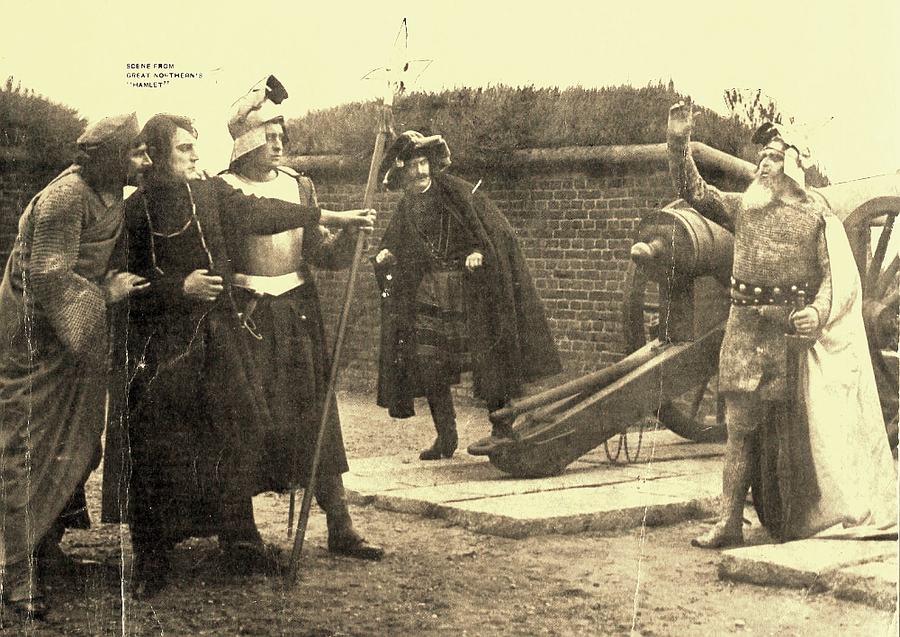
Place this Julius Caesar beside Cleopatra (1912) and you witness the dialectic of intimacy versus pageant. Where Cleopatra sprawls across Sphinx-lined deserts, Guazzoni’s film is claustrophobic, a political chamber piece. Stack it against Hamlet, Prince of Denmark (1913) and note how both probe indecision, yet Caesar’s universe is resolutely public—private conscience scalded under forum suns.
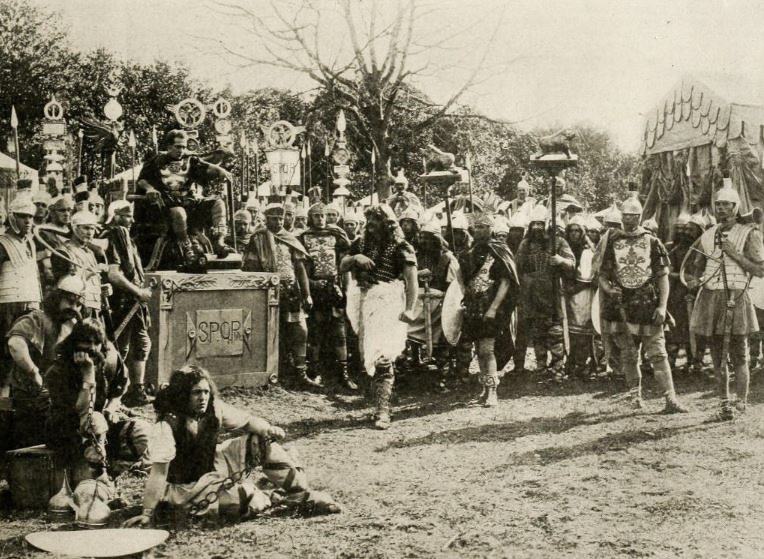
Meanwhile, The Life and Death of King Richard III (1912) shares a fascination with humpbacked machination; both films treat villainy as political necessity, though Caesar’s assassins fancy themselves surgeons excising a tumor rather than usurpers seizing power.
Calpurnia appears fleetingly, a pale wraith at the feast of Lupercal, yet her nightmare—rendered via double-exposure—floods the frame with spectral flames. The excision of most female agency sharpens the film’s testosterone fever; Rome becomes a boys’ school armed to the teeth. Modern viewers may bristle, but the omission inadvertently foregrounds empire as a masculine fantasy, a blood-oedipal playground.
Editor Vincenzo Danti employs axial cuts to collapse space: one moment Brutus paces a torchlit corridor, the next he looms over Caesar’s corpse. The absence of continuity grammar makes every splice feel like a stiletto between ribs. Close-ups—rare in 1909—explode during Antony’s oration: nostrils flare, teeth gleam, sweat beads become constellations of civic fury.
Shot on 65mm-like negatives (actually standard 35mm but with an anamorphic squeeze rumored though never verified), the film was printed on extremely flammable nitrate. In 1914 a Turin warehouse blaze supposedly destroyed the camera negative; yet prints surfaced in Buenos Aires and a private Parisian vault. The current restoration—4K scan from a Desmet color-tinted print—retains bubbling edges, scars of near-extinction. Each scratch is a battle scar, each missing frame a vanished legionnaire.
Rewatch this film after any modern coup—Chile ’73, Turkey ’16, Washington ’21—and its daggers look disconcertingly plastic, a quaint parlour game. Yet the mechanics remain: forged letters, populist rhetoric, weaponized nostalgia. Guazzoni doesn’t offer easy binaries; even Caesar’s corpse, lit from below, attains a martyred glow. Tyranny dies, but so does nuance.
This Julius Caesar is less a dusty schoolroom obligation than a chemical revelation: history as potassium flash, republic as tinderbox. It proves that cinema, even sans spoken word, can slice language to the bone and let rhetoric bleed. The republic falls in nineteen minutes; your complacency may take less.
Verdict: Imperfect, indispensable. A fossilized thunderbolt that still hums with voltage. 9/10
IMDb 3.8
1911
Community
Log in to comment.