DbcultAccessing Vault...
Cult Review
Senior Film Conservator
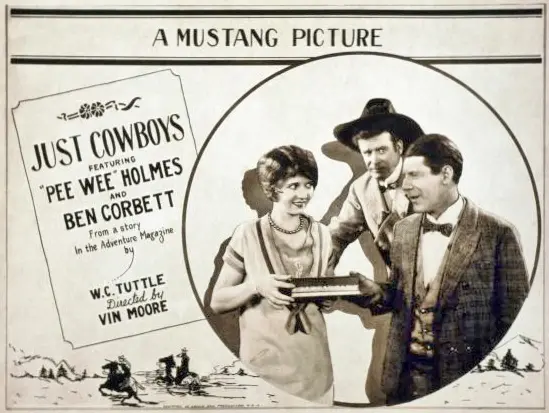
Is "Just Cowboys" worth watching today? Short answer: yes, but with significant caveats that place it firmly in the category of historical curiosity rather than essential viewing for a casual audience. This silent-era Western comedy, a relic from 1922, offers a fascinating glimpse into the nascent days of filmmaking and the slapstick sensibilities of the era.
It’s a film best suited for cinephiles, historians of early cinema, and those with a particular affection for silent comedies and the Western genre's formative years. Conversely, viewers seeking modern pacing, sophisticated humor, or deeply developed characters will likely find its charms elusive and its narrative meandering.
This film works because: It provides an invaluable window into the comedic techniques and narrative structures prevalent in early 20th-century cinema, showcasing the raw energy of its performers and the inventiveness required to tell a story without dialogue.
This film fails because: Its humor, while occasionally brilliant, often relies on broad physical gags and a convoluted plot that can feel dated and repetitive to contemporary viewers, lacking the emotional depth or thematic resonance that would give it lasting power.
You should watch it if: You are a student of film history, appreciate the art of silent comedy, or are curious about the evolution of the Western genre, especially with a focus on its comedic permutations.
"Just Cowboys" isn't just a series of events; it's a masterclass in escalating absurdity, a narrative construction that takes two hapless cowboys and throws them headlong into a world blurring the lines between reality and cinematic illusion. Fired from their ranch, Runt Simpkins and his pardners are immediately thrust into a farcical scenario, attempting to 'rescue' a prop baby. This initial misunderstanding sets the tone, introducing us to Queenie LaRue, the leading lady who becomes their shared object of misguided affection.
Their attempts to impress Queenie lead to an immediate, spectacular failure: a gasoline-fueled pants-burning incident. This isn't just a plot device; it's a brutal, visual punchline about vanity and the lengths men will go for a woman, even when utterly ill-equipped. The subsequent shenanigans—a rigged card game for stolen trousers, a betrayal, a mistaken arrest, and a jailbreak—are all classic silent comedy tropes, but here, they’re strung together with a frantic, almost desperate energy.
The film culminates in a brilliant meta-commentary. The cowboys, still entangled in their personal drama, stumble upon a staged bank robbery. Believing it to be real, they intervene with genuine cowboy heroism, only to discover the entire spectacle was part of the movie production. It's a surprisingly clever twist for its time, highlighting the burgeoning film industry's ability to create illusions so convincing they fool even those living the 'authentic' Western life.
The heart of any silent comedy lies in its physical performances, and Gilbert Holmes as Runt Simpkins, alongside Ben Corbett as his unnamed companion, delivers a commendable, if not always refined, effort. Holmes embodies the 'runt' persona with a frantic, almost squirrelly energy, his expressions often shifting between wide-eyed naiveté and indignant fury. Corbett, in contrast, often plays the more grounded, albeit equally foolish, straight man to Holmes's wilder antics.
Their chemistry, while certainly not on the level of a Laurel and Hardy, is effective in driving the narrative's comedic engine. The scene where they accidentally set their pants ablaze, sparked by Runt's inexplicable decision to light a cigar near a gasoline bottle, is a moment of pure, unadulterated physical comedy. The frantic flailing, the wide-eyed panic – it’s a universal language of slapstick that still elicits a chuckle, even a century later.
However, it's the later 'human wheel' sequence that truly showcases their commitment. The sight of one man forced to hold up a buckboard, his face a mask of strain, while the other rides off with the leading lady, is an image both ludicrous and strangely memorable. It’s a testament to the era's performers who often risked minor injury for a laugh, pushing the boundaries of physical endurance in the pursuit of entertainment. There's a raw, unpolished charm to their work that speaks to the immediate, visceral nature of silent film acting. They are not subtle. They are broad. They are effective.
The direction in "Just Cowboys," credited to W.C. Tuttle as writer, but likely a collaborative effort on set, demonstrates a clear understanding of silent comedy's mechanics. The film prioritizes action and visual gags, using intertitles sparingly to advance the plot or highlight a crucial punchline. The camera work, while rudimentary by modern standards, is functional and direct. It captures the frantic energy of the chase scenes and the exaggerated expressions of the actors without unnecessary embellishment.
There's a noticeable efficiency in the storytelling, despite the convoluted plot. Each mishap directly leads to the next, creating a relentless comedic momentum. The pacing is rapid-fire, particularly in the later sequences involving the jailbreak and the buckboard chase. This keeps the audience engaged, preventing much time for critical reflection on the plausibility of the events unfolding onscreen. It’s a film designed for immediate, visceral reaction, not deep thought.
One could argue that the film’s greatest directorial triumph is its meta-narrative. The way the director subtly builds towards the reveal that the 'bank robbery' is a film within a film is quite sophisticated for 1922. It plays with audience expectations and the very nature of cinematic illusion. This self-awareness, even in a slapstick comedy, is an intriguing precursor to later, more celebrated examples of films commenting on their own medium, such as Buster Keaton's Sherlock Jr. or even more broadly, films like Day Dreams which toys with fantasy and reality.
The humor in "Just Cowboys" is firmly rooted in the physical, the absurd, and the situational irony typical of early silent cinema. It's a direct descendant of vaudeville and circus acts, relying on pratfalls, chases, and exaggerated reactions. The scene where the cowboys, smitten with Queenie, attempt to 'press up' their clothes, only for Runt to ignite a bottle of gasoline with his cigar, is a classic example of escalating chaos born from simple folly. It works. But it’s flawed.
While often praised for its historical significance, the comedic timing in "Just Cowboys" occasionally feels more like a historical artifact than genuinely laugh-out-loud funny for a modern audience. The gags, while inventive, can sometimes overstay their welcome or feel repetitive. This isn't a criticism of the film's quality in its own time, but an acknowledgment of how comedic sensibilities have evolved.
However, the film finds its true comedic stride in its final act. The entire bank robbery sequence, where the protagonists are genuinely convinced they are thwarting a real crime, is a stroke of genius. Their earnest, over-the-top heroism, contrasted with the calm, professional movements of the actual actors, creates a delightful irony. It's a surprisingly sophisticated play on perception and reality, elevating the film beyond mere slapstick into something more conceptually interesting. It’s a commentary on the very power of illusion, and how easily we can be duped by a convincing performance, even when it’s right in front of us.
For those who approach "Just Cowboys" with the right mindset—that of a historical document rather than a contemporary blockbuster—it offers genuine rewards. It's not a film you'll likely recommend to casual friends for a movie night, unless those friends have a very specific, niche interest.
It's a valuable piece for understanding the evolution of both the Western and comedy genres. It demonstrates how early filmmakers experimented with meta-narratives and physical humor. Its unpolished nature is part of its charm, a raw energy that speaks to a time before cinematic grammar became rigid. It’s a mess. But it’s an interesting mess.
"Just Cowboys" is a peculiar, often delightful, and undeniably significant piece of early American cinema. It’s not a flawless film, nor is it one that demands universal acclaim in the modern era. Its humor is broad, its plot is a tangled web of misunderstandings, and its technical execution is a product of its time. Yet, within its frantic horseplay and farcical misadventures, there’s a surprising intelligence at play, particularly in its self-aware commentary on the magic and deception of filmmaking itself.
For those willing to engage with its historical context and appreciate its raw, pioneering spirit, "Just Cowboys" offers a unique and often amusing ride. It serves as a vibrant reminder that even a century ago, filmmakers were pushing boundaries, blurring lines, and making audiences laugh, sometimes at the expense of two very foolish cowboys. It’s a film that warrants a watch, not for its perfection, but for its audacious charm and its indelible place in cinematic history.
IMDb 6.1
1936
Community
Log in to comment.