DbcultAccessing Vault...
6.2/10
Senior Film Conservator
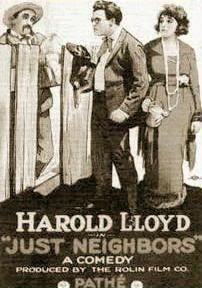
A definitive 6.2/10 rating for a film that redefined the boundaries of cult cinema. Just Neighbors remains a cornerstone of transgressive art.
In the annals of silent cinema, few names resonate with the enduring warmth and comedic brilliance of Harold Lloyd. While often celebrated for his iconic 'Glasses Character' scaling skyscrapers or dodging urban perils, it's in the intimate, often more relatable, confines of suburban life that some of his most delightful and destructive humor truly blossoms. 'Just Neighbors,' a vibrant testament to the power of escalating slapstick, stands as a quintessential example of this domestic pandemonium, masterfully orchestrated by Lloyd and his frequent collaborator, 'Snub' Pollard. This film isn't merely a series of gags; it's a meticulously crafted narrative of good intentions gone hilariously, spectacularly awry, exploring the delicate balance between neighborly camaraderie and utter chaos when competence takes a backseat to sheer, unadulterated enthusiasm.
The premise is deceptively simple: two suburbanites, Lloyd and Pollard, decide to pool their efforts for a common good – the construction of a garden shed. What follows is a ballet of ineptitude, a masterclass in how every single step of a straightforward task can be systematically, and hilariously, botched. From the initial measurements that seem to defy the laws of geometry to the handling of tools with all the grace of a toddler in a china shop, the film establishes its comedic rhythm early on. The very act of hammering a nail becomes a perilous endeavor, threatening not just fingers, but the structural integrity of anything within a five-foot radius. This immediate descent into disarray sets the tone, promising an escalating series of mishaps that will leave no stone unturned, literally.
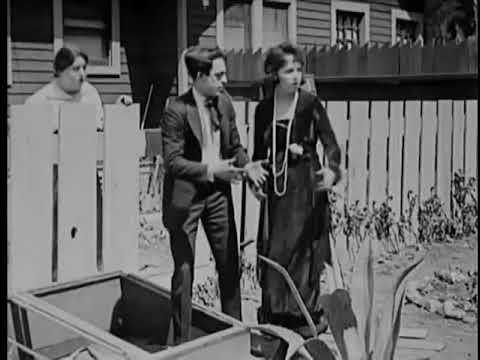
The initial phase of shed construction is a visual feast of physical comedy. Lloyd, with his characteristic earnestness, attempts to lead the charge, only to find his efforts undermined by Pollard's well-meaning but utterly clumsy assistance. Tools are misused, lumber is miscut, and the very ground beneath them seems to conspire against their architectural aspirations. The garden, initially a pristine backdrop of suburban serenity, quickly becomes the first casualty. What begins with a stray plank or a misplaced tool soon escalates into a full-scale excavation, as the duo, in their attempts to correct one blunder, invariably create three more. Prized rose bushes are uprooted, neatly tilled soil becomes a chaotic mound, and the delicate ecosystem of a carefully tended plot is transformed into a war zone of horticulture. The visual gags here are particularly strong, relying on the audience's understanding of domestic order being utterly inverted.
But the destruction does not confine itself to the flora. The film broadens its canvas of chaos to include the domestic sphere, specifically the laundry. Marie Benson and Madeline Terry's characters, presumably the wives, have meticulously hung their fresh wash out to dry, a symbol of domestic tranquility. This symbol, however, is ripe for comedic demolition. As the shed project veers wildly off course, paint spills, sawdust flies, and debris rains down, transforming crisp white linens into a mottled tapestry of grime and color. The visual contrast between the pristine laundry and its inevitable defilement is a classic slapstick trope, executed here with precision and escalating humor. The reactions of the women, moving from mild annoyance to outright exasperation, further amplify the comedic effect, grounding the absurdity in relatable human frustration. It’s a powerful reminder that even the most mundane household chore can become an epic struggle against forces of comedic destruction.
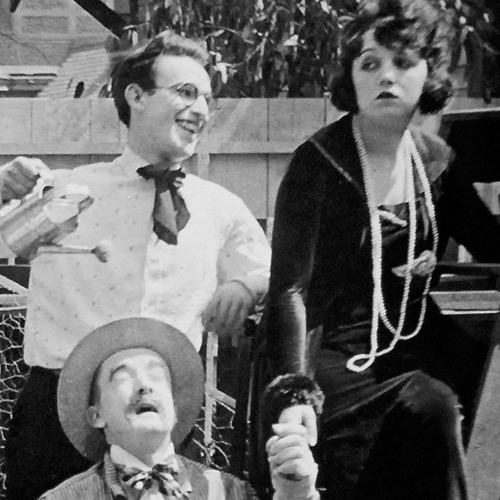
The final act of escalating mayhem involves the unwitting release of chickens. This addition injects a new, unpredictable element into the already chaotic scene. The chickens, flapping and squawking, become agents of further disorder, scattering tools, dirtying the remaining clean laundry, and generally adding a layer of barnyard pandemonium to the suburban setting. The chase sequences that ensue are a testament to the film's kinetic energy, with characters slipping, sliding, and tumbling in pursuit of the feathered escapees. The sight of dignified suburbanites flailing after chickens is inherently funny, and the film milks this scenario for every drop of comedic potential. This particular sequence elevates the film from mere domestic mishap to a full-blown farcical spectacle, ensuring that the audience is left breathless from laughter.
Harold Lloyd, as one of the central figures, embodies his iconic 'Glasses Character' with an almost heartbreaking sincerity. His character is not malicious; he genuinely wants to help, to build, to be a good neighbor. It is this earnestness, coupled with an almost pathological lack of practical skill, that makes his blunders so endearing and so funny. Lloyd's physical comedy is precise, almost balletic, even in moments of utter disarray. He doesn't just fall; he executes a perfectly timed, perfectly expressive tumble. His facial expressions, even without dialogue, convey a rich tapestry of emotions – from initial confidence to bewildered frustration and ultimate resignation. This performance anchors the film, providing a relatable human core to the escalating absurdity. His ability to maintain a sense of optimism even as his world crumbles around him is a hallmark of his comedic genius.
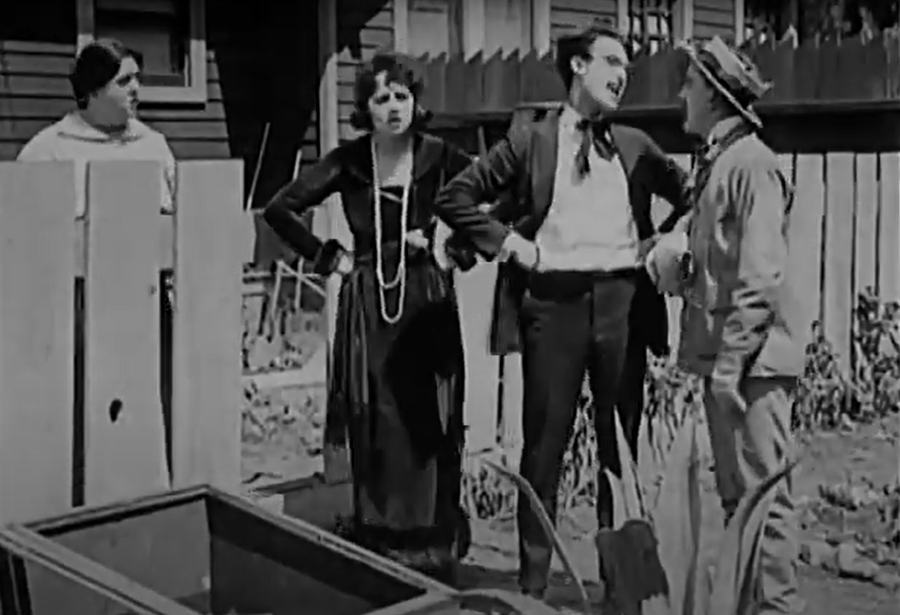
'Snub' Pollard, as Lloyd's hapless partner in crime, provides the perfect foil. Pollard's character is often the catalyst for the next disaster, his clumsiness less refined than Lloyd's, more brute force and accidental destruction. Their dynamic is a classic comedic pairing: the slightly more capable (but still incompetent) leader and the utterly bumbling sidekick. Pollard's wide-eyed innocence and his ability to amplify every mistake Lloyd makes create a multiplicative effect on the humor. The supporting cast, including Marie Benson, Madeline Terry, Noah Young, and others, contribute significantly to the film's tapestry of chaos. Their reactions, whether it's the exasperated wives or the bewildered passersby, serve to punctuate the central comedic thrust, reflecting the audience's own incredulity and amusement.
'Just Neighbors' is a masterclass in silent film comedy, relying entirely on visual storytelling and physical performance. The absence of dialogue forces a heightened focus on expression, gesture, and the precise timing of gags. The film's pacing is relentless, building momentum from one mishap to the next without pause, allowing the audience to be swept up in the current of escalating chaos. The visual language is clear and universally understood: a spilled bucket of paint doesn't need words to explain its comedic potential; the sight of it cascading over a freshly laundered shirt speaks volumes. This universal appeal is a significant reason why silent comedies, especially those of Lloyd, Chaplin, and Keaton, continue to resonate across generations and cultures.
The direction, while often uncredited in many short comedies of the era, demonstrates a keen understanding of comedic rhythm and spatial awareness. Every prop, every movement, and every character's position is orchestrated to maximize the comedic impact. The framing often highlights the contrast between the characters' intentions and their disastrous results, or the sheer scale of the mess they create. This attention to detail ensures that even the most outlandish gags feel earned and contribute to the overall comedic narrative, rather than feeling gratuitous. It's a testament to the early filmmakers' ingenuity in creating engaging narratives without the benefit of spoken words or complex special effects.
'Just Neighbors' fits squarely into a rich tradition of early 20th-century slapstick that often found humor in domestic settings and the foibles of the common man. While some films like The Phantom or Alias Jimmy Valentine explored more dramatic or adventurous narratives, 'Just Neighbors' revels in the simpler, yet equally potent, humor of everyday life gone wrong. It shares thematic echoes with other comedies of its time that explored similar themes of domestic mishap, albeit with its own unique brand of Lloydian charm. The film’s focus on relatable, small-scale disaster makes it incredibly accessible, contrasting with the often grander, more exotic settings of films like Caloola, or The Adventures of a Jackeroo or the dramatic intensity of Sentenced for Life. Here, the stakes are not life and death, but rather the sanctity of a garden and the cleanliness of one's laundry, which, in the comedic universe, are equally momentous.
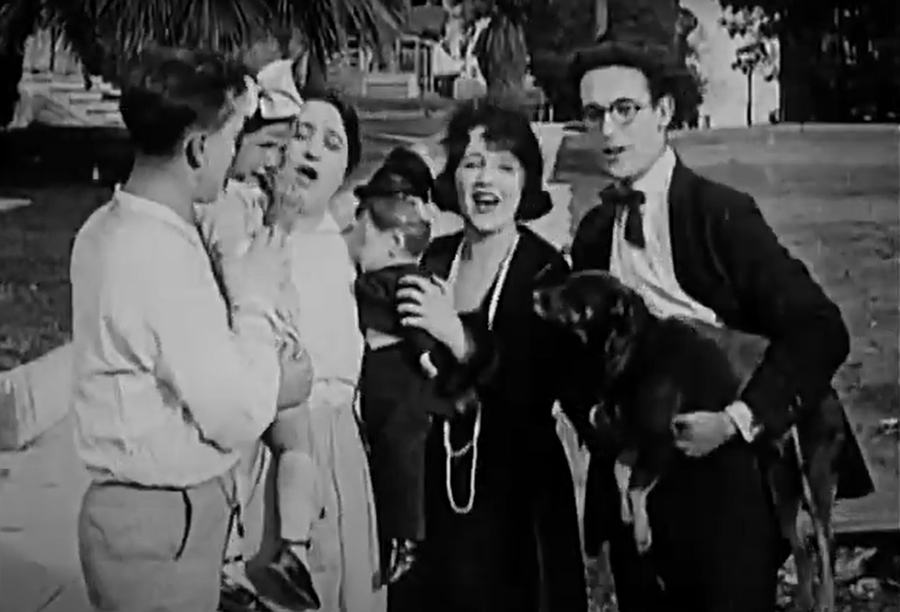
The film's exploration of neighborly relations, even if through the lens of comedic disaster, touches on universal themes. The desire to help, the awkwardness of accepting help, and the inevitable friction that can arise even from the best intentions are all present. This makes 'Just Neighbors' more than just a series of gags; it's a commentary, however lighthearted, on the complexities of community living. It avoids the darker undertones that might be found in a film like La tigresa, instead opting for pure, unadulterated comedic relief. Its historical significance lies not only in its entertainment value but also in its contribution to solidifying Harold Lloyd's persona as the 'boy next door' whose aspirations often outstripped his practical capabilities, a persona that would resonate throughout his illustrious career.
Even a century later, 'Just Neighbors' holds up remarkably well. Its humor is timeless because it's rooted in fundamental human experiences: the frustration of a DIY project, the exasperation of domestic chores, and the sheer delight in watching someone else's carefully constructed world unravel. The film's gags, though simple by today's standards, are executed with such precision and enthusiasm that they remain genuinely funny. It serves as an excellent entry point for newcomers to silent film, offering an accessible and immensely entertaining glimpse into an era of cinematic innovation. Unlike the more dramatic or epic scope of films such as La tragica fine di Caligula imperator or the intricate mystery of The Mystery of the Yellow Room, 'Just Neighbors' finds its power in the everyday, turning it into extraordinary comedy.
The film's influence can be seen in countless subsequent comedies that explore the humorous side of domestic incompetence and escalating chaos. From sitcoms to modern-day blockbusters, the 'DIY gone wrong' trope owes a debt to these early pioneers of slapstick. The specific brand of physical comedy, the interplay between characters, and the relentless build-up of absurdity are elements that continue to be refined and reinterpreted in contemporary media. 'Just Neighbors' is not just a relic of the past; it's a vibrant, living piece of comedic history that continues to inspire laughter and admiration. It reminds us that sometimes, the greatest humor can be found in the simplest of tasks, especially when undertaken by the most well-intentioned, yet utterly incompetent, of individuals. It's a short, sharp burst of joy that perfectly encapsulates the genius of Harold Lloyd and the enduring appeal of silent film. For anyone seeking a dose of unadulterated, brilliantly executed slapstick, 'Just Neighbors' remains an absolute must-watch, a hilarious reminder that sometimes, it's safer to just hire a professional.
IMDb —
1915
Community
Log in to comment.