DbcultAccessing Vault...
Cult Review
Senior Film Conservator
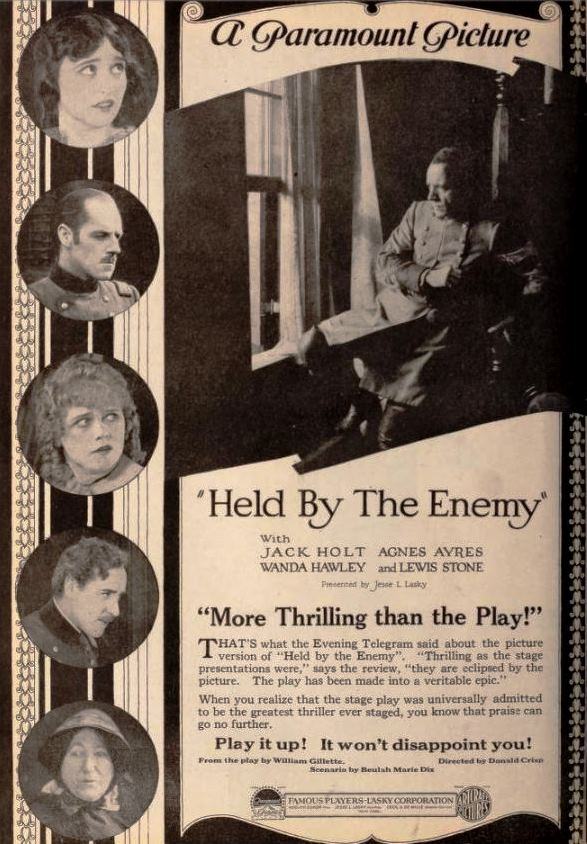
he annals of silent cinema are frequently populated by simplistic dichotomies of virtue and villainy, yet Held by the Enemy (1920) emerges as a strikingly nuanced meditation on the permeable boundaries of loyalty. Adapted from the stage play by William Gillette—the man who fundamentally defined the visual lexicon of Sherlock Holmes—this production navigates the visceral tensions of the American Civil War not through the grandiosity of the battlefield, but through the claustrophobic intimacy of an occupied household. The film eschews the typical jingoistic fervor of its era, opting instead for a deliberate exploration of how interpersonal magnetism can supersede the rigid mandates of nationalistic duty. In this regard, it shares a thematic DNA with the emotive struggles found in Kærlighed overvinder Alt, where the endurance of affection is tested against the crushing weight of external circumstance.
The narrative architecture of the film is built upon the foundational performance of Agnes Ayres as Rachel Hayne. Ayres portrays Rachel not as a fragile Southern belle, but as a woman of profound interiority, navigating the wreckage of her social order with a quiet, steely dignity. When her home is subsumed by Union forces, the intrusion is not merely physical but existential. The presence of Colonel Prescott, played with a stoic nobility by Lewis Stone, creates a fascinating friction. Prescott represents the 'enemy' in a political sense, yet his conduct embodies the very chivalry that Rachel’s own culture purports to value. This paradox creates a fertile ground for a romance that feels earned rather than forced, a slow-burning realization that the human spirit can find kinship even amidst the machinery of internecine slaughter.
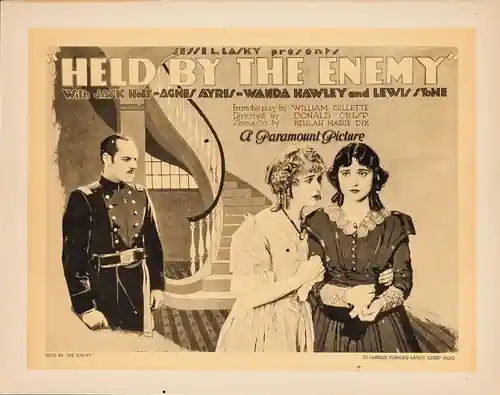
This dynamic is starkly contrasted by the presence of Surgeon Fielding, a role inhabited by Robert Cain with a palpable sense of predatory entitlement. Fielding is the true antagonist of the piece—not because of his uniform, but because of his willingness to weaponize his authority for personal gain. His unwanted attentions toward Rachel serve as a constant reminder of the vulnerability inherent in being 'held' by an opposing force. Unlike the existential dread explored in The Darkest Hour, where the threat is often external and sweeping, the danger in 'Held by the Enemy' is intimate, breathing the same air as the protagonist within the confines of her own parlor.
The structural integrity of the plot is tested by the sudden re-emergence of Gordon Hayne (Jack Holt). Reported dead and mourned as a martyr, his return as a captured Confederate spy introduces a classic Hitchcockian MacGuffin—the secret that cannot be kept. Gordon’s presence acts as a catalyst for a moral realignment. Rachel’s loyalty to her husband is not presented as a romantic resurgence, but as an inescapable duty. The film brilliantly captures the agony of a woman caught between a love that is blossoming in the present and a ghost that has returned to claim its due from the past. This triangular tension is reminiscent of the complex interpersonal webs seen in Maria Pavlowna, where political upheaval serves as the crucible for individual transformation.
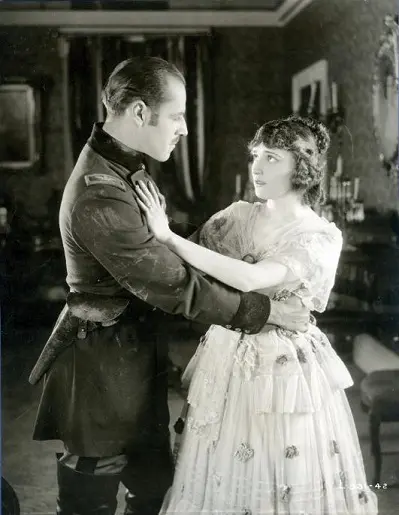
The spy subplot allows the film to transition from a drawing-room drama into a high-stakes thriller. The tension escalates as Gordon is condemned to death, forcing Rachel into a desperate gambit. The plan to feign his death is a masterstroke of theatricality, a nod to Gillette's stage origins. It requires a suspension of disbelief that the film earns through its meticulous pacing. We see the hospital transformed into a stage where the actors must perform for their lives, a motif that echoes the performative desperation in The Model. The atmosphere becomes sepulchral, thick with the scent of ether and the looming shadow of the gallows.
The climax of the film is a masterclass in suspense and tragic irony. The scene involving the stretcher, as it is carried through the hospital corridors under the suspicious gaze of Surgeon Fielding, is arguably one of the most effective sequences in early 1920s cinema. Fielding’s demand for an examination is not born of medical necessity, but of a vindictive desire to dismantle Prescott’s reputation and Rachel’s hope. The tension is nearly unbearable as General Stanton (Clarence Geldert) approaches the body. The revelation that Gordon has actually expired is a profound subversion of the audience's expectations. It is a moment of 'deus ex machina' that feels remarkably grounded in the grim realities of war. Death, usually the ultimate tragedy, here serves as a paradoxical liberator.
This resolution allows the film to bypass the potentially messy ethical ramifications of Rachel’s infidelity or Gordon’s treason. By having Gordon die 'naturally' from his wounds during the ruse, the narrative provides a clean, albeit somber, slate for the survivors. It is a resolution that lacks the cynicism of modern war films, yet possesses a haunting quality that lingers long after the final title card. The emotional resonance of this ending can be compared to the bittersweet conclusions of Tears and Smiles, where joy is inextricably linked to loss.
While often overshadowed by the epics of Griffith, the direction here—credited to the prolific Donald Crisp (though the script carries the weight of Gillette and Dix)—demonstrates a keen understanding of space and shadow. The use of depth within the frame allows the audience to feel the constant presence of the military occupation; there is rarely a shot of Rachel that does not include a Union sentry or a military artifact in the background. This visual storytelling reinforces the theme of being 'held.' The cinematography captures the textures of the South—the heavy drapes, the dust motes in the sunlight, the cold sterility of the field hospital—with a clarity that was state-of-the-art for 1920.
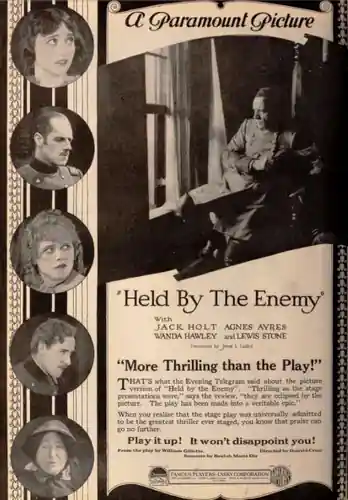
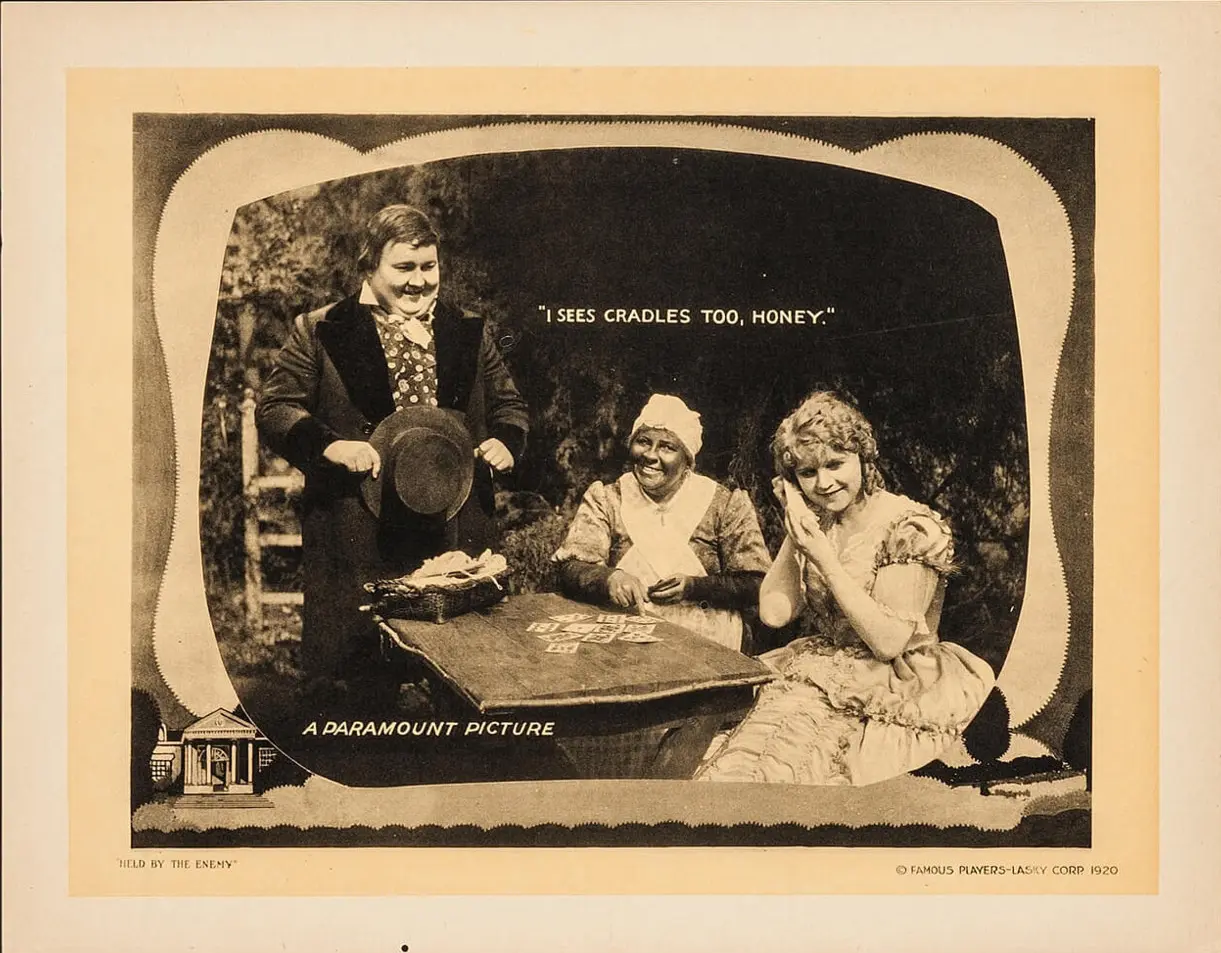
The supporting cast, including Wanda Hawley and Walter Hiers, provides a necessary tonal balance. Hiers, in particular, offers a touch of levity that prevents the film from descending into unrelenting gloom. This balance of light and shadow is a hallmark of successful silent melodrama, much like the structural variety found in Beating the Odds or the rhythmic pacing of Snap Judgment. Each character feels like a necessary cog in a complex emotional machine, rather than a mere placeholder for plot progression.
Reflecting on 'Held by the Enemy' over a century later, one is struck by its refusal to offer easy answers. It suggests that in the crucible of war, the most significant battles are fought within the human heart. The film’s exploration of the 'enemy' as a human being capable of honor and love was a progressive stance for its time. It invites comparison to other international works of the era that sought to humanize the 'other,' such as the Hungarian classic Bánk bán or the socially conscious The Daughters of Men.
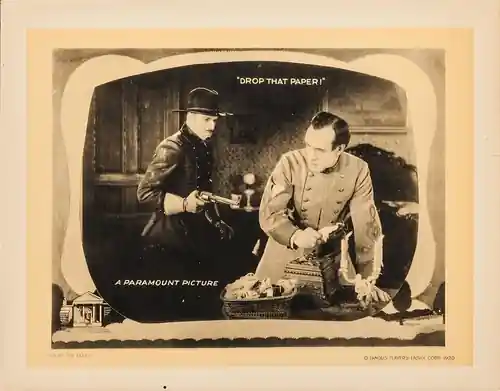
The film also serves as a poignant reminder of the fragility of the Southern aristocratic identity. Rachel’s home is her fortress, yet it is easily breached. Her husband is her protector, yet he becomes her greatest liability. This subversion of traditional roles provides a layer of feminist agency that was often lacking in contemporary portrayals of the era. Rachel is the one who orchestrates the deception; she is the one who must ultimately live with the consequences of her choices. This focus on female resilience is a thread that connects this film to the tragic heroines of The Leap of Despair and the romantic yearning of Irish Eyes.
Ultimately, 'Held by the Enemy' is a quintessential example of the 'well-made play' successfully transitioning to the silver screen. It retains the tight plotting and character-driven stakes of its theatrical origins while utilizing the unique visual language of film to enhance its atmospheric depth. It is a work that demands to be viewed not just as a historical curiosity, but as a vital piece of cinematic storytelling that addresses universal themes of love, loss, and the ambiguous nature of truth. Whether compared to the dualities of Dvoynaya zhizn or the pastoral charms of The Wishing Ring Man, it stands out for its gravitas and its refusal to simplify the human experience.
In a landscape of silent films that often feel like relics, 'Held by the Enemy' remains a living document of emotional complexity. It is a testament to the power of narrative to bridge divides, reminding us that even when we are held by the enemy, our hearts remain our own.
IMDb 6.3
1912
Community
Log in to comment.