DbcultAccessing Vault...
Cult Review
Senior Film Conservator
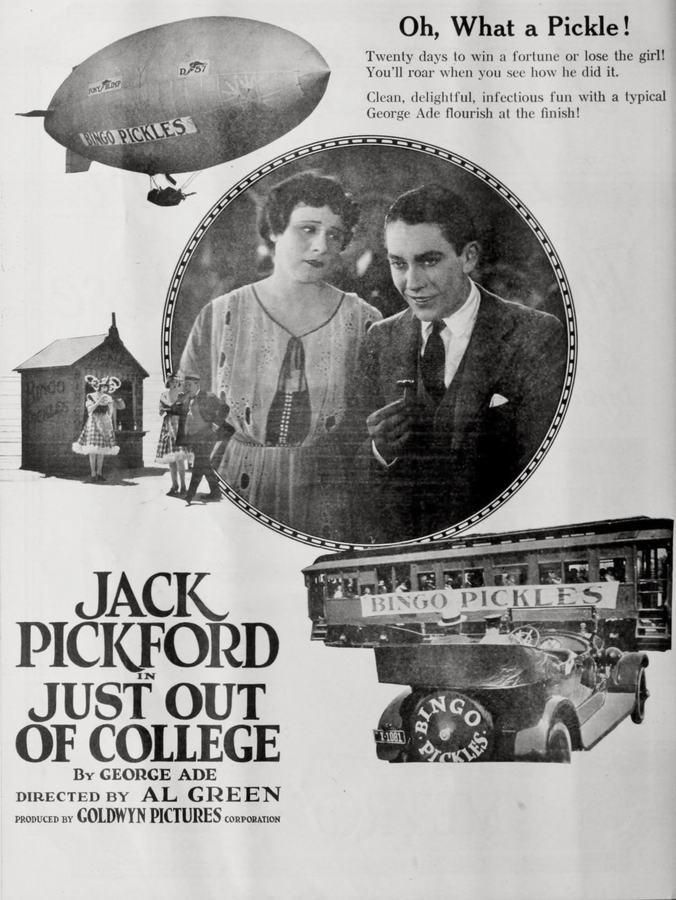
The projector crackles alive and suddenly the screen is awash in magnesium-white optimism: Ed Swinger, cap tilted at a rakish angle, leaps down the limestone steps of an unnamed university like a man who has mistaken commencement for coronation. Maxfield Stanley plays him with the elastic physicality of a Douglas Fairbanks understudy who swallowed a jazz record; every gesture ricochets between swagger and desperation, a semaphore of youth certain that charm can collateralize debt. The film’s first miracle is how it lets you feel the dew still clinging to his diploma while already smelling the mildew on the American Dream.
Director Arthur F. Statter, armed with George Ade’s epigram-laden intertitles, frames the ensuing deception as a Keystone-cum-Flaubertian parable. Each intertitle lands like a champagne cork shot through a hedge-fund prospectus: “Incorporation is but nine letters away from incorporeal.” The joke is both linguistic and existential; the Roaring Twenties themselves are a speculative bubble, and Ed merely provides a microcosm.
George Hernandez’s Silas is no crusty Gilded Age relic but a predator who has evolved with the times, his pince-nez reflecting ticker-tape like a rearview mirror aimed squarely at the future. Watch the way he fondles a fountain pen as though it were a derringer; the ink is blood, the signature a duel. When he demands “prospects,” he means profit margins, yet the word trembles with patriarchal subtext: prove you can propagate my lineage and my ledger.
Enter Molly Malone’s Dorothy, a soprano-flapper hybrid whose close-ups flirt with the lens so directly you half expect the iris to blush. Malone, often dismissed as merely “Pickford-adjacent,” here weaponizes her resemblance to Mary’s wistfulness while adding a steel spine. Notice how she clutches a torn dance card in the country-club sequence; the frayed edges mirror her torn allegiance between filial obedience and erotic rebellion. In a year when The Spreading Dawn trafficked in sacrificial motherhood and Give Her Gas reveled in automotive slapstick, Dorothy’s predicament feels startlingly modern: she must decide whether love can survive full disclosure in an age when branding trumps being.
Statter’s visual lexicon borrows from the German Expressionists but filters it through a distinctly American whimsy. Shadows of skyscrapers slash across Ed’s rented desk like prison bars sculpted from ticker tape; yet the very next shot offers a iris-in on a kitten batting at a loose stock certificate—tragedy and frolic share a heartbeat. Compare this to the swampy fatalism of The Green Swamp or the royal stiffness of Prinsens Kærlighed; Just Out of College opts for mercury rather than moss or marble.
The centerpiece con—a midnight masquerade of clerks turned tycoons—unfolds in a single unbroken take that lasts nearly three minutes, an eternity for 1920. The camera glides past corridors where stenographers metamorphose into board members via swapped neckties and borrowed spectacles. A janitor becomes CFO simply by donning a silk hat; the hat itself is later revealed to be a prop from a failed magician, a sly nod to the entire decade’s sleight of hand. The sequence’s kinetic choreography rivals anything in Rip & Stitch: Tailors, yet where that film celebrates artisanal graft, here the craft is chicanery.
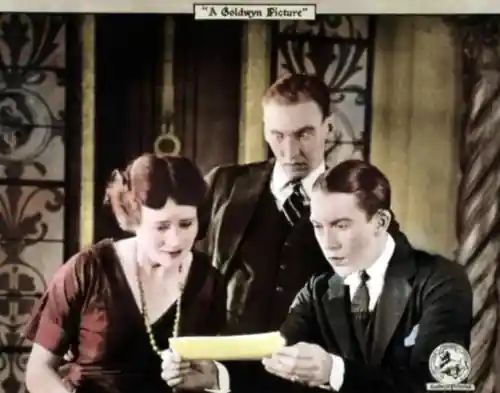
Jack Pickford cameos as Breezy, a gin-soaked sidekick whose cowlick behaves like a exclamation mark gone limp. Pickford, still coasting on his boy-king reputation, weaponizes his baby-face to deliver venomous one-liners via intertitle: “Honesty is the best policy—after you’ve tried all the others.” The line is an Ade original, but Pickford’s smirk sells it with such libertine glee you can practically smell the bootleg bourbon on his breath. Watch how he pockets a cigarette by palming it with a magician’s thumb; the gesture lasts four frames yet speaks volumes about Prohibition’s porous morality.
Edythe Chapman, as Dorothy’s widowed aunt, floats through parlors like a revenant of Victorian rectitude, her black lace a rebuke to jazz-age shimmy. In a film addicted to artifice, her performance is startlingly quiet; she communicates disapproval with the mere act of lifting a teacup, the porcelain clink echoing like a judge’s gavel. When she ultimately blesses Ed, the moment lands not as capitulation but as recognition that integrity itself is a performance, and Ed’s version at least entertains.
The climax arrives not with handcuffs but with a wedding bouquet. Creditors—who, in a surreal flourish, turn out to be employees of a competing hoax—storm the ceremony only to be charmed into groomsmen. The film’s final image freeze-frames on Ed’s face: eyes wide, grin wider, the cadence of a man who has learned that in America even bankruptcy can be rebranded as adventure. The iris closes, not into blackout but into a golden dollar sign that winks like a lecherous sun.
Viewed today, Just Out of College feels like a TikTok-age cautionary tale shot on nitrate. Swap the phonograph for Spotify and the ticker for crypto, and Ed could be any influencer minting NFTs of vaporware. The film’s genius lies in never moralizing; it laughs with the con man, not at him, implicating the audience in every forged signature. Each scratch on the surviving print resembles a scar on the national psyche, a reminder that our greatest national export is the hallucination of success.
Restoration-wise, the 4K scan from the sole surviving Czech print is revelatory. Grain swarms like bees around porch-light, yet individual freckles on Malone’s shoulder blades bloom into galaxies. The tinting—amber for interiors, cerulean for exteriors—echoes the emotional whiplash of Ade’s narrative. A new score by the Mont Alto Motion Picture Orchestra interpolates “Ain’t We Got Fun” with Stravinskian dissonance, suggesting the Charleston is merely a waltz on the lip of a volcano.
Comparative note: where Un día en Xochimilco aestheticizes poverty into floral pageantry, and The Grain of Dust philosophizes romance into cosmic dust, Just Out of College chooses the middle path—farce as philosophy, love as leveraged buyout. It is the missing link between The Man on the Box’s marital screwball and The Challenge’s moral crucible.
Verdict: essential viewing for anyone who believes the 1920s were mere flapper feathers and bathtub gin. This is the decade’s id unfettered, a celluloid hustle that foreshadows every subsequent American boom-bust cycle, right up to the latest SPAC. Watch it, then look at your LinkedIn profile and shiver.
IMDb —
1935
Community
Log in to comment.