DbcultAccessing Vault...
5/10
Senior Film Conservator
A definitive 5/10 rating for a film that redefined the boundaries of cult cinema. The Golf Bug remains a cornerstone of transgressive art.
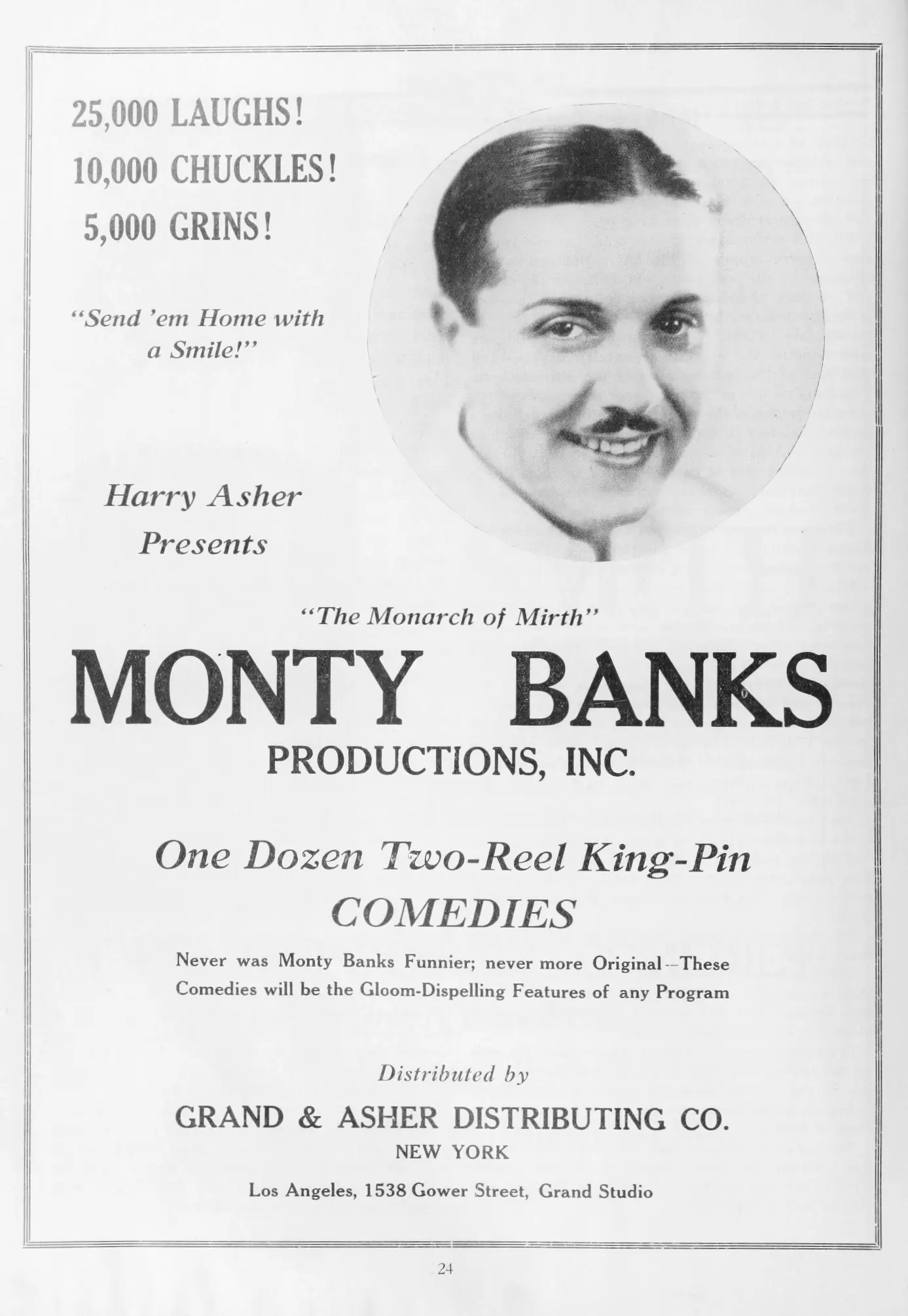
In the pantheon of silent era luminaries, Monty Banks often occupies a space defined by his astonishing physical agility and a certain Italianate brio that distinguishes him from the more melancholic Keaton or the Everyman persona of Lloyd. The Golf Bug (1924) stands as a quintessential artifact of this era, a period where the short-form comedy was reaching its zenith of technical and performative sophistication. Unlike the sprawling narratives found in The Princess of Patches, Banks’s work here is distilled, focusing on the singular mania of the 'golf bug'—a metaphorical infection that renders the sufferer incapable of perceiving the world through any lens other than that of the links.
The film opens not with a whimper, but with a rhythmic precision that suggests a choreographer was as much at work as a director. Banks, with his wide-eyed enthusiasm, manages to imbue the simple act of practice with a sense of impending doom. His physicality is a marvel; he moves with a liquid grace that belies the chaotic outcomes of his actions. When compared to the more static dramatic structures of His House in Order, 'The Golf Bug' feels positively modern in its pacing, utilizing the short-reel format to maximize the density of its gags without ever feeling overstuffed.
The visual language employed by the cinematographers of the 1920s was one of stark contrasts and deep shadows, yet in 'The Golf Bug', there is a luminous quality to the outdoor sequences. The golf course becomes a character unto itself—a verdant, deceptive siren calling to the protagonist. This obsession mirrors the thematic weight found in The Door Between, though here the 'door' is the threshold between social acceptability and the madness of the amateur athlete.
William Blaisdell and Ena Gregory provide the essential counterpoint to Banks’s frenetic energy. Gregory, in particular, navigates the role of the long-suffering partner with a nuanced frustration that elevates the film beyond mere slapstick. In the same way that Playmates explored the dynamics of companionship through a different lens, 'The Golf Bug' uses the domestic sphere as a pressure cooker for Banks’s antics. The chemistry between the leads is palpable, rooted in a shared understanding of timing that was the hallmark of the 1920s comedy troupes.
Merta Sterling’s contribution cannot be overlooked. Her presence adds a layer of formidable opposition that forces Banks into even more creative physical maneuvers. Watching her interact with Banks is like witnessing a collision between an immovable object and an irresistible, golf-obsessed force. This ensemble dynamic is far more sophisticated than the rudimentary characterizations often found in earlier works like National Red Cross Pageant, showing the rapid evolution of screen acting during this decade.
While many contemporary viewers might see 'The Golf Bug' as a simple farce, a deeper reading reveals a sharp critique of the burgeoning leisure class. The 1920s were a time of unprecedented prosperity for some, and the 'golf bug' was a very real phenomenon that signaled a shift in how Americans spent their time and money. Banks’s character is a victim of his own aspiration, trying to master a game that is inherently unmasterable. This pursuit of perfection through absurdity is a theme that echoes in An Overall Hero, where the protagonist also finds himself at odds with the expectations of his environment.
The film’s editing is particularly noteworthy. The transition from the domestic space to the public arena of the golf course is handled with a fluidity that mirrors the protagonist’s mental state. As the 'bug' takes hold, the world literally becomes a golf course in his eyes. This proto-surrealist touch is reminiscent of the stylistic experimentation seen in Trompe-la-Mort, albeit applied to a comedic context. The gag where Banks perceives everyday objects as golf balls is a masterclass in visual storytelling, requiring no intertitles to convey the depth of his delusion.
The use of depth of field and the orchestration of large-scale physical stunts in 'The Golf Bug' predates many of the techniques that would become standard in later talkies. The film manages to capture the scale of the golf course while maintaining the intimacy of the character’s internal struggle. It is this balance that makes it a more compelling watch than the somewhat disjointed Taxi Please.
When we place 'The Golf Bug' alongside its contemporaries, its unique flavor becomes even more apparent. It lacks the melodrama of A Prisoner in the Harem, opting instead for a grounded absurdity. Yet, it shares a certain thematic kinship with Youthful Cheaters in its portrayal of social mores and the consequences of deviating from them. Banks’s character isn’t a rebel; he is a man who wants to belong to the elite world of golf but is physically and temperamentally ill-suited for its quietude.
Furthermore, the film’s exploration of domesticity and the 'hobbies' that threaten it can be compared to Wanted: A Baby. In both films, a singular desire drives the plot into increasingly complex social entanglements. However, Banks’s athleticism provides a visual spectacle that few other comedians of the time could match. His ability to fall, tumble, and recover with the grace of a gymnast adds a layer of 'superhuman' comedy that elevates the stakes of every scene.
The cultural footprint of 'The Golf Bug' extends beyond its initial release. It serves as a precursor to the sports-comedy subgenre that would later be dominated by the likes of Rodney Dangerfield or Adam Sandler, but with a level of pantomimic skill that is largely lost in the age of dialogue. The film’s focus on the 'obsession' rather than just the 'game' makes it a timeless piece of art. It speaks to anyone who has ever been consumed by a passion to the point of social alienation.
In the broader context of international cinema, one might look at Miyama no otome or Le nabab to see how different cultures were grappling with the transition to modernity and the changing roles of men in society. Banks’s golf-obsessed protagonist is a distinctly American (via Italy) creation—a man defined by his leisure and his failure to master it. It is a poignant, if hilarious, reflection of the 1924 zeitgeist.
"A masterclass in kinetic storytelling, Monty Banks turns the fairway into a battlefield of the absurd."
The technical prowess of the film is perhaps best exemplified in the climax, where the various threads of the 'bug' come together in a crescendo of physical comedy. The timing required for these sequences is staggering. Unlike the more contemplative pacing of The Little Church Around the Corner, 'The Golf Bug' demands constant attention, rewarding the viewer with a barrage of visual payoffs. Even the smaller moments, like Banks attempting to use a common household item as a club, are imbued with a sense of tragicomic desperation.
Ultimately, the film succeeds because it treats its ridiculous premise with absolute sincerity. Banks never 'winks' at the camera; he is fully committed to the madness. This commitment is what makes the comedy work—it is the same commitment found in the best performances of Miss Peasant, where the stakes are life and death, even if they are presented through the lens of irony. 'The Golf Bug' is a testament to the power of silent film to convey complex psychological states through nothing more than movement, expression, and the perfect swing of a club.
From a formalist perspective, the film’s composition is a study in the use of the frame to create comedic tension. Directors of this era, working within the constraints of early equipment, had to be ingenious. The way Banks moves through the frame—often entering from unexpected angles or disappearing into the background to emerge in a different state of disarray—shows a sophisticated understanding of spatial relationships. This is a far cry from the more theatrical staging of A Prisoner in the Harem, representing a leap forward in cinematic language.
As we look back nearly a century later, 'The Golf Bug' remains more than a curiosity. It is a vibrant, breathing piece of cinema that captures a specific moment in the evolution of the American comedy. It showcases a star at the height of his powers, a supporting cast of impeccable pedigree, and a director who understood the innate humor of the human condition when pushed to its obsessive limits. It is a hole-in-one for silent cinema enthusiasts and a necessary curriculum for any student of the slapstick arts.
Final Verdict: An indispensable artifact of 1920s physical comedy that remains as infectious as the obsession it portrays.
IMDb —
1923
Community
Log in to comment.