DbcultAccessing Vault...
Cult Review
Senior Film Conservator
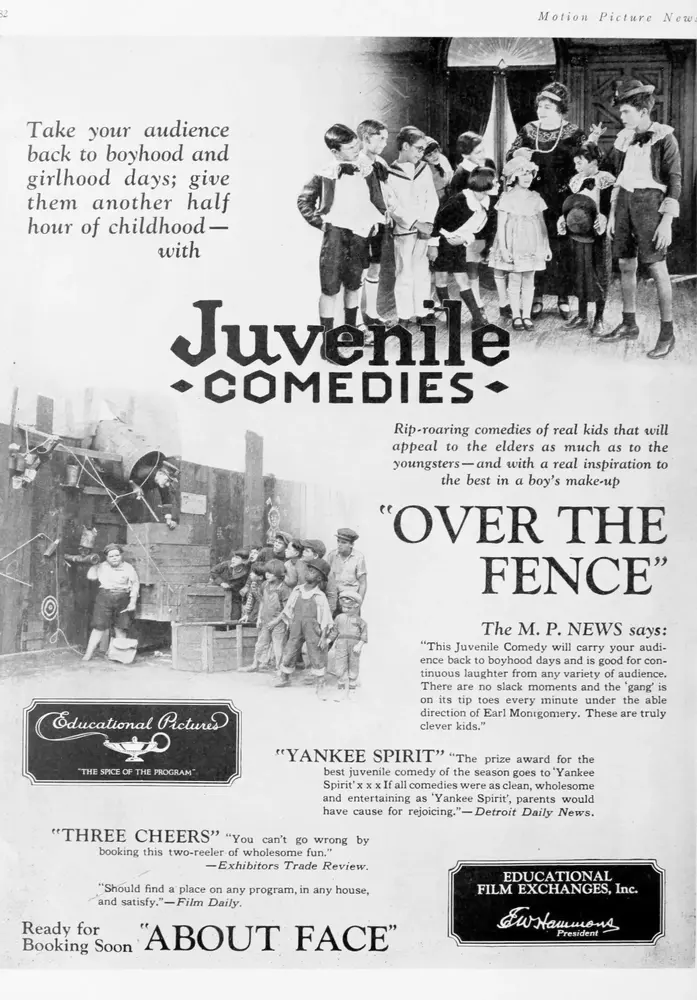
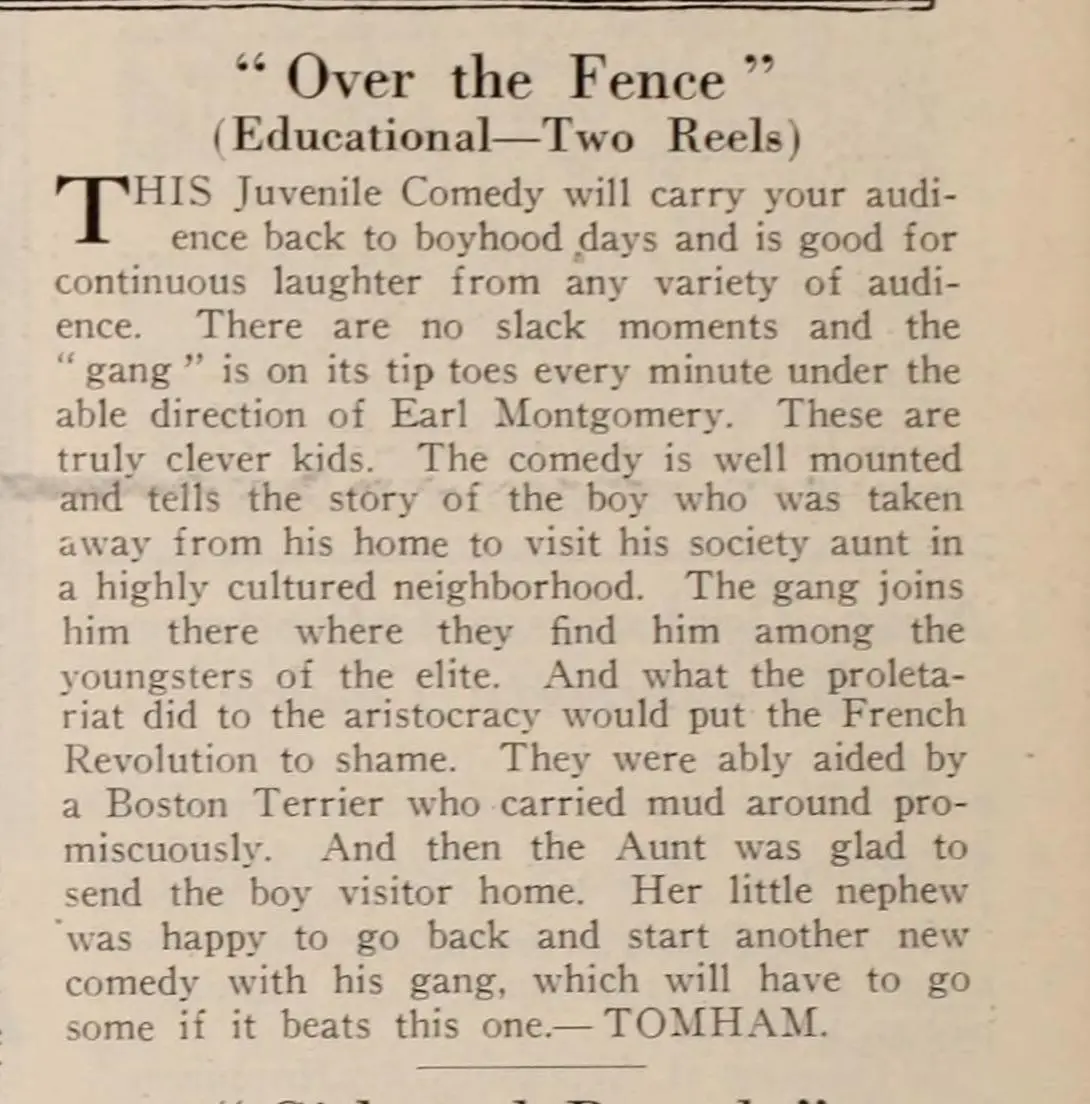
The cinematic landscape of the late 1910s was often a battleground between the lingering moralism of the 19th century and the emerging, ribald energy of the 20th. Over the Fence stands as a definitive artifact of this transition, utilizing the domestic sphere as a microcosm for broader societal shifts. The protagonist, portrayed with a deceptive innocence by the youthful ensemble, is sent to live with a 'society aunt'—a character trope that embodies the stiff, unyielding structures of the upper class. This setting is not merely a backdrop; it is a character in itself, laden with heavy drapes, fragile artifacts, and an oppressive silence that begs to be shattered. Unlike the protagonists in The Poor Rich Man, who navigate wealth with a sense of duty, the children here see opulence as an obstacle to be overcome through sheer kinetic force.
The 'fence' of the title is a potent symbol of class segregation. It represents the barrier between the manicured gardens of the elite and the dusty, vibrant reality of the street. When the boy’s pals arrive, they don't just visit; they invade. This intrusion is framed with a sophisticated understanding of spatial dynamics. The camera, though largely static in the tradition of the era, captures the frantic movement of the children as they navigate the aunt’s parlor. Their presence is a cacophony of motion in a world designed for stillness. Each broken vase and overturned ottoman serves as a rejection of the aunt’s curated identity. The film suggests that the vibrancy of youth cannot be contained within the sterile confines of high-society expectations, a theme that resonates with the existential struggle seen in Conceit, albeit through a much more comedic lens.
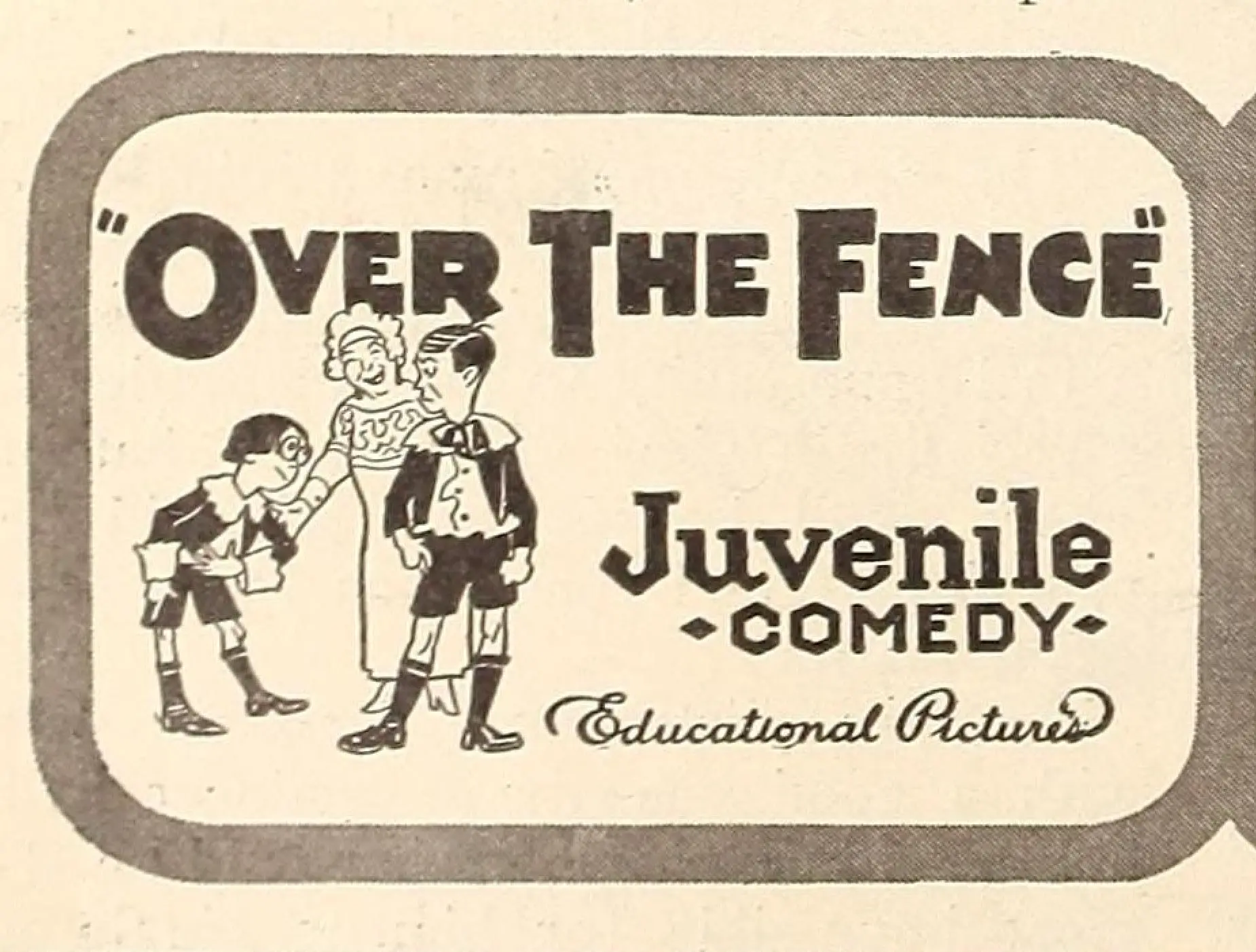
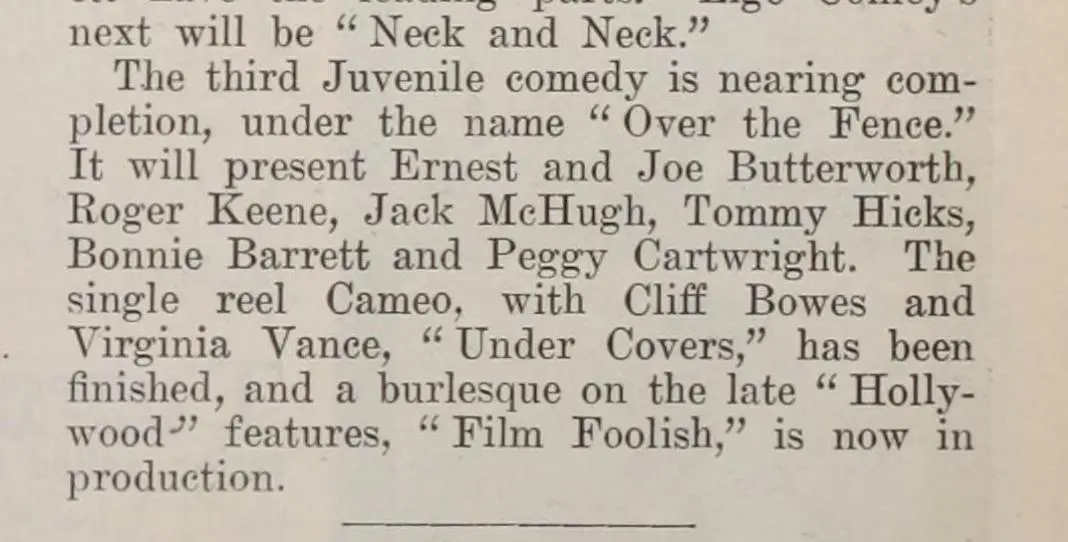
To dismiss the events of Over the Fence as mere 'mess-making' is to ignore the intricate choreography of its slapstick. The Butterworth brothers, Ernest and Joe, along with Jack McHugh and the rest of the cast, display a level of physical synchronicity that rivals the great vaudevillian troupes of the time. The humor is derived from the collision of two incompatible worlds. We see the aunt attempting to maintain a veneer of dignity while her world literally collapses around her. This is not the tragic downfall found in Slaves of Pride, but a jubilant, carnivalesque deconstruction of status. The mess is the message.
The pacing of the film is relentless. Once the pals enter the frame, the narrative trajectory shifts from a character study of a lonely boy to a symphonic display of entropic devastation. There is a specific gag involving the aunt’s parlor that deserves academic scrutiny: the way the boys use high-end furniture for mundane, low-brow games. It is a visual pun on the utility of wealth. In their hands, a priceless tapestry becomes a fort; a silver platter becomes a projectile. This subversion of the intended use of objects is a hallmark of the finest silent comedies, reflecting a world where the old rules no longer apply. It mirrors the thematic restlessness found in The Man Beneath, where social roles are constantly being challenged and rewritten.
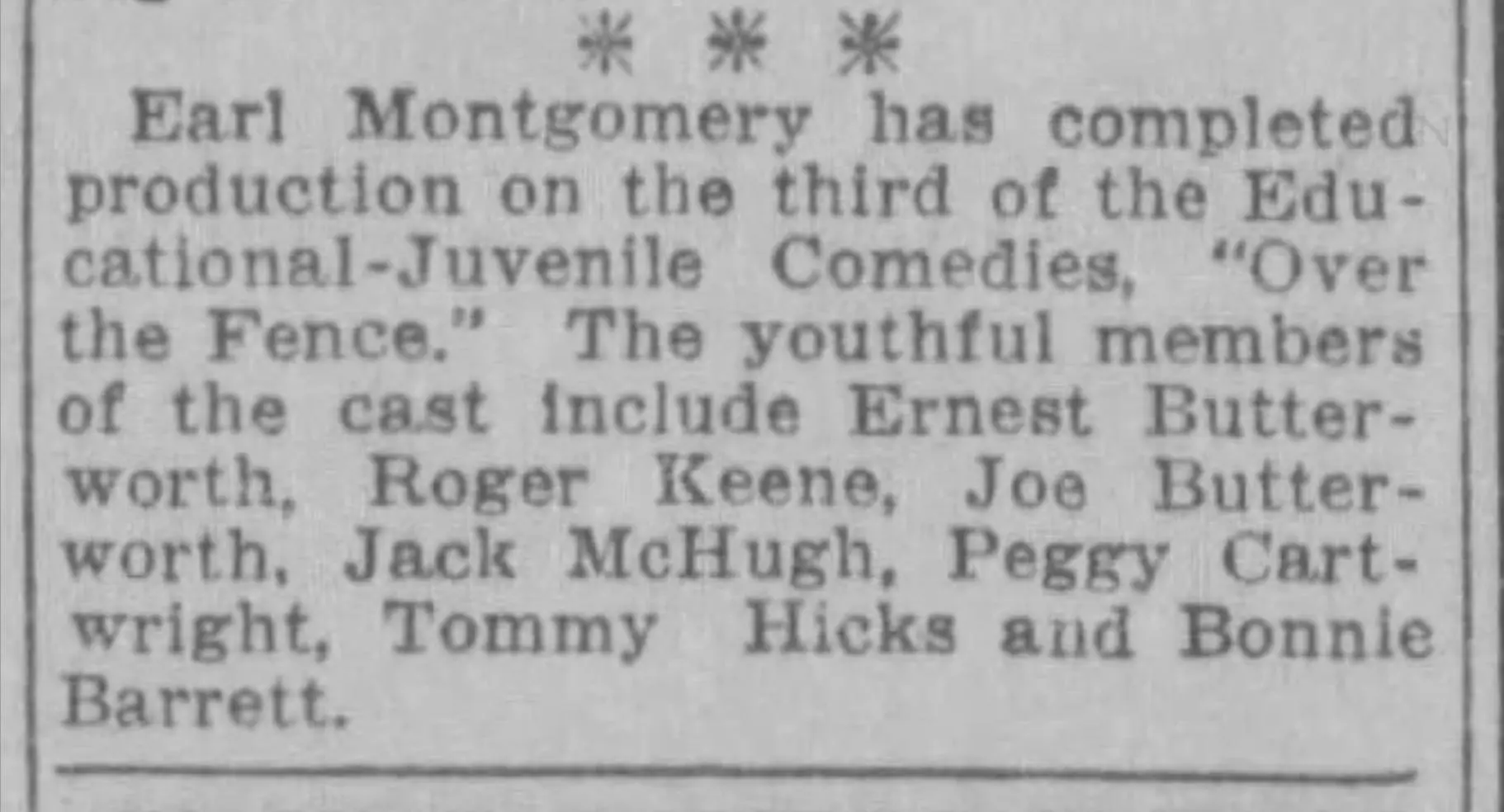
The casting of Over the Fence is crucial to its enduring charm. The Butterworth brothers bring a naturalism to their roles that was rare in an era often characterized by stagey, exaggerated performances. They don't 'act' like children; they embody the chaotic essence of childhood. Their interactions with Bonnie Barrett and Peggy Cartwright create a balanced ensemble that feels like a genuine community of miscreants. This collective energy is the film's greatest asset. While films like A Sister to Carmen rely on the singular magnetism of a lead, this short thrives on the chemistry of its group.
Jack McHugh’s performance, in particular, provides a necessary grounding for the more outlandish gags. He often serves as the bridge between the aunt’s world and the boys’ world, his facial expressions conveying the internal conflict of a child caught between the desire for approval and the primal urge for play. The cinematography supports this by frequently placing him in the center of the frame, surrounded by the swirling chaos of his friends. This visual arrangement emphasizes his role as the catalyst for the estate's transformation. The film doesn't need the overt melodrama of The Family Honor to make its point; the simple act of a child laughing in a forbidden room is a powerful enough statement.
Despite the technical limitations of 1917, the film exhibits a keen eye for composition. The use of deep focus, though perhaps accidental, allows the audience to see the aunt’s horrified reactions in the background while the boys continue their destruction in the foreground. This layering of action creates a rich, multi-dimensional comedic experience. The lighting, too, plays a role in the storytelling. The bright, natural light of the outdoor scenes contrasts sharply with the shadowed, moody interiors of the aunt’s house, reinforcing the idea that the boys are bringing 'light' (or at least life) into a dark, stagnant place. This use of contrast is far more subtle than the stark shadows of The Mask, yet it is equally effective in establishing mood.
The editing is surprisingly modern for its time. The cuts between the boys’ escalating pranks and the aunt’s futile attempts to restore order create a rhythmic tension that drives the film toward its climax. There is a musicality to the destruction—a crescendo of breaking glass and falling fabric that the viewer can almost hear despite the silence. This rhythmic editing is a precursor to the sophisticated montage techniques that would later define the medium. It shares a certain 'cinematic pulse' with the raw, documentary-style energy of The Corbett-Fitzsimmons Fight, where the focus is entirely on the physicality of the subjects.
In the context of the early 20th century, a film about children destroying a high-society home was not just funny; it was slightly subversive. This was an era of profound social upheaval, and the image of the 'society aunt'—a symbol of the old guard—being outmaneuvered by a group of scrappy kids would have resonated deeply with a working-class audience. The film avoids the heavy-handed moralizing found in The House Without Children, opting instead for a celebratory approach to domestic rebellion. The mess is not a sign of failure, but a sign of life. It is the physical manifestation of a refusal to be bored, to be still, or to be compliant.
The aunt’s reaction to the mess is also telling. She doesn't just get angry; she seems genuinely bewildered, as if her entire reality has been invalidated. Her inability to comprehend the boys' joy is the film's sharpest critique of the upper class. To her, the objects in her house are more valuable than the people in it. By shattering those objects, the boys are forcing her to confront the emptiness of her lifestyle. This thematic depth elevates Over the Fence above many of its contemporaries. It isn't just a comedy; it's a small-scale revolution. While a film like The Law of Blood deals with the weight of heritage and tradition, Over the Fence suggests that sometimes the best thing to do with a heritage is to knock it off its pedestal and see what happens.
Ultimately, Over the Fence is a masterclass in the economy of storytelling. In a relatively short runtime, it establishes a clear conflict, develops a memorable cast of characters, and delivers a satisfyingly chaotic resolution. It captures a specific moment in time—a moment when the world was moving away from the rigid hierarchies of the past and toward a more fluid, energetic future. The film’s reliance on physical comedy allows it to transcend the barriers of language and time, making it as accessible today as it was in 1917. It lacks the dark psychological undertones of The Phantom Honeymoon or the gritty realism of Hair Trigger Stuff, but it possesses a pure, unadulterated joy that is rare in any era of filmmaking.
The film’s legacy can be seen in the countless 'Our Gang' shorts that followed, but there is a raw, unpolished quality here that gives it a unique edge. It feels less like a studio product and more like a captured moment of genuine play. The mess made in the aunt's house is a glorious, shambolic triumph of the human spirit over the constraints of decorum. It reminds us that no matter how high the fence, or how strict the society, the inherent anarchic energy of youth will always find a way to climb over, break through, and make a beautiful, wonderful mess of things. It is a cinematic celebration of the untamed, a ribald salute to the agents of chaos, and a timeless reminder that the most valuable things in life are often the ones that can't be kept in a glass case.
IMDb 6.2
1924
Community
Log in to comment.