DbcultAccessing Vault...
Cult Review
Senior Film Conservator
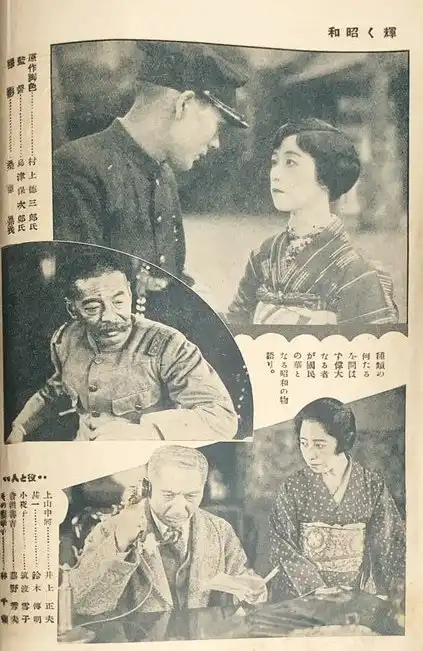
Okay, so Kagayaku showa (that's "Shining Showa" for us non-Japanese speakers) from 1937 is definitely not for everyone.
If you're into quick cuts and explosions, you'll probably hate it, honestly. But if you've got a soft spot for early Japanese cinema, or just want to see something that feels like a window into a truly different time, then yeah, it's absolutely worth carving out an evening for this one. It’s a slow burn, for sure, but there’s a quiet charm here that really sneaks up on you. ✨
The movie kinda just… happens. You’re dropped into this world, the Japan of the late 1930s, and it feels so incredibly real, almost like you’re just watching people live their lives.
Kinuyo Tanaka is, as always, mesmerizing. Her character, let's call her Sato, doesn't say a ton, but her eyes do all the heavy lifting.
There's this one scene, Sato is sitting by a window, just staring out. The light catches her face in a way that just tells you everything you need to know about her worries, without a single word of dialogue.
You can almost feel the weight of expectation on her shoulders, the way she carries herself, slight slump, but still trying to project strength. It’s those tiny details.
The pacing is… well, it’s 1937. Things move slower. But it gives you time to actually *look* at the sets, the clothes, the way people interact with each other.
One shot that stuck with me: a busy street scene, all these people bustling past, and the camera just holds on Sato for a beat too long.
It makes you feel her isolation, even amidst the crowd. Like, everyone else is going somewhere, doing something, and she's just… there.
The film plays a lot with silence, which I really appreciated. Sometimes the quiet feels a bit long, almost awkward, but then it becomes incredibly powerful.
It lets you sit with the characters' feelings, rather than being told what to feel. Very subtle, you know?
And the way they framed some of the interiors, it’s just beautiful. Very stark, but you can feel the warmth of the wood and paper screens.
There's a subtle tension running through it, too. You can feel the country changing around them, even if the film doesn't explicitly talk about it.
You get glimpses of modernizing elements creeping into the traditional setting. A telephone ringing, or a car passing by a rickshaw.
It’s not a film that spells things out for you. It trusts you to pick up on these small shifts.
I remember thinking about The Stronger Vow while watching this, not because they’re similar in plot, but in how they both capture a certain *mood* of their era without being heavy-handed about it.
The ending, without giving anything away, is a bit open. It doesn't wrap everything up neatly with a bow.
Some might find that frustrating, but I thought it felt right. Life doesn’t always give you clean conclusions, does it?
Overall, Kagayaku showa is a quiet, contemplative film. It's not going to grab you by the collar, but it might just settle into your thoughts for a while after you've watched it. A truly interesting piece of history, if nothing else. 🎬
IMDb 6
1932
Community
Log in to comment.