DbcultAccessing Vault...
5.7/10
Senior Film Conservator
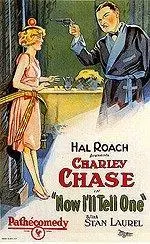
A definitive 5.7/10 rating for a film that redefined the boundaries of cult cinema. Now I'll Tell One remains a cornerstone of transgressive art.
Is Now I'll Tell One a lost gem of the silent era or just a footnote for comedy historians? Short answer: Yes, but only if you value the raw, unrefined energy of the Hal Roach studio over polished narrative structure.
This film is specifically for those who want to see the DNA of modern sketch comedy being spliced together in real-time. It is not for viewers who require a linear, grounded plot or those who find 1920s gender tropes too grating to endure. This is a loud, abrasive, and fascinating relic.
Before we dive into the technicalities of this 1927 short, let’s establish the baseline for its modern relevance. It exists in a strange limbo between a Charley Chase vehicle and a proto-Laurel and Hardy collaboration.
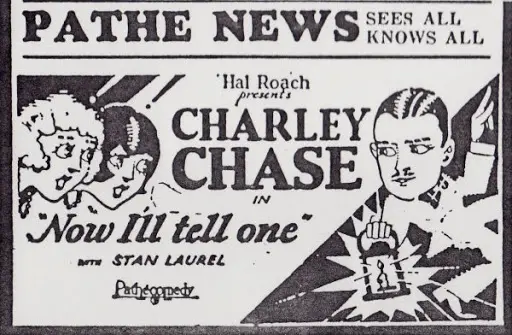
Long before Rashomon explored the subjectivity of truth, silent comedies like Now I'll Tell One were using the concept for cheap—but effective—laughs. The setup is simple: a divorce court. But the execution is anything but straightforward. Charley Chase, playing a version of his 'Everyman' persona, uses the witness stand to paint a picture of domestic horror that is so over-the-top it becomes surreal.
In one specific sequence, Charley depicts his wife as a literal monster of the household, a woman whose physical prowess and temper would make a heavyweight boxer flinch. The brilliance of Chase’s performance here isn't in the action, but in the reaction. He plays the 'meek victim' with a sincerity that makes the eventual reveal of his own 'drunken' behavior in his wife's testimony even funnier. It is a cynical look at marriage that mirrors other shorts of the era, such as Hooked at the Altar, where the institution of matrimony is treated as a combat sport.
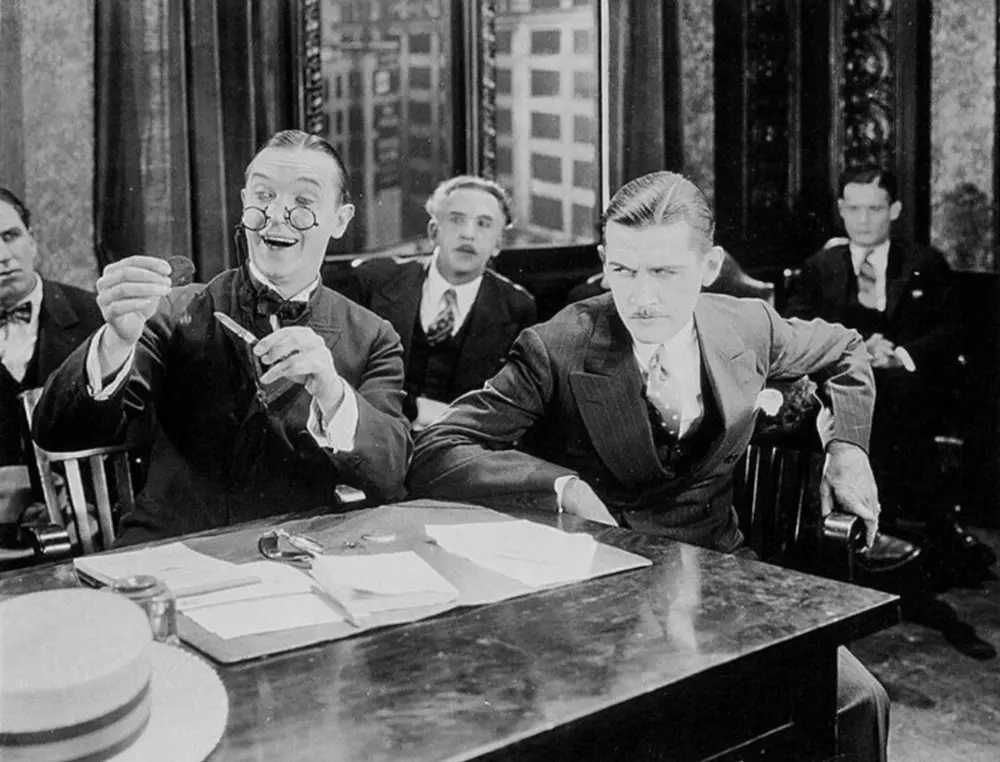
For many, the primary draw of this film isn't Charley Chase, but the presence of Stan Laurel and Oliver Hardy. It is important to manage expectations here. They are not yet 'Laurel and Hardy.' Stan plays a lawyer, and Ollie appears in a smaller capacity. However, the sparks are visible. There is a moment where Laurel’s legalistic posturing is undercut by his own physical clumsiness that feels like a rough draft of his future persona.
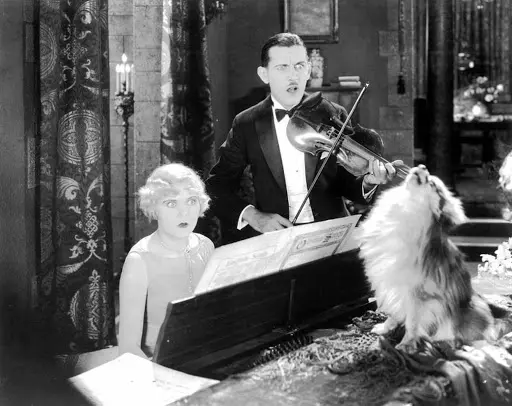
Seeing them here is like looking at a rough sketch of a world-famous painting. You see the lines, the intent, but the colors aren't filled in yet. Their presence adds a layer of historical weight to the film that elevates it above other contemporary shorts like In Bad in Bagdad. It’s a reminder that the Hal Roach 'Lot of Fun' was a literal laboratory for comedic chemistry.
The direction by James Parrott is functional rather than inventive. The camera stays largely static, serving as a proscenium arch for the physical gags. This was standard for the time, but in Now I'll Tell One, the lack of dynamic camera movement actually helps the comedy. By keeping the frame wide during the domestic 'battles,' Parrott allows the audience to see the full geometry of the stunts.
The pacing, however, is a bit of a roller coaster. The courtroom scenes act as the 'valleys'—necessary for the plot but lacking the kinetic energy of the 'peaks' (the flashbacks). When the film shifts into the exaggerated stories, the gag-per-minute ratio skyrockets. But when we return to the judge’s bench, the air tends to leak out of the balloon. It works. But it’s flawed.
The film doesn't ask you to believe in its characters; it asks you to enjoy the wreckage of their reputations.
Is Now I'll Tell One worth your time in the digital age?
Yes, if you view it as a 20-minute time capsule. It provides a rare look at Charley Chase at the height of his popularity, showcasing his unique ability to play both the instigator and the victim of chaos. For fans of Laurel and Hardy, it is an essential piece of the puzzle, showing the duo in their 'incubation' period. If you can move past the dated social dynamics, the core of the comedy—the idea that everyone is the hero of their own distorted story—remains surprisingly modern.
Charley Chase’s timing is impeccable. He has a way of moving his body that suggests a man constantly surprised by his own limbs. The inclusion of the Roach 'All-Stars' gives the film an ensemble feel that many solo shorts lacked. Furthermore, the film’s willingness to go 'dark' with its humor regarding divorce was somewhat bold for its time.
The film suffers from the 'short-film syndrome' where the ending feels abrupt rather than earned. Once the gimmick of the dual testimonies is exhausted, the movie simply stops. Additionally, some of the physical gags are repetitive, relying on the same 'hit and fall' rhythm a few times too many.
Now I'll Tell One is a fascinating, if uneven, explosion of silent comedy. It’s a film that thrives on its own cynicism. While it may not have the emotional depth of a Chaplin feature or the architectural precision of a Keaton masterpiece, it has something else: a mean-spirited, frantic energy that feels oddly contemporary. It’s a chaotic symphony of 'he said, she said,' and while the instruments are out of tune, the conductor—Charley Chase—knows exactly how to keep the audience watching the train wreck. It is a vital document for anyone interested in the evolution of the Hal Roach house style and the early footsteps of Stan and Ollie.
IMDb —
1919
Community
Log in to comment.