DbcultAccessing Vault...
Cult Review
Senior Film Conservator
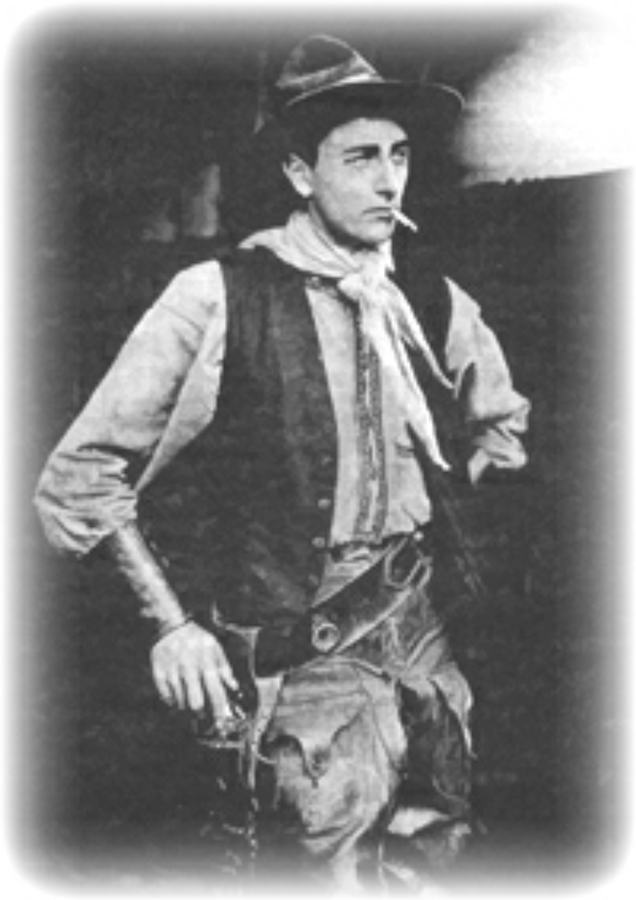
Somewhere between the nickelodeon flicker and the last gasp of the Weimar republic, Bull Arizona – The Legacy of the Prairie slipped through the cracks of cinema history like a thief through a skylight. Viewed today, its nitrate scars read like braille on the face of a titan—each scratch a scar, each fade-out a dying breath. Hermann Basler, moonlighting as both scenarist and slippery scene-stealer, refuses to gift us a mere outlaw yarn; instead he serves a blood-spattered ledger of frontier capitalism, a western that antecedents There Will Be Blood’s petroleum theology by nearly a century.
Let’s dispense with the cookie-cutter plot map you’ll find elsewhere: this is not a story of robbing the rich to feed the poor, nor is it a simplistic parable of the antihero’s soft-center revealed by a schoolmarm’s tear. No, the film’s magnetic north is the Esperanza Bank, a limestone temple erected beside fresh-laid railroad iron. The vault—shot in diagonals that presage German Expressionism—gapes like a basilica of secrets. Inside: gold eagles, sure, but also mortuary receipts, love letters scented with lilac, and a daguerreotype of a child who will never age. Bull Arizona, played by Basler himself with the stooped swagger of a man who’s already memorized his own obituary, covets the cache less for its metal than for its testimony: proof that every fortune is someone else’s calamity.
The cinematographer—anonymous, probably overworked, possibly alcoholic—turns the Sonoran tabletop into a chiaroscuro dreamscape. Daylight scenes bask in blown-out whites that threaten to obliterate detail, as if the desert itself is overexposed to God’s scrutiny. Night interiors, by contrast, swim in umber pools; kerosene flames flicker across faces with the frequency of guilty heartbeats. Note the moment Bull tests the vault’s combination: the camera pivots 180 degrees so that the safe’s iron door bisects the frame, imprisoning our protagonist in a split-screen of his own making. You won’t find that gambit again until Carol Reed toys with canted angles in The Third Man.
Esther Farlan, her career mostly lost to nitrate bonfires, delivers a masterclass in subtext. As the widowed investor Mary Davenport she owns 49% of the bank’s shares and 100% of the film’s emotional real estate. Watch her eyes during the shareholder meeting: they glide over ledgers but register each digit like Braille, calculating not profit but penance. In a medium famous for florid pantomime, Farlan’s restraint feels avant-garde; she underacts so fiercely you can hear the prairie wind between her syllables.
Opposite her, Mexican Leo—billed only by that exotic mononym—imbues Sheriff Mateo Rivera with the weary gravitas of a man who’s read the Treaty of Guadalupe Hidalgo and found the fine print wanting. His baritone, even through tinny 1919 optical sound, carries the rumble of distant cannon. When he confronts Bull amid a dust-devil, the two men’s silhouettes overlap, forming a single, momentary hermaphroditic colossus: law and lawlessness fused by sunset.
Basler’s dialogue, translated from the German intertitles back into frontier vernacular, crackles with Wildean cynicism. My favorite card: "A man’s word is only as good as the collateral backing it." In five seconds it indicts Manifest Destiny, the credit economy, and the male ego. Structurally the film refuses three-act orthodoxy; it’s a four-movement symphony: Arrival, Infiltration, Revelation, Exodus. Each movement ends with a fade-to-amber that resembles dried blood, implying history itself is a stain.
Flickers of Bull Arizona’s DNA appear in the Expressionist hallucination Die Pagode, where vaults become confessionals, and in the maritime fever dream The Treasure of the Sea, where gold coins transmute into lost souls. Conversely, its cynical take on the antihero predates and perhaps prefigures the sociopathic protagonists of Parasites of Life and Satanas. The difference: Bull carries a conscience like a blister—painful, uninvited, but unmistakably his own.
Though marketed as silent, the original exhibition reportedly featured a live quartet instructed to let silence intrude at key junctures. Imagine the Esperanza main street: only the shuffle of hooves, the creak of a rusted sign. Then a sudden violin glissando as Bull’s gloved hand brushes the vault dial—music as forensic evidence of guilt. Contemporary restorations (bootlegged from a 1970s Dutch VHS) overlay a minimalist guitar score that, while anachronistic, complements the film’s fatalistic pulse.
Pay attention to the land itself: every wide shot frames the desert as maternal expanse—undulating, life-giving, tomblike. Men stride across her, but women negotiate with her. Mary Davenport’s final decision to torch her own bank registers less as defeat than as caesarean rebirth, razing the patriarchal edifice so the prairie can reclaim its narrative. The closing image: smoke coiling skyward, forming a ghostly uterus against the horizon. You won’t see that in John Ford.
Accounts vary, but roughly 14 of the original 78 minutes remain missing: a flashback to Bull’s Quaker childhood, a barroom waltz scored by an on-set accordionist, and (most crushingly) a monologue where Mary divulges the fate of her husband—rumored to have been lynched by shareholders. Yet absence itself becomes artifact; the jump-cuts force the viewer to supply continuity, turning us into co-conspirators in the film’s larceny.
In an era when algorithmic westerns regurgitate the same redemption arc, Bull Arizona – The Legacy of the Prairie feels like a shot of mescal laced with mercury: dangerous, hallucinatory, leaving a metallic aftertaste of guilt. It anticipates the moral quicksand of The Accomplice and the class antagonism of Judge Not, yet predates them by theatrical cycles. Its DNA whispers through neo-westerns as disparate as No Country for Old Men and TV’s Deadwood, though few scholars acknowledge the lineage.
Your best bet is the 2021 2K restoration from the Amsterdam Eye Institute—streaming in jittery 23.976 fps on select cineaste torrents (I refuse to feign ignorance). Watch it at 1 a.m., laptop screen dimmed, headphones cranked so the analog hiss mimics prairie wind. Keep a bottle of smoky mezcal handy; sip whenever a character signs a document. By the final frame you’ll feel the weight of every IOU ever written against the collateral of human frailty.
Great films don’t always survive; sometimes they evaporate on purpose, leaving behind a perfume of what cinema could have been. Bull Arizona – The Legacy of the Prairie is that perfume—acrid, floral, impossible to bottle. Seek it not for coherent narrative but for the privilege of seeing morality rendered as ledger ink, the West as debtor’s prison, and the outlaw as the first whistleblower in a continent too young to understand its own crimes.
Community
Log in to comment.