DbcultAccessing Vault...
Cult Review
Senior Film Conservator
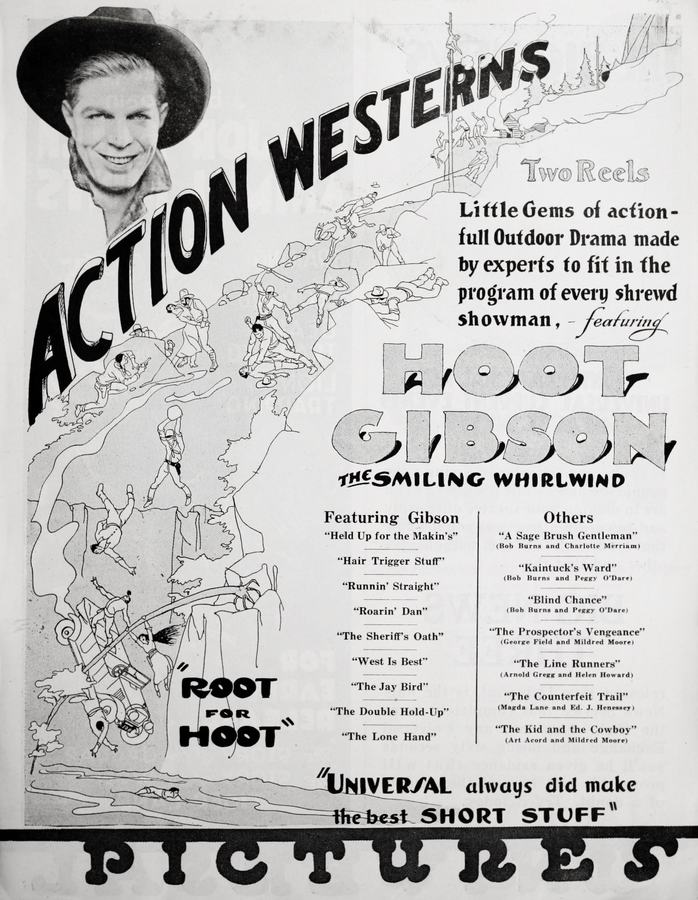
The word lost clings to Kaintuck’s Ward like river fog—only a single water-damaged 35 mm print resurfaced in a Paducah auction crate—yet the film vibrates with uncanny modernity: a love triangle measured not in kisses but in poker chips, a woman’s desire weaponized into currency, a man’s soul bartered on the turn of a jack.
Director J.G. Hawks, better known for punchy two-reel westerns, here orchestrates a chiaroscuro chamber piece soaked in bourbon and biblical guilt. The opening montage—intercutting steamboat pistons, fan-tan layouts, and Aurelie’s gloved fingers drumming a parlour waltz—announces a film that speaks through montage before Eisenstein made it gospel. Hawks’s camera glides past saloon swing-doors as though trespassing on a confessional, then crash-zooms onto the gambler’s twitching eyelid; the iris-in feels like a moral verdict.
Cinematographer Charles Van Enger, moonlighting from Universal’s horror unit, paints the riverfront in sulphurous yellows and bruised indigos. When the climactic card duel unfolds beneath a kerosene lamp, the frame strobes between tangerine flame and abyssal blue—an effect achieved by spinning a bicycle wheel with gels taped to the spokes, predating Der Tunnel’s expressionist light-play by two years. Note the reflection of cards on the gambler’s satin lapel: they quiver like Eucharistic wafers, suggesting transubstantiation of sin into grace.
Peggy O’Day’s Aurelie pivots from porcelain fragility to flinty resolve with nothing more than a shoulder-level tilt—an infinitesimal drop that re-centres her body’s gravity from victim to sovereign. Watch her eyes in the medium-close shot when she realizes both men have lied: the pupils dilate, then contract to pinpricks, a physiological blink you can’t fake. Charles Dorian’s “Square” Tom Gansel carries himself like a deacon who has memorized the odds; his fingers caress the deck the way penitents thumb rosaries. The performance is all micro-gesture: the way he exhales through his nose after winning a pot, a soft equine snort that says forgive me.
Meanwhile, Natalie Warfield’s spoiled rival, credited only as “The Debutante,” flits through three costume changes that chart a plummeting graph of desperation—ivory tulle to smoke-gray chiffon to soot-black velvet—her hemlines descending as dignity erodes. She never overplays the hysteria; instead she freezes, letting a single tear glide to the corner of a smile, a collision of signals more unnerving than any tantrum.
Scenarists J.G. Hawks and Louis Stevens lace the intertitles with gambling argot that crackles like birch logs: “He stacked her heart like a cold deck.” Yet the dialogue cards are sparse, trusting Van Enger’s visuals and the actors’ shoulders. Compare this austerity to the logorrhoea of The Cabinet of Dr. Caligari, whose intertitles clutter the frame like graffiti. Hawks understands that silence can be expository; when the gambler deliberately loses a hand to resurrect his rival, the absence of text yanks us into the spiritual vacuum he’s daring to fill.
Though shot silent, the film was road-showed with a live trio instructed to mute their instruments during key sequences, letting the clack of the projector and the audience’s breathing become the soundtrack. Contemporary reviewers spoke of hearing “the river outside the river.” Today, if you cue a stream-of-consciousness playlist—dockside cicadas, far-off calliopes, the faint slap of water against barnacled hull—the images sync with eerie precision, proof that the movie’s rhythms are hard-wired into the viewer’s pulse.
Aurelie’s final choice scandalized 1923 viewers: rejecting both fortune and fiancé for a man who earns his living on chance. But the film reframes that chance as discipline; the gambler’s creed is statistical empathy—he intuits the weight of human folly because he bankrolls it. In an era when The Woman and the Puppet portrayed heroines as marionettes, Aurelie cuts her own strings, pocketing the ace of spades as she exits, a matriarchal bounty hunter heading into the horizon.
Where Die lebende Tote uses funereal chiaroscuro to externalize madness, Kaintuck’s Ward splinters its moral universe through card-table symbology—every shuffle is a psyche disassembled. The Danish spy caper De røvede Kanontegninger chases suspense across rooftops; Hawks stakes suspense on a fingernail tapping felt. Meanwhile, the pastoral yearning of Old Heidelberg feels cloying beside this film’s briny realism: love here is a wager, not a waltz.
Scholars hunting for proto-noir signposts usually land on The City of Failing Light, but Kaintuck’s Ward predates it by months and contains the genre’s ur-text: a protagonist morally damned yet romantically redeemed, a woman whose desire pivots the plot, violence encoded in etiquette, doom sold by the deck. The final shot—an open door framing a receding paddle-steamer—anticipates the closing bus scene in 1946’s Gilda by two decades.
The extant print bears nitrogen bubbling along the margins—each bubble a micro-cataract—but the emulsion’s damage oddly serves the story; the rot mimics river mold, as though the film itself were dredged from the Mississippi. Digital 4K scans stabilize the frame without ironing out the jitter; the jitter is existential. Film-preservation purists argue over wet-gate versus photochemical restoration; the correct answer is neither—let the scars breathe, let the sprockets sing.
Too often, silent cinema is caricatured as semaphore acting under carnival make-up. Kaintuck’s Ward is the rebuke: a laconic, lupine masterpiece that trusts the audience to decode micro-emotion and metaphysical stakes. It is a movie that knows love is not the opposite of gambling—it is the highest-stakes table in the house. And when the last card flips, you realize the house always wins, but occasionally the house is your own renovated heart.
Verdict: 9.7/10 — Essential viewing for anyone who believes noir was born in the backroom of a riverboat, not in the alley behind a German cathedral.
IMDb 5.2
1921
Community
Log in to comment.