DbcultAccessing Vault...
3.4/10
Senior Film Conservator
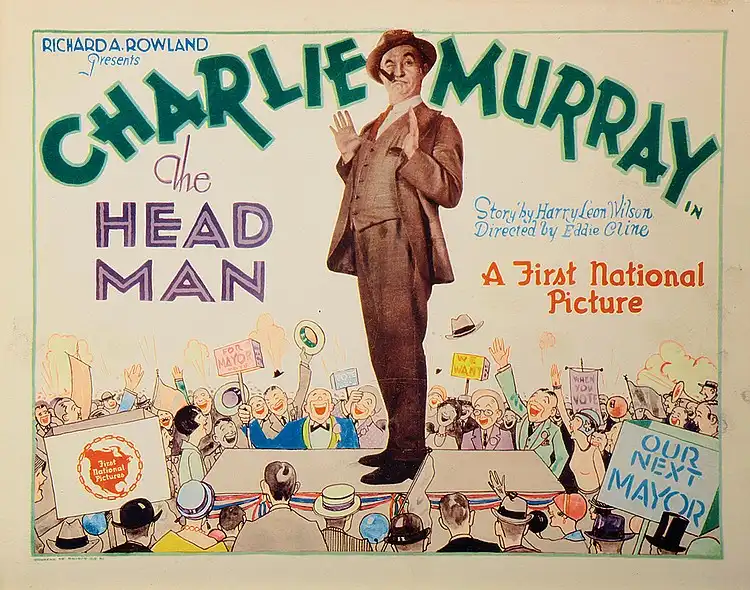
A definitive 3.4/10 rating for a film that redefined the boundaries of cult cinema. The Head Man remains a cornerstone of transgressive art.
If you are looking for a high-stakes political thriller, The Head Man is going to be a massive disappointment. It is a very small movie. It is essentially about a guy who gets his feelings hurt by his political party and decides to burn the house down by running for mayor. It’s worth watching today mostly if you’re a silent film completist or if you want to see Loretta Young when she was basically a child. If you hate movies where the 'climax' involves a lot of people standing around in hats looking slightly surprised, you should probably skip this one.
Lucien Littlefield plays Watts, the ex-senator. He doesn’t really look like a senator. He has this nervous, twitchy energy that makes him look more like a man who is constantly worried he left the stove on. When the political 'mob'—which consists of about four guys in a smoky room—tells him he’s done, he gets this look of pure, pathetic indignity. It’s the best part of his performance. You don't feel bad for him because he's a noble statesman; you feel bad for him because he looks like a kicked dog.
The movie talks about him being relegated to the 'public wastebasket,' which is a great phrase that the film doesn't quite know how to visualize. There are a few scenes in the middle where Watts is just moping around his house, and the pacing just dies. The camera lingers on him sitting in chairs, looking at the wall, and then looking at his daughter (Loretta Young). Young is maybe fifteen here, and she mostly just has to look pretty and concerned. She has these massive, expressive eyes that the director clearly knew were her best feature, because half her shots are just tight close-ups where she isn't really doing anything but existing.
The campaign itself feels oddly empty. For a movie about a man becoming a 'power in local politics,' there never seem to be more than ten people in any given scene. When he's supposed to be evoking 'the public's sympathy,' you see a couple of extras nodding solemnly. It feels like the production ran out of money for a crowd and just hoped we wouldn't notice. It lacks the scale of something like Lure of Ambition, where the social climbing actually feels like it has stakes.
There is a weird edit about forty minutes in during a dinner scene. Watts is talking, and then suddenly the film cuts to a wide shot where everyone has shifted about six inches to the left. It’s jarring. Also, the makeup on the rival politicians is distracting—they’ve got these heavy, dark circles under their eyes that make them look like they haven’t slept since the McKinley administration. I suppose it’s meant to make them look villainous, but it just makes them look ill.
One thing that actually worked for me was the physical comedy from Harvey Clark. He has a way of entering a room that feels genuinely clumsy in a way that isn't over-rehearsed. Most of the acting in these 1920s political dramedies is so stiff, so seeing a guy actually trip over a rug and keep the scene going is a relief. It reminds me a bit of the casualness in Pretty Smooth, though that's a different kind of movie entirely.
The dialogue on the title cards is... fine. It’s very '1928.' Lots of talk about 'the will of the people' and 'the dirty game of politics.' There’s one card that tries to explain a complex tax maneuver in about ten words, and I honestly had to read it three times to realize it didn't matter. The movie isn't really about policy; it’s about a guy wanting to be the 'Head Man' again because his ego was bruised.
The ending happens very fast. One minute he's losing, the next minute a title card tells us he's the mayor, and then everyone is happy. There’s no real tension in the victory. It just sort of... occurs. It’s a bit like Now I'll Tell One in that sense, where the narrative jumps feel more like the filmmakers were tired than like a stylistic choice.
I did notice a strange background detail in the mayor’s office toward the end—there’s a painting on the wall that looks like it’s upside down. Or maybe it’s just very abstract for 1928. I spent the last five minutes of the scene trying to figure out if it was a landscape or a bowl of fruit. That’s the kind of movie this is. It’s pleasant enough, but your mind will definitely wander to the furniture.
IMDb —
1913
Community
Log in to comment.