DbcultAccessing Vault...
Cult Review
Senior Film Conservator
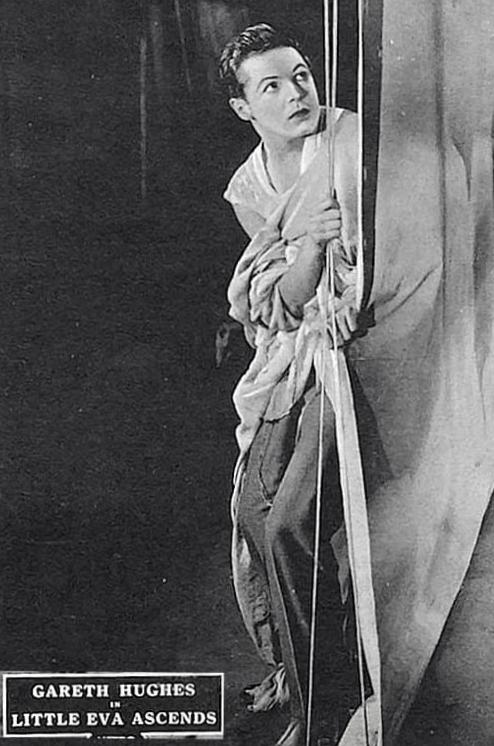
The silent era was often defined by its obsession with the 'Tom Show'—those ubiquitous, often garish adaptations of Harriet Beecher Stowe’s seminal novel that crisscrossed America for decades. Yet, Little Eva Ascends (1922) stands as a remarkably self-aware artifact, a meta-textual commentary on the exhaustion of that very tradition. Rather than presenting a straightforward adaptation, the film peels back the greasepaint to reveal the weary, disenfranchised lives of the performers behind the curtain. It is a work that oscillates between biting social satire and a tender coming-of-age drama, anchored by a performance from Gareth Hughes that is as vulnerable as it is technically proficient.
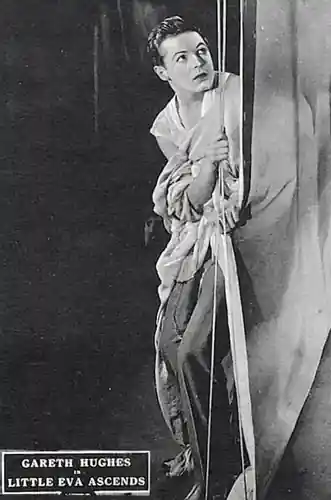
At the heart of the narrative is the inherent absurdity of the theatrical gender-swap. While the silent screen frequently toyed with cross-dressing for comedic effect, as seen in the broader strokes of The Hayseed, there is a palpable sense of humiliation in Roy’s portrayal of Little Eva. Hughes, who was known for his delicate, almost ethereal screen presence, captures the stifling claustrophobia of a sixteen-year-old boy trapped in the frills of a Victorian child-martyr. The film doesn't merely ask us to laugh at the sight of a boy in a dress; it asks us to empathize with the psychological toll of such a performance, especially when the object of his affection is seated in the front row.
The contrast with his brother John, played with a stoic resignation by Ben Hagerty, is striking. John’s blackface performance is treated by the film not as a point of racial commentary—standard for the era’s unfortunate tropes—but as a badge of professional drudgery. They are laborers in the field of melodrama, no different from the factory workers or farmers they entertain. This sense of theater-as-toil is a recurring theme in early cinema, often contrasted with the more glamorous depictions of the stage found in films like Kilmeny.
One of the film’s most ingenious sequences occurs not on the stage, but in the dining room of a local hotel. The screenplay by Thomas Beer introduces a fascinating sociological detail: the distinction between 'actors’ meat' and 'commercial travelers’ meat.' In the 1920s, the traveling player occupied a liminal social space—admired for their craft but often viewed with suspicion by the 'respectable' middle class. By serving the St. Georges the superior cuts of beef usually reserved for businessmen, the hotelier inadvertently signals a deeper connection. This culinary clue serves as the catalyst for the revelation that the proprietor, Mr. Wilson, is the boys’ estranged father.
The film brilliantly uses the mundane reality of a dinner table to dismantle the artifice of the theater. While Blanche St. George strives for the high-minded glory of an opera house, her family is literally and figuratively starving for the stability of a domestic life that 'commercial travelers’ meat' represents.
The titular 'ascent' of Little Eva is the film’s grand set-piece, a masterpiece of staged disaster that rivals the chaotic energy of What Happened to Father. The mechanical failure of the stepladder—intended to hoist Roy toward a painted heaven—is a metaphor for the collapse of the St. Georges’ nomadic lifestyle. When the local boys in the gallery begin to heckle, recognizing the masculine physique beneath the lace, the tension between the performance and the performer reaches a breaking point. The physical destruction of the set—the tearing of the canvas sky, the crashing of the ladder—is a cathartic destruction of the lies they have been living.
This sequence is filmed with a kinetic energy that belies the static reputation of some early silences. The camera captures the frantic efforts of the stagehands and the horrified reactions of the audience, creating a sense of immersive panic. It is a stark departure from the more controlled, atmospheric tension found in contemporary mysteries like The Great London Mystery, opting instead for a raw, slapstick-infused realism.
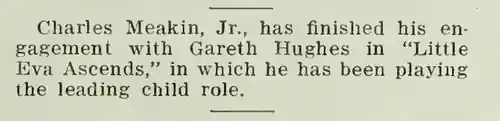
The resolution of Little Eva Ascends is a fascinating study in early 20th-century American values. The father, Mr. Wilson, offers a transactional redemption: $10,000 for Blanche’s opera house in exchange for the custody of his sons. To a modern audience, this might seem like a cold, almost mercantile arrangement, but within the context of the 1922 social landscape, it represents the ultimate triumph of the hearth over the stage. Blanche, portrayed with a steely, desperate dignity by May Collins, finally achieves her dream, but at the cost of the very troupe she built.
The final dinner scene, where the St. Georges and the local Connecticut family break bread together, signifies the reintegration of the 'actor' into the 'human.' The barriers of class and profession that were so sharply defined earlier in the film are dissolved. While films like The Corner Grocer often dealt with similar themes of upward mobility and family secrets, Little Eva Ascends adds a layer of theatrical irony that makes its conclusion feel both earned and slightly bittersweet.
Visually, the film utilizes the naturalistic lighting of the early 20s to great effect, particularly in the dimly lit hotel hallways and the flickering artifice of the stage lighting. The cinematography highlights the weariness on the actors' faces, contrasting the bright, artificial 'heaven' of the play with the muddy, grounded reality of the Connecticut town. While it lacks the sheer visual experimentation of Der weisse Pfau, its strength lies in its narrative economy and the sincerity of its performances.
The writing by Thomas Beer deserves special mention. Beer, who would go on to become a respected biographer and novelist, imbues the dialogue intertitles with a wit and literary flair that was often absent from more pedestrian silents. His understanding of the 'Tom-show' culture is encyclopedic, capturing the specific jargon and the unique hardships of the road. This intellectual depth elevates the film beyond mere melodrama, placing it in the company of more sophisticated narratives like Just Out of College.
In the vast sea of silent films that have been lost to time or neglect, Little Eva Ascends remains a compelling, multifaceted work. It is a film that rewards close viewing, offering insights into the gender politics, class structures, and theatrical history of the 1920s. Gareth Hughes delivers a performance that is remarkably modern in its vulnerability, reminding us why he was once considered one of the era’s most promising talents. For those interested in the evolution of American cinema and the dismantling of its early myths, this film is an essential watch.
Whether viewed as a satire of Harriet Beecher Stowe’s legacy, a domestic drama, or a comedy of errors, it succeeds on multiple levels. It captures a moment in time when the old world of traveling theater was finally giving way to the new world of cinema and suburban stability. Much like The Big Adventure, it finds its heart in the longing for home, proving that even those who spend their lives ascending to a painted heaven eventually just want a seat at a real dinner table.
Critical Rating: 8.4/10 - A masterful blend of satire and sentiment that deconstructs the artifice of the American stage.
IMDb —
1918
Community
Log in to comment.