DbcultAccessing Vault...
5.2/10
Senior Film Conservator
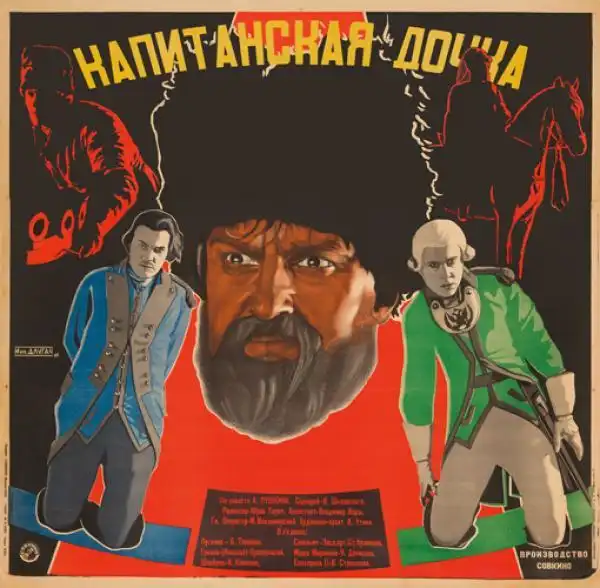
A definitive 5.2/10 rating for a film that redefined the boundaries of cult cinema. Kapitanskaya dochka remains a cornerstone of transgressive art.
If you have any interest in how movies looked before they talked, then yes. It is worth it for the snowy scenery alone.
History nerds and people who like Pushkin will probably dig this the most. If you hate reading subtitles or slow-moving shots of guys with big beards, you will probably hate it.
I found myself actually caring about Pyotr, which is rare for these really old military movies. He seems like a kid who is just way out of his league.
The movie starts with him leaving home and it feels very fast, almost like the director was in a rush to get to the fort. The fort itself looks like it is held together by wood glue and prayers.
One of the first things you notice is the lighting. It is very harsh and makes everyone look like they haven't slept in three weeks.
There is a scene where Pyotr is traveling through a blizzard and the wind looks vicious. I felt cold just sitting on my couch watching it.
Nikolai Simonov plays Pugachev and he has this look in his eyes that is genuinely scary. He doesn't just look like a rebel; he looks like a guy who forgot how to be nice a long time ago.
The way he stares at the camera for a few seconds too long makes the hair on your neck stand up. It reminded me a little bit of the intensity in Order na arest, though the vibes are different.
Masha, the daughter, is played by Vera Streshnyova and she does a lot of the 'scared girl' acting that was big back then. Lots of hand-wringing and wide eyes.
It gets a bit repetitive after the third or fourth time she looks worried. But then again, if a rebel army was outside my door, I’d probably wring my hands too.
There is this one guy, Shvabrin, who is just the worst. You can tell he is the villain because he smirks at everything and stands in corners.
The movie takes a bit of a turn when the rebellion actually hits the fort. The scale of the crowd scenes is actually pretty impressive for 1928.
It doesn't feel like they just hired ten guys to run around in a circle. It feels like a messy, angry mob which is exactly what it should be.
I noticed a weird detail where one of the soldiers is wearing a hat that looks two sizes too big. It keeps slipping down and I spent five minutes just watching him try to keep it straight.
The movie doesn't really explain the politics that much. It assumes you already know who Pugachev is and why everyone is so mad at the Tsarina.
If you don't know the history, you might be a little lost on why the peasants are so hyped up. But the emotion of the scenes carries it through even if you're confused.
The execution scenes are surprisingly dark. They don't show everything, obviously, but the shadows do a lot of the heavy lifting.
There is a moment where Pugachev recognizes Pyotr from the blizzard earlier in the film. The way the music (in the version I saw) swelled up was a bit much, but the acting was solid.
It’s that weird silent movie thing where they communicate everything through a slight nod of the head. It works better than you’d think.
I felt like the middle section dragged a bit when Pyotr is trying to figure out how to save Masha. He spends a lot of time just walking back and forth in front of buildings.
It reminded me of the slow pacing in The White Pearl, where you just want them to get to the point already. But then the ending kicks in and it gets moving again.
The costumes are heavy. You can almost hear the wool scratching against their skin.
I liked the small details, like the way they drink tea or the messy tables in the background. It feels lived-in, not like a clean movie set.
Sometimes the film quality gets a bit grainy and you can't tell who is who during the night scenes. I think I missed a whole conversation because I couldn't see the person's face clearly.
There's a scene with a letter that takes forever to read. They show the letter on screen and then a title card and then back to the letter.
I get it, he's reading a letter! We can move on now!
Despite that, the tension during the final trial is actually good. You aren't 100% sure if the Empress is going to be a jerk or not.
The actress playing the Empress looks like she’s wearing about fifty pounds of jewelry. She moves very stiffly, which I guess is what Queens do.
Overall, the movie feels like a raw piece of history. It isn't polished like a modern drama, and that makes it feel more real in a weird way.
It’s not as flashy as something like The Isle of Lost Ships, but it has more heart. Or at least more dirt and snow.
I’m glad I watched it, even if I did check my phone once during the long horse-riding montage. That montage went on for about three minutes too long.
If you want to see what 1920s Russia thought of their own history, this is a great window into that. Just bring a blanket because all that snow on screen is effective.
The ending is a bit abrupt, but that’s just how these old movies go. One minute they’re hugging, and the next it says 'The End' and you're sitting in the dark.
I'd give it a solid 'check it out on a Sunday' recommendation. It’s better than most of the stuff you'll find on a random streaming scroll.
IMDb —
1919
Community
Log in to comment.