DbcultAccessing Vault...
Cult Review
Senior Film Conservator
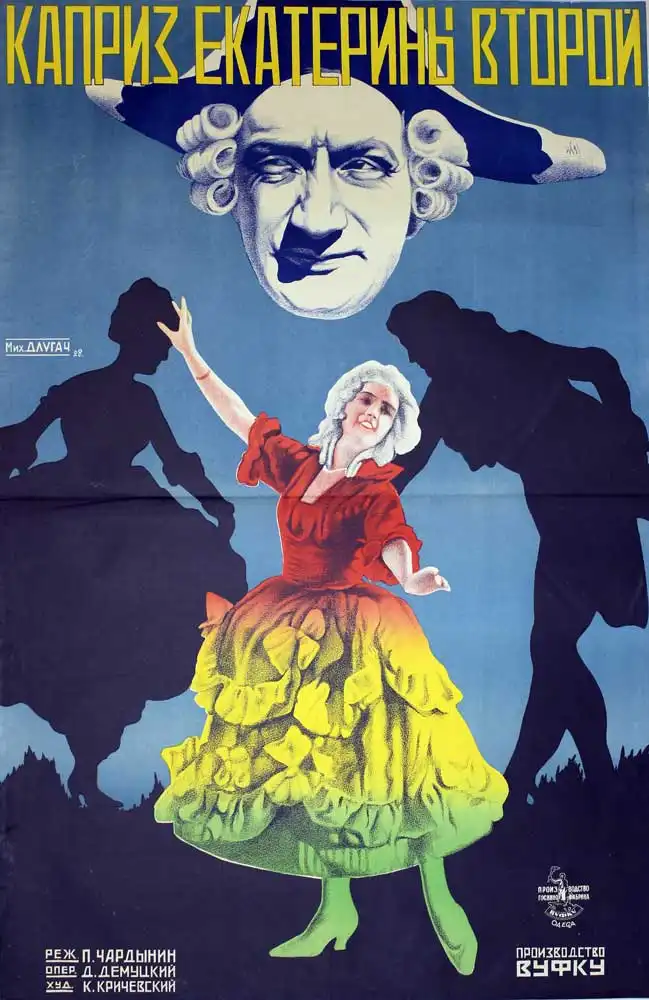
Look, if you're not already a big fan of really old historical dramas, especially the kind where people wear massive wigs and speak in very formal, drawn-out ways, then Kapriz Ekateriny II might not be your Saturday night pick. But if you have a soft spot for vintage cinema and don't mind a slower pace, there's a certain dusty charm here that’s kinda interesting. Anyone looking for explosions or quick dialogue? Nope, you'll absolutely hate it. 🙅♀️
The film, as you might guess from the title, centers around Empress Catherine the Great and some... well, a caprice of hers. The plot itself unfolds with a very measured hand, which means a lot of scenes feel like they're building up to something huge, then just kinda simmer instead.
Right from the start, you’re thrown into a world of elaborate costumes and vast, echoing palace rooms. It’s all very grand, but sometimes the sets feel a bit too *stagey*, like they’re waiting for an audience to clap rather than just being lived in. The sheer scale is impressive for its time, though.
I found myself really focusing on the costumes, honestly. They look heavy, _really_ heavy, especially those powdered wigs. I kept wondering how uncomfortable the actors must have been during those long takes, trying to maintain composure.
Speaking of long takes, there’s a moment where Catherine just stares out a window for what felt like an eternity. You see the light shift, a servant walk past in the distance. It’s meant to be reflective, I think, but after a minute, you start checking your watch. 🕰️
The acting style is definitely from another era. It's less about subtle glances and more about grand gestures, very theatrical. Sometimes it works, conveying a real sense of period drama, but other times it feels a touch over-the-top, almost like a pantomime.
There’s this one courtier, I forget his name, but he has this very _distinctive way of holding his hands_. Like he’s perpetually about to conduct an orchestra, even when just standing there listening. Once you notice it, you can’t unsee it.
The dialogue is often very formal, sometimes feeling less like actual conversation and more like speeches being delivered. It adds to the period feel, but also makes some scenes quite dense to get through. You have to really lean in to catch all the nuances.
One scene involves a big procession, and it’s just *so* many people walking slowly down a hallway. The camera just tracks them, and tracks them, and you kinda lose the thread of why this particular procession is important beyond just showing off the palace staff. The extras, bless their hearts, are doing their best to look significant.
The pacing is… deliberate. If you’re used to modern films with quick cuts and constant plot developments, this will test your patience. It demands you sit with the characters and the setting, letting the atmosphere soak in.
I appreciate the attempt to build a sense of historical weight, but it occasionally just feels _slow_ rather than weighty. There's a fine line, you know? It's like the movie tries to convince you every single pause is profound, but sometimes it's just... a pause.
There's a curious little subplot involving a minor noble trying to gain favor, and his constant _fumbling_ with a quill pen became oddly endearing. Every time he's on screen, you just wait to see if he'll drop it again. 😂
The ending doesn't really offer a big, dramatic resolution in the way you might expect from a modern story. It just sort of… is. Like life, I guess, not everything wraps up neatly with a bow.
So, is it worth seeking out? For history buffs or those interested in early cinema, sure, absolutely. It's a peek into how stories were told back then, and there's a certain unique artistry to it. But for the casual viewer, it might be a bit of a marathon. _It's a definite vibe_, if that makes sense.
IMDb —
1924
Community
Log in to comment.