DbcultAccessing Vault...
Cult Review
Senior Film Conservator
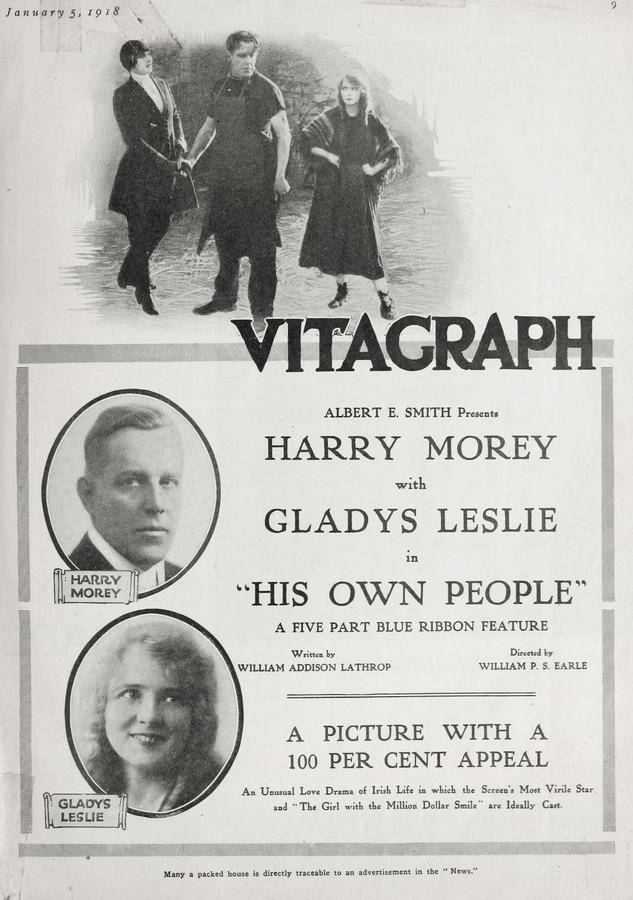
The year 1917 was a watershed moment for the cinematic medium, a period where the primitive flickers of the nickelodeon era were rapidly evolving into the sophisticated visual language of the feature film. Among the treasures of this transition lies His Own People, a Vitagraph production that serves as a potent microcosm of the era’s preoccupation with class dynamics, rugged masculinity, and the theatricality of romantic jealousy. Directed with a keen eye for the textures of rural life, the film presents a narrative that is both a pastoral romance and a simmering socio-political drama. It is a work that demands our attention not merely as an antique, but as a vibrant testament to the power of silent storytelling.
At the center of this storm is Hugh O'Donnell, portrayed with a brooding, physical intensity by Harry T. Morey. In the lexicon of early cinema, the blacksmith was more than a craftsman; he was a symbol of the untainted strength of the common man. Unlike the decadent aristocracy represented by Lord Percival Cheltenham, Hugh’s power is earned through sweat and honest labor. The film spends considerable time establishing Hugh’s forge as the ideological heart of the village. It is a place of heat, sparks, and transformation, mirroring the internal fires that drive the plot forward. Much like the protagonist in The Disciple, Hugh is a man of principle forced to navigate a world where his moral compass is tested by the whims of those who hold systemic power.
Morey’s performance is a masterclass in the economy of gesture. In an era often criticized for its histrionics, he maintains a grounded presence that makes his eventual eruption into violence all the more impactful. When Lady Mary Thorne (played by the luminous Betty Blythe) enters his shop, the contrast is stark. The film uses this encounter to explore the 'gaze'—Mary’s fascination with Hugh’s 'rugged manliness' is a rare instance of the female gaze directed at the working-class male body, a subversion that adds a layer of erotic tension to the class divide.
Opposing the earthy integrity of the forge is the cold, sterile environment of the Cheltenham manor. William R. Dunn’s portrayal of Lord Percival is a chilling depiction of aristocratic entitlement curdled into malice. His 'war on poachers' is not merely a legal pursuit; it is a psychological war against his own tenants. This theme of the oppressive landlord is a recurring motif in silent cinema, often drawing parallels to the sweeping social upheavals found in Les Misérables. However, His Own People grounds this conflict in a specific, localized animosity that feels visceral and immediate.
The manor itself is filmed with a sense of looming dread. The high ceilings and ornate shadows serve to isolate Cheltenham, emphasizing his disconnection from the people who toil on his land. When the gamekeeper’s bullet finally strikes a poacher, it acts as the catalyst for a long-awaited catharsis. The peasants storming the manor is a sequence of remarkable kinetic energy, reminiscent of the revolutionary fervency seen in Escaped from Siberia. It is here that Hugh’s role as a leader is truly tested—he must balance his loyalty to 'his own people' with a commitment to a law that has rarely served them.
Gladys Leslie’s Molly Conway provides the film’s emotional complexity. Initially presented as a figure of lighthearted mischief, her character evolves into something far more poignant. Her pranks are not merely the whims of a bored girl; they are the defensive mechanisms of a woman who fears the vulnerability of love. This psychological depth is a hallmark of William Addison Lathrop’s writing, which often elevated standard melodramatic tropes into character studies. Molly’s decision to flirt with Cheltenham is a dangerous gambit, a 'theatre of the self' that nearly ends in tragedy.
The dynamic between Molly and Hugh is a fascinating study in miscommunication. In a world without spoken dialogue, the actors must convey the nuances of jealousy and regret through the eyes. The scene where Molly follows Hugh to the manor is particularly well-constructed, using cross-cutting to build a sense of inevitable disaster. Her subsequent entrapment by the drunken Lord serves as a harrowing reminder of the physical dangers faced by women in a society where their bodies are often seen as the spoils of class warfare, a theme also explored with varying degrees of intensity in The Girl Without a Soul.
The film’s climax in the manor library is a tour de force of suspense. As the peasants batter the doors outside, the internal drama reaches its boiling point. Hugh’s discovery of Molly with Cheltenham is a moment of pure, unadulterated melodrama, yet it is handled with a restraint that prevents it from descending into farce. The lighting in this scene is particularly noteworthy; the flicker of the hearth and the dim lamps create a chiaroscuro effect that mirrors the moral ambiguity of the situation. Hugh’s hands, the same hands that shape iron, are now wrapped around the neck of the man he believes has stolen his honor.
Molly’s confession—that her flirtation was a desperate attempt to arouse Hugh’s passion—is the hinge upon which the film turns. It is a resolution that might feel contrived to modern audiences, but within the context of 1917, it is a powerful statement on the complexities of the human heart. The forgiveness that follows is not just between two lovers, but a restoration of the social order within the village. It echoes the resolution of moral quandaries found in Gambier's Advocate, where the truth eventually cuts through the fog of deception.
Technically, His Own People demonstrates Vitagraph’s commitment to high production values. The set design of the village feels lived-in and authentic, avoiding the staginess that plagued many contemporary productions like The Secret of the Old Cabinet. The editing is particularly sophisticated, using parallel action to heighten the stakes during the riot. We see the rising tide of peasant anger juxtaposed with the intimate, high-stakes drama inside the library, a technique that would later be perfected by masters like Griffith but is already being used here with great effectiveness.
The film also benefits from a robust supporting cast. Stanley Dunn and Arthur Donaldson provide solid foundations for the world-building, ensuring that the village feels like a populated community rather than a mere backdrop. The narrative economy is impressive; for a film that tackles class war, romantic rivalry, and moral redemption, it never feels overstuffed. It possesses a clarity of purpose that is often missing from more sprawling epics like The Queen's Jewel or the labyrinthine plots of Trapped by the London Sharks.
Viewing His Own People today, one is struck by its relevance. While the specific trappings of the Irish blacksmith and the English lord may belong to a bygone era, the underlying themes of economic disparity and the struggle for dignity remain universal. The film stands alongside other socially conscious works of the time, such as What 80 Million Women Want, in its attempt to engage with the pressing issues of the day through the lens of popular entertainment.
It is also a fascinating comparison point for films that deal with the 'return' or the 'resurrection' of character archetypes, such as The Dead Alive. In His Own People, Hugh O'Donnell is not just a man; he is the resurrected spirit of the noble savage, tempered by the fires of civilization and the demands of modern justice. The film’s conclusion, which sees Hugh turning the 'culprit' over to the law rather than allowing the mob to take its course, is a significant moment in the evolution of the cinematic hero. It marks the transition from the vigilante justice of the frontier to the structured society of the 20th century.
In the final analysis, His Own People is a triumph of silent era melodrama. It balances its socio-political weight with a genuine, beating heart. Harry T. Morey and Gladys Leslie create a screen partnership that is both believable and deeply moving. While it may not have the surrealist leanings of La loca del monasterio or the sheer scale of Checkers, it possesses a grit and an honesty that makes it stand out among the thousands of films produced during this prolific decade. It is a film about the strength of the community, the danger of pride, and the transformative power of truth. For those interested in the roots of cinematic drama, this is an essential piece of the puzzle, a rugged and beautiful artifact from a time when the world was changing as fast as the images on the screen.
Rating: 4.5/5 Anvils - A must-watch for aficionados of early 20th-century social dramas.
IMDb 4.6
1935
Community
Log in to comment.