DbcultAccessing Vault...
Cult Review
Senior Film Conservator
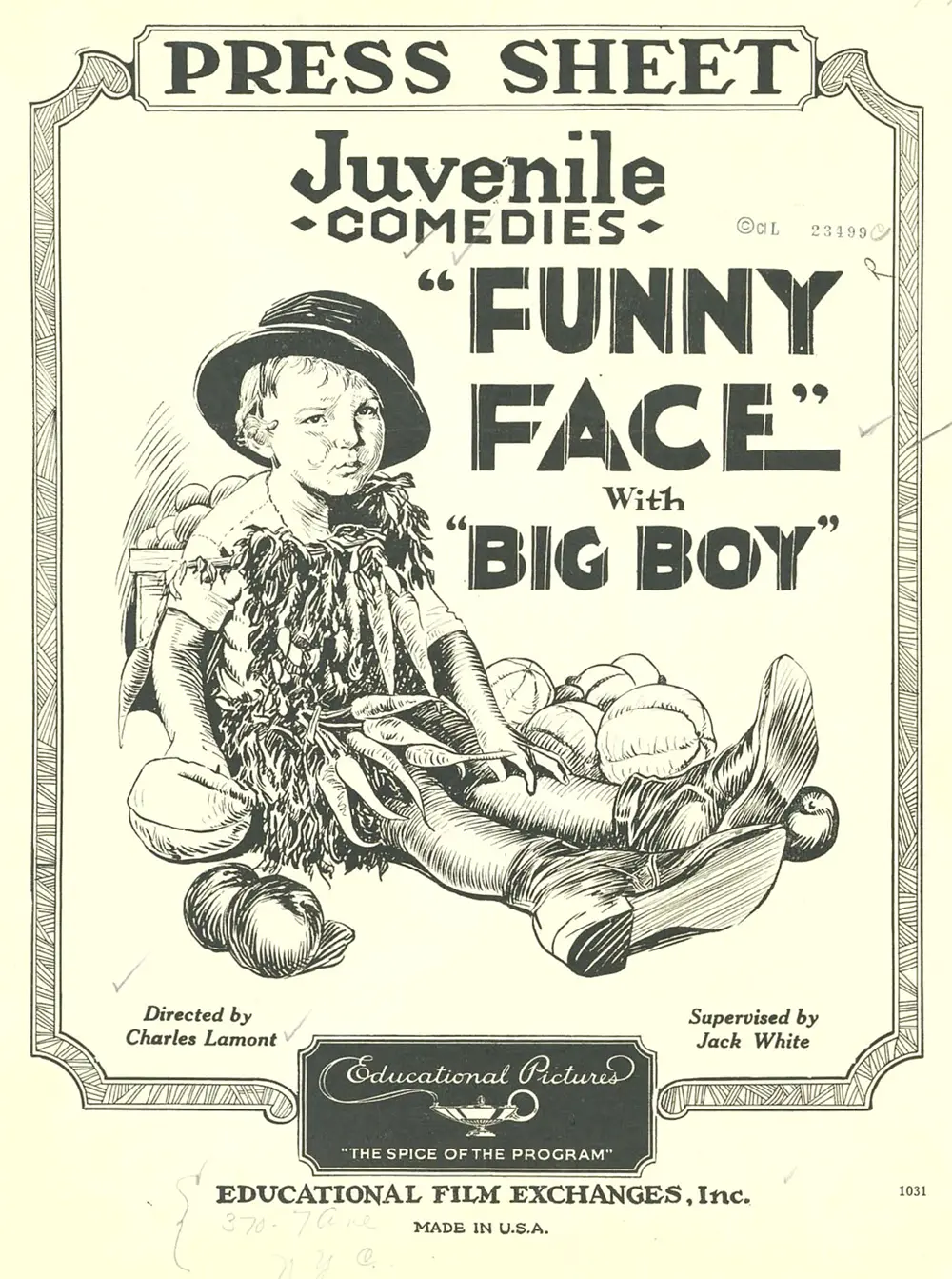
Short answer: Yes, but only if you have an appetite for the unrefined, frantic energy of early silent-era slapstick. This film is for cinema historians and fans of 'Our Gang' style child antics who don't mind a heavy dose of 1920s socioeconomic grit; it is NOT for those who prefer the polished, high-brow comedy of Chaplin or Keaton.
Funny Face is a fascinating artifact that attempts to bridge the gap between Dickensian tragedy and Vaudeville humor. It doesn't always succeed in balancing these tones, but its commitment to chaos is undeniably entertaining. The film captures a specific moment in American history where the line between childhood play and adult survival was razor-thin.
1) This film works because the physical comedy, particularly the dog-and-buggy chase, is executed with a reckless abandon that modern safety standards would never allow.
2) This film fails because the transition from the mother’s genuine despair to Big Boy’s grocery store flirting feels tonally whiplashed.
3) You should watch it if you want to see how early filmmakers used child actors to navigate complex themes of class and poverty without losing the audience's interest.
Watching Funny Face today is a jarring experience. We are introduced to a family that is literally starving. The mother is a washerwoman, a role that was the shorthand for the 'deserving poor' in the 1920s. Unlike the more surreal comedies of the era, such as Aelita, the Queen of Mars, which looked toward the stars and political revolution, Funny Face is grounded in the dirt of the street.
The opening scenes are surprisingly bleak. There is no food. There is no rent money. This isn't the 'genteel' poverty we often see in later Hollywood films; this is the kind of poverty that drives children to scavenge for coal. However, the film refuses to stay in this misery. It uses the hunger of the boys as a propellant for their energy rather than a weight on their spirits. This is a debatable creative choice. Some might find it insensitive, but in the context of 1924, it was a survival mechanism for the audience as much as the characters.
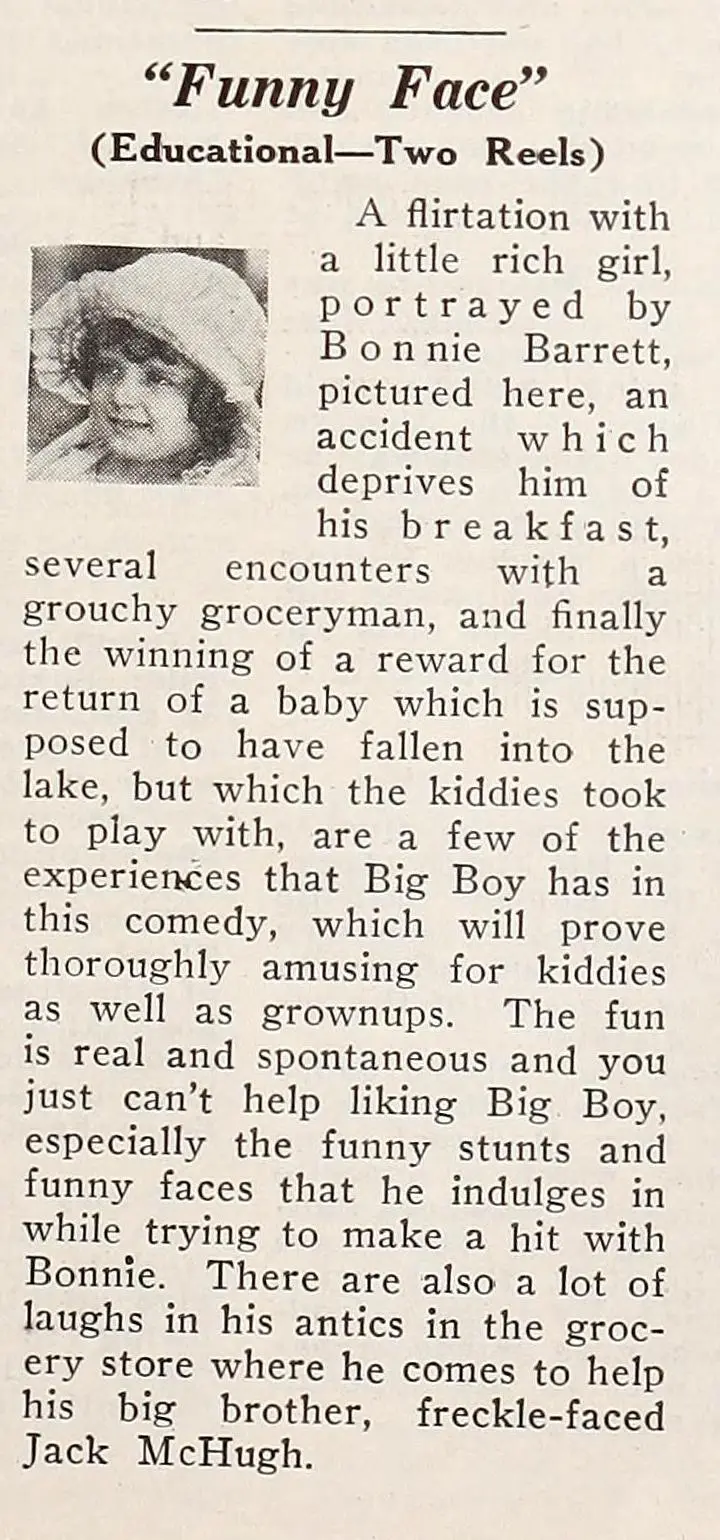
Malcolm Sebastian, as 'Big Boy,' is a force of nature. His performance style is rooted in the 'ugly kid' trope of the era—making faces, cutting up, and being a general nuisance to the adult world. In the grocery store scene, his interactions with Bonnie Barrett’s character are genuinely charming. There is a raw, unscripted quality to his movements that you don't see in the more choreographed performances of Next Aisle Over.
The 'funny faces' that give the film its title are more than just gags. They are a child's way of asserting dominance in a world where they have no power. When Big Boy nearly wrecks the store, it isn't out of malice. It’s out of a desperate, hyperactive need to be seen. The spanking he receives from the grocer is a brutal reminder of the era's disciplinary standards. It's a quick, sharp moment that grounds the comedy in a harsh reality.
The third act of Funny Face shifts into high gear with a sequence involving a dog, a cat, and a baby buggy. This is where the film’s pacing truly shines. While the earlier scenes feel episodic, the chase sequence is a masterclass in silent-era editing. Jack tying the buggy to the pet dog is the kind of 'logic' that only exists in silent shorts, but once the cat appears, the film becomes a precursor to the high-speed chases we’d see in films like Ten Dollars or Ten Days.
The cinematography during the lake sequence is surprisingly effective. Seeing the dog pull the buggy through various urban terrains gives us a tour of a lost world—1920s streets, storefronts, and parks. The frantic search by the mother and the grocer adds a layer of genuine tension. It is slapstick, yes, but the stakes are high. A baby in a lake is no small thing, even in a comedy.
Funny Face is worth watching for anyone interested in the evolution of silent slapstick and child-led comedies. It provides a fascinating, if somewhat uncomfortable, look at 1920s poverty through a comedic lens. The film is a must-see for collectors of early 20th-century shorts but may be too dated for general audiences who are not accustomed to the tropes of the era.
One of the most interesting aspects of the film is the character of Bonnie. As a 'little rich girl,' she should be the antagonist or a distant object of desire. Instead, she finds Big Boy’s antics acceptable. There is a strange, fleeting moment of class solidarity between the two children that the adults in the film lack. The grocer sees a thief; the mother sees a burden; the rich girl sees a friend. It’s a subtle touch in a film that is otherwise about as subtle as a brick to the head.
Pros:
- Incredible energy from the child actors.
- Authentic 1920s location shooting.
- Genuinely funny physical gags involving the dog.
- Short runtime makes it an easy historical watch.
Cons:
- The tonal shifts are jarring.
- The 'funny faces' can occasionally feel repetitive.
- The ending is overly simplistic even for a short.
Funny Face is a relic, but a vibrant one. It captures the spirit of an era where cinema was still figuring out how to tell stories that were both socially relevant and commercially viable. It works. But it’s flawed. The film doesn't have the sophisticated pathos of Chaplin’s The Kid, but it has a raw, street-level energy that is entirely its own. The dog is the hero. The humans are a mess. And in the end, the feast they enjoy feels earned, even if the money came from a stroke of cinematic luck. If you have 20 minutes to spare, this is a trip back in time worth taking.
IMDb 6.4
1924
Community
Log in to comment.