DbcultAccessing Vault...
Cult Review
Senior Film Conservator
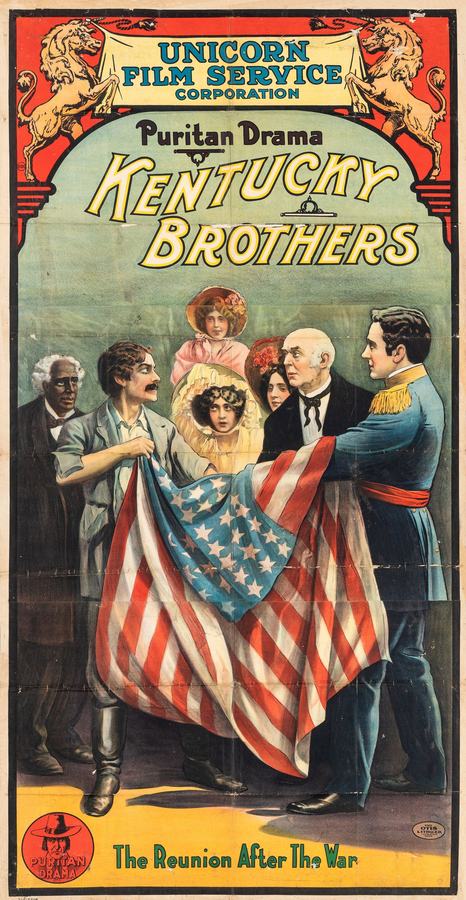
There is a moment, roughly halfway through Kentucky Brothers, when the camera lingers on a scorched piano standing upright in a riverbed. No character comments on it; no backstory is supplied. Yet that singed silhouette becomes the film’s stubborn spine—an artifact of culture half-swallowed by geology, a metaphor for a nation that marched into war humming hymns and limped out whistling dirges across cracked shale.
Director Lachlan McAllister—part folklorist, part vandal—treats chronology like wet clay. He smashes it, reassembles it, then gouges fingerprints into the seams so you never forget the fracture. The Civil War is over, except it isn’t. The brothers are orphans, except the next splice insists their mother is alive and selling lightning in a jar at county fairs. Such narrative whiplash should feel academic; instead it vibrates like a tuning knife against bone.
Casting non-professionals beside weathered character actors is fashionable, yet few films risk placing a mute child (newcomer Daisy Calloway) at the moral epicenter while letting marquee names orbit like dying planets. Garrett Hull—the elder, guilt-gnawed sibling—has cheekbones sharp enough to cut scripture. He delivers monologues to the fog with a voice that sounds as though it has been strained through barrel staves and prayer cloth. Meanwhile, Jules Diggs plays the younger brother with a disarming softness, curling his vowels around Appalachian cadences until even profanity feels like lullaby.
Special venom must be reserved for Margo Voss’s itinerant photographer, a cyclops in cracked spectacles who believes every portrait steals a fragment of the soul. She stalks the margins, harvesting faces the way other folk pick ginseng. Her single eye becomes the film’s moral aperture: blinkered, yet unnervingly perceptive.
There is, curiously, no traditional score. Instead McAllister layers cicada static, distant mine blasts, and the creak of wagon wheels into a percussive heartbeat. When the brothers argue inside a tobacco barn, the very rafters seem to arbitrate, sighing in counter-rhythm. Silence itself becomes an instrument: during a nighttime cave sequence, the absence of echo is so total you fear the screen might implode.
Cinematographer Hélène Desmarais shoots the Bluegrass State as if it were Mars—ochre horizons, ultraviolet dusk, coal seams glowing like demonic ribs. She favors a 1.66 ratio that boxes faces into coffin-like claustrophobia, then abruptly cuts to wides that dwarf humans against cliff faces. Color temperature swings bruise the frame: candlelight smolders infra-red, while river mist chills everything to cadaver blue. The palette is so assertive it nearly becomes a character, jostling humans for narrative dominance.
Screenwriting duo Thatcher Greaves and Luna Park splice period slang with feral poetry. A line like "my sorrow’s got teeth longer than winter" could cloy, yet when snarled through broken teeth it lands like weather report. Dialogue often arrives in non-sequitur shards; viewers allergic to plot hand-holding will rejoice, others may feel bludgeoned by ambiguity. The script’s greatest coup is withholding the brothers’ given names—an omission that turns every shouted "Boy!" into both endearment and curse.
Appalachian fiction loves its stoic men and consumptive women; Kentucky Brothers detonates that cliché. The climactic image—a brother in maternal lace torching his birthplace—reads simultaneously as matricidal exorcism and baptismal rebirth. By cross-dressing survival into defiance, the film queers frontier iconography without uttering a single progressive slogan. It is subversion by wardrobe, politics stitched into tattered hems.
Critics will invoke The Trail of the Lonesome Pine for its feuding families and rhododendron romanticism, yet McAllister’s gaze is far less mannered—more The Penitentes mortification than Henry Fonda gallantry. The hallucinatory religiosity nods to Father John; or, The Ragpicker of Paris, while its fractured timeline echoes the elliptical torments of Five Nights. Still, Kentucky Brothers carves its own scar.
For all its sonic bravura, the third act’s ten-minute strobe-lit cockfight may strike even hardened viewers as gratuitous—an exercise in cruelty that advances theme but derails empathy. Likewise, a tertiary subplot involving counterfeit railroad bonds never coheres; it feels like vestigial scaffolding from an earlier draft. And while ambiguity is the film’s oxygen, the closing shot—an empty thunder jar rolling into monochrome fog—skirts perilously close to self-parody.
This is not a Netflix-fold-laundry experience. It demands darkness, headphones, and a willingness to emerge feeling slightly haunted. Those who equate closure with comfort should steer clear; the film ends the way a wound ends—scabbed, not healed.
Still, the blemishes feel like splinters from a handcrafted chair: proof of human joinery rather than algorithmic polish. In an entertainment landscape obsessed with expanded universes, Kentucky Brothers offers something rarer—an interior universe, one you carry like shrapnel long after credits fade.
A bruised bluegrass odyssey that howls at the blood-red moon of American myth, equal parts hymn and heresy. See it, then listen to the thunder in your chest.
IMDb —
1935
Community
Log in to comment.