DbcultAccessing Vault...
7.3/10
Senior Film Conservator
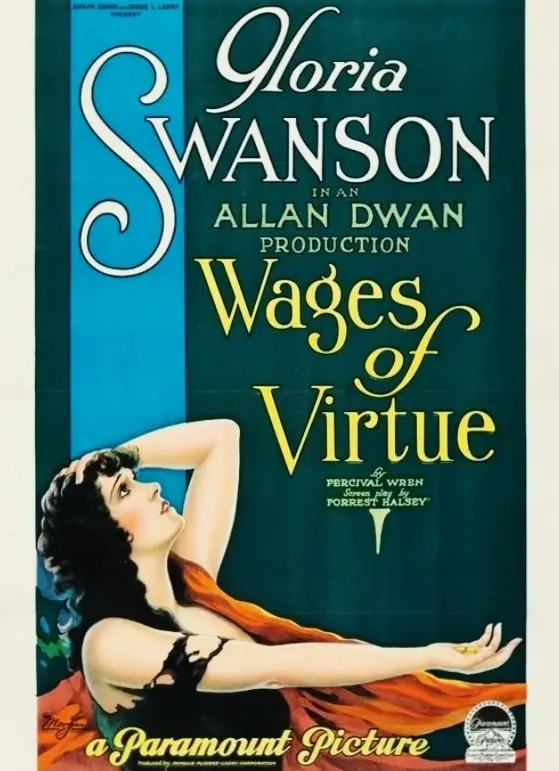
A definitive 7.3/10 rating for a film that redefined the boundaries of cult cinema. Wages of Virtue remains a cornerstone of transgressive art.
The year 1924 represented a definitive crossroads for the burgeoning language of cinema, a period where the primitive flickers of the nickelodeon had fully matured into the sophisticated visual grammar of the silent epic. At the center of this transformation stood Gloria Swanson, an actress whose transition from the comedic whimsy of Mack Sennett to the dramatic gravitas of Cecil B. DeMille had already cemented her as a titan of the silver screen. In Wages of Virtue, directed by the versatile Allan Dwan, we witness a fascinating collision of gritty realism and high-stakes melodrama, set against the backdrop of the French Foreign Legion—a setting that would soon become a staple of cinematic escapism.
The narrative begins not in the sands of Africa, but in the damp, claustrophobic atmosphere of a traveling show. Here, we are introduced to Luigi, played with a terrifying, muscular intensity by Ivan Linow. Luigi is a man defined by his physical dominance, a strongman whose prowess is matched only by his possessive volatility. When he saves Carmelita (Swanson) from drowning, the act is framed not as a selfless rescue, but as an acquisition. This fundamental tension—the distinction between a life saved and a life owned—forms the psychological marrow of the film. Unlike the more whimsical depictions of fate seen in Aladdin and the Wonderful Lamp, the destiny at play here is heavy, grounded in the sweat and grime of the working class.
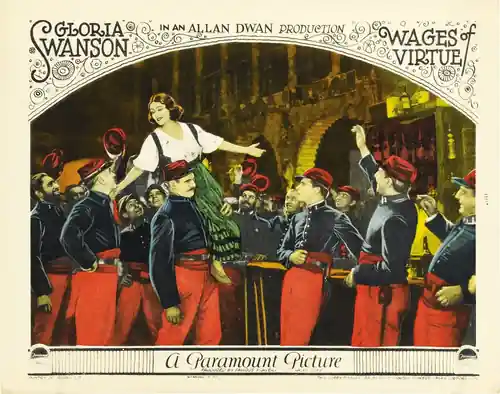
Swanson’s Carmelita is a masterclass in understated resilience. In an era often criticized for its histrionic acting styles, Swanson utilizes her expressive eyes to convey a soul caught in a perpetual state of hyper-vigilance. She is loyal to Luigi, but it is a loyalty born of trauma and the social conditioning of the time. When Luigi kills his assistant in a fit of rage, the subsequent flight to Algiers feels less like an adventure and more like a descent into a beautiful, sun-scorched purgatory. This sense of displacement and the search for a new identity mirrors the themes found in The Exiles, though Dwan’s lens focuses more on the individual’s struggle against a singular, looming oppressor.
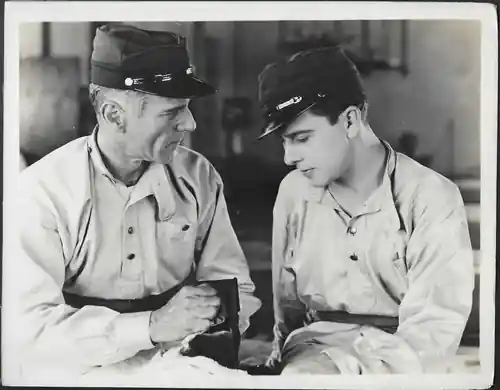
Once the production shifts to the Algerian outpost, the film’s aesthetic shifts from the shadowy corners of the circus to the high-contrast brilliance of the desert. The cafe where Carmelita is installed as proprietress becomes the stage for a sophisticated domestic drama. It is a space of respite for the Legionnaires, yet for Carmelita, it is a gilded cage. The introduction of Marvin, the American legionnaire portrayed by Ben Lyon, provides the necessary catalyst for the story's moral evolution. Marvin represents a different kind of masculinity—one that is protective without being predatory, a stark contrast to Luigi’s atavistic brutality.
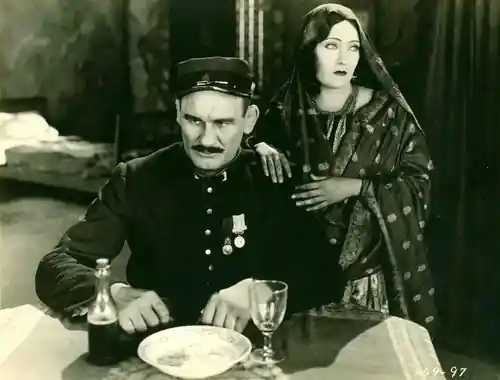
"The desert does not change a man; it merely strips away the layers of his civilization until only the core remains. In Luigi, that core is iron; in Marvin, it is hope."
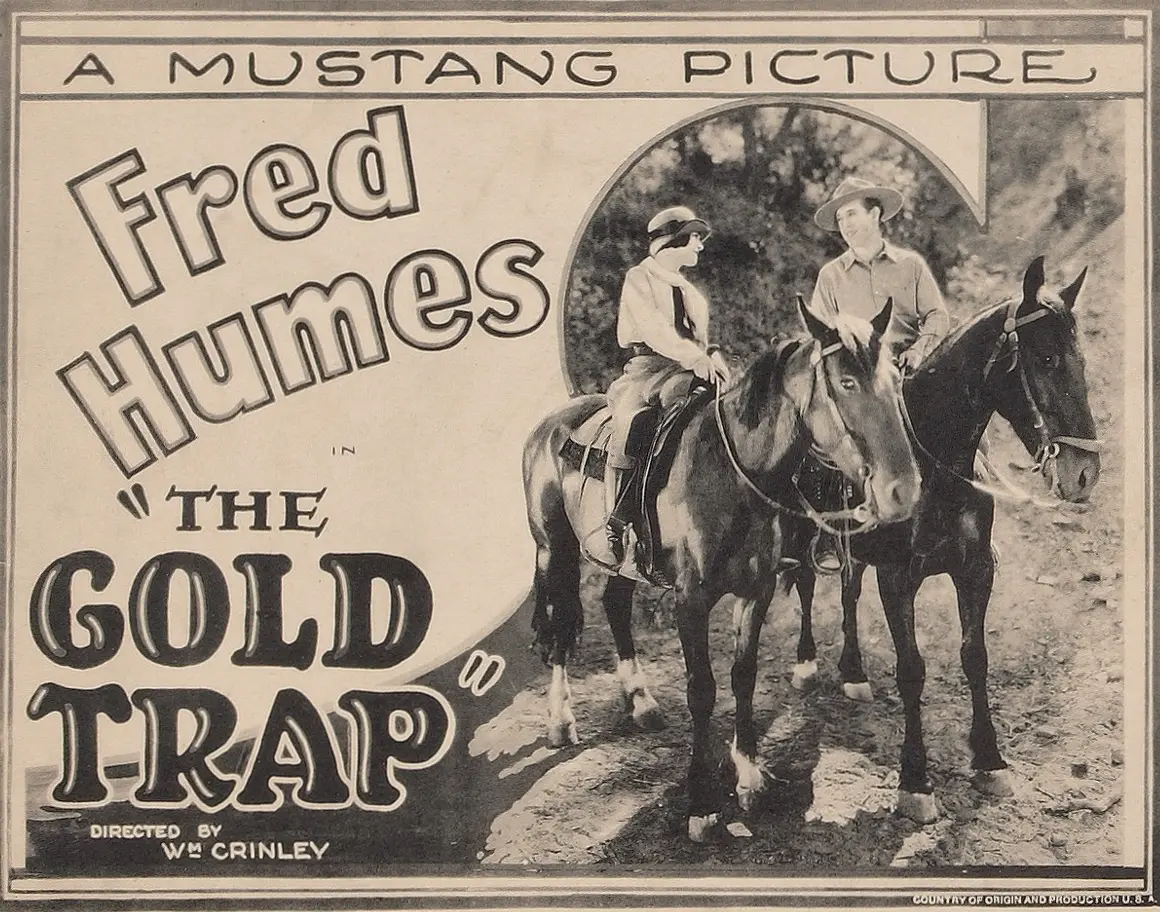
The screenplay, penned by Forrest Halsey and based on the work of Percival Christopher Wren (the mind behind Beau Geste), excels in its depiction of the Legion’s internal culture. There is a sense of camaraderie that borders on the sacred, a theme also explored in the documentary-style realism of Kitchener's Great Army in the Battle of the Somme. However, in Wages of Virtue, this brotherhood is weaponized by Luigi. His framing of Marvin is a calculated move that exploits the very systems designed to maintain order, showing a cunning that makes his physical strength even more formidable.
While many films of the period, such as Cyclone Smith Plays Trumps, utilized the 'strongman' figure as a hero of pure action, Dwan and Linow deconstruct this archetype. Luigi is a tragic figure in the classical sense—his greatest strength is also his greatest flaw. His need to possess Carmelita is his undoing. The fight scene between Marvin and Luigi is choreographed with a visceral realism that was rare for 1924. It isn't a clean, heroic duel; it is a desperate, ugly struggle for survival. As Luigi gains the upper hand, the audience is forced to confront the terrifying reality of brute force over moral right.
The pivotal moment of the film, however, belongs to Swanson. The revelation that Luigi intends to marry Madame La Cantinière (the formidable Adrienne D'Ambricourt) serves as the final shattering of Carmelita’s illusions. The 'virtue' mentioned in the title is not merely her chastity or her loyalty, but her integrity as a human being. By stabbing her benefactor, she isn't just committing a crime; she is performing an act of radical self-liberation. This psychological complexity elevates the film above standard melodrama, touching on the darker domestic themes found in Shattered.
From a technical standpoint, Wages of Virtue is a marvel of its era. The cinematography utilizes the harsh Algerian sun to create sharp, dramatic shadows that mirror the internal conflicts of the characters. The set design of the cafe—cluttered with the detritus of a dozen different cultures—captures the transient, desperate nature of the Foreign Legion. It’s a far cry from the stylized, almost theatrical settings of A Child of Mystery. Dwan’s direction is patient, allowing the tension to simmer in the quiet moments between the bursts of violence.
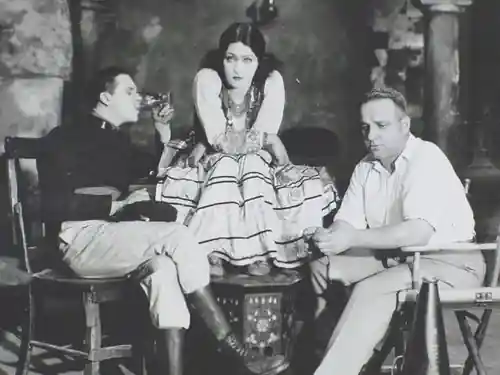
The supporting cast also deserves significant mention. Norman Trevor and Paul Panzer provide a grounded reality to the military life, ensuring the film never veers too far into pure fantasy. The ending, where the legionnaires attribute Luigi's death to an anonymous 'Arab' to protect Carmelita and Marvin, is a fascinating commentary on the moral flexibility of the desert. It’s a cynical resolution that acknowledges the messiness of justice, a sentiment that feels surprisingly modern. In many ways, it echoes the survivalist themes found in A Daughter of the West, where the harsh environment dictates its own set of laws.
Revisiting Wages of Virtue today, one is struck by how much of the film’s power relies on the chemistry between the three leads. Ben Lyon provides the necessary sweetness to balance the film’s darker impulses, but it is the shadow-play between Linow and Swanson that drives the narrative. Swanson proves here that she was more than just a fashion icon or a silent-screen 'queen'; she was a formidable dramatic actress capable of carrying a complex, morally ambiguous story on her shoulders.
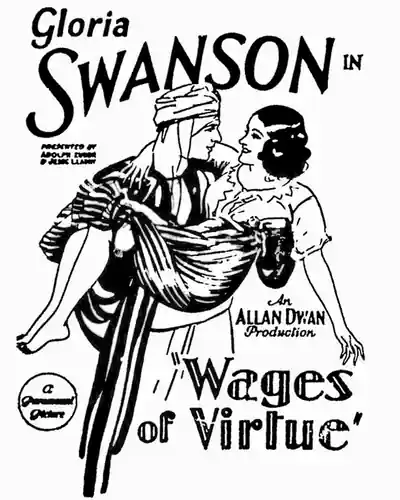
The film also serves as an important precursor to the Foreign Legion films of the 1930s. It lacks the sanitized romanticism that would later plague the genre, opting instead for a gritty, almost nihilistic view of the soldiers' lives. When compared to other films of the time like Oltre l'amore, which dealt with passion in a more traditional sense, Wages of Virtue feels ahead of its time in its exploration of domestic abuse and the psychological toll of entrapment.
In the final analysis, Allan Dwan’s work here is a testament to the power of silent cinema to tell deeply human stories without the crutch of dialogue. The 'wages' of Carmelita’s virtue are paid in blood, but the price is worth the purchase of her soul. It is a film that demands to be seen not just as a historical curiosity, but as a vital, breathing piece of art that still resonates with the echoes of its own desert winds. For those looking to understand the evolution of Gloria Swanson or the development of the action-drama, this is an essential chapter in the celluloid history of the 1920s.
Directed by: Allan Dwan | Written by: Forrest Halsey, P.C. Wren | Starring: Gloria Swanson, Ben Lyon, Ivan Linow | Released: 1924
IMDb —
1920
Community
Log in to comment.