DbcultAccessing Vault...
5.9/10
Senior Film Conservator
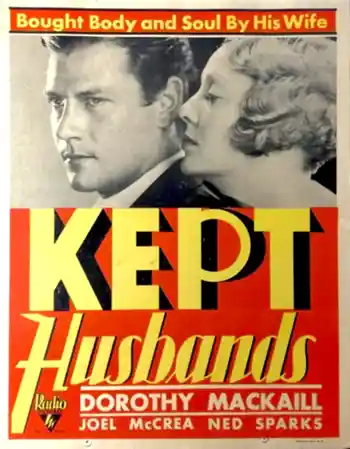
A definitive 5.9/10 rating for a film that redefined the boundaries of cult cinema. Kept Husbands remains a cornerstone of transgressive art.
If you have about an hour to kill and you want to see what people in 1931 thought was 'scandalous,' then Kept Husbands is definitely worth a watch today. It is perfect for anyone who likes those fast-talking Pre-Code movies where people drink cocktails at 10 AM and wear silk robes just to complain about their lives.
If you hate movies where the ending feels like the director suddenly realized he was out of film and needed to go home, you might find this one a bit annoying. 🙄
The whole thing centers on Dorothy Mackaill, who plays Dot, a rich girl who is bored out of her mind. She makes a bet with her dad that she can marry any man she wants and make him happy, which is a pretty terrible way to start a relationship if you ask me.
Enter Joel McCrea as Dick Brunton. He’s a 'man of the people' who builds bridges and probably smells like hot metal and old tobacco.

The first thing you notice is that Joel McCrea is absolutely massive compared to everyone else in this movie. He stands in these tiny, fancy living rooms and looks like he’s going to accidentally knock over a vase just by breathing. 🏺
It’s actually kind of funny to watch him try to act 'refined' when he clearly wants to be out climbing a girder somewhere. It reminds me a bit of the vibe in The Love Piker, where the class stuff is laid on thick, but here it feels more like a tug-of-war.
Dot wins him over, they get married, and then the real movie starts. Which is basically just her trying to turn him into a 'kept husband'—someone who just hangs around, plays bridge, and looks pretty.
I have to mention Ned Sparks. He plays the cynical friend, and honestly, his face looks like he just sucked on a very sour lemon for twenty minutes straight. 🍋
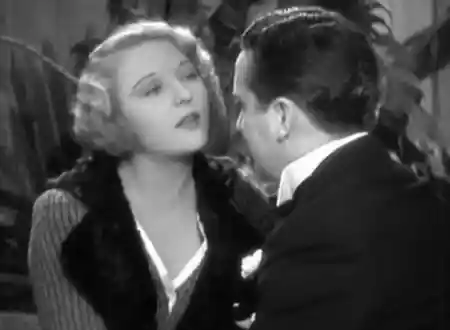
He gets all the best lines because he’s the only one who seems to realize how ridiculous these rich people are. Every time he’s on screen, the movie gets about 20% more interesting, mostly because he looks like he’d rather be literally anywhere else.
There is this one scene at a party where the 'kept husbands' of the other rich women are all sitting around looking miserable. It’s supposed to be a warning to Dick, but it comes off as a weirdly quiet, awkward moment that lingers just a bit too long.
You can see Dick realize that he’s basically just a new piece of furniture in Dot’s house. 🪑
The way the movie handles money is so 1930s. Dick wants to live on his salary, which is like $40 a week or something, while Dot spends that much on a single hat. It’s the classic 'poor but proud' trope, but McCrea sells it because he looks so genuinely uncomfortable in a tuxedo.
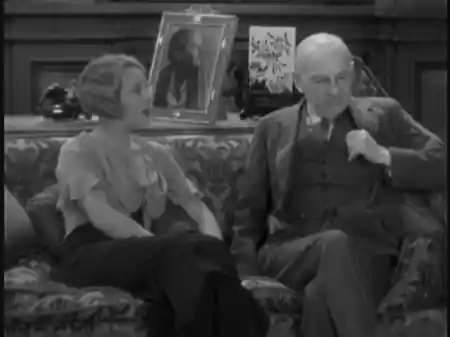
I caught myself looking at the background actors in the dinner scenes. They all look so stiff, like they were told not to move or they wouldn't get paid. It gives the whole movie this slightly unreal feeling.
It’s a bit like White Pants Willie in how it tries to balance comedy with some actual social stakes, but it’s much more of a melodrama. Sometimes the music swells up for no reason, making a simple conversation sound like the world is ending.
The 'conflict' is basically Dick wanting to go back to work and Dot wanting him to stay home and be her pet. There’s a scene where he’s looking at a bridge blueprint and he has more passion in his eyes for that paper than he does for his wife in the previous scene. 🌉
Dot isn't really a villain, she's just incredibly dim about how the world works. Dorothy Mackaill plays her with this frantic energy that makes you think she might just start spinning in circles if she doesn't get her way.
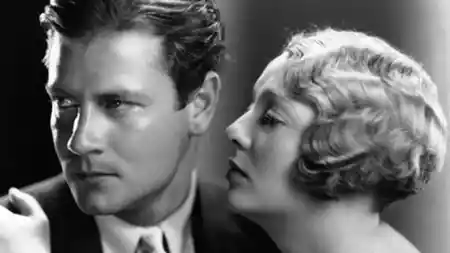
I liked the part where Dick finally loses his cool. He doesn't scream, he just gets very quiet and intense, which is way more effective. McCrea was always good at that 'quiet strength' thing, even this early in his career.
The movie is full of these little moments that feel very specific to the era. Like how everyone has a 'man' or a 'maid' standing three feet away at all times, even when they’re having a private fight. It’s a bit like Some Tomboy where the social rules are just... weirdly rigid.
One thing that bothered me: the lighting in the office scenes is really flat. It’s like they just turned on every light in the building and hoped for the best. It makes the sets look like cardboard.
But then you get a close-up of Mackaill and her eyes are perfectly lit, so you know where the budget went. She really was a star, even if the script gives her some pretty dumb things to say.
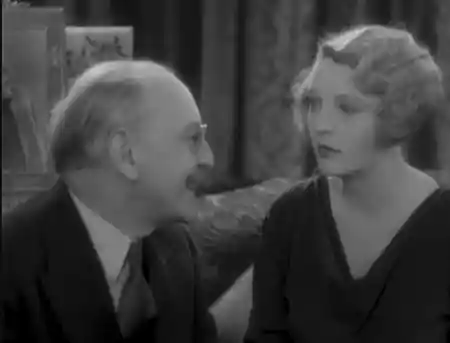
The movie moves fast, which is a blessing. It’s only about 70 minutes. If this were made today, it would be two and a half hours long and involve a lot of therapy sessions. Here, they just yell at each other, have a drink, and move on to the next crisis. 🍸
I did find myself wondering about the other husbands. We never really find out if they’re happy being kept. They just sort of drift through the background like well-dressed ghosts.
Is it a masterpiece? Absolutely not.
But it’s a great example of that weird transition period where movies were still figuring out how to talk. The dialogue is snappy, but the pauses are sometimes way too long, like the actors are waiting for a signal from off-camera.
The ending is... well, it’s a 1931 ending. Everything gets wrapped up in a neat little bow in about three minutes. It feels a bit unearned, but you’re usually so ready for the credits to roll that you don’t mind too much.
If you like seeing Joel McCrea before he became a Western legend, or if you just want to see some really incredible 1930s interior design, give it a go. It’s better than a lot of the stuff that came out that year, mostly because the chemistry between the leads actually feels alive, even when the plot is being silly.
Just don't expect a deep dive into the human soul. It's a movie about a guy who likes bridges and a girl who likes buying stuff. 🤷♂️
IMDb —
1919
Community
Log in to comment.