DbcultAccessing Vault...
Cult Review
Senior Film Conservator
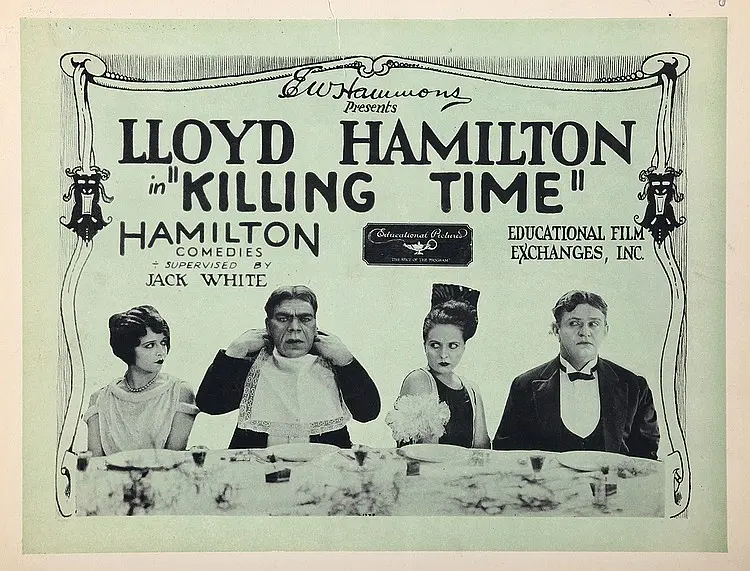
The year 1924 stood as a pivotal meridian in the evolution of silent cinema, a time when the raw physicality of the early nickelodeon era began to fuse with a more sophisticated, character-driven narrative structure. At the heart of this transition was Lloyd Hamilton, an artist whose contributions to the medium often oscillate between criminal neglect and cult-like adoration. In Killing Time, Hamilton delivers a performance that is not merely a collection of gags, but a surgical deconstruction of the American class mythos. The premise—a milkman teaching etiquette to a rough-and-tumble oil tycoon—serves as the perfect scaffolding for Hamilton’s unique brand of pathetic comedy.
The comedic chemistry between Lloyd Hamilton and Dick Sutherland is the kinetic engine of the film. Sutherland, with his monolithic physique and craggy features, embodies the untamed spirit of the West, a man who has conquered the earth but is defeated by a salad fork. Hamilton, conversely, represents the fastidious underdog. Unlike the acrobatic defiance of Buster Keaton or the sentimental resilience of Chaplin, Hamilton’s 'Ham' character is defined by a desperate, often misplaced, dignity. When he enters the magnate’s mansion, he isn't just a tutor; he is a man attempting to impose order on a world that is fundamentally chaotic.
This dynamic reminds one of the friction seen in His Briny Romance, where Hamilton’s interaction with his environment is both a struggle and a dance. In Killing Time, the stakes are shifted from the nautical to the domestic. The humor arises from the subversion of expectations: the milkman, usually the lowest rung on the service ladder, becomes the arbiter of taste for the man who owns the ladder itself.
While the film is ostensibly a comedy, its undercurrents are sharply observant of the 1920s economic boom. The 'oil magnate' was a recurring trope of the era—a symbol of sudden, unearned wealth that threatened the established social order. By casting a sheepherder as the protagonist’s pupil, the writers highlight the absurdity of social mobility when it is disconnected from cultural integration. This thematic depth is something Hamilton explored with varying degrees of cynicism in other works, such as the later The Catspaw.
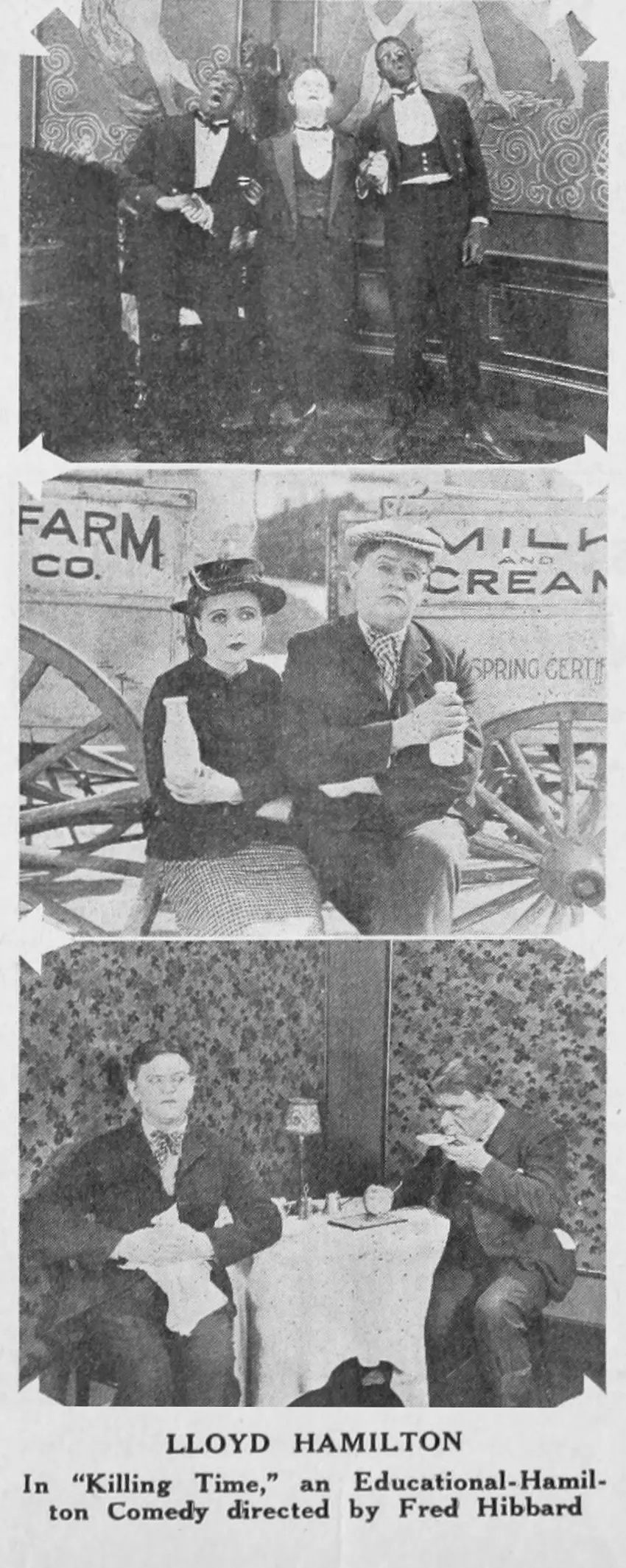
The dinner scene, which serves as the film’s centerpiece, is a masterclass in escalating tension. Every clink of a spoon is a potential explosion. Hamilton’s face, a canvas of anxious micro-expressions, conveys the terror of a man who knows that one wrong move with a napkin could result in social catastrophe. It is this high-wire act between the mundane and the disastrous that elevates Killing Time above the standard slapstick fare of its contemporaries like Squabs and Squabbles.
Directed by Lloyd Bacon, who would later go on to helm massive talkies like 42nd Street, the film exhibits a budding sense of spatial awareness. Bacon utilizes the depth of the frame to create simultaneous gags. While Sutherland is wrestling with a stubborn lobster in the foreground, we see Hamilton in the background, frantically miming the correct procedure with an air of tragic desperation. This use of deep focus and layered action is far more advanced than the flat stagings found in earlier shorts like The Sons of Satan.
The cinematography captures the textures of the era—the shimmering silk of the gowns worn by Ruth Hiatt and June Marlowe against the heavy, dark wood of the dining room. These visual contrasts underscore the central conflict: the collision of the old world and the new, the refined and the raw. Even in a comedy, the aesthetic choices speak to a desire for realism that was beginning to permeate the industry, a trend also visible in the more dramatic The Humming Bird.
What makes Hamilton so compelling in Killing Time is his inherent isolation. Even when surrounded by the elite, or when teaching a giant, he remains an island. He is the 'Lonesome' character—a man who is perpetually on the outside looking in, even when he has been invited through the front door. This existential quality is what differentiates him from the more socially integrated characters in Who Loved Him Best? or the broad farce of What Happened to Jones.
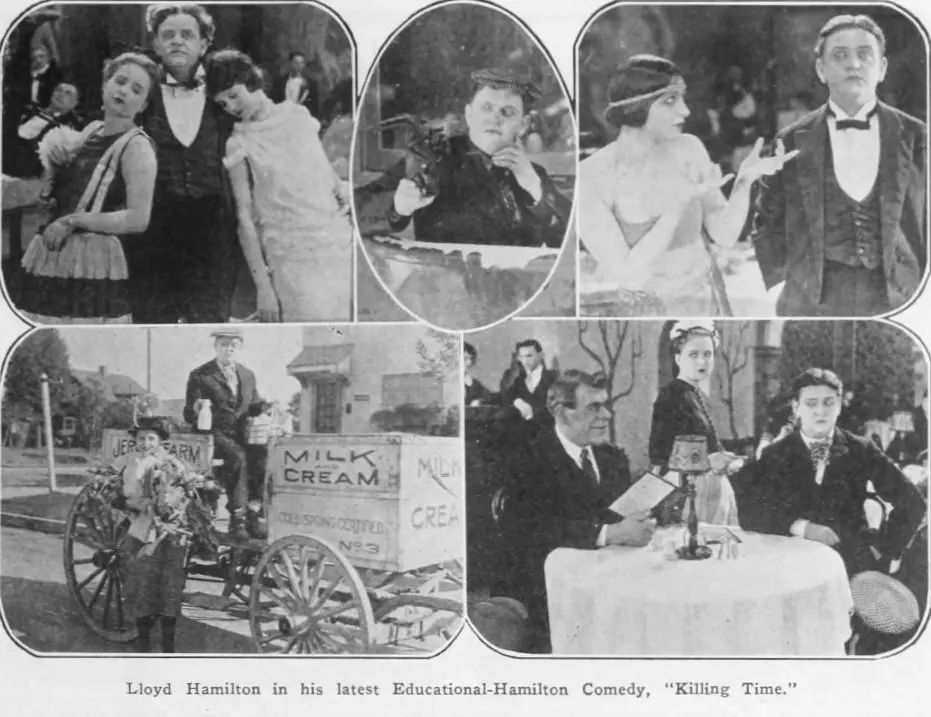
His costume—the oversized checkered cap and the slightly-too-small coat—is a visual synecdoche for his life: he is a man who almost fits, but never quite. In the context of the etiquette lessons, this becomes a poignant metaphor. He is teaching rules that he himself only marginally understands, creating a blind-leading-the-blind scenario that is as heartbreaking as it is hilarious. We see echoes of this struggle for identity in The Phantom Fortune, yet here it is distilled into the simple act of eating soup.
The editing in Killing Time is remarkably percussive. The film understands the rhythm of the gag—the setup, the anticipation, the subversion, and the 'button.' When Sutherland inevitably destroys a piece of fine china, the cut to Hamilton’s reaction is timed with musical precision. This rhythmic mastery is often overlooked in silent comedy, where viewers assume the humor is purely physical. However, the timing here is as sophisticated as any modern sitcom, far surpassing the often lethargic pacing of European imports like Az utolsó éjszaka or the gothic sensibilities of Le revenant au baiser mortel.
Furthermore, the film avoids the trap of repetitive gags. Each attempt at refinement—from walking with a book on one's head to the proper way to address a lady—introduces a new set of physical challenges. It’s a progressive escalation that mirrors the protagonist’s own rising anxiety. This narrative momentum is what keeps the film engaging despite its simple premise, a quality it shares with the tightly-wound The Pinch Hitter.
Ultimately, Killing Time is a testament to the versatility of the short film format. In less than half an hour, it manages to critique the American dream, explore the nuances of human insecurity, and provide a masterclass in physical theater. It doesn't need the supernatural elements of The Devil-Stone or the sprawling melodrama of Nineteen and Phyllis to make its point. It finds the universal in the specific—the universal fear of being found out as an impostor in a world of polished surfaces.
Lloyd Hamilton’s legacy may have been obscured by the passage of time and the loss of many of his films, but Killing Time remains a vibrant, breathing artifact of his genius. It is a film that demands to be watched not as a historical curiosity, but as a living piece of art. Whether you are a fan of the circus-like energy of Sawdust or the solemnity of The Holy City, there is something profoundly human in Hamilton’s milkman that resonates across the century. It is a comedy of manners for those who have none, and a reminder that, in the end, we are all just trying to figure out which fork to use.
IMDb —
1921
Community
Log in to comment.