DbcultAccessing Vault...
Cult Review
Senior Film Conservator
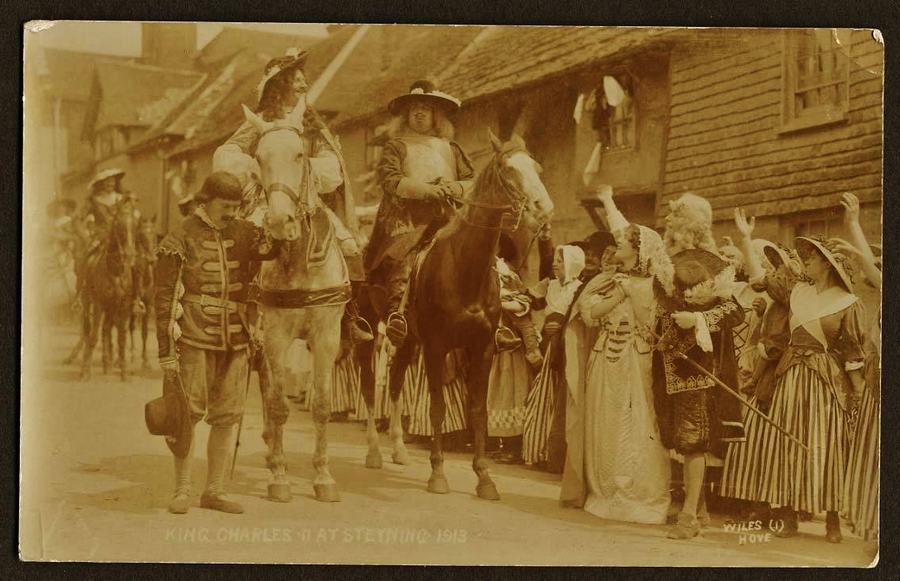
—a fugitive king, a nation holding its breath, cinema that scorches the retina—
Windsor’s polished marble corridors have long since vanished when the first frame of King Charles floods the screen with sepia smoke and the coppery stink of gunpowder. Director Low Warren, never shy of historical haemorrhage, plunges us into the last gasp of the Battle of Worcester: mud sucking at boots, rain thrumming on morion helmets, the sky slashed by pikes that look more like crucifixion nails than weapons. Into this Bosch-like pandemonium staggers the 21-year-old monarch—played by P. G. Ebbutt with eyes wide as shattered porcelain—his royal standard now a tattered dish-rag trampled under hoof. The cinematic coup is immediate: we do not see the battle; we feel it as a synesthetic assault, the soundtrack crunching bones against tympani, the camera smeared with blood the colour of overripe cherries.
From that instant, narrative becomes pilgrimage. The screenplay, adapted by Harrison Ainsworth from his own Victorian door-stopper novel, refuses the comfy upholstery of linear escape. Instead, episodes bloom like bruises—non-sequential, feverish, stitched together by voice-over letters read in candle-scarred darkness. One moment Charles is a scullery boy scrubbing pots in a Worcestershire grange; next he’s a cloaked shepherd under the Severn stars, spinning alibis in a West-Country burr that fools no one but buys silence. The film’s temporal labyrinths echo Pilgrim’s Progress in their allegorical pulse, yet the pulse here is more arrhythmic, more mortal.
Dorothy Bellew, billed simply as "The Woman," supplies the moral counter-melody. She first appears as a silhouette against a moon-blanched apple tree, her face revealed only after she decides—against every instinct of self-preservation—to hide the battered prince in her straw-littered barn. Bellew’s performance is a masterclass in micro-gesture: the way her pupils dilate when she hears distant dragoons, the flutter of a half-finished curtsey that reminds us she once believed in divine right. Their relationship never slips into romantic cliché; it is a trembling covenant of two shipwrecked souls who measure time by the crack of frost on windowpanes.
Warren and cinematographer Theo Harcourt shoot almost exclusively in available light—firelight, dawn haze, the pewter sheen of drizzle. The palette is Caravaggio slammed into social realism: faces hover out of pitch-black like half-remembered saints, while the landscapes—a blur of ochre fields, indigo woods, alabaster cliffs—bleed into one another as if painted on damp parchment. Note the scene where Charles, disguised in a hodden-grey coat, crosses the Thames at night: the river becomes a liquid mirror of galaxies, each oar-stroke a supernova. You can almost smell the bruised reeds, the dank breath of history.
Comparisons are inevitable yet slippery. The film shares DNA with Les Amours de la Reine Élisabeth in its fetish for royal intimacy, but swaps velvet pomp for lice-ridden authenticity. It nods to The Life and Death of King Richard III in the way power corrodes the body politic, yet here the corrosion is reversed: the king is stripped until monarchy itself becomes a ghost. And if From the Manger to the Cross spiritualised suffering, King Charles secularises it—every psalm is whispered for camouflage, not salvation.
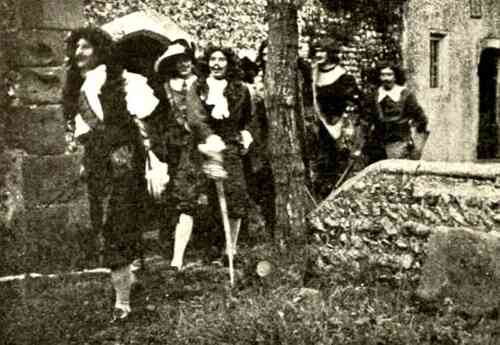
Composer Miriam Klammer withholds strings until the halfway mark, letting the creak of leather and the hush of pine-needles do the talking. When the score finally erupts—a flurry of violas and Gaelic psaltery—it feels like a heart remembering how to beat after prolonged asystole. Conversely, whole stretches unfold in absolute muteness: the king alone in a shepherd’s bothy, breath condensing on stale air, the camera fixed on a spider traversing the roof beam as though weaving his destiny. The absence of sound becomes louder than cannon.
Ebbutt reportedly lost 28 pounds during the shoot, and the emaciation reads as existential: cheekbones sharp enough to cut fog, eyes ringed with the purple of spent gunpowder. In close-up, his freckles resemble a galaxy of terra-cotta islands, each trembling when he realises that every subject who once bowed now hunts him. Watch the moment a village priest—half-drunk on sacramental wine—offers absolution in exchange for a silver crest the king no longer owns. Ebbutt’s blink is infinitesimal yet seismic: the death of divine right in one flutter of eyelashes.
Bellew’s task is subtler. She must convey a peasant’s ontological vertigo: sheltering the body she was raised to regard as God’s anointed. Her solution is to act the earth itself—steady, nurturing, implacable. When she finally watches Charles disappear over the Channel cliffs, the camera lingers on her boots sinking into chalk dust, a secular Ascension witnessed by a woman who will scrub his scent from the hay with lye and tears before winter.
Ainsworth’s script is a magpie’s nest of chronicles, ballads, and forged passports. The famous oak of Boscobel appears, but only as a peripheral blur; the emphasis is on lesser-known footnotes—Charles hiding inside a hollow of bracken while Parliamentary scouts urinate mere inches away, or teaching himself to snare rabbits with strips of his own shirt. These granular indignities accumulate into a portrait of monarchy metabolised by the digestive tract of history, excreted as mere flesh and bone.
Purists will carp at invented composites: a mute charcoal burner who never existed, a Catholic widow who smuggles the king in a hearse. Yet the film’s thesis is that national myth is itself an act of creative forgery. When Charles finally boards the fishing skiff bound for France, the Union Jack is conspicuously absent; the only flag is a tattered sail patched so many times it resembles a quilt of disparate destinies—a visual whisper that Britain itself is a patchwork of fictions.
Warren weaponises point-of-view with Brechtian cruelty. We rarely see Charles’s face straight-on; mirrors fracture him, candle-flames half-illuminate him, windowpanes smear him into ghostly superimposition. The implication: monarchy is a spectator sport; once the audience looks away, the actor ceases to exist. Conversely, commoners are granted frontal solidity—especially in a bravura tavern sequence where a parliamentarian officer grills peasants about the fugitive. The camera squares up to each rustic like a portraitist painting the new republic: weather-reddened cheeks, broken teeth, eyes alight with the nascent glow of sovereignty inverted.
Editing duo S. L. Croft and H. J. Mears splice ellipses into the bloodstream. A single match-cut leaps from Charles’s blistered heel to the whorled knot of an oak, implying the king is grafted into England’s arboreal memory. Elsewhere, jump-cycles compress six weeks into a heartbeat: a loaf of bread tossed to a dog, a rosary entwined through frost-bitten fingers, a noose dangling from a Cotswold elm where another Royalist spy swings. The effect is not montage but memento mori—the viewer gasps at how casually time deletes bodies.
While Charles’s masculinity shrinks into the cowed posture of prey, female agency swells. A laundress smuggles letters in soap-barrels; a teenage dairymaid misdirects dragoons with tales of fairy rings; even a parliamentarian’s wife pretends Charles is her pregnant sister-in-law, lending him a smocked dress and a cushion belly. The film refrains from trumpeting proto-feminism; these women act not from ideology but from the visceral solidarity of the endangered. Yet the cumulative impact is a whispered manifesto: when kingdoms totter, it is women who weave the safety nets from invisible thread.
Catholic households hide the Protestant king not out of doctrinal loyalty but because both denominations share the sacrament of secrecy. In a candle-scented priest-hole, Charles learns to genuflect before icons, his lips forming Ave Marias he does not believe. The scene’s irony is gentle yet corrosive: salvation comes not through faith but through mimicry—identity reduced to theatre, a precursor to the film’s final French shores where he will play refugee instead of ruler.
When the escape vessel finally pushes off, the ocean is shot from low above the gunwale—black water flecked with phosphorus, each splash a possible bullet. The camera never rises to the horizon line; we share the king’s claustrophobia, the sense of floating inside a coffin with no lid. A thunderclap of waves, a sailor’s muttered prayer, then fade to white. End credits roll over the empty beach at Normandy, footprints swallowed by tide, the sound of gulls mocking the hollow thrones of men.
King Charles is not heritage cinema prettified for tea-time Britain; it is an unvarnished parable of how power corrodes the body that wears it, how history’s grand narratives are stitched from anonymous scabs. Low Warren has crafted a film that bleeds authenticity even as it deconstructs myth. You will emerge chilled, exhilarated, and weirdly grateful that thrones are now occupied by mere mortals who can be voted out rather than escaped from under cover of night.
Seek it on the largest screen you can find, though its black holes of shadow will swallow even IMAX lumens. Let its silence scrape your eardrums raw. Then walk home under city streetlights and notice how each pavement crack resembles a fossilised footprint of kings who once believed the ground sacred. You’ll never bow the same way again.
IMDb —
1933
Community
Log in to comment.