DbcultAccessing Vault...
Cult Review
Senior Film Conservator
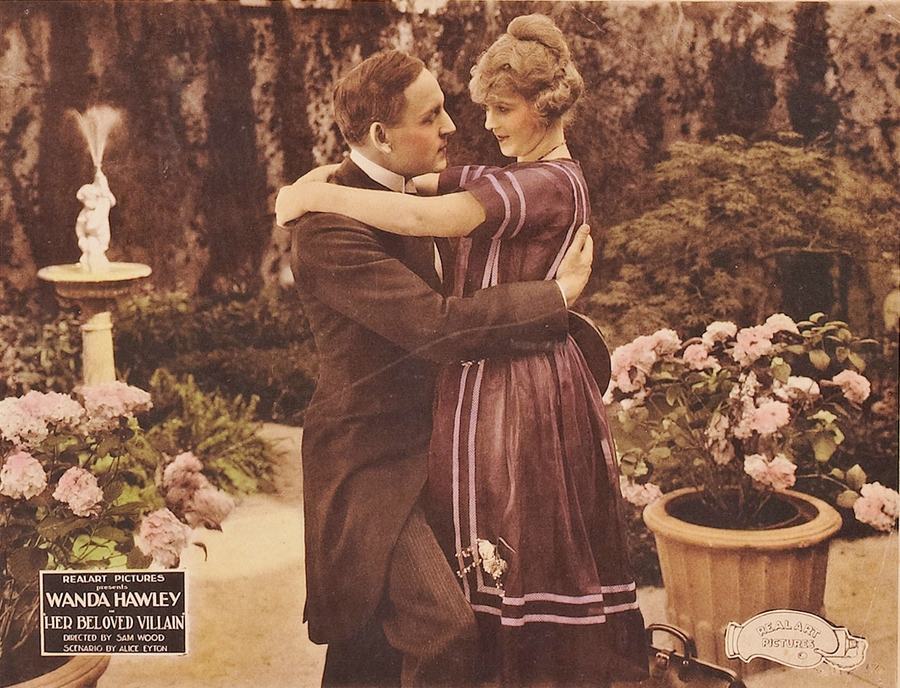
Imagine a world where every whisper ricochets off frescoed ceilings like a duel of rapiers—this is the playground of Her Beloved Villain, a 1920 silent cocktail of champagne malice and gender jujitsu. Director Alexandre Bisson, adapting his own boulevard hit, lets the camera linger on the moment a lie is born: Paul Blythe’s pupils dilate as Susanne’s gloved hand withdraws from his palm, and in that microsecond the film announces its true subject—how desire weaponizes gossip.
The plot—ostensibly a matrimonial scavenger hunt—unfurls like a mille-feuille of deceit. Ramsey Wallace’s Martinot is every inch the porcelain aristocrat: powdered profile, cravat pinned with a sapphire the size of a birthright. Harrison Ford (no, not that one—this is the suave pre-Indiana matinee idol) plays Blythe with the feral elegance of a man who has read La Rochefoucauld and decided cruelty is the sincerest form of flattery. When he forges Susanne’s genealogical death certificate, the intertitle card burns white-hot against the screen: “Her father—brandy’s biographer; her mother—the cabaret’s echo.” The font itself seems to smirk.
Cinematographer Jay Peters shoots Nice as if it were Versailles on holiday: parasols spin into abstract sunflowers, casino mirrors fracture faces into cubist guilt. The most ravishing sequence is a wordless midnight chase along the Promenade des Anglais—Susanne’s silk cloak flutters like a black flame against the phosphorescent surf, while Blythe’s silhouette gnaws the edges of every frame. The absence of synchronized sound becomes an asset; you hear the gravel crunch in your synapses.
Compare this to the sculptural erotics of The Venus Model or the veldt-melodrama of De Voortrekkers—both 1917-1919 fare that treated women as statuary or scenery. Her Beloved Villain grants Susanne the last laugh, a narrative coup as rare in 1920 as a comet visible at teatime.
Wanda Hawley’s Susanne is the film’s voltaic core. In early reels she is all pastel compliance—eyebrows sketched like question marks, gloved fingers clutching a prayer book. But watch the way her gait recalibrates once she learns of Blythe’s slander: shoulders square, chin tilts to an angle that could slice bread. Her faux-drunken burlesque in the final act is silent-era drag
Ford’s Blythe ages a decade in a single reel; close-ups catch the moment his smirk ossifies into crow’s-feet. The film refuses to flatten him into mere cad; in the parlour scene where he believes Susanne lost to him forever, tears bead on his starched collar like tiny crystal apologies. We are reminded of the wounded predators in The Cave Man, except here the prey outfoxes the hunter. Alice Eyton’s scenario weaponizes the era’s obsession with la ligne directe—the straight genealogical line—turning it into a noose that ends up garroting the male ego. The film’s true revolution lies in shifting the power of definition: Susanne rewrites her own dossier, transmuting slander into slapstick. When she pirouettes on a café table, champagne flute sloshing like a metronome, every spectator becomes an accomplice in her coup d’état. Contrast this with the plantation chivalry of Under Southern Skies or the nickelodeon piety of Not My Sister—films that anointed women as redeemers rather than revolutionaries. Her Beloved Villain prefers dynamite to incense. Bisson’s staging of farce is Rube Goldberg by way of Louis XV: a misdelivered letter triggers a domino row of mistaken bedrooms, leading to Dr. Poulard (Robert Bolder) accidentally pocketing a duchess’s tiara while reaching for lozenges. The humor is cerebral—no pie fights, only the elegant collision of social protocols. Watch the iris-in on a chambermaid’s face when she overhears Susanne feigning inebriation: the camera shrinks the world to a silent scream of complicity. The 2023 4K restoration by Eye Filmmuseum reveals textures previously smothered in nitrate bloom: the ermine trim on Susanne’s traveling coat now ripples like moonlit surf; the handwritten poison-pen letters bloom in sepia 3-D. If you stream it, kill the ambient lights—let the ghostly piano score (composed by Maud Nelissen) crawl under your skin. Modern viewers will detect pre-echoes of Gone Girl’s “cool girl” monologue or the performative hysteria of Promising Young Woman, yet Susanne’s victory is warmer, less nihilistic. She does not burn the world; she redecorates it, hanging her husband’s shame like a hunting trophy in the drawing room. A century on, Her Beloved Villain still hisses with relevance: fake news, class gatekeeping, the weaponization of reputation. It is a Versailles-era takedown of toxic privilege that feels tweeted yesterday. Seek it out, let its champagne-bubble cynicism pop in your mouth, and remember—when the villain is beloved, the real crime is underestimating the heroine. ★★★★½ out of 5Gender & Class: A Guillotine in Silk
Comic Machinery & Narrative Clockwork
Restoration & Modern Resonance
Final Verdict
IMDb 5.7
1913
Community
Log in to comment.