DbcultAccessing Vault...
Cult Review
Senior Film Conservator
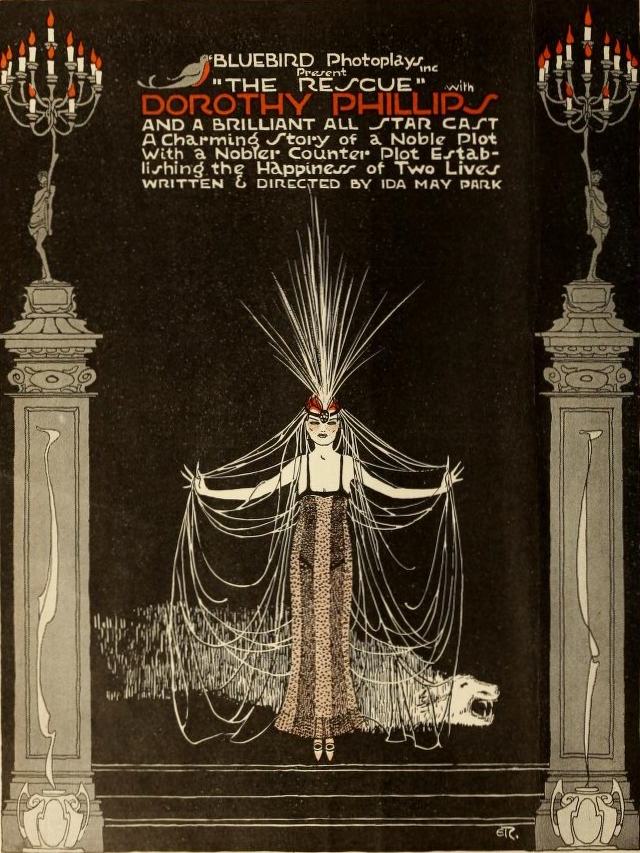
Imagine a film where every close-up is a loaded question and every title card a stiletto slipped between ribs; that film is The Rescue. Released in late 1923, this Universal melodrama—directed by the unjustly sidelined Ida May Park—slips through historiographic cracks like silk through careless fingers, yet it throbs with a modernity that makes many contemporaneous Joan-of-Anthem epics feel embalmed.

Park, adapting Hugh McNair Kahler’s brisk novella, refuses the moral absolutism then fashionable in post-World War I redemption tales. Instead she hands us a tri-cornered duel of appetites: Anne’s craving for retrospective validation, Kent’s hunger for perpetual adoration, Betty’s ache to author her own myth before anyone else writes it for her. The film’s tension is never will Anne succeed but what success will cost each player, spectator included.
Dorothy Phillips—Universal’s “Queen of Emotional Subtlety”—operates in micro-gestures: a half-second hesitation before accepting a dance, the way her knuckles whiten when Kent calls Betty “little girl.” The camera, inching to medium-close range, magnifies these fissures until the screen itself seems to pulse. It’s a performance calibrated for the intimate hush of nickelodeon balconies, not the amphitheaters that swallowed Garden of Lies.
William Stowell’s Kent, meanwhile, is no mustache-twirling rake. He is lethally pleasant, a man who mistakes inertia for innocence. Watch how his shoulders slacken when Anne resurrects the memory of their honeymoon in the Adirondacks: the body betrays relief long before the conscience catches up. The film’s most chilling moment arrives not during a confrontation but in a simple cutaway—Kent staring at his own reflection while Betty hums off-key in the next room. He sees the abyss of repetition, yet steps toward it anyway.
“You always collected hearts the way boys collect stamps,” Anne’s intertitle jabs, a line that ricochets through the rest of the narrative like a bullet seeking a secret exit.
Claire Du Brey’s Betty is sketched in diaphanous contradictions: childish ringlets framing a gaze that has already begun to calcify. She believes rebellion means eloping with an older man; she discovers too late that real rebellion would have been refusing every script pre-written for her gender. Du Brey lets us glimpse that dawning comprehension in the final reel—a tremor in the lower lip, a furtive glance toward the window as if plotting escape from her own storyline.
Park’s visual syntax marries the florid to the surgical. Interiors drip with antimacassars and potted palms, yet the staging favors oblique sightlines: mirrors fracture faces, doorways bisect bodies, shadows swallow half-spoken lies. Cinematographer King Gray (an unjustly forgotten craftsman between French-imported impressionism and emerging Germanic chiaroscuro) bathes Wheaton in perpetual autumnal gloom. Even daylight scenes carry a nicotine tint, as though the town itself exhales stale secrets.

Compare this to The Leap of Despair, where moral polarization is signaled by literally cliff-edge geography. Park trusts the viewer to read gradations of guilt without topographical crutches. The result is a narrative that feels closer to 1970s psychological noir than to its own year’s slate of virtuous-waif sagas.
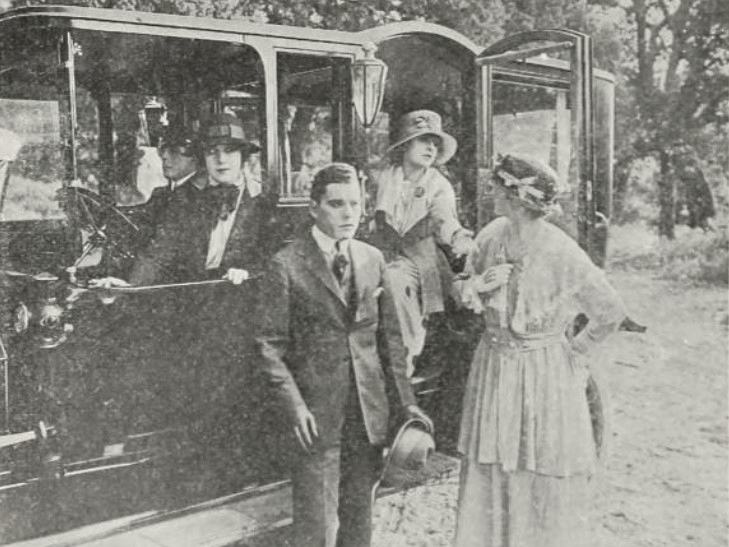
Musically, the original exhibition recommendations called for a “sighing cello motif” for Anne and a “bright flute figure” for Betty—an aural battle of registers later echoed in A Love Sublime (1926). Contemporary restorations often overlay generic piano, flattening such planned dissonance. If your local archive ever screens a 35 mm print with live accompaniment, sprint; you will hear the gendered leitmotifs clash like steel hoops beneath crinoline.
Yet the film’s most subversive stroke lies in its refusal to punish the “fallen woman.” Anne’s sexuality is neither sanitized nor condemned; it is her tool, blunted only by unexpected sentiment. When she accepts Kent’s second proposal—ostensibly to save Betty—the intertitle reads: “I do it for her, but I tremble for myself.” That tremor is the film’s ethical epicenter: a recognition that altruism and appetite can coexist, that rescuing another can still be self-serving. Try finding such ambiguity in Ignorance, where every reformation is rubber-stamped by church bells.
Critical reception in 1923 was bifurcated. Motion Picture Magazine lauded Phillips’ “velvet restraint,” while a Variety reviewer (likely underpaid and over-caffeinated) dismissed the plot as “a ladylike catfight padded with epigrams.” Both miss how Park weaponizes that very catfight to interrogate the limited scripts available to women: wife, mother, ingenue, harlot. The film’s true radicalism is structural—it puts two female subjectivities in the ring and lets the male prize wander like a lost pawn, irrelevant until the final move.
Speaking of structure, watch how often Park withholds establishing shots. We enter scenes mid-conversation, forced to reorient via context—a proto-modernist dislocation that would feel at home in Der Onyxknopf. Such fragmentation amplifies claustrophobia: Wheaton becomes a dollhouse whose walls keep sliding inward.
Some scholars cite The Rummy as the first to depict female alcoholism without sermon, but The Rescue predates it in portraying another taboo: the ex-wife who neither retreats into spinsterhood nor expires of neurasthenia. Anne ends the film alive, restless, perched on a railway platform—destination undisclosed. The camera lingers on her ticket clenched between gloved fingers; destination is immaterial. Freedom, Park suggests, is the act of motion itself.
Genre enthusiasts sometimes lump this film with “mans-ruin” melodramas like A Man’s Prerogative, but the comparison limps. In those tales the erring male learns humility; here the man is merely a ballast weight, exchanged between women who recognize, however belatedly, that the real contest is not for a groom but for the right to narrate their futures.
Restoration status? Tragically fragmentary. The final reel held by the Library of Congress is a 16 mm reduction print, water-damaged along one edge. Yet even in its scars the film whispers: every frame that survives is a reprieve from the ash heap. Digital scans reveal latent details—Anne’s hidden smirk when Betty boasts she’ll “never be an actress”—that 1923 audiences, squinting through flicker and projector hiss, might have missed.
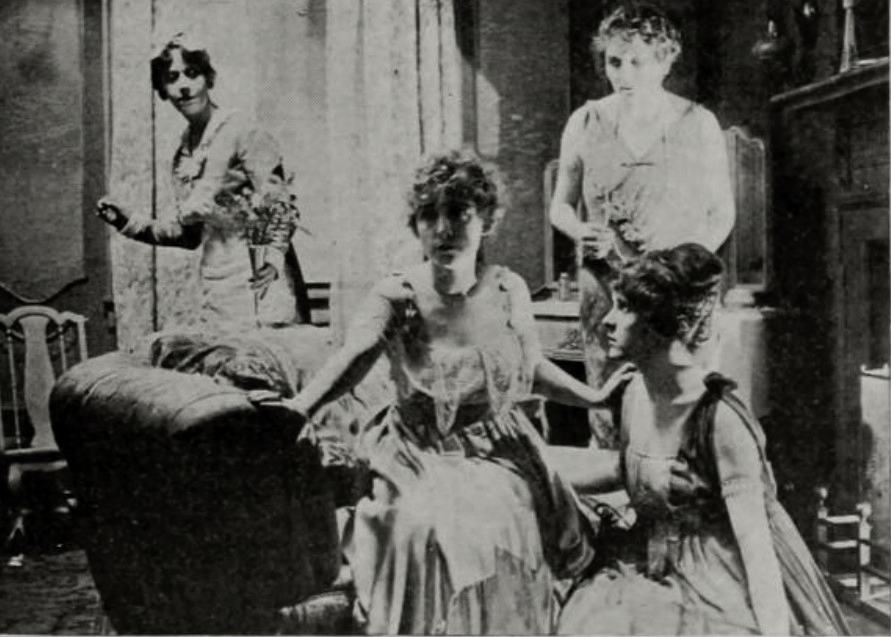
Contextual footnote: Lon Chaney appears fleetingly as Jerrold’s taciturn groundskeeper, a role so peripheral it feels like inside joke. Watch for the moment he slides a whetstone along a scythe while Anne strides past—an omen of marital severance worthy of his later Soul of Satan menace.
Modern viewers allergic to silent cinema’s perceived histrionics will be startled by the film’s tonal hush. Emotions pass like weather fronts; no one collapses onto fainting couches. When Anne finally confesses residual love, the admission emerges as a single tear sliding toward the corner of a smile—an emotional simultaneity talkies still struggle to capture without orchestral bullying.
Compare that restraint to The Honor System, where reformation arcs are signaled by thunderclaps and biblical intertitles. Park trusts the viewer to intuit storm systems from a trembling lampshade, a skill contemporary directors resuscitated only during the 1960s “quiet cinema” resurgence.
Marketing ephemera of the era promised “A tornado of feminine fury!” Tornadoes are blunt; The Rescue is surgical. Its fury is cognitive: the recognition that marriage, even second-time-around, remains a cage whose bars are forged from social expectation and economic dependency. Anne’s final acceptance of Kent is less romantic capitulation than pragmatic realpolitik—she retains legal leverage, social clout, and the upper hand of experience. If that’s surrender, it’s wrapped in barbed wire.
Film theorist Miriam Hansen once argued that silent melodrama offered women “a training ground for deciphering patriarchal codes under cover of sentimental education.” Park’s film escalates that clandestine curriculum into full-fledged insurgency. Every glance Anne casts toward the camera invites female spectators to conspire in her double game: rescue the girl, reclaim the man, but never confess which goal truly matters.
In the current cultural moment—where reboots recycle 1980s nostalgia—reviving The Rescue feels almost seditious. It whispers that love can be both genuine and tactical, that saving others can still damn ourselves, that female agency need not wear superhero spandex to be formidable. Its absence on streaming platforms is less oversight than unconscious suppression: we still fear stories where women win by weaponizing the very tenderness patriarchy expects them to proffer gratis.
So when some archive finally cobbles together a 4 K restoration, clear your calendar. Sit in the dark with a live sextet sawing tension into celluloid. Let Anne’s calculated tremor reverberate through your ribcage. And as the lights rise, ask yourself: would you board that midnight train beside her, destination unknown, ticket paid for with the currency of everything you once believed about rescue, romance, and the price of another woman’s safety? If the answer is yes, congratulations—you’ve survived the film’s last, most intimate seduction.
IMDb 6.1
1930
Community
Log in to comment.