DbcultAccessing Vault...
6.1/10
Senior Film Conservator
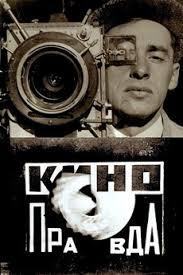
A definitive 6.1/10 rating for a film that redefined the boundaries of cult cinema. Kino-Pravda No. 13: Yesterday, Today, Tomorrow. A Film Poem Dedicated to the October Revolution remains a cornerstone of transgressive art.
Vertov’s thirteenth Kino-Pravda is less a film than a live grenade hurled into the palace of linear narrative. You don’t watch it; you survive its shrapnel.
Strip away the polite word newsreel and what remains is a kinetic assault: spliced chronicles of 1922 Petrograd where frost-rimed streetcars screech past banners still wet with revolutionary glue. The camera—an unblinking mechanical eye—refuses the bourgeois comfort of exposition; instead it thrusts you into the crush of bread queues, the hiss of turbines, the ecstatic tremor of Komsomol orators whose breath freezes mid-sentence. Each frame quivers with the instability of a nation learning to walk without monarchic crutches.
Montage as Insurrection
Montage here is not grammar but guerrilla warfare. A shot of children sliding on icy embankments collides with factory chimneys vomiting soot; the ricochet births a third meaning: play itself weaponized, leisure re-forged into industrial discipline. Cutting becomes class struggle enacted at twenty-four frames per second. Compare this to the pastoral slapstick of Double Trouble or the rodeo caricatures in Pardners—American contemporaries blissfully narcotized by linear cause-and-effect. Vertov’s Soviets have no such luxury; history is being edited in real time, and every splice risks ideological hemorrhage.
Elizaveta Svilova, the invisible co-author, wields her editing bench like a sorceress stitching space-time. She discovers rhymes across class: the arc of a sickle mirrored by the crescent of a smile, the diagonal of a bayonet echoed in the slant of a woman’s hat brim. Such visual consonance isn’t ornamental; it’s agitprop alchemy, transmuting prosaic reportage into revolutionary hymn.
The Camera as Proletarian
Vertov christens his lens kino-eye, a cyclops unshackled by humanist sentiment. It clambers up smokestacks, burrows beneath locomotives, even insinuates itself inside a spinning press, letting rotary blades churn the viewer’s stomach. This kino-eye is the antithesis of Hollywood’s star-gawking apparatus seen in The Star Boarder or His Hansom Butler where cameras genuflect before celebrity aura. Here, faces are geological: weather-scarred, coal-seamed, yet illuminated by the sudden voltaic grin that the future might be theirs.
Sound, though absent on the strip, screams through imagery: the thud of boots on cobblestones, the syncopated clatter of looms, the choral roar when a hydro dam births its first spark. Vertov engineers a phantom soundtrack inside the viewer’s cortex—an ideological synesthesia where image alone triggers auditory hallucination.
October, Not as Spectacle but as Synapse
Forget pageant reenactments; the Revolution here is neuro-electrical. A title card—white letters on tar-black—declares Yesterday/Today/Tomorrow before detonating into triptych montage: Tsarist prisoners shuffle through sleet; present-day workers unfurl red sails; future cosmonauts (imagined via child-drawn rockets) pierce paper skies. Time folds like a futurist accordion, compressing centuries into a single heartbeat. Compare the melodramatic fatalism of The Tides of Fate where destiny drips like syrup, or the drought-parched determinism of The Breaking of the Drought. Vertov’s dialectic denies tragedy; history is a switch track, operable by collective will.
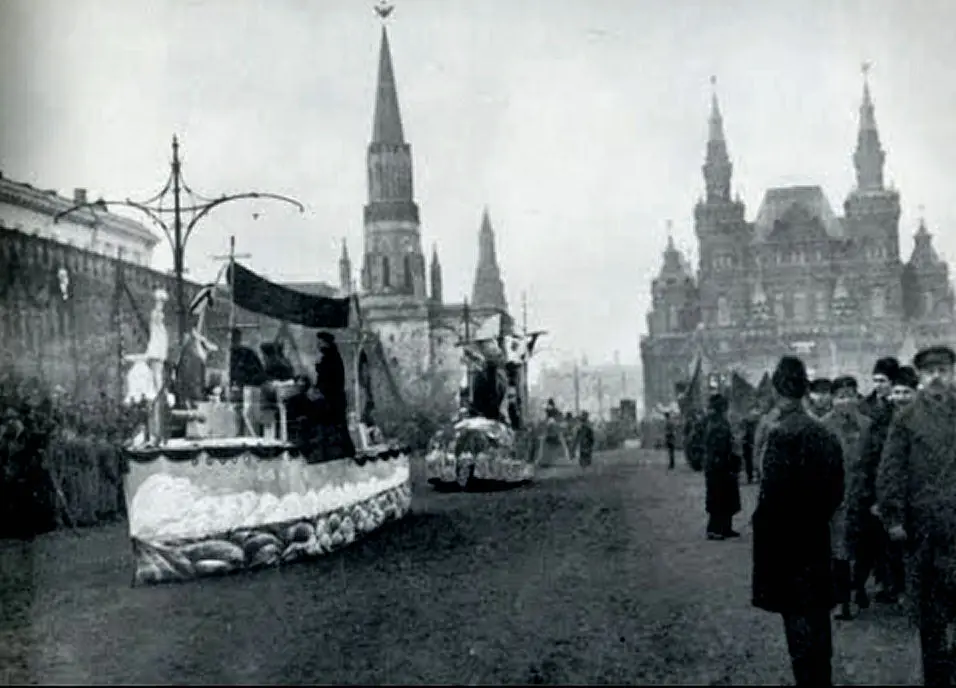
Yet the film harbors doubt like grit inside a gear. A brief, almost subliminal shot captures an old woman clutching an icon, her eyes reflecting both hope and bereavement. The revolution that liberated her grandchildren may have orphaned her prayers. Vertov includes this fracture without narrative cushioning, trusting dialectics to metabolize contradiction. The sequence lasts perhaps three seconds but expands in the mind like a drop of ink in water, staining any triumphalist reading.
Newsreel as Neural Implant
Contemporary viewers, weaned on algorithmic feeds, will recognize Kino-Pravda’s DNA inside every TikTok jump-cut, every drone-shot protest clip. Vertov’s ethos—life caught unawares—prefigures body-cam immediacy, yet surpasses it in ethical rigor. Where today’s viral loops monetize shock, Vertov’s montage seeks cognitive re-wiring: to make the spectator an accomplice in history’s next splice.
Archivists recently unearthed a 4K scan from a Czech negative; grain now erupts like diamond dust, revealing textures obliterated in generations of 16 mm dupes. You can taste the soot on a welder’s lip, trace the frayed satin of a ballet dancer moonlighting as courier. Restoration paradoxically heightens the film’s modernity; the past snaps into present tense with HD cruelty.
Gendered Gazes, Proletarian Bodies
Unlike the reactionary gender farce of A Pair of Sexes, Vertov’s women are neither vamps nor victims. A locomotive engineer wipes grease from her brow, the smear forming a warrior streak. A peasant cradles a rifle in one arm, her infant in the other, both progeny of the same revolution. The camera does not ogle; it acknowledges. Desire is redirected toward the collective project: electrification, literacy, vaccination.
Male bodies fare no gentler: soldiers march in cubist fragmentation—torsos, boots, bayonets—deconstructed then reassembled into a single organism named Mass. Individuality is not erased but sublimated, like notes within a chord. You exit the film humming that chord, your gait unconsciously syncing to its internal rhythm.
The Unfinished Symphony
Scholars still dispute whether Kino-Pravda No. 13 intentionally lacks closure. The final reel ends mid-motion: a child releases a paper boat into a flooded gutter, the camera tilts up toward a hydro pole buzzing with newfound current—cut to black. No fade-out, no triumphant super-title. This abruptness is not failure but invitation: tomorrow remains unshot, awaiting our own montage. Contrast the tidy moral brackets of This Is the Life or the comic restitution of Risky Business. Vertov denies catharsis; he offers circuitry.
In an age when every smartphone breeds a would-be documentarian, Vertov’s century-old bulletin feels prophetically post-digital. He asks: once everyone owns the kino-eye, what will you splice next? The question flickers like a warning lamp inside the skull long after the projector’s hum subsides.
Verdict: compulsory viewing for anyone who still believes images can alter molecules of reality. Bring your optic nerves; leave your nostalgia at coat-check.
Community
Log in to comment.