DbcultAccessing Vault...
5.6/10
Senior Film Conservator
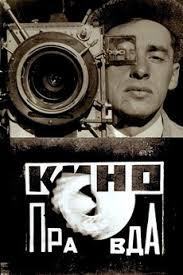
A definitive 5.6/10 rating for a film that redefined the boundaries of cult cinema. Kino-pravda no. 15 remains a cornerstone of transgressive art.
To watch Kino-pravda no. 15 in the modern era is to witness the birth of a visual consciousness that remains, even a century later, startlingly radical. While the global cinematic landscape of 1923 was largely dominated by the burgeoning narrative structures of Hollywood—think of the domestic moralizing in The Blindness of Divorce or the lighthearted escapism of Peppy Polly—Dziga Vertov was engaged in a scorched-earth campaign against the 'theatrical' film. He viewed the fictionalized drama as a 'cine-nicotine' that drugged the masses into passivity. In contrast, this fifteenth iteration of his newsreel series is a bracing shot of reality, distilled through the lens of a machine that claims to see more clearly than the human eye ever could.
The brilliance of Kino-pravda no. 15 lies not just in what it captures, but in the aggressive intentionality of its assembly. Vertov, Kaufman, and Svilova—the 'Council of Three'—operated with a synergy that redefined the possibilities of the medium. Mikhail Kaufman’s cinematography is a masterclass in perspective; his camera scales industrial scaffolding and dives into the heart of bustling markets with a mobility that was unheard of in the era of static, stage-bound productions like The Matrimonial Martyr. There is a palpable sense of danger and discovery in every frame, a rejection of the safe, eye-level gaze that characterized commercial cinema.
However, the true alchemy occurs on the editing table of Elizaveta Svilova. Her contribution to the 'Kino-Eye' method cannot be overstated. Svilova’s montage is not merely a tool for chronological progression; it is a dialectical engine. She juxtaposes the rhythmic churning of machinery with the faces of the workers, creating a visual metaphor for the synthesis of man and technology. This is a far cry from the linear, often predictable pacing found in contemporary dramas like The Light of Victory. In Kino-pravda no. 15, the edit is the heartbeat of the film, pulsing with an energy that mirrors the frantic reconstruction of a nation.
The subject matter of this particular newsreel is a fascinating cross-section of Soviet life in the early 1920s. We see the heavy industry that would become the backbone of the USSR, the efforts to combat disease, and the pervasive presence of agitprop. Yet, Vertov elevates these topics beyond mere propaganda. There is an inherent beauty in the geometry of the cranes and the fluid motion of the crowds. Unlike the star-driven allure of Brown of Harvard, the 'star' of Kino-pravda is the collective. The individual is subsumed into the movement of the whole, a cinematic representation of the socialist ideal.
One cannot help but compare the raw, unvarnished textures of these Russian streets to the polished, artificial sets of films like The Price of Vanity. Where Western cinema sought to hide the seams of its construction to foster immersion, Vertov delights in showing us the machinery. He often includes shots of the camera itself or the editor at work, a meta-textual layer that reminds the viewer that 'truth' is something constructed through the lens. This self-reflexive approach was decades ahead of its time, prefiguring the French New Wave and the modern essay film.
The auditory experience of Kino-pravda—even in its silent form—is one of perceived sound. The visual rhythms are so precisely calibrated that one can almost hear the clanging of the steel mills and the chatter of the urban centers. This kinetic energy stands in stark contrast to the leisurely, often plodding narratives of films like Jubilo. Vertov’s work is a sprint, a relentless forward motion that refuses to let the viewer settle into a comfortable spectatorship. It demands an active engagement, an eye that is as sharp and discerning as the camera itself.
Consider the depiction of the everyday struggle. While films like They Do It on $8 Per attempted to touch upon social conditions through a fictional lens, Kino-pravda no. 15 presents them as an inescapable reality. There is no sentimentalism here, no melodramatic rescue. There is only the documentation of a people rebuilding their world from the ashes of empire. The grit on the faces of the children and the calloused hands of the laborers are presented without the softening filters used in A Flirt There Was. This is cinema as a social weapon, a tool for enlightenment rather than mere entertainment.
Looking back at Kino-pravda no. 15, one realizes that Vertov was not just recording history; he was predicting the future of the image. The rapid-fire editing techniques and the emphasis on the 'unrehearsed' moment are the direct ancestors of modern documentary and even music video aesthetics. While the narratives of Rule G or The Half Million Bribe feel like relics of a bygone era of storytelling, Vertov’s work feels contemporary. It possesses a raw, visceral quality that transcends the limitations of its 1923 production context.
The film’s influence can be traced through the history of political cinema, from the agitprop of the 1930s to the cinéma vérité movement of the 1960s. It stands as a testament to the power of the montage to create meaning where there was previously only chaos. Even when compared to the high-energy comedies of the time, such as Number, Please? or the physical humor of High Kickers, the kineticism of Kino-pravda is of a different order. It is a movement born of purpose, a cinematic dance that celebrates the triumph of the collective over the individual.
In its exploration of the mundane, the film finds the extraordinary. A simple shot of a streetcar or a public fountain becomes a symphony of light and shadow. This ability to find the poetic in the industrial is what separates Vertov from his contemporaries. While others were searching for drama in the drawing rooms of the elite, Vertov was finding it in the grease and steam of the new world. It is an uncompromising vision, one that rejects the easy comforts of a film like Nattens datter II or the straightforward adventure of Robbery Under Arms.
Kino-pravda no. 15 remains a monumental achievement in the history of the moving image. It is a film that demands to be seen not as a historical curiosity, but as a living, breathing manifesto. Dziga Vertov, along with Svilova and Kaufman, proved that the camera could be more than a recording device; it could be a catalyst for social and perceptual change. In an era where we are inundated with images, the purity and intensity of the 'Cine-Eye' serve as a reminder of the power of the visual to shape our understanding of the world.
The film’s enduring relevance lies in its refusal to compromise. It does not seek to please the viewer or to provide a comfortable narrative arc. Instead, it offers a challenge: to see the world as it is, in all its complexity and contradictions. It is a work of profound intellectual rigor and artistic bravery, a cornerstone of avant-garde cinema that continues to inspire and provoke. As we navigate our own era of technological and social upheaval, the lessons of Kino-pravda—the importance of the discerning eye and the transformative power of the edit—are more pertinent than ever.
IMDb 3
1931
Community
Log in to comment.