DbcultAccessing Vault...
Cult Review
Senior Film Conservator
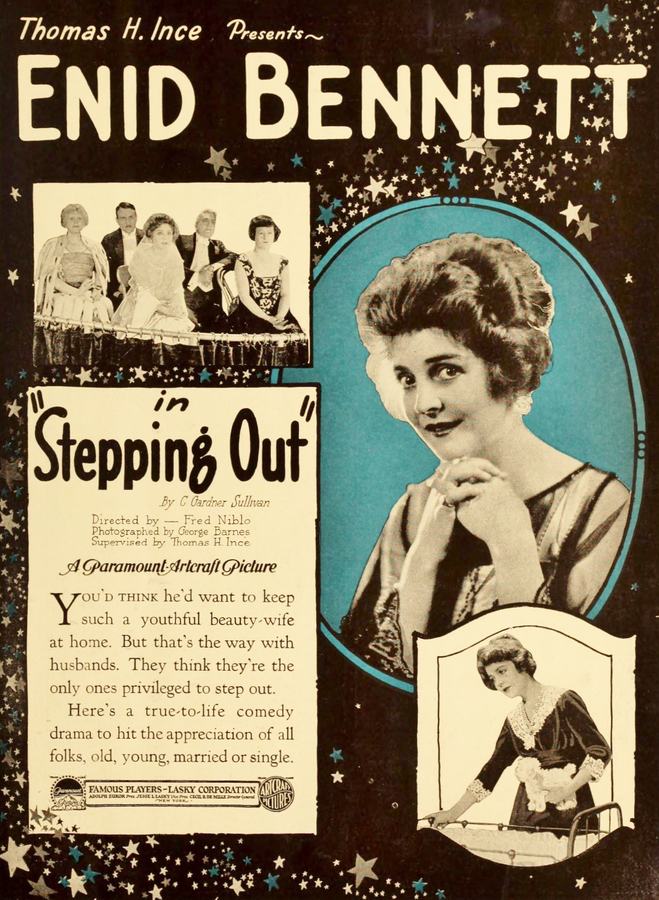
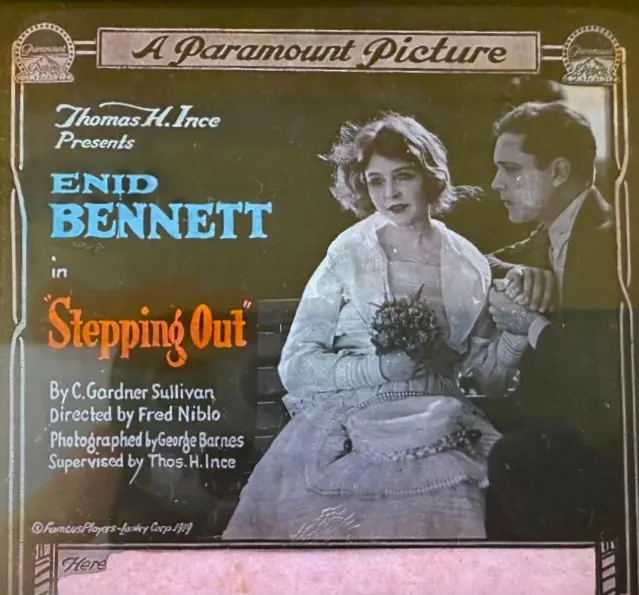
The year 1919 stood at a precipice of cultural transformation, a moment where the rigid Victorian moralism of the past began to collide with the nascent cynicism of the Jazz Age. Within this volatile milieu, Stepping Out emerges as a startlingly modern exploration of marital infidelity and the transactional nature of respectability. Directed with a keen eye for social nuance, the film serves as a vehicle for Enid Bennett, whose performance here serves as a masterclass in the slow-burn evolution of a character pushed to the brink of psychological endurance.
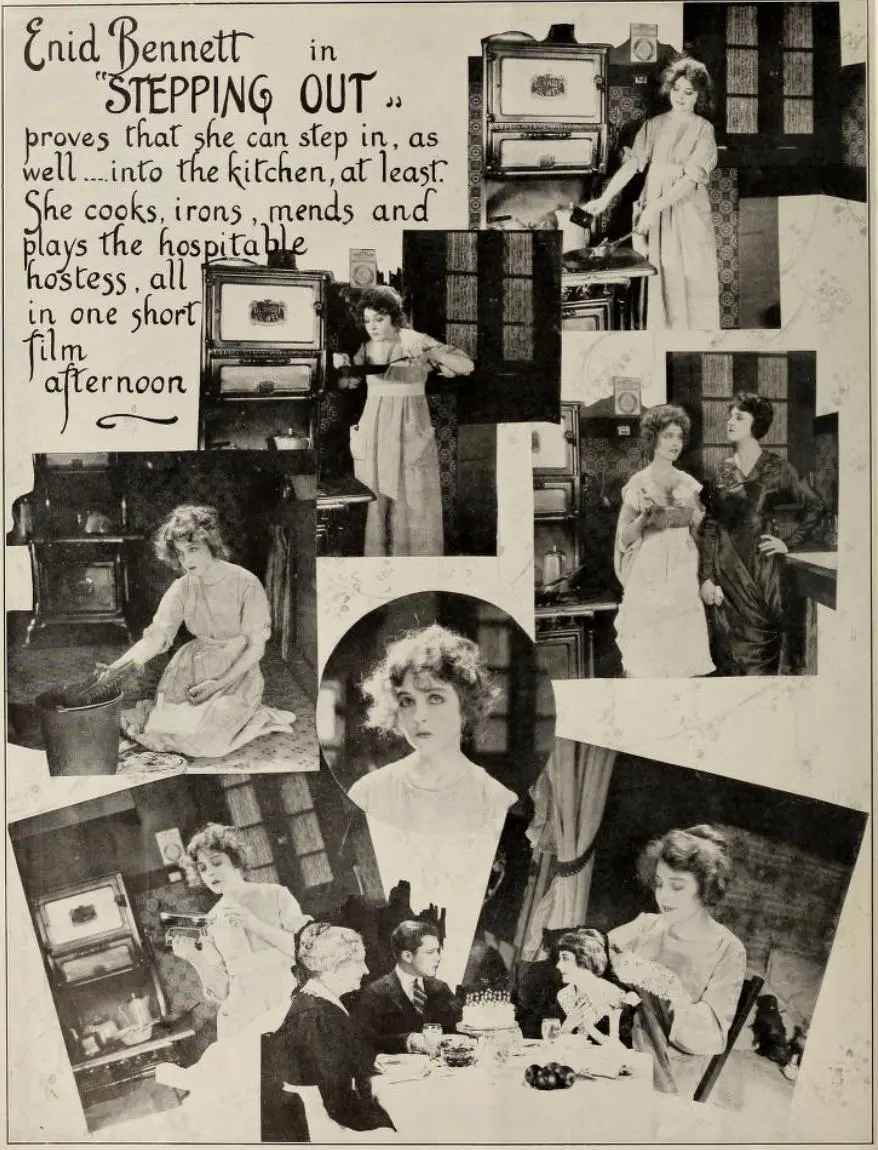
The opening movements of the film establish a rhythm of drudgery that is almost tactile in its heaviness. We see Bennett’s character not merely as a wife, but as a logistical engine for her husband’s comfort. The script by C. Gardner Sullivan avoids the easy sentimentality often found in contemporary works like The Little Patriot. Instead, it leans into the gritty reality of a woman whose identity has been entirely subsumed by the needs of a "cad." This term, while quaint by today's standards, carries a lethal weight in the context of the film’s narrative. The husband, played with a chilling lack of empathy by William Conklin, represents a specific breed of post-Victorian entitlement—a man who views his wife as an appliance and his secretary as a perk of his burgeoning status.
Infidelity in silent cinema often took on a melodramatic, almost operatic quality, as seen in the heightened emotions of Jealousy. However, Stepping Out opts for a more insidious approach. The discovery of the affair is not a moment of explosive confrontation, but a quiet, soul-crushing realization that the foundations of her reality are built on sand. The secretary, portrayed by Julia Faye, is not a mere caricature of a temptress; she is a mirror to the wife’s own invisibility, a woman who uses the only tools at her disposal to climb the social ladder. This dynamic creates a fascinating tension, as the audience is forced to reconcile the wife’s suffering with the secretary’s ruthless ambition.
What sets this film apart from the moralizing tales like The Matrimonial Martyr is the protagonist's refusal to play the role of the martyr. Once the veil is lifted, the character’s trajectory shifts from internal despondency to external calculation. This isn't the impulsive revenge found in Without Honor; it is a cold, methodical dismantling of her husband’s ego. By targeting his employer, she strikes at the one thing he values more than his marriage or his mistress: his standing in the eyes of the patriarchy. The irony is delicious—she uses the very feminine charms her husband took for granted to seduce the man who holds her husband's future in his hands.
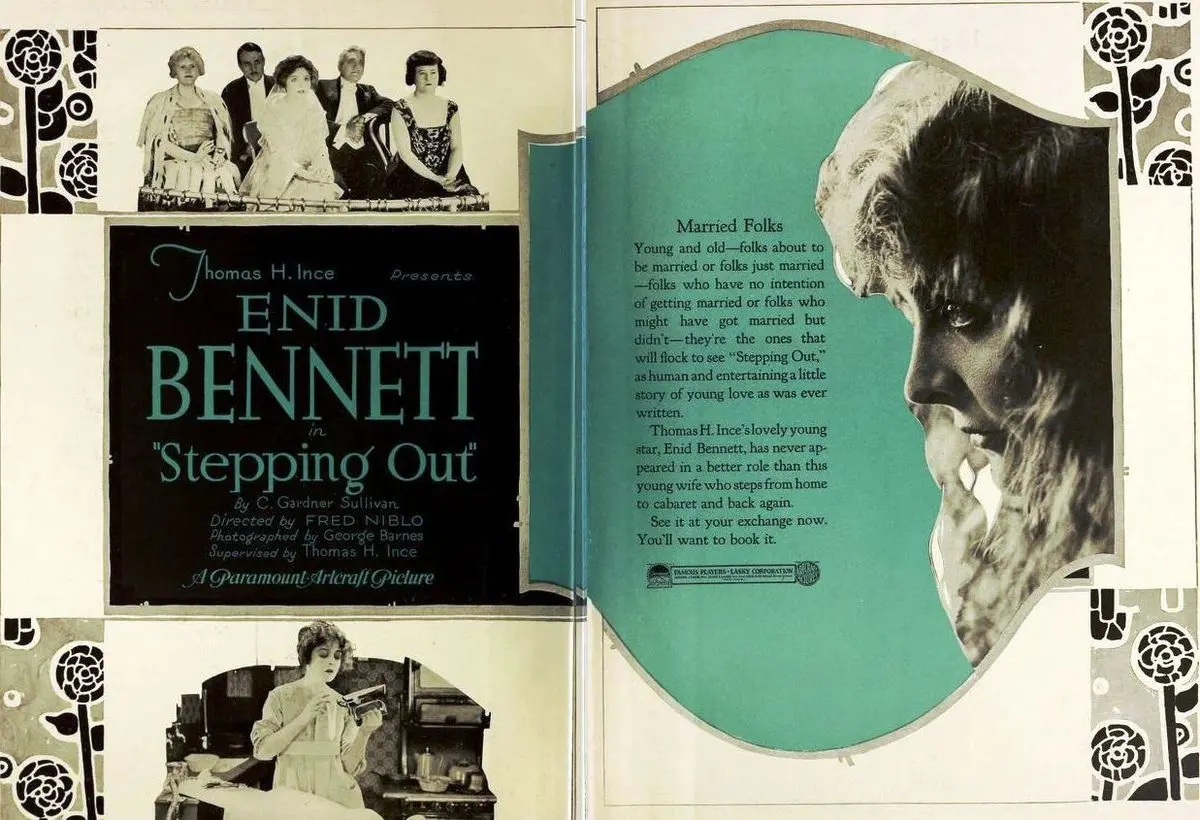
The cinematography in Stepping Out utilizes light and shadow to articulate the internal states of its characters. In the early scenes, the lighting is flat and oppressive, mirroring the monotony of the household. As Bennett’s character begins her "stepping out," the visual palette becomes more dynamic, with the high-society settings rendered in lush, high-contrast tones that suggest both glamour and danger. This visual evolution is reminiscent of the stylistic shifts in Fruits of Desire, where aesthetic choices serve as a direct extension of the protagonist's moral journey.
Sullivan’s writing deserves particular praise for its avoidance of the didactic. While many films of the era felt the need to include intertitles that lectured the audience on virtue, Stepping Out allows the actions of the characters to speak for themselves. The dialogue, captured in those brief flashes of text, is sharp and often laced with a biting subtext. It lacks the whimsicality of Lend Me Your Name, opting instead for a psychological realism that feels remarkably ahead of its time. The supporting cast, including Niles Welch and Gertrude Claire, provide a solid bedrock of realism, ensuring that the film never drifts too far into the realm of the implausible.
At its core, the film is a scathing critique of the economic dependency of women in the early 20th century. The wife’s "revenge" is only possible because she understands the value of social capital. In a world where she has no legal or financial standing, her only currency is her presence and the perception of her virtue. By weaponizing these assets, she exposes the hypocrisy of a system that rewards the husband's philandering while demanding the wife's total subservience. This theme resonates with other contemporary social dramas like The Blacklist, though it approaches the issue from a domestic rather than a political angle.
When comparing Stepping Out to other works of the period, its unique DNA becomes even more apparent. Unlike the sprawling, allegorical nature of Peer Gynt, this film is tightly focused on the intimate theater of the home and the office. It lacks the comedic levity of Berth Control or the rural simplicity of Gladiola. Instead, it shares a certain DNA with The Measure of a Man, specifically in its interrogation of what constitutes true character in the face of moral failure. However, where that film looks for redemption, Stepping Out looks for justice—or at least a satisfyingly symmetrical form of retribution.
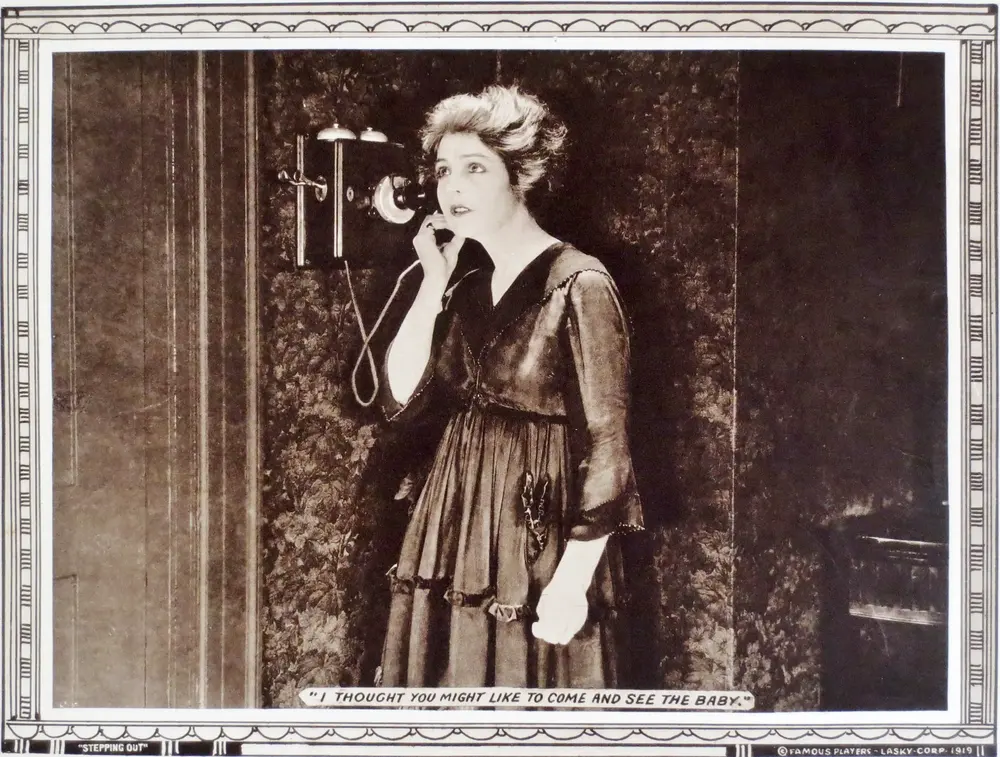
One cannot overstate the importance of Enid Bennett to the film’s success. In an era where silent acting could often devolve into broad gestures and frantic eye-rolling, Bennett employs a minimalist approach that is devastatingly effective. Her face becomes a map of shifting loyalties and hardening resolve. The scene where she first observes her husband with his secretary is a masterclass in subtlety; her eyes convey a world of hurt that quickly solidifies into a diamond-hard intent. It is a performance that rivals the emotional depth seen in When Paris Loves, yet it is grounded in a much more relatable, domestic tragedy.
The husband’s employer, the object of her strategic affection, is played with a fascinating mix of gravitas and vulnerability. He represents the ultimate prize in this game of social chess. The wife’s interactions with him are layered with a double meaning that the employer is oblivious to, but which the audience is fully privy to. This dramatic irony fuels the second half of the film, creating a tension that is far more compelling than the physical stakes of an action film like The Only Road.
As the narrative reaches its crescendo, the film avoids the easy out of a tearful reconciliation. The resolution is far more complex, leaving the characters in a state of altered equilibrium. The husband is humbled, the secretary is displaced, and the wife has discovered a power she never knew she possessed. It is a conclusion that feels earned, a far cry from the forced happy endings of films like Her Country First. Stepping Out remains a vital piece of silent cinema because it refuses to simplify the human experience. It acknowledges that love can die, that betrayal has consequences, and that sometimes, the only way to move forward is to burn the bridges behind you.
In the broader context of 1919, this film was a bold statement. It challenged the audience to sympathize with a woman who was technically "stepping out" herself, even if her motives were defensive. It blurred the lines between the victim and the aggressor, suggesting that in the war of the sexes, the most effective weapon is not anger, but intelligence. For the modern viewer, Stepping Out offers a window into a world that is at once distant and uncomfortably familiar. The costumes and the technology have changed, but the dynamics of power, neglect, and the quest for dignity remain universal.
Note: While Pay Day deals with the economic struggles of the working class, Stepping Out reminds us that the emotional and social struggles of the bourgeois are no less fraught with peril. This film is a testament to the enduring power of silent storytelling and the timeless brilliance of Enid Bennett.
IMDb 6.9
1932
Community
Log in to comment.