DbcultAccessing Vault...
6.2/10
Senior Film Conservator
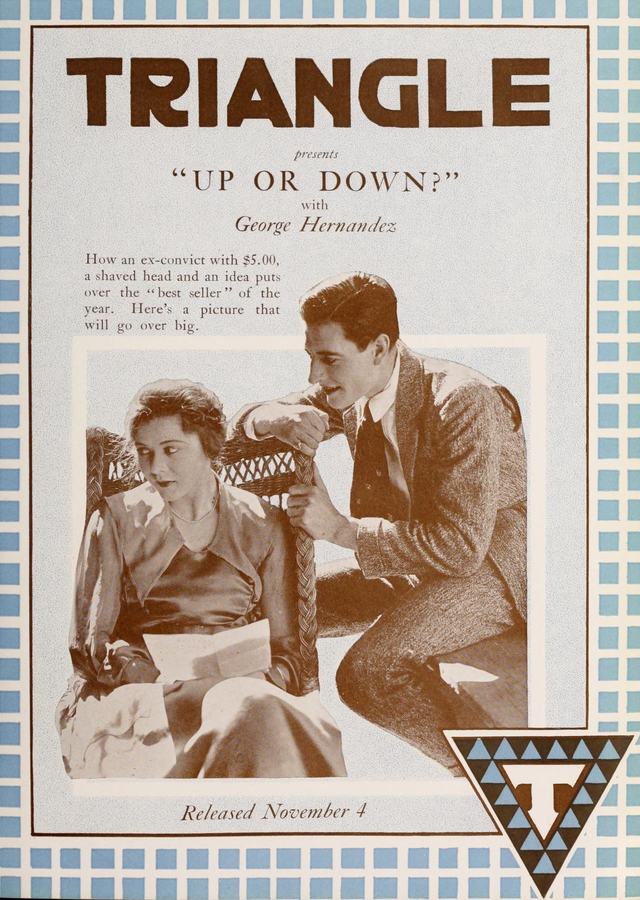
A definitive 6.2/10 rating for a film that redefined the boundaries of cult cinema. Up or Down? remains a cornerstone of transgressive art.
In the annals of early cinematic endeavors, certain films emerge not merely as historical artifacts, but as vibrant, pulsating narratives that continue to resonate with a surprising contemporary relevance. Up or Down?, a 1917 production, stands as one such testament to the enduring power of storytelling, particularly within the nascent genre of the Western. It is a film that, despite its century-old vintage, grapples with themes of moral ambiguity, the elusive nature of justice, and the transformative power of experience, all woven into a compelling frontier drama penned by the insightful Lynn Reynolds.
The narrative thrust of Up or Down? is deceptively simple at its outset, yet it quickly unfurls into a labyrinthine exploration of human character. We are introduced to Allan Corey, portrayed with a compelling blend of intellectual weariness and burgeoning idealism by John Gilbert. Gilbert, a star who would later achieve immense fame in the silent era and beyond, brings a nuanced depth to Allan, a writer ensnared in the suffocating grip of creative paralysis. His initial encounter with Mike, a character imbued with a volatile magnetism by Jack Curtis, serves as the igniting spark for the film's central conflict and eventual resolution. Mike, fresh from the confines of incarceration, is discovered in the throes of a brutal, yet arguably justified, act of violence against an individual who committed an atrocity against an animal. This raw, visceral display of frontier ethics, a stark contrast to Allan's more cerebral struggles, immediately establishes the film's moral landscape: one where right and wrong are not always neatly delineated.
Allan, recognizing the potent, untamed energy within Mike – perhaps sensing a muse in the rough – extends an invitation for the ex-convict to accompany him on a journey westward. This proposition is born of Allan's desperate quest for inspiration, a yearning to infuse his stagnant writing with the authentic grit and drama of the American frontier. Mike, ever the pragmatist, accepts, though his motivations are far less artistic. His mind, still scarred by prison walls, is fixated on a swift return to a life of crime, viewing Allan's naive idealism as a convenient cover for his nefarious schemes. This initial dynamic, a symbiotic relationship built on divergent desires, forms the bedrock of their evolving partnership and is a fascinating study in contrasts. It echoes, in a sense, the unlikely pairings found in other character-driven dramas of the era, where disparate individuals are thrown together by fate, much like the unexpected alliances forged in The Debt, though with a distinct Western flavor.
The journey leads them to the ranch of Esther Hollister, played with spirited grace by Fritzi Ridgeway. Ridgeway's portrayal of Esther is not merely that of a damsel in distress or a romantic interest; she is a woman of agency, possessing a strong moral compass and an unwavering sense of justice that will profoundly impact both Allan and Mike. It is on Esther's ranch that Mike's criminal instincts resurface with a vengeance. With a cunning that belies his rough exterior, he meticulously plans and executes a series of robberies. His ingenuity is particularly evident in his method of misdirection: by cleverly dragging four horses along with him during his escapades, he ensures that the crimes are wrongfully attributed to the notorious 'Texas' Jack gang, who, by unfortunate coincidence, are operating in the vicinity. This narrative device is a stroke of brilliance by Reynolds, injecting an element of mistaken identity and heightened suspense that elevates the plot beyond a simple cat-and-mouse chase.
The moral complexities deepen when Allan and Esther bear witness to a brazen bank robbery. Esther, a woman who values action and integrity, is utterly repulsed by Allan's apparent inaction, his intellectual detachment preventing him from intervening. Her disgust serves as a pivotal turning point for Allan. His desire to prove his mettle, to shed the skin of the contemplative observer and embrace the role of the active participant, propels him into a daring act of heroism. In a remarkable display of courage and resourcefulness, Allan single-handedly tracks down and captures Texas Jack's formidable gang. Not content with merely apprehending the culprits, he also unearths the hidden loot, a treasure trove that, unbeknownst to him, was stashed by Mike. This sequence is a powerful affirmation of Allan's transformation, showcasing his journey from a man of thought to a man of decisive action, a thematic arc that resonates with similar journeys of self-discovery in films like The Primal Lure.
The film's resolution is multi-faceted, offering satisfying conclusions while maintaining a degree of psychological realism. Allan's heroic exploits not only provide him with a wealth of material for his new novel, finally breaking his creative block, but also solidify Esther's admiration, leading to the promise of a romantic union. The adventure has proven to be a crucible, forging a new, more complete Allan. Yet, it is Mike's arc that perhaps offers the most profound commentary on the human capacity for change. Witnessing the wrongful conviction of Texas Jack's gang, a consequence of his own clever misdirection, a flicker of conscience ignites within him. In a surprising act of moral rectitude, Mike engineers their escape from prison one night. This act of atonement, however, does not lead him back to his life of crime. Instead, he makes the conscious choice to return to Esther's ranch, to his partner, embracing a path of quiet redemption and companionship. This unexpected turn highlights the film's nuanced understanding of character, suggesting that even those seemingly set on a downward trajectory can find a path upward.
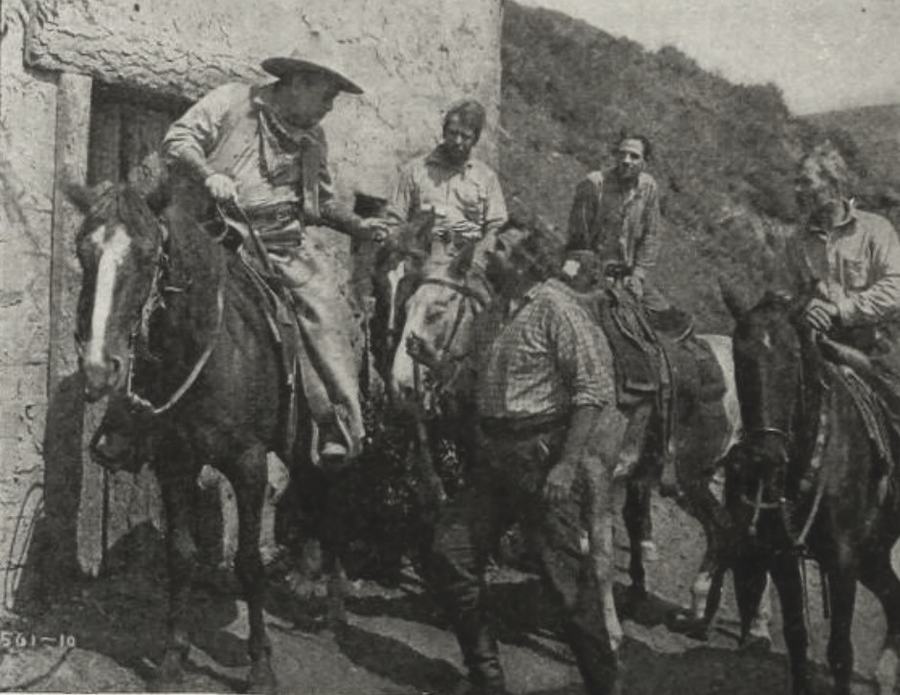
The performances in Up or Down? are uniformly strong, a testament to the talent of the era's actors who conveyed so much through gesture, expression, and physicality. John Gilbert, as Allan Corey, masterfully transitions from a brooding intellectual to a man of decisive action, his eyes conveying a wealth of internal struggle and eventual triumph. Fritzi Ridgeway's Esther is a formidable presence, her indignation and eventual adoration for Allan palpable. Jack Curtis imbues Mike with a compelling blend of menace and an unexpected vulnerability, making his eventual turn towards redemption believable rather than contrived. The supporting cast, including Edward Burns, George Hernandez, Elwood Bredell, and Graham Pettie, contribute significantly to the film's rich texture, each bringing a distinct flavor to their respective roles.
Lynn Reynolds' screenplay is a marvel of construction, balancing intricate plotting with profound character development. The pacing is deliberate, allowing the audience to fully immerse themselves in the moral quandaries faced by the protagonists. The use of mistaken identity and the clever subversion of audience expectations keep the narrative engaging. Reynolds understands the power of the Western genre to explore universal themes, using the rugged landscape as a backdrop for internal struggles. This depth of writing is reminiscent of the complex narratives found in films like The Dark Silence, which also explored the hidden depths of human motivation.
Cinematically, Up or Down? showcases the burgeoning artistry of silent film. While specific directorial credits are often less emphasized in early productions, the visual storytelling is effective, utilizing broad sweeping shots of the Western landscape to establish mood and scale, contrasting with tighter, more intimate framing for moments of emotional intensity. The film's use of light and shadow, characteristic of the era, adds a dramatic flair, enhancing the moral ambiguities inherent in the plot. The editing, though perhaps less frenetic than modern cinema, is purposeful, guiding the viewer through the unfolding events with clarity and increasing tension.
Thematically, the film is a fascinating exploration of perception versus reality. Esther's initial judgment of Allan, based on his inaction, is later overturned by his courageous deeds. Similarly, Mike's outward persona as an unrepentant criminal belies an underlying moral code that eventually compels him to act justly. The title itself, Up or Down?, perfectly encapsulates the central dilemma faced by its characters: will they succumb to their baser instincts, or will they rise to the challenge of their better selves? This question of choice and consequence is timeless, making the film's message resonate far beyond its historical context. It is a question that many films, from Sentenced for Life to others grappling with moral turning points, have sought to answer.
Furthermore, the film offers a subtle commentary on the nature of inspiration itself. Allan's journey highlights the idea that true artistic creativity often springs not from isolated contemplation, but from direct engagement with life's messy, unpredictable realities. His transformation from a detached observer to an active participant directly fuels his literary output, suggesting that the most profound stories are lived before they are written. This meta-narrative layer adds another dimension to the film, inviting viewers to consider the very process of storytelling.
In conclusion, Up or Down? is far more than a mere silent Western; it is a sophisticated character study, a thrilling adventure, and a thoughtful meditation on morality and redemption. Its enduring appeal lies in its complex characters, its ingenious plot, and its timeless themes. For enthusiasts of classic cinema and those interested in the evolution of the Western genre, this film offers a rich and rewarding viewing experience. It reminds us that even in the silent era, filmmakers were crafting narratives of immense depth and emotional resonance, proving that the language of cinema, even without spoken words, is universally understood and deeply felt. The choices made by its characters, whether 'up' towards redemption or 'down' towards perdition, continue to intrigue and provoke thought, solidifying its place as a minor masterpiece of its time.
IMDb 6.1
1936
Community
Log in to comment.