DbcultAccessing Vault...
6.1/10
Senior Film Conservator
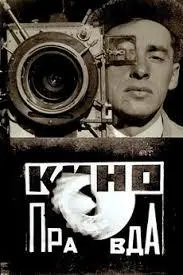
A definitive 6.1/10 rating for a film that redefined the boundaries of cult cinema. Kino-Pravda No. 18: A Movie Camera Race Over 299 Meters and 14 Minutes and 50 Seconds in the Direction of Soviet Reality remains a cornerstone of transgressive art.
In the annals of cinematic history, few names resonate with the audacious spirit of innovation and ideological fervor quite like Dziga Vertov. His Kino-Pravda series, particularly an entry as precisely titled as "Kino-Pravda No. 18: A Movie Camera Race Over 299 Meters and 14 Minutes and 50 Seconds in the Direction of Soviet Reality," stands not merely as a historical document but as a foundational text in the very grammar of documentary filmmaking. This isn't just a collection of newsreel clips; it's a meticulously crafted argument for a new way of seeing, a polemic against the narrative contrivances of fictional cinema, and a fervent embrace of the unvarnished truth captured by the 'Kino-Eye.'
To fully appreciate Kino-Pravda No. 18, one must first grasp the revolutionary philosophy underpinning Vertov's work. For Vertov and his collective, the Kinoks, the camera was not merely a recording device but an extension of the human eye, capable of perceiving and organizing reality in ways impossible for the naked eye. This 'Kino-Eye' was designed to dismantle the bourgeois conventions of theater and literature that had, in their view, corrupted cinema, replacing them with a 'cinema-truth' derived directly from life itself. The very title of this installment, with its precise measurements of film stock and duration, underscores this commitment to the material reality of the medium, transforming the act of documentation into a scientific, almost athletic endeavor—a 'race' to capture the most authentic fragments of Soviet existence.
In the early 1920s, Russia was a crucible of change, reeling from revolution and civil war, grappling with the New Economic Policy (NEP), and striving to forge a new socialist identity. Vertov’s Kino-Pravda series emerged directly from this tumultuous landscape, designed to chronicle the birth of the Soviet state. Unlike the escapist narratives of Maciste turista or the melodramatic tension found in films like The Painted Soul, Vertov's work grounded itself in unvarnished reality. His newsreels were not just informational; they were pedagogical tools, meant to educate, inspire, and shape the consciousness of the new Soviet citizen. They were a deliberate counterpoint to the fictionalized dramas that, while popular, Vertov viewed as distractions from the urgent task of socialist construction.
Kino-Pravda No. 18, much like other issues in the series, is a tapestry woven from disparate threads of daily life. The 'race' implied in its title is multi-faceted: it’s the camera's relentless pursuit of truth, the rapid pace of societal transformation, and the swiftness with which these fragments of reality are captured and assembled. One can imagine scenes unfolding within its 299 meters of film: the bustling markets under NEP, where private enterprise tentatively coexists with socialist ideals; the determined faces of workers in newly re-opened factories; the serene, yet arduous, labor of peasants in the vast countryside. Vertov, through his lens and the masterful editing of Elizaveta Svilova, transforms these seemingly mundane moments into profound statements about human resilience and collective endeavor.
"The Kino-Eye lives and moves in time and space, takes and records impressions, not of the human eye, but of a special apparatus, the camera." - Dziga Vertov
The visual language of Kino-Pravda No. 18 is characterized by its dynamic montage. Vertov, a pioneer of the form, understood that meaning was not solely inherent in the individual shot but emerged from the juxtaposition of images. A close-up of a worker's calloused hand might be followed by a sweeping panorama of a collective farm, then by the intricate gears of a machine, creating a visual rhythm that speaks to the interconnectedness of labor, land, and industry. This approach stands in stark contrast to the more linear, narrative-driven filmmaking common at the time, such as the straightforward adventurism of The Big Adventure or the character-focused dramas like My Boy. Vertov's method was a deliberate shattering of conventional storytelling, replacing it with a more direct, sensory engagement with reality.
While Dziga Vertov is often the singular name associated with the Kino-Pravda series, the contributions of Elizaveta Svilova, his editor and wife, and Mikhail Kaufman, his brother and principal cinematographer, are absolutely indispensable. Svilova's role in shaping the final form of these films cannot be overstated. It was her meticulous work in the cutting room that transformed raw footage into Vertov's kinetic montages, imbuing them with their distinctive rhythm and ideological thrust. She was the architect of the film's internal logic, understanding how to weave together disparate shots to create a coherent, compelling vision of Soviet reality. Without her keen eye and revolutionary approach to editing, Vertov's theoretical pronouncements would have remained just that—theories.
Mikhail Kaufman, on the other hand, was the 'Kino-Eye' in the field. His camera work was fearless and innovative, capturing life as it happened, often in challenging conditions. He was not merely an operator but an active participant in the 'race' to document. His handheld shots, unusual angles, and willingness to immerse himself in the action provided the raw, visceral material that Svilova would then sculpt. The immediacy and authenticity that define Kino-Pravda No. 18 are a testament to Kaufman's skill and dedication. This collaborative triumvirate—Vertov's vision, Kaufman's lens, and Svilova's scissors—created a synergy that propelled the Kino-Pravda series into the vanguard of world cinema.
It is tempting to view the Kino-Pravda series primarily through the lens of Soviet propaganda, and indeed, its ideological purpose was undeniable. Yet, to reduce it to mere propaganda would be to overlook its profound artistic and theoretical contributions. Vertov was not simply documenting events; he was actively constructing a new cinematic language, one that sought to reveal the hidden truths of the world rather than fabricate fictional ones. The '299 Meters' and '14 Minutes and 50 Seconds' are not just technical specifications; they are an implicit challenge to the audience to engage with cinema as a material, temporal art form, demanding active participation rather than passive consumption.
Consider the stylistic choices: the use of split screens, rapid-fire cuts, freeze frames, and even animated sequences to emphasize points or create visual metaphors. These were not mere embellishments; they were integral to the Kino-Eye's mission to reveal the 'invisible' aspects of reality. While other films of the era, such as The Prussian Cur or Fantomas: The Man in Black, focused on narrative suspense or character drama, Vertov was dissecting the very fabric of society. He was interested in the collective, the patterns of human behavior, and the grand sweep of historical forces, rather than individual psychological struggles.
The impact of Kino-Pravda No. 18, and the series as a whole, extends far beyond its specific historical moment. Vertov's radical ideas about non-fiction filmmaking laid the groundwork for future generations of documentarians and avant-garde artists. His insistence on capturing life unscripted, his pioneering use of montage, and his philosophical commitment to 'cinema-truth' influenced movements like cinéma vérité and direct cinema decades later. Filmmakers around the globe continue to grapple with the questions Vertov first posed: What is the true nature of cinematic reality? How can the camera reveal what the human eye cannot? How can film serve as a tool for social understanding and transformation?
Even today, revisiting Kino-Pravda No. 18 is a bracing experience. It challenges our contemporary understanding of what constitutes a 'documentary' and reminds us of the medium's inherent power to shape perception. In an age saturated with digital imagery, where the line between reality and fabrication often blurs, Vertov's uncompromising pursuit of 'Kino-Pravda' feels remarkably prescient. His 'movie camera race' was not just a sprint over a few hundred meters of film; it was a marathon that continues to influence how we see, interpret, and engage with the moving image. It’s a testament to the enduring power of a vision that dared to see the world not as it was told, but as it truly appeared through the unblinking eye of the camera.
While many films of the 1920s, such as The Stolen Voice or The Lion and the Mouse, captivated audiences with their fictional narratives, Vertov was charting a different course entirely. He was less interested in the individual drama of a 'stolen voice' and more in the collective voice of a nation finding its footing. He eschewed the allegorical battles of 'lions and mice' for the concrete struggles and triumphs of everyday Soviet citizens. This commitment to the real, the raw, and the unadulterated makes Kino-Pravda No. 18 not just a historical artifact, but a vital, living document of cinematic ambition and revolutionary artistry.
The specific '299 Meters and 14 Minutes and 50 Seconds' in the title serves as a potent reminder of the film's materiality and its deliberate construction. It's a rejection of illusion, an embrace of the tangible. Vertov wasn't hiding the mechanics of filmmaking; he was celebrating them. He wanted the audience to be aware of the film as film, as a constructed reality, even as it strove for 'truth.' This transparency, this meta-awareness, was decades ahead of its time. It’s a profound statement about the nature of perception and representation that continues to resonate. In a world increasingly mediated by screens, Vertov's audacious 'race' to capture reality remains a powerful touchstone for anyone seeking to understand the power and responsibility of the moving image.
Community
Log in to comment.